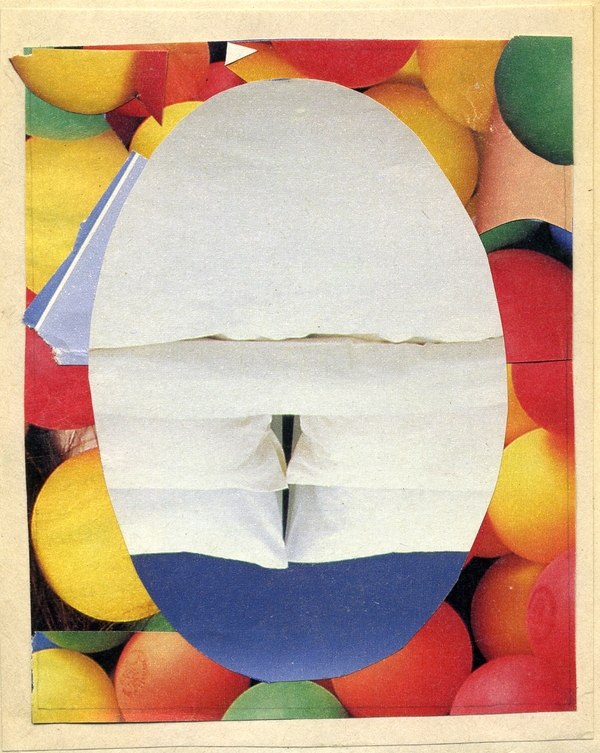
In the late 1970s, the artist Alexander Livanov found a stack of America magazines in the entrance hall while taking out the trash.
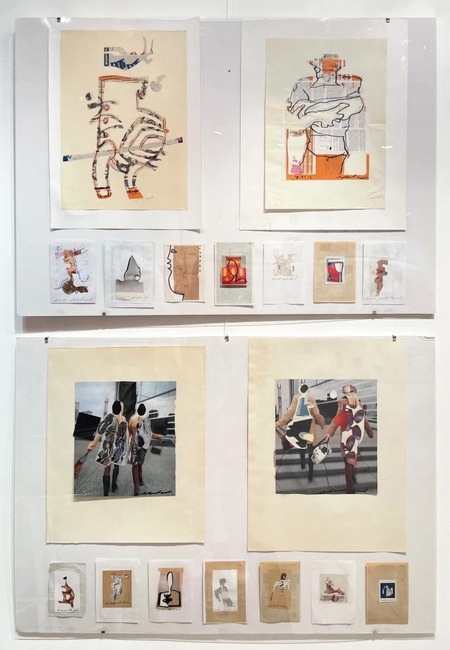
On vibrant spreads, there were luxurious cars, country homes, an abundance of goods, and smiling people. A lifestyle that seemed almost unattainable to a Soviet citizen. Livanov brought the magazines home without any particular purpose—more like just flipping through them. But instead, as if mesmerized, he picked up colored chalk and began drawing directly over the bright illustrations.
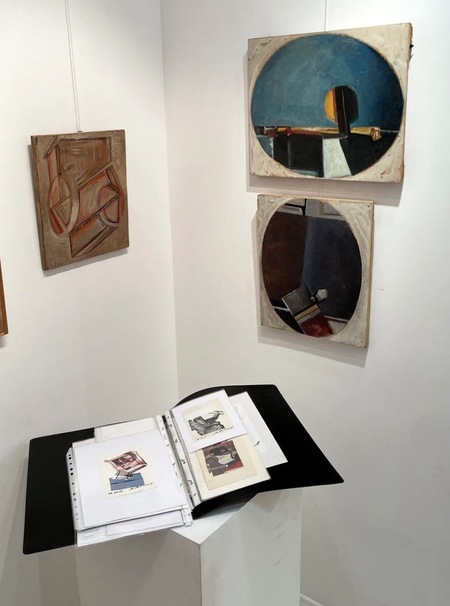
Sometime later, the building entrance became another place of unexpected discovery for Livanov. One of his neighbors, upon moving out, had left a stack of photographs depicting so-called «New Russians"—entrepreneurs and bankers who had suddenly become wealthy, transforming their fortune into the primary symbol of success. The pictures featured fur, gold jewelry, banquets with red caviar, and early trips to Europe. Livanov cut these photographs up and assembled them into abstract oval collages, and he named the series «Ovals.»
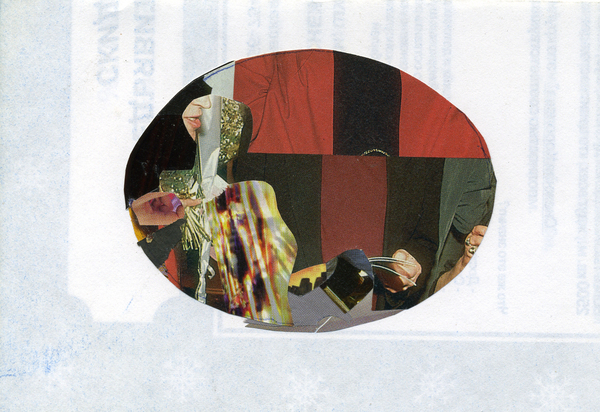
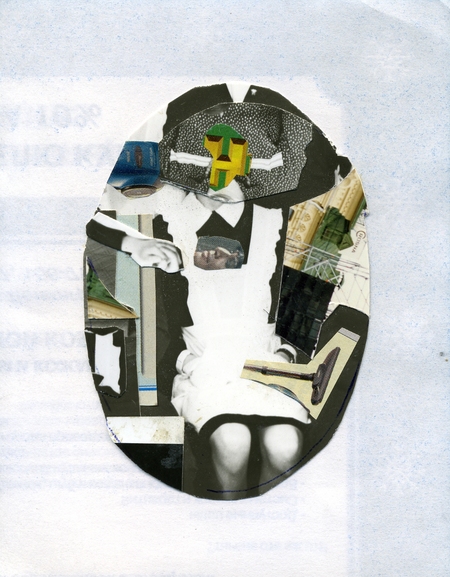
Alexander Livanov. Collage from the «Ovals» series, 2000–2020s.
At first glance, the idea of drawing over other people’s images seems strange. But this is precisely the artistic method of Livanov. If Marcel Duchamp’s readymade was based on minimal intervention into a found object, Livanov, conversely, completely transforms it. Throughout this process, the artist never knows what the final piece will look like. He cuts the image, rearranges the fragments, and adds a few lines until the composition organizes itself. It is no coincidence that Livanov says his task is not to create a picture, but to let it happen.
You shouldn’t manufacture the image; you should allow it to happen.
Today, Alexander Livanov’s work can be viewed at the «Variants» exhibition in the «Open Club» gallery. This collection features abstract collages, including his famous «Ovals, ” alongside paintings from various years, ranging from works created in the 1990s to more recent pieces. Despite shifts in subject matter and materials, the artist’s working method remained consistent. Livanov took photographs, magazines, and old paintings, cut them up, rearranged the details, and gradually transformed them into new pieces. Consequently, „Variants“ showcases not only different periods of his career but also what has remained virtually unchanged over the decades.