Research Concept
Western European illuminated bestiaries from the 13th century represent a unique stratum of book culture, where the depiction of an animal exists outside the laws of realism. To a modern viewer, medieval lions, elephants, or crocodiles may seem naive, but their deformation is a conscious system of graphic stylization. Studying how the masters worked with silhouette and conventionalized form allows one to see in the manuscripts not drawing errors, but bold expressive techniques.
Research Objective
To identify, classify, and visually demonstrate the core graphic principles through which 13th-century miniaturists transformed and distorted animal anatomy, converting a real member of the fauna into a religious symbol and an element of book design.
Research Thesis
The anatomical deformation of fauna in 13th-century bestiaries is governed by three artistic objectives:
1. Page Architecture: The animal’s body is stretched or compressed to fit the frame and rhythm of the page.
2. Constructing the «Hearsay» Image: Since artists could not observe exotic animals in person, they assembled their likenesses like a construction set using familiar details.
3. Allegorical Dramaturgy: Animals were given human poses and facial expressions to convey the moral lesson of the parable.
Material Base
The research is built upon a visual analysis and comparison of two famous 13th-century English illuminated manuscripts from the British Library collection: the Worcester Bestiary (Royal MS 12 F XIII, c. 1225–1250) and the Harley Bestiary (Harley MS 4751, c. 1230–1240).
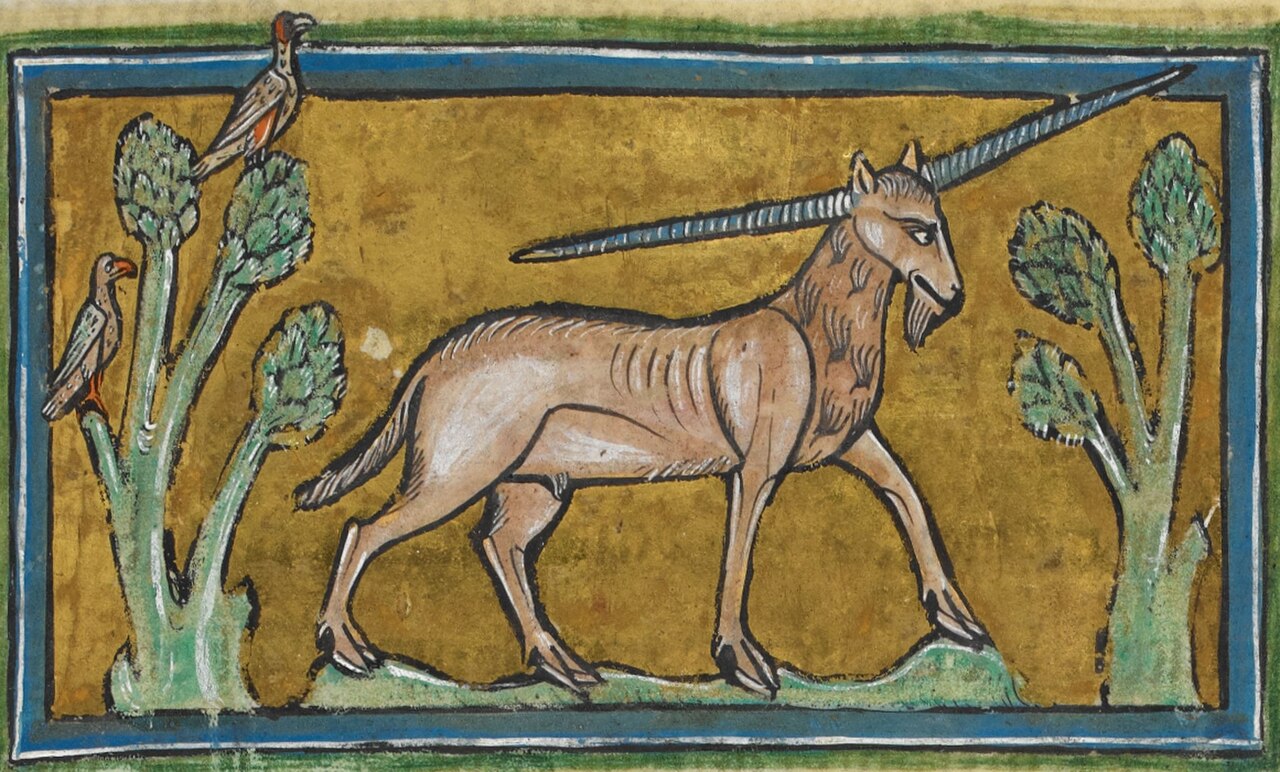
Stylistic exemplar. Nature in miniature is reduced to conventional signs: the earth is transformed into a wavy ornament, trees into symmetrical clusters of leaves, and the animal’s body conforms to a clear, enclosed silhouette. Rochester Bestiary (Royal MS 12 F XIII), 13th century.
Chapter 1. The Architectonics of the Page
In the medieval manuscript, the miniature does not exist in isolation—it is rigidly embedded within the page’s grid. The frame’s format directly determines its anatomy: to fit within a square, a narrow band, or a circle, the body of the animal is compressed, elongated, or twisted into an ornamental form.
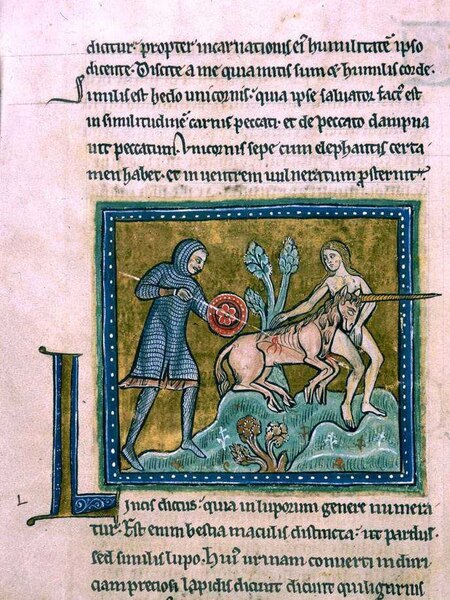
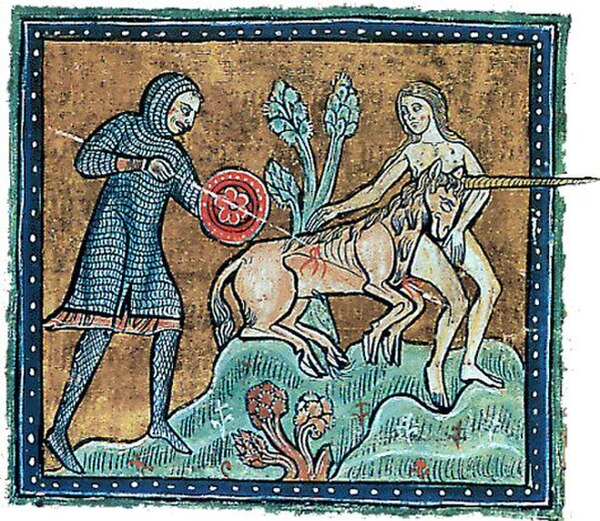
• Unity of text and image. The miniature occupies the exact width of the text column. Its dense, colored border and the elongated, vertical capital L function as a unified frame for the page.
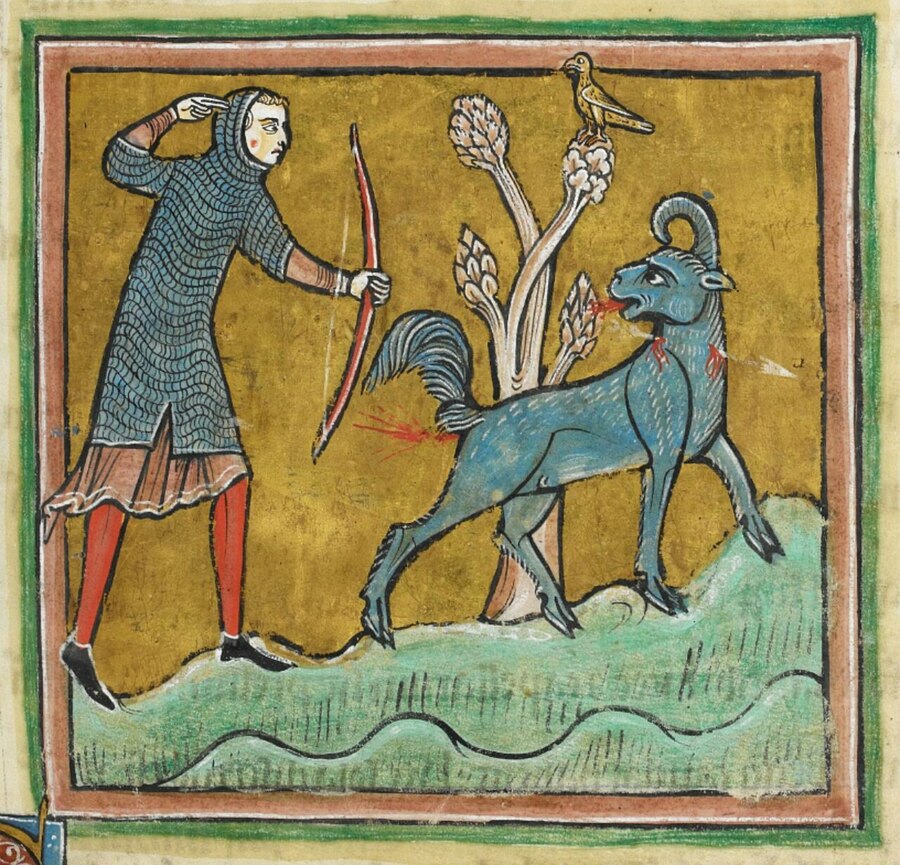
Page geometry. The vertical lines of the trees and the hunter’s spear within the miniature repeat the strict rhythm of the handwritten text strokes surrounding it.
Deformation under the frieze. To fit the battle scene into a narrow horizontal band, the artist shortens the legs of the horse and griffin and stretches their bodies horizontally.
Rhythm and storyboard. The narrow format transforms the frame into a proto-comic: one hedgehog is shown three times in action, and its elongated silhouette sets a horizontal rhythm between the vertical lines of the trees.
Graphic motif. Needles and the fruits pinned to them have been transformed into a rhythmic ornament of strokes and circles—naturalism yields to decorative expressiveness.
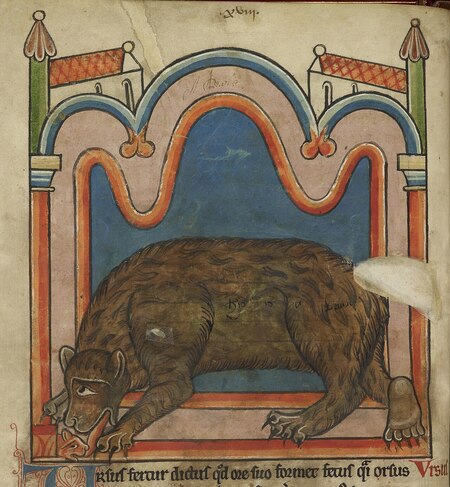
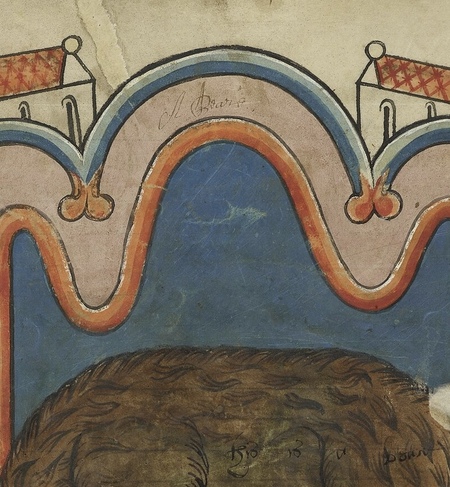
Submitting to the arch. The bear’s spine’s heavy arch precisely mirrors the wavy curve of the three-lobed architectural frame.
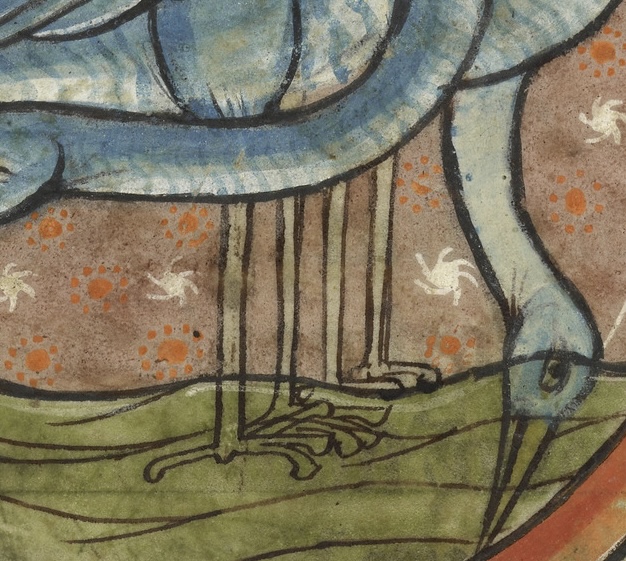
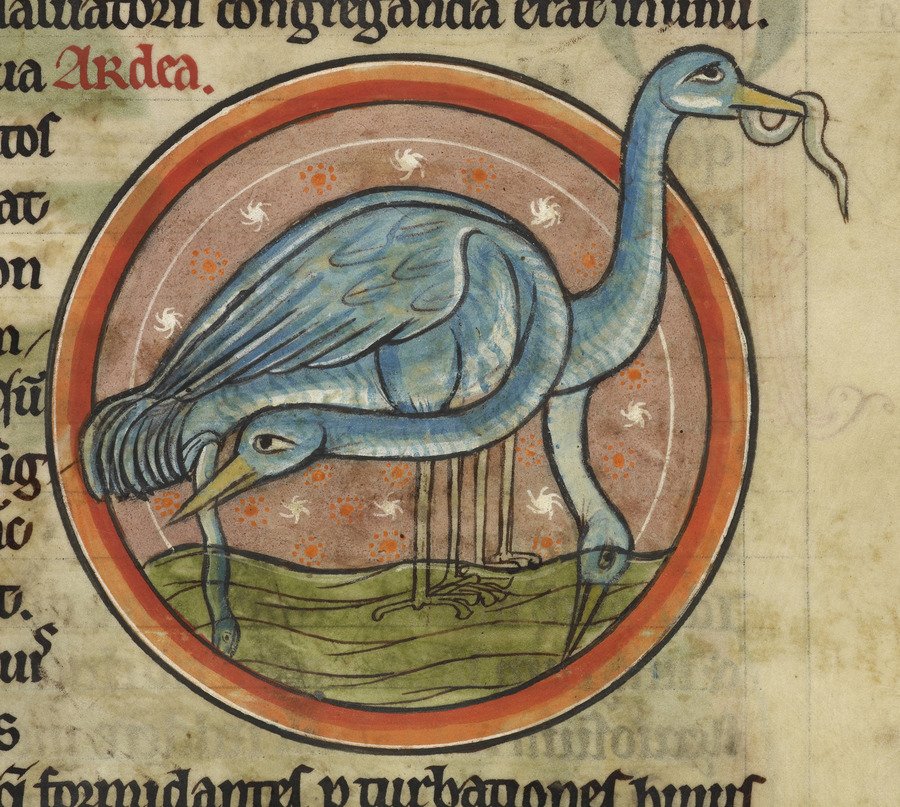
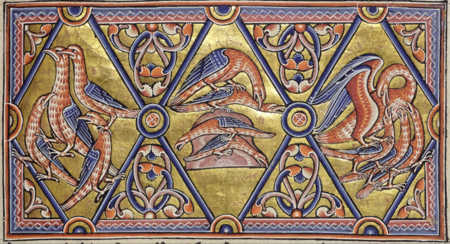
Ornament from shey. In the round medallion, the supple necks of the birds interweave into a single pattern that mirrors the frame’s circumference, and the legs transform into a palisade of vertical lines.
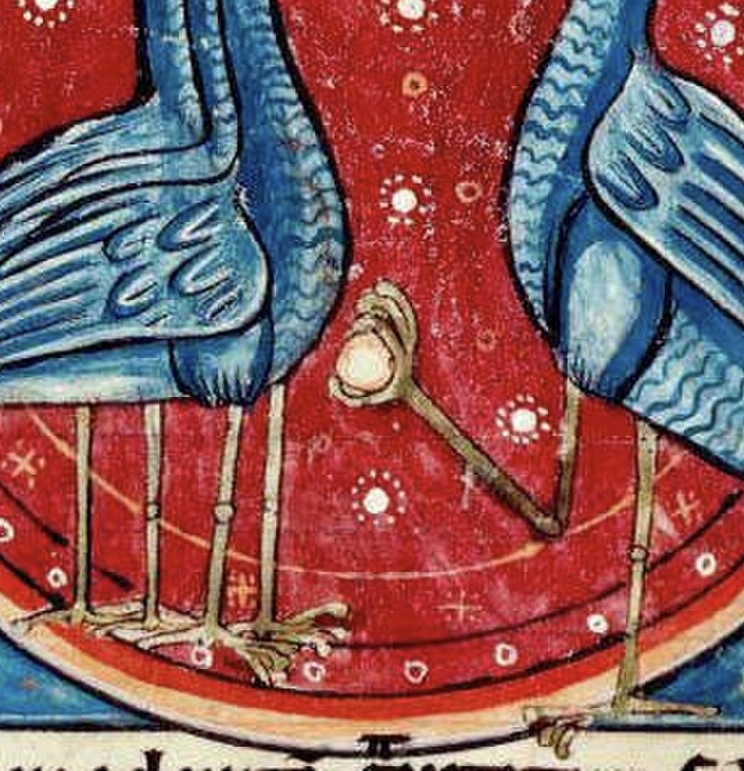
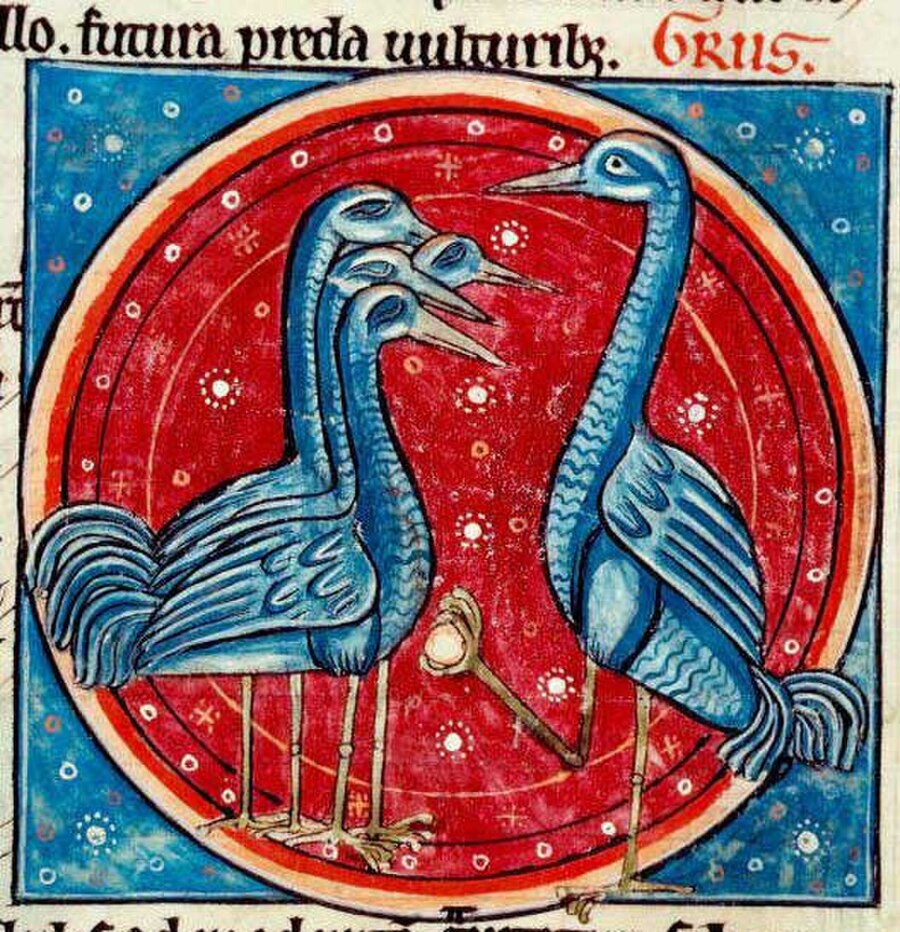
Silhouette Cascade. Bird heads are arranged in a stepped pattern along the curve of the circular frame—the composition is structured according to heraldic laws, not perspective.
Chapter 2. Fantastic Assemblages: Images «From Testimony»
Medieval artisans had never seen elephants, crocodiles, or lions in person. Relying on ancient texts, they assembled unfamiliar beasts like a kit—from parts of familiar European animals.
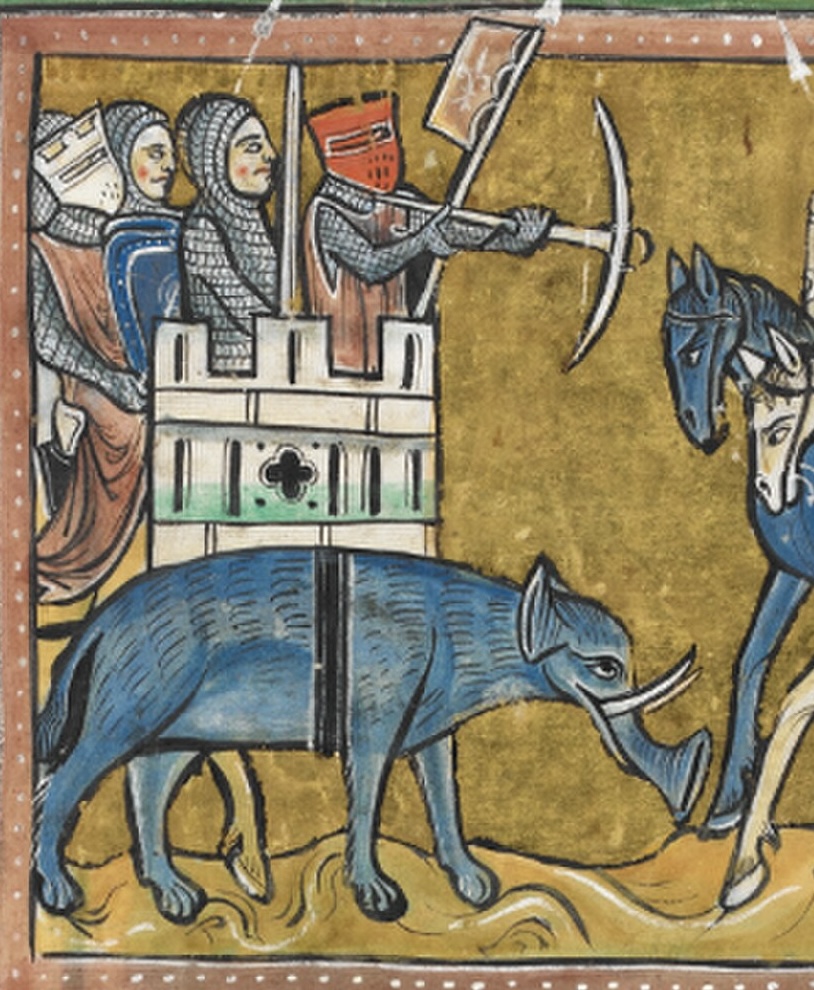
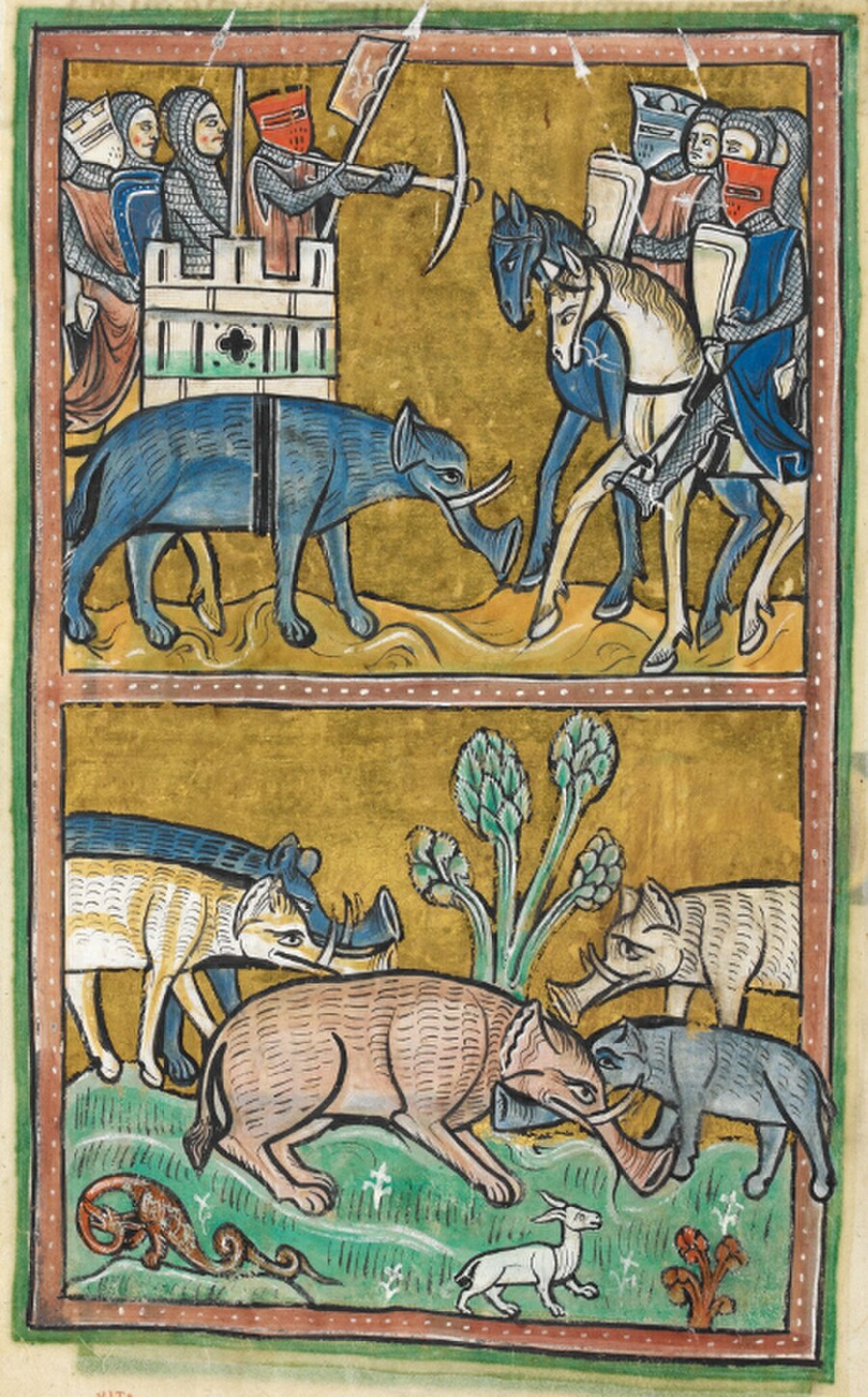
Elephant as a construction kit. Unaware of real anatomy, the artist gave the elephant the body and hooves of a horse, the tusks of a wild boar, and a rigid musical horn instead of a flexible trunk. A stone tower is strapped to its back like a regular saddle.
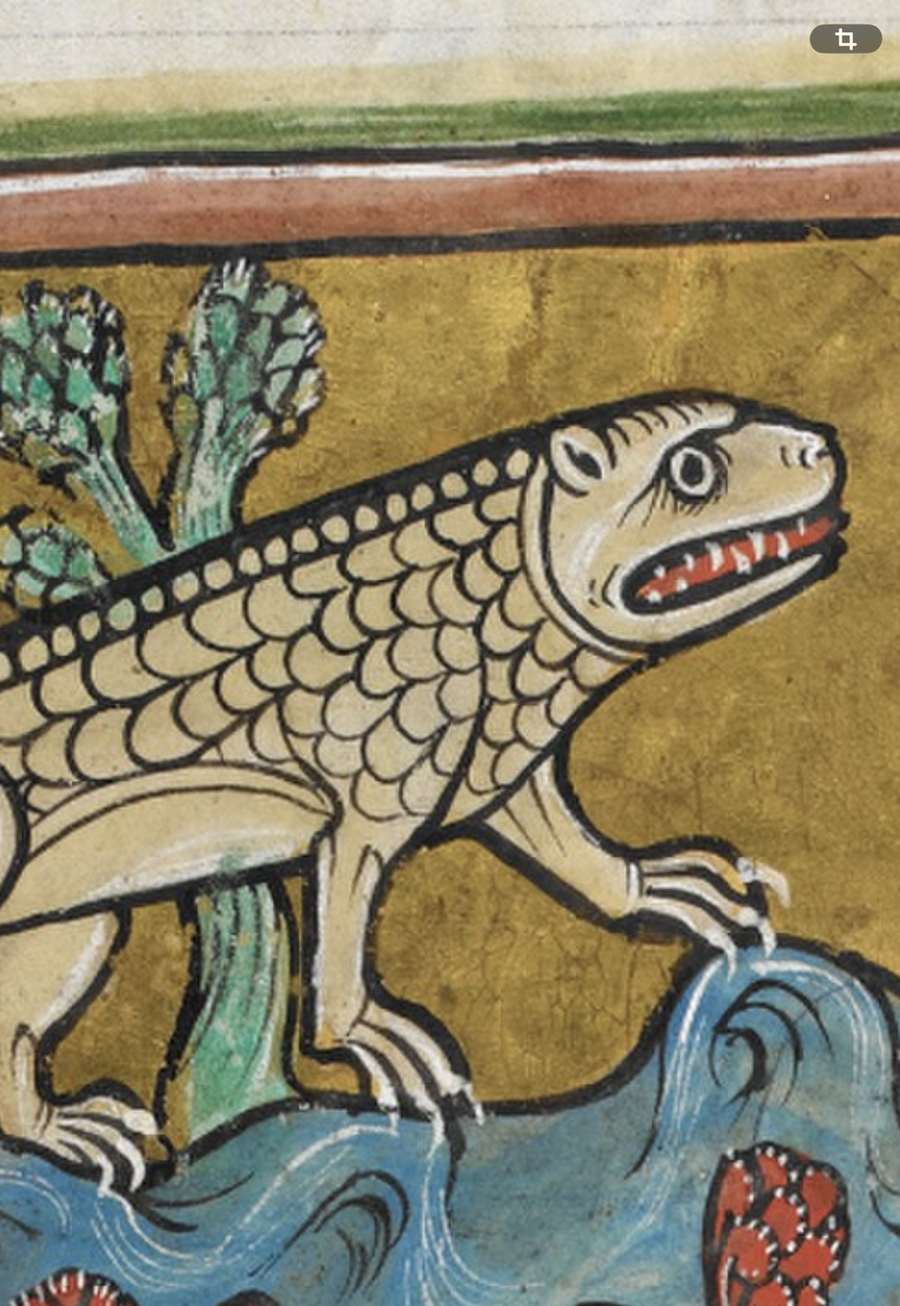
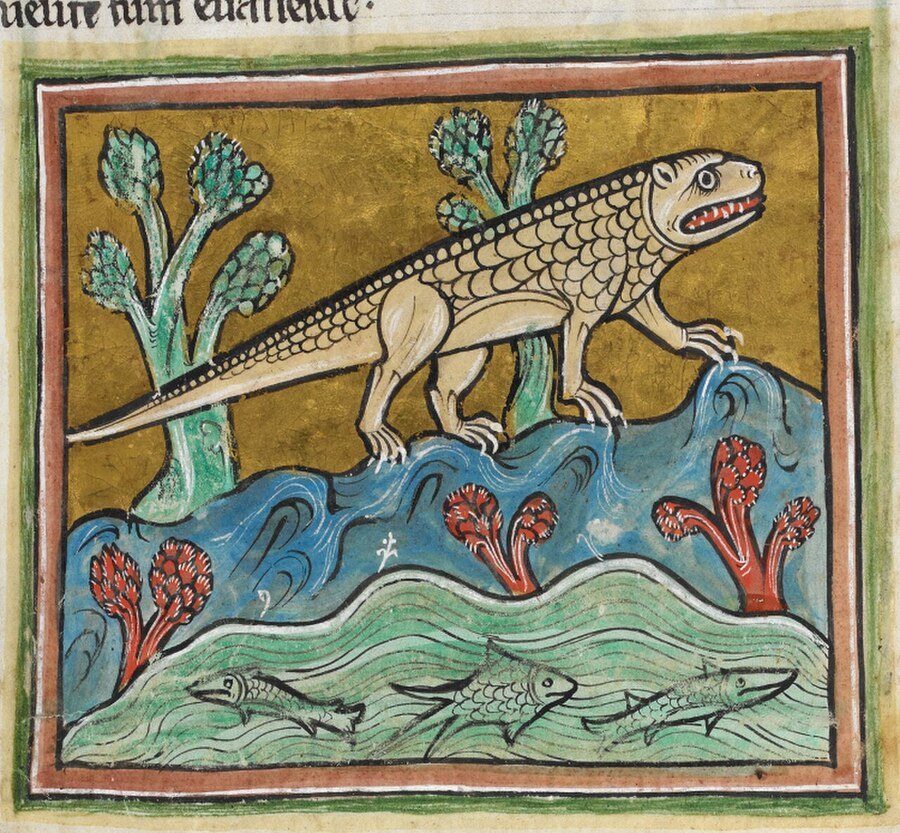
River predator by description. The text describes a crocodile as a four-legged beast with a long tail and a fearsome maw. Ultimately, the artist drew the body of a European dog, stylizing the scales like neat tiles and the dorsal crest like a string of white beads.
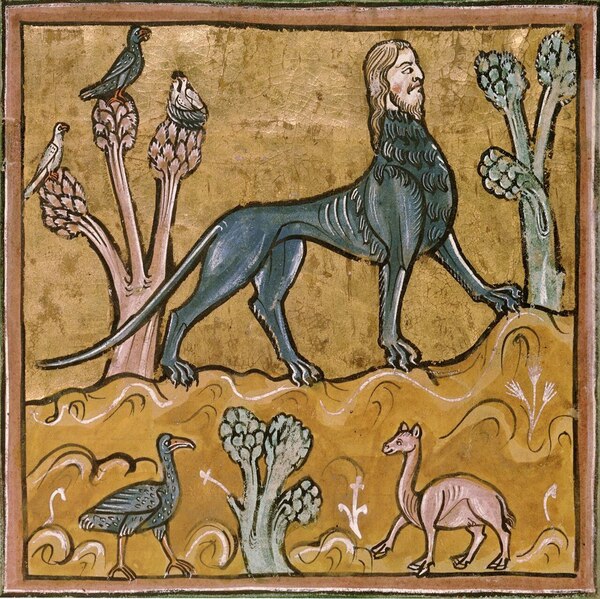
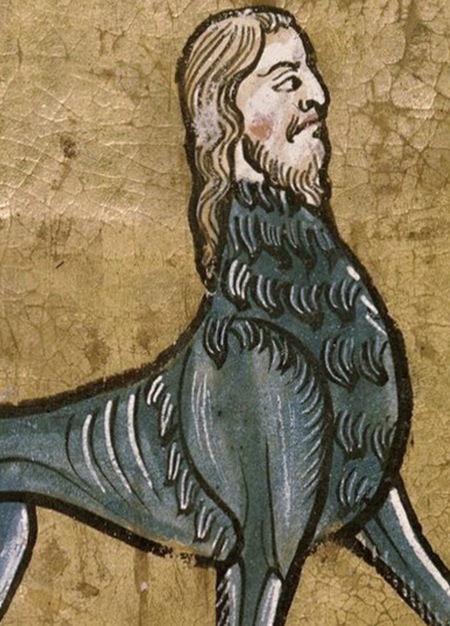
Hybridization. The direct joining of the incompatible: a lion’s body with an exaggeratedly taut abdomen, a scorpion’s tail, and the serene face of a bearded man.
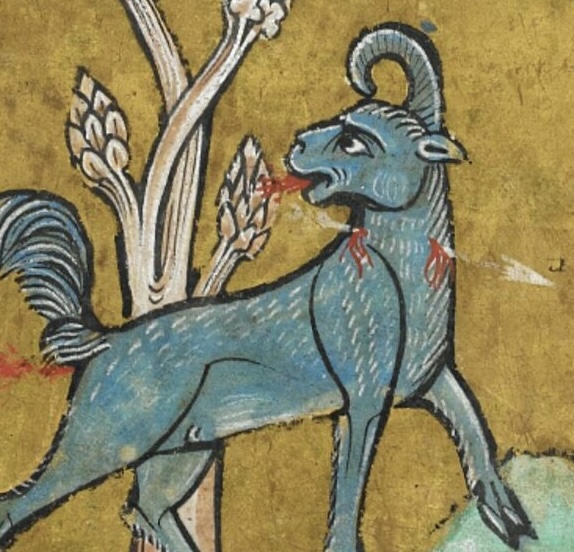
Mythical mechanics. A goat’s beard and hooves combine with massive horns pointing in opposite directions—a literal illustration of the legend of a beast capable of spinning its horns in battle.
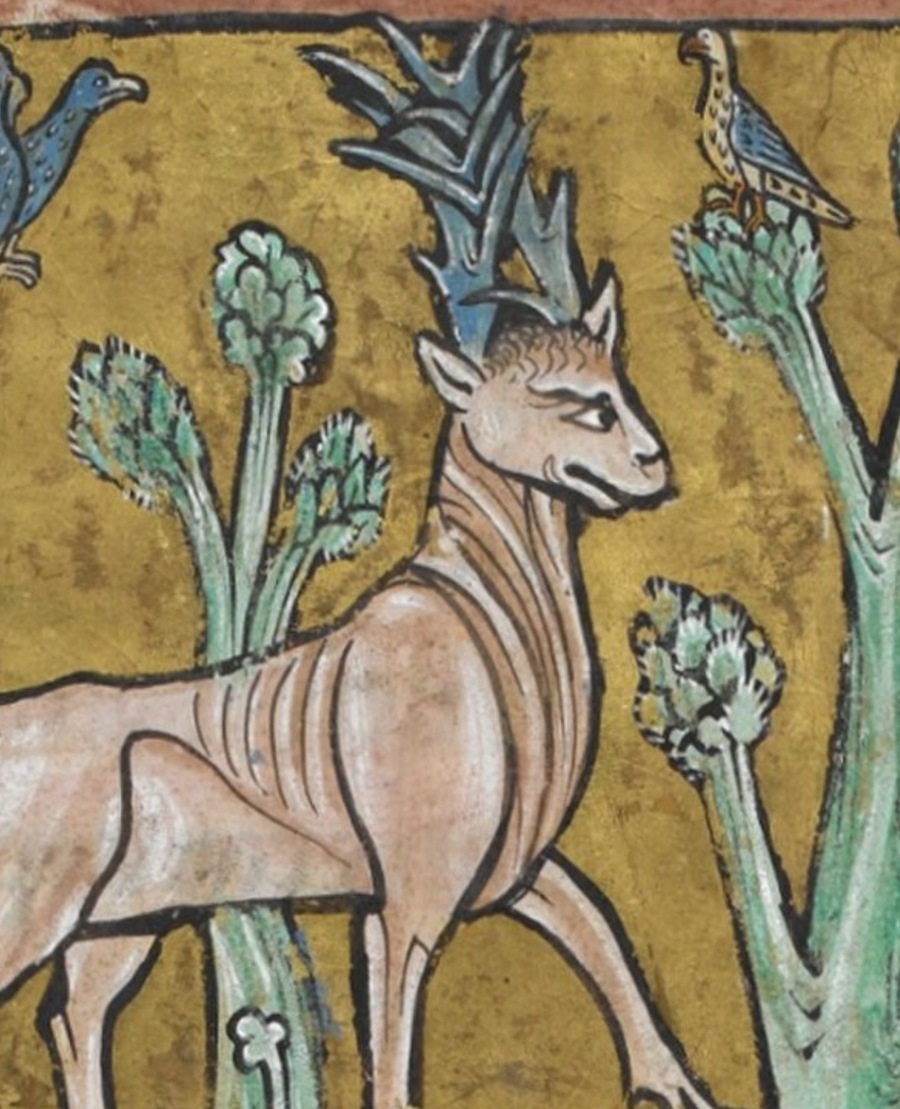
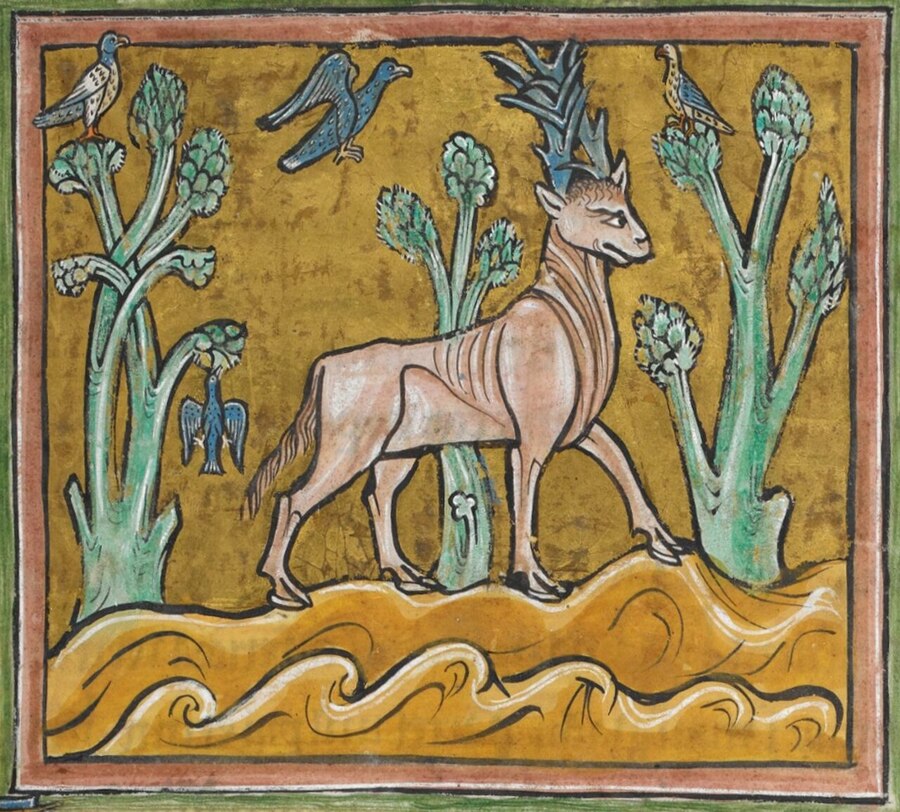
«X-ray» ornamentation. The folds of skin on the neck and the ribs on the beast’s side do not model volume with chiaroscuro, but transform into a decorative pattern of parallel stripes.
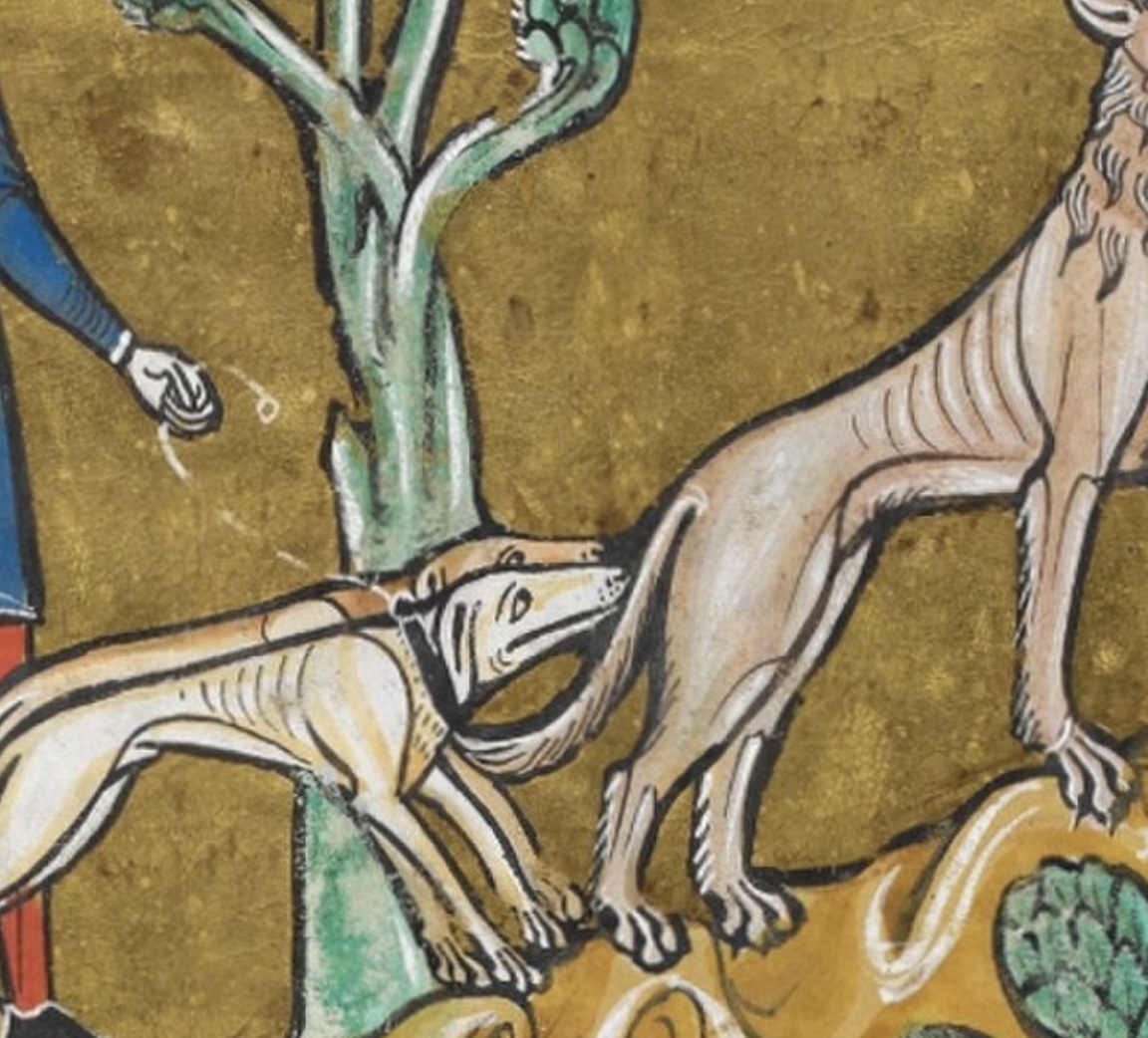
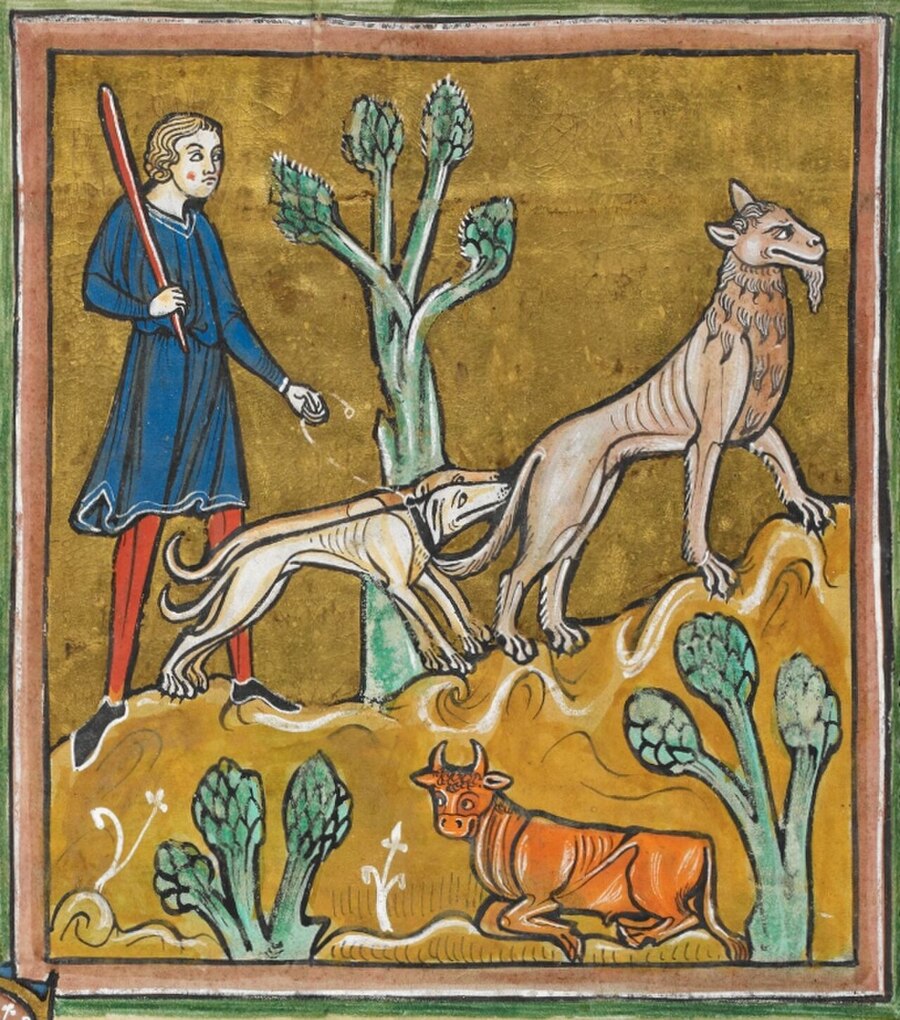
Unified body template. Both the hunting dog and the prey it pursues feature the same elongated spinal plasticity and a «ribbed» stippling—the artist uses a single graphic module for different species.