Concept
Zen Buddhism entered Japan from China in the late 12th–13th centuries. Alongside its philosophical and ethical teachings, Zen manifests extensively through art, utilizing a unique visual language rooted in simplicity, restraint, and emphasis on inner essence rather than external grandeur.
It was in the 14th century that this language began to take shape in Japan and acquired its first stable characteristics. Later, during the 15th–16th centuries, it developed into the classic forms of Zen art, taking root in national culture and subsequently evolving into a global phenomenon that persists to this day, inspiring contemporary artists.
Japanese art has taken on the task of being eloquent in the language of suggestion.
This specific direction interested me because its essence lies in creating the most accurate depiction without overloading it with detail. This approach is used to convey a sense of feeling, without striving for perfection—on the contrary, inaccuracies become evidence that we are viewing a work created by a living artist. The works themselves often lack a clear plot, which might have contained a specific idea; rather, they are founded on the principle of suggestion, compelling the viewer to ponder and look inward. Shifting the focus from a clear narrative to symbols, composition, and posture helps approach a state of «here and now,» transforming the contemplation of art into a unique experience.
Why painting?
Zen aesthetics manifested across numerous art forms: in architecture, gardens, calligraphy, and the tea ceremony. For this study, I chose painting because the principle of «minimal means» is most visibly apparent within it. The painting is composed on a single plane, allowing one to trace how the master resolves which elements will constitute the work. Each such decision can be examined and analyzed, making painting ideally suited for revealing the visual characteristics of Zen Buddhism. Furthermore, painting is more closely tied to the Zen practice itself than other art forms. The works were created within the monastic environment as part of spiritual life and served as a method to convey experiences that are difficult to articulate in words. Additionally, Japanese painting from the 13th–14th centuries is well-preserved and featured in museum collections and academic catalogs with the necessary information, allowing for reliance on verifiable sources.
In my research, I pose the question: What visual and compositional characteristics in 14th-century Japanese art indicate the influence of Zen Buddhism?
My objectives are as follows:Using authoritative museum databases and scholarly catalogs, select key works of Japanese painting created up to and including the 14th century. The collection must include pieces created within the Zen artistic tradition.Analyze a selection of these works and identify the defining characteristics that most clearly reflect the essence of Zen, thereby helping to answer the initial research question.Typologically group the works into categories based on observable traits.Draw a conclusion based on the gathered data.
Void
Emptiness is one of the most fundamental principles of Buddhism, which posits that Non-being lies at the foundation of all things and phenomena. This principle naturally finds its place in Zen art. In this sense, Emptiness carries no negative connotation—unlike the concepts of depression, loneliness, or meaninglessness that are characteristic of Western culture. Within the context of Zen, Being and Non-being are not contradictory; they are inseparable, much like ink and paper.
Let’s examine this with examples.
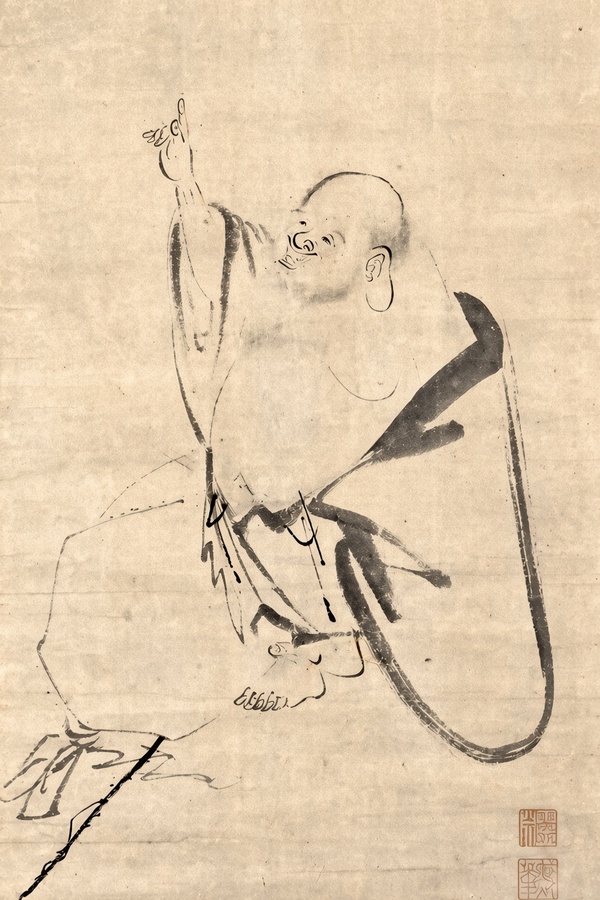
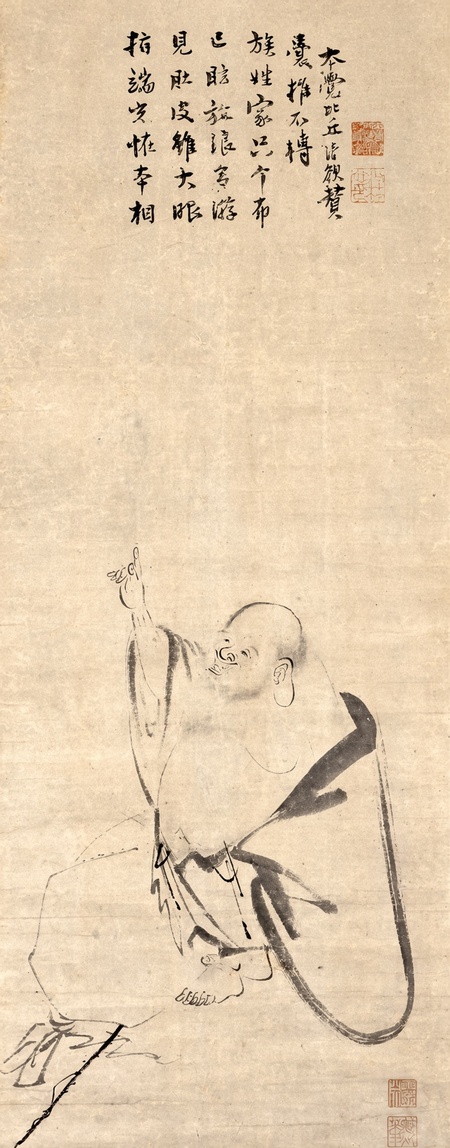
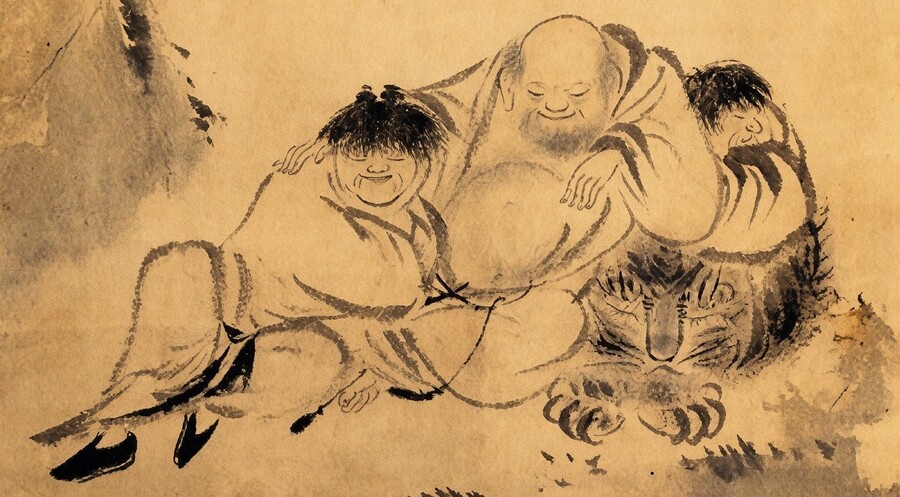
Mokugan Reien, «Hotei (Budai), ” 14th Century (fragment) // Mokugan Reien, „Hotei (Budai), ” 14th Century
The scroll depicts Hotei—an enlightened Buddhist monk and the protagonist of numerous parables and legends. Dressed as a wandering beggar, he lives in complete harmony with the world, which is why he is always smiling or laughing.Attention should be paid to the composition here. The majority of it is the white expanse—a void. According to the parable, the hero’s gesture points toward Maitreya (the future Buddha), who resides in heaven. The irony is that Hotei is his embodiment, meaning he is pointing into nothingness. In this context, the blank page suggests that searching for divinity far away in the heavens is futile, because it is right before you.
A figure, so intrinsically embedded in empty space, evokes a sense of «marvelous Void, ” from which events unexpectedly emerge.
Although the figure is partly divine, the artist had no intention of visually glorifying it. It is rendered extremely schematically; its form, like its sack, is merely an outline, and the body itself remains unfilled and empty. This method perfectly reflects the concept of Zen art, where emptiness itself becomes the medium for narrative.
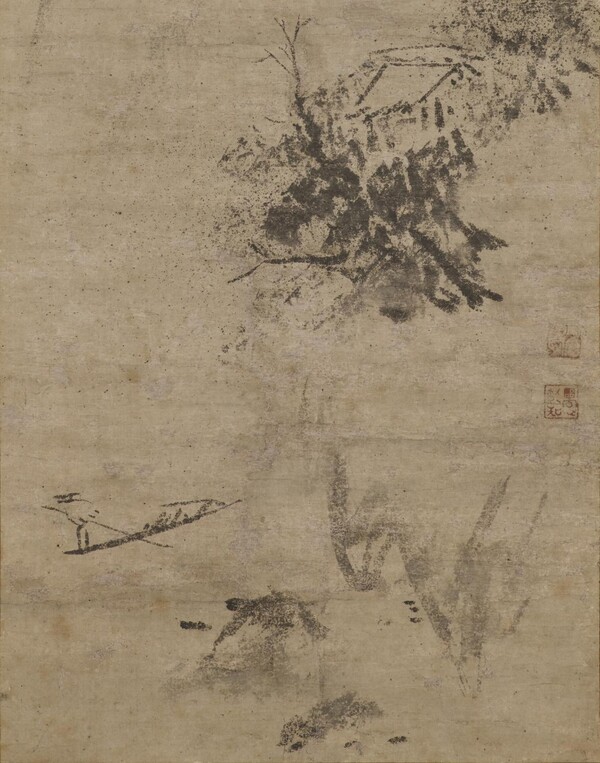
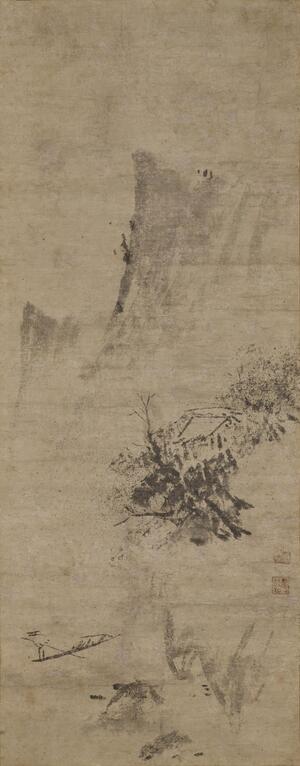
Gubei Wei. Rainy Landscape, 14th Century (Fragment) // Gubei Wei. Rainy Landscape, 14th Century
In Zen painting, the goal of depicting a landscape was not to create a realistic scene. Nature was treated as something alive and ever-changing; consequently, working with numerous details was perceived as a parody of nature. What was truly important was conveying the artist’s impression gained from contemplating nature.On this scroll, similar to the previous one, the majority of it remains untouched—all objects and planes are unified by negative space. The viewer is invited to complete the image independently. The artist does not paint the water surface but only hints at it by depicting a boat. Although the painting is titled «Rainy Landscape,» the rain itself is represented only through indirect signs, such as the blurred contours of the mountains and cliff, creating a sense that the rain is concealing absent details.
In Zen, all artificial distinctions are discarded as hindrances to our inner vision in comprehending the nature of life and the essence of things.
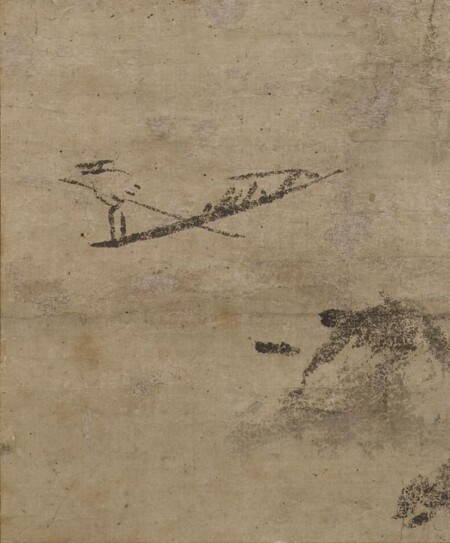
Zen Buddhism dissolves the boundary between humanity and nature. When painting a landscape, the artist never places people in the foreground. With this approach, the human figure is sometimes depicted as a barely perceptible shape that blends into the overall composition. Consequently, the work feels like a single, unified entity.
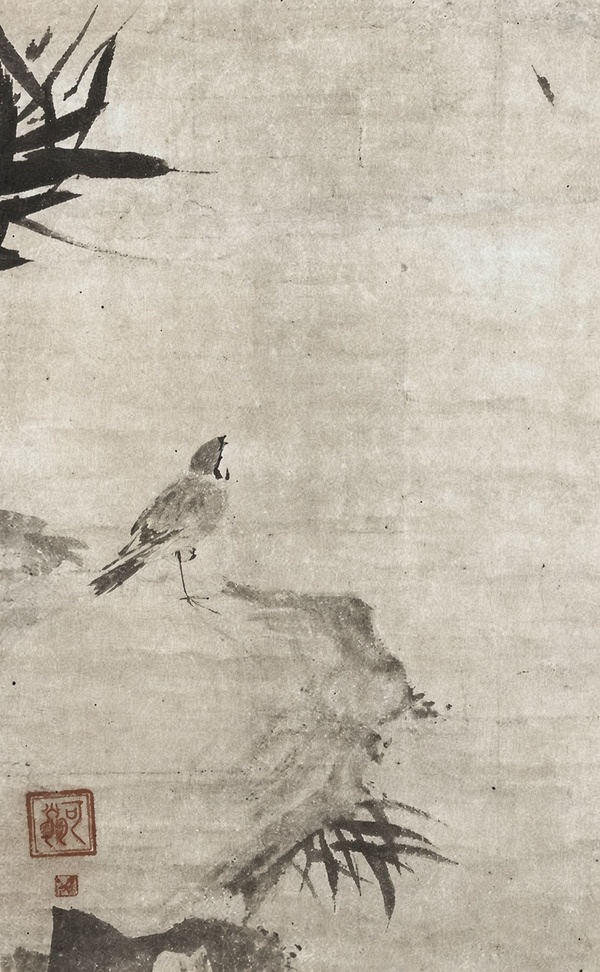
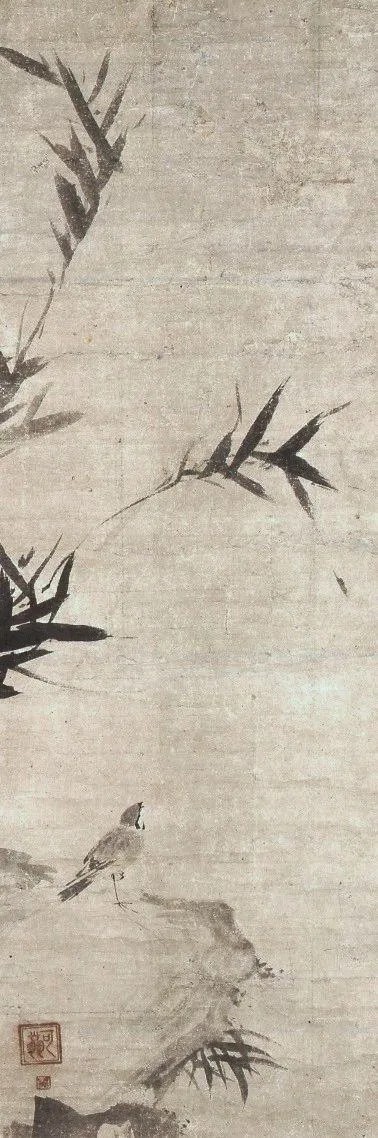
Kao Ninga. Bamboo and Sparrow, 14th Century (Fragment) // Kao Ninga. Bamboo and Sparrow, 14th Century
In the work of artist Kao Ning, the contrast between the blank canvas and the bamboo swaying in the wind plays a crucial role—this composition is intended to convey the absence of any impediments to the plant’s movement. The bamboo seems to emerge from nowhere, symbolizing the spontaneity and unpredictability inherent in all living things.Furthermore, bamboo itself is often used as a metaphor in Zen art. Monks value its flexibility, its ability to withstand strong winds without being damaged by external forces—much like valuing the flexibility of the human mind, which allows a person to find the path of least resistance even in the most difficult circumstances.
Kao Ninga. Bamboo and Sparrow, 14th Century (Fragment)
The sparrow on this scroll embodies lightness and spontaneity. The quick bird pauses to look at the bamboo—this scene illustrates the transience of a moment, instinctively placing the viewer in the sparrow’s position, allowing for contemplation without excess thought or fuss.Thus, the void connects the two ways of life in this work. Its role is to reveal the shared origin of the sparrow and the bamboo—the observer and the observed—while also providing a necessary sense of space to clear the mind, enabling the viewer to grasp the essence of the piece.
Brushstroke
Zen painting also possesses distinct characteristics regarding the painting process. Artists typically do not use sketches or preliminary drawings, nor do they correct inaccuracies. Every brushstroke must be deliberate and confident. Haste was seen as a sign that the artist was immersed in their thoughts rather than fully focused on the act of painting. The painter’s state of mind while creating a work received immense attention, as the piece reflects the artist’s intellect at a specific moment in time. The brushstroke is an extremely vital expressive element because it alters the texture of the subjects, adds a sense of movement, and establishes the rhythm of the work.Next, I will present several pieces that demonstrate this approach.
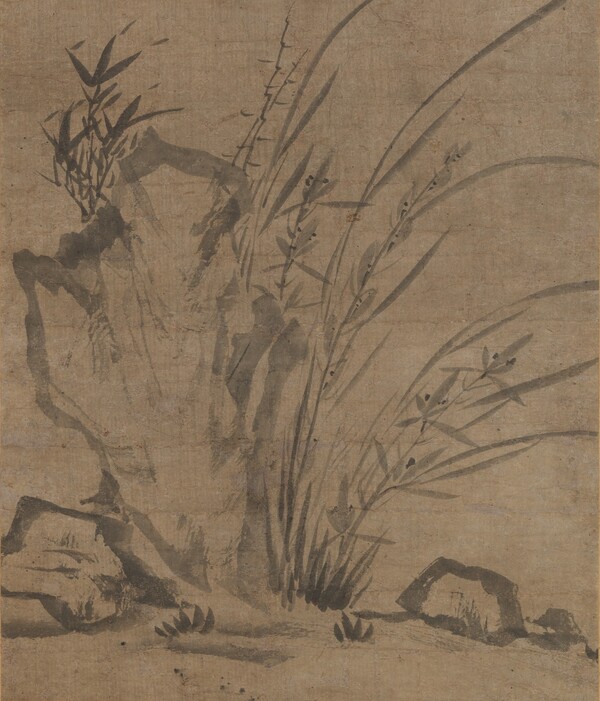
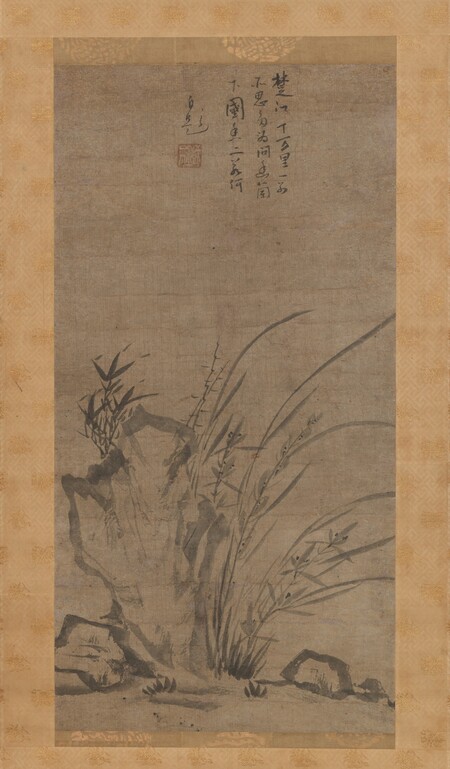
Tesshū Tokusai. Orchids, Bamboo, Thornbush, and Cliffs, 14th Century series (fragment) // Tesshū Tokusai. Orchids, Bamboo, Thornbush, and Cliffs, 14th Century series
Tessu Tokusai is considered one of the first Japanese Zen monks to actively paint orchids using ink. According to researchers, he is the one who introduced this genre from China and passed it on to succeeding generations.In this work, the brushstroke is the key instrument. The painting is constructed on the contrast between stone and plant, which is manifested in the way they are depicted. The orchid leaves are written with thin, continuous lines, whereas the stone is rendered with dry, broad strokes.
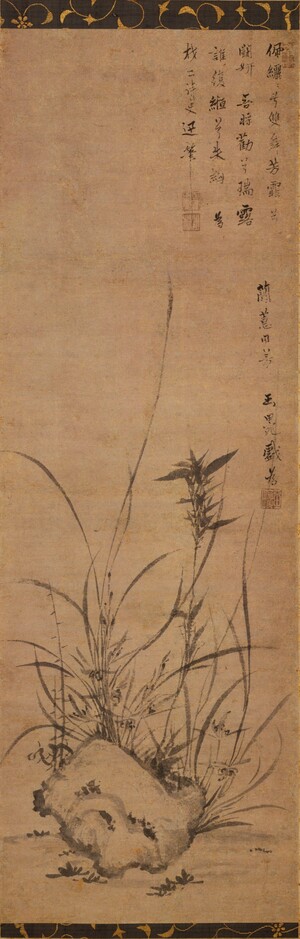
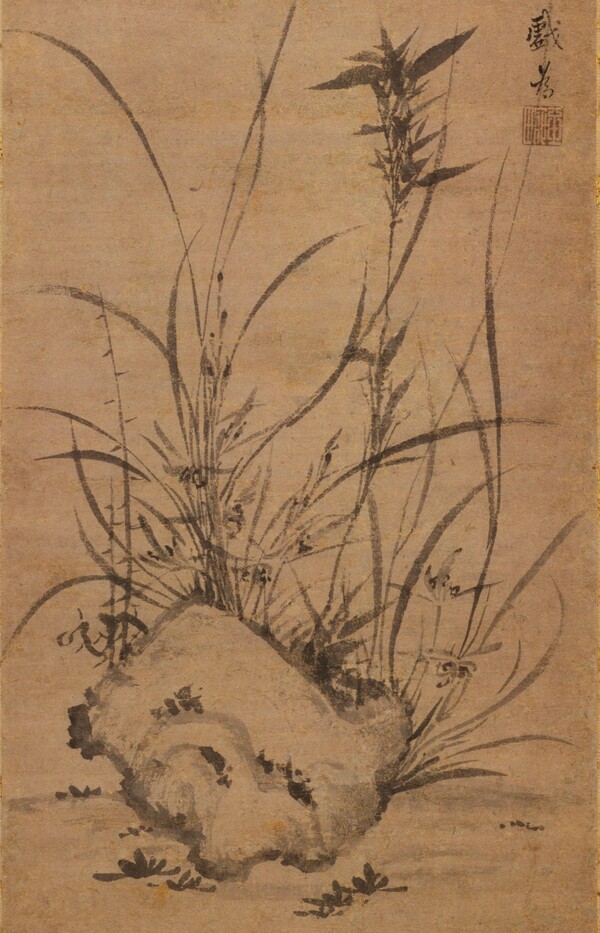
Gokuen Honpo. Orchids and Stone, late 14th–early 15th century // Gokuen Honpo. Orchids and Stone, late 14th–early 15th century (fragment)
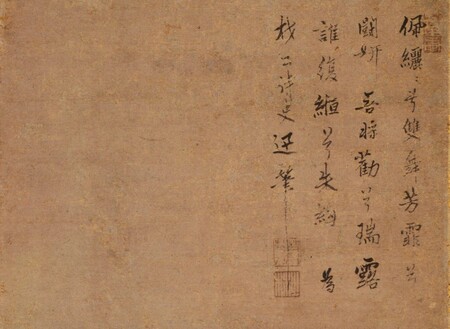
Here, a symbolic opposite to the orchid is presented—fragility versus rock—rigidity. The meaning of this imagery is to demonstrate the coexistence and harmony of two dissimilar phenomena.Scrolls were often accompanied by a short poetic commentary. Here, the poem reads:
«A dancing couple adorned with garlands
Combines rival fragrances.
One must drink their precious dew.
Who can recreate these deep-red brushes anew?
I sketched this poem and painting for the esteemed Tsar.»
(Translated by B. B. Ford)