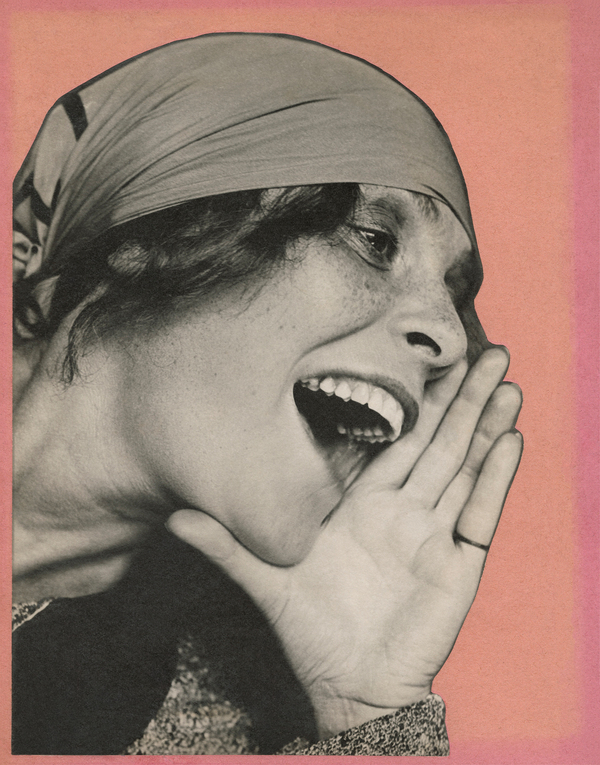
A new PhotoBiennale has opened at MAMMA, coinciding with two anniversaries—the 200th anniversary of photography and the 30th anniversary of the museum itself. Seven exhibitions have been curated here, revolving around two distinct definitions of photography: as a contemporary art medium and as a document of an era. Among these, two exhibitions are particularly noteworthy: Roger Ballen’s «Theater of the Subconscious» and «Lilya Brik: Icon of Style and Muse of the Avant-Garde.»
Roger Ballen is a contemporary photographer who has moved beyond simply documenting reality with a camera. His journey over the past half-century forms the foundation of this exhibition: from early documentary shots, Roger moves toward meticulously staged scenes that bring together people, animals, found objects, drawings, and interior fragments. As a result, what appears before the lens is less the external world and more a strange inner scene—a space of dreams, fear, and the subconscious. Ballen himself calls his method «psychodrama»: photography, in his words, must touch upon what lies deeper than social or everyday history.
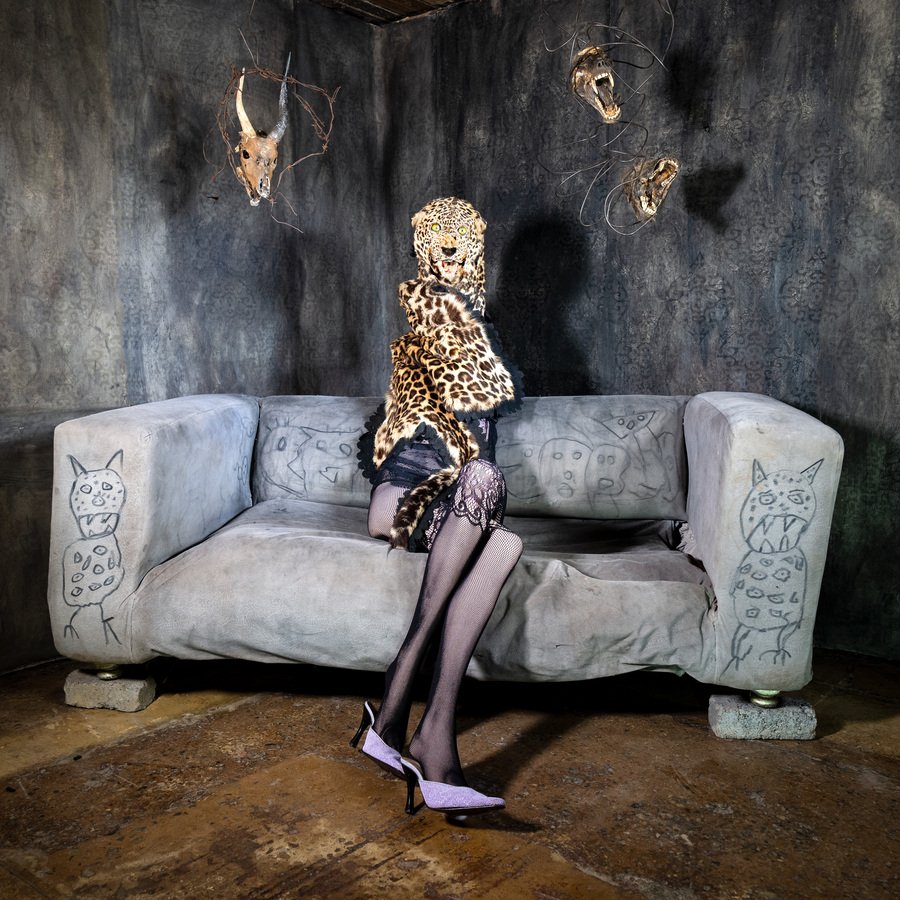
Roger Ballen. Leopard Woman, 2019. From the series «Ghosts and Spaces.»
This method is particularly clear in «Inferno, ” which is inspired by Dante’s Divine Comedy. Here, Dante is not used merely to illustrate the plot; Ballen effectively uses „Hell“ as a route into the human psyche. His characters and creatures evoke something far more primal than the historical Middle Ages—fear, guilt, loneliness, physicality, and the unknown. The artist himself states that in the photographs of this series, he is interested in „primary memories“ that delve deeper than individual recollection.
Here, the exhibition situation itself is crucial: in Ballen’s work, the viewer constantly senses that what is happening either just occurred a second ago or is about to unfold. The frame appears staged, yet it maintains the feeling of a casual observation. This is one of the major paradoxes of his photography—a artificially constructed scene begins to feel more convincing than reality. Ballen works almost like a director, but he leaves room for unpredictability within each photograph.
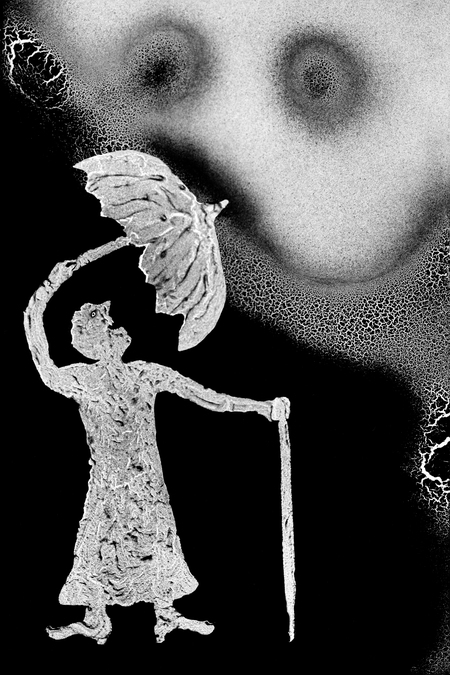
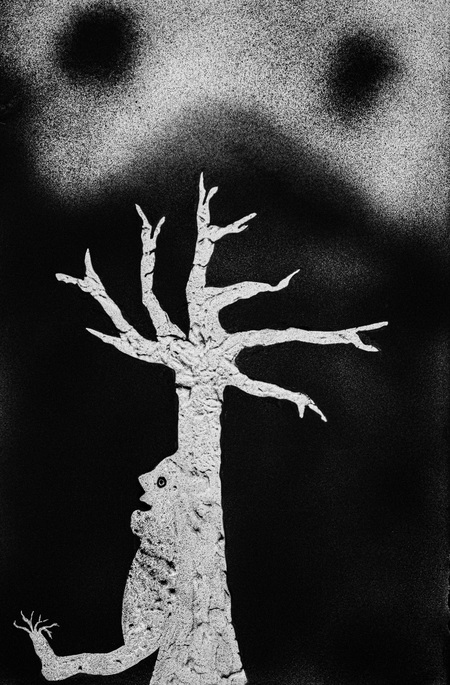
Roger Ballen. From the «Inferno» series. 2025.
Lily Brik’s exhibition is structured in an entirely different way. Here, photography returns to the individual and their persona—it doesn’t simply showcase a famous woman, but rather traces the process by which a person becomes a cultural icon. MAMM gathers images of Brik from the 1910s to the 1970s, Alexander Rodchenko’s photo collages from Mayakovsky’s poem «About This, ” posters, film excerpts, and materials from the Goslitmuseum archives. Among these are a childhood portrait of Lili Kagan, photographs from the 1920s, her personal belongings, and even a signet ring engraved with her initials and the inscription „Volodya“ on the inside.
Unknown author. Osip Brik, Lilya Brik, and Vladimir Mayakovsky. 1928.
It is particularly fascinating to view Brick alongside Rodchenko. For the poet, she was the addressee and heroine of poems; for the photographer, she was a model. Yet, within the visual language of the avant-garde, her face transformed into a self-sufficient sign. In the book «On This, ” Brick’s photograph graces the cover, and Rodchenko’s photo-montages become integral to the poetic construct. Thus, Brick exists here in multiple roles simultaneously: a living person, the subject of a private narrative, a model, and a fully formed visual archetype. The Photo Biennial 2026 examines photography as a complete medium—from a witness to history to a director of others’ dreams.
Vladimir Bogdanov. Lilya Brik, 1974–1975.