Silhouette and Movement
The image of the bull is often depicted in motion, especially in scenes with acrobats. What artistic techniques are used to convey the animal’s dynamism, and how does that influence the perception of its power?
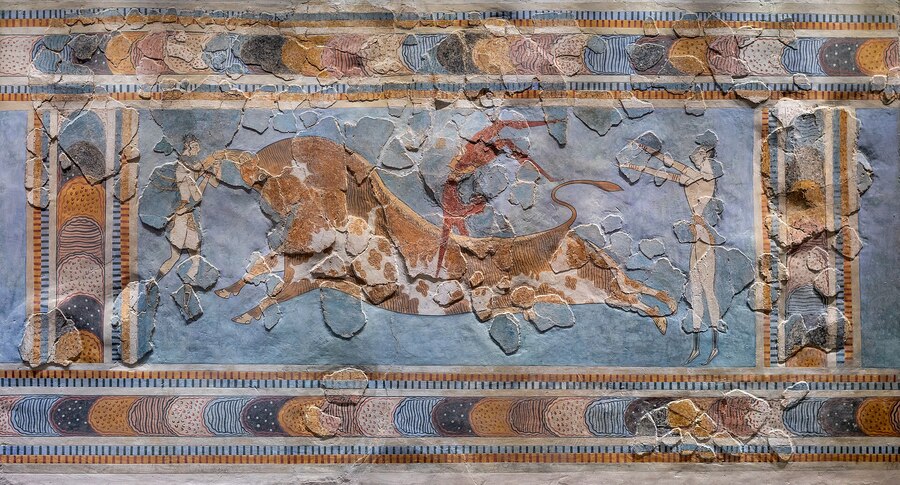
«Acrobats with a Bull.» Knossos, 1450–1400 BCE.
The fresco depicts taurokathapsia—a ritual act involving jumping over a bull, common in Minoan culture. It is presumed that the participation of young men and women in such trials symbolized the transition into adulthood. In this scene, the bull serves not only as an embodiment of natural power but also as an active participant in the rite, during which the individual demonstrates agility, courage, and the ability to overcome danger.
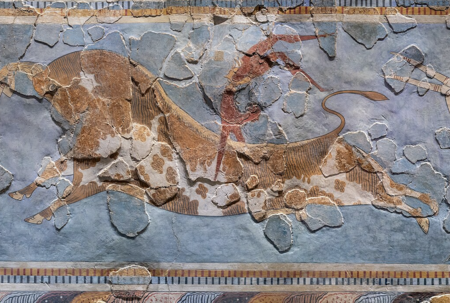
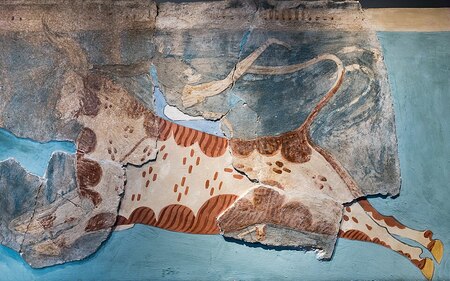
«Acrobats with a Bull.» Knossos, 1450–1400 BCE. Leaping Over a Bull. Tiryns, Late Helladic Period.
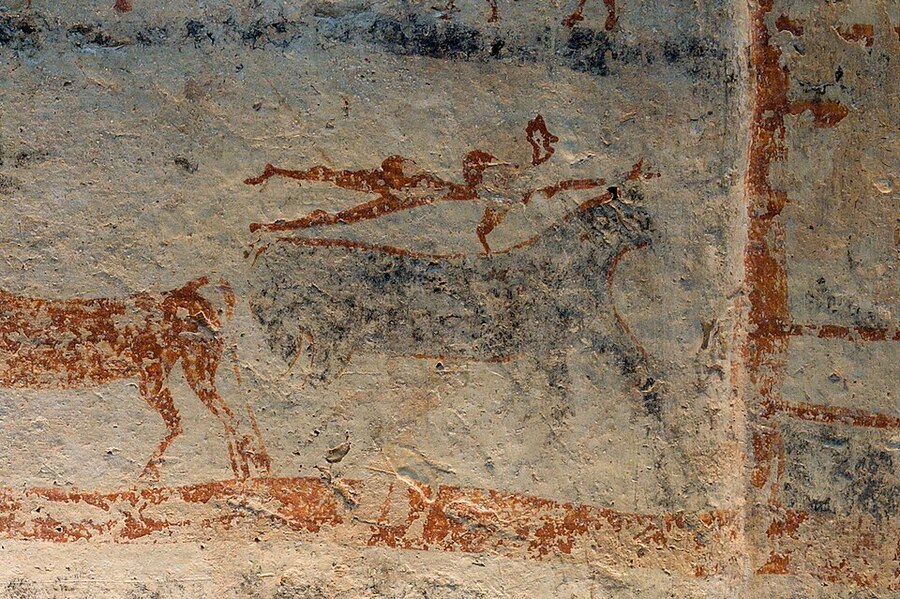
Scene with bulls and human figures. Tanagra, Mycenaean culture, 13th century BCE.
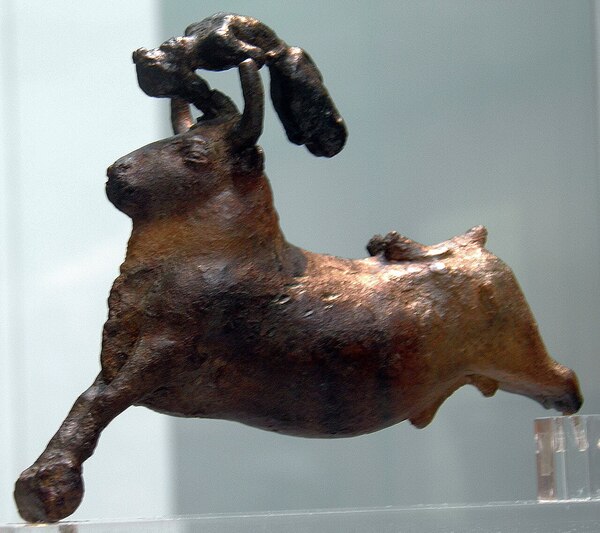
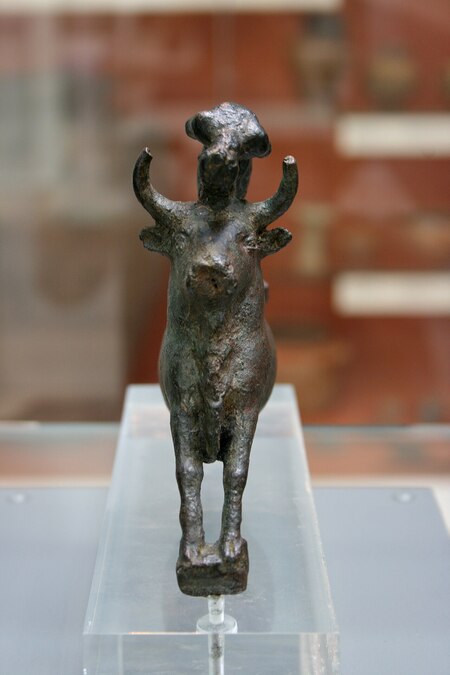
Bronze group of a bull and an acrobat. Minoan culture, 1600–1450 BCE.
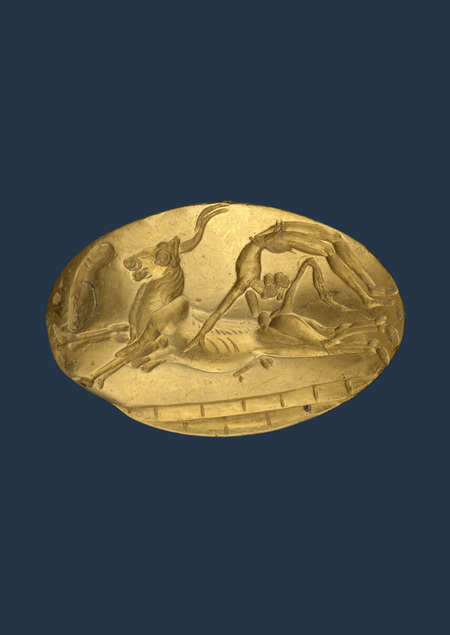
Acrobat leaping over a bull. Gold signet ring from Archanes, Crete. Minoan culture, 1600–1500 BCE.
The bull’s movement is conveyed through its elongated silhouette, leg positioning, and body curve. In scenes featuring acrobats, the sense of dynamism is amplified by the interaction between the human figures and the animal. A comparison of the works shows that the impression of strength is created not only by the size and massiveness of the bull but also through the tension in its posture and the direction of its movement. Thus, movement becomes one of the primary ways to convey the animal’s power.
Mass and Proportion
The bull was depicted not only in motion but also in calm, static poses. Let’s examine how the proportions of the body, head, neck, and limbs influence the animal’s image and the means by which artists conveyed its power without depicting active action.
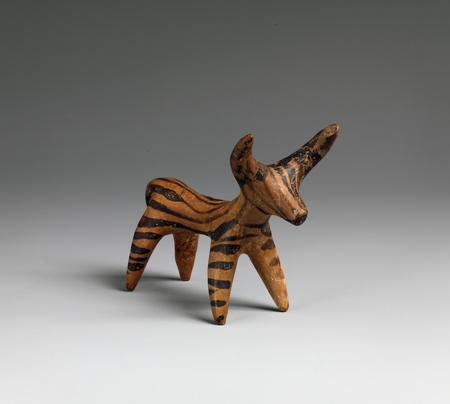
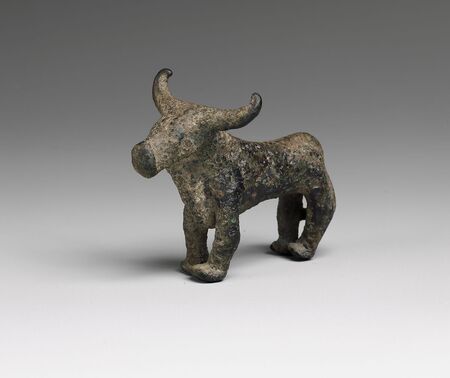
Terracotta Bull. Mycenaean culture, c. 1400–1300 BCE. Painted terracotta. Bronze Bull. Minoan culture, c. 1400–1200 BCE. Bronze.
Rhyta in the shape of bulls — vessels for ritual libations. Fest, Crete island. Minoan culture, 1800–1700 BCE.
At first glance, the figurines resemble children’s toys. These are rhytons—vessels used for ritual libations, through which liquids were offered to the deities. They are distinguished by their small legs and horns, simplified proportions, and varied painted patterns. The artists did not strive for an exact reproduction of anatomy, preserving only the most recognizable features of the animal. As a result, the image of the bull becomes conventional and almost geometric, retaining expressiveness without emphasizing physical power.
Reclining Bull. Lens-shaped stamp. Krit, Minoan culture, c. 1500–1450 BCE.
The rounded body and curved legs create a compact silhouette. The animal is not shown in active motion, but its large torso allows it to be perceived as heavy and powerful.
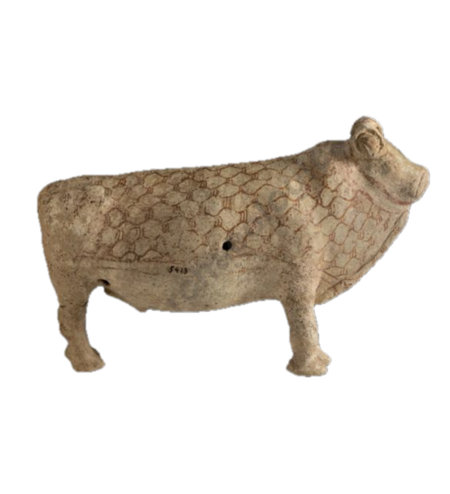
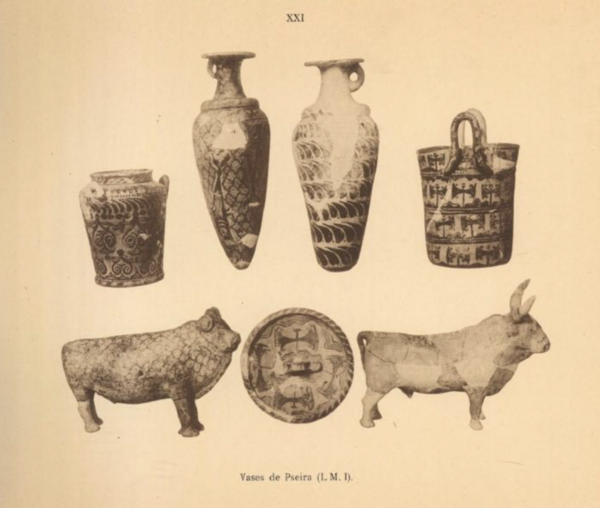
Rhyton in the shape of a bull with net-like decoration. Psyche, Crete. Minoan culture, 1500–1450 BCE.
A comparison of sculptural representations reveals that even in static poses, the proportions of the bull can vary significantly. In some works, a massive body and pronounced neck emphasize the animal’s physical power; in others, an elongated torso and slender limbs create a lighter, more stylized silhouette. The impression of strength depends not only on the pose but also on the proportional relationships between the body parts. Moreover, the recognizability of the image is maintained even when the artist is not striving to emphasize the animal’s bulk.
Head and Horns
The bull was depicted not only whole but also as a separate head. We will examine how the shape and tilt of the head, the size, and the direction of the horns affect the animal’s image and what means artists used to maintain its recognizability and convey its power without depicting the body.
Relief fresco with a bull. Knossos, 1650–1550 BCE.
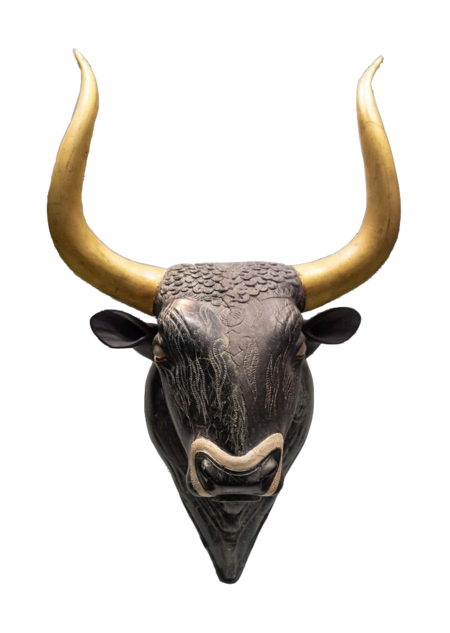
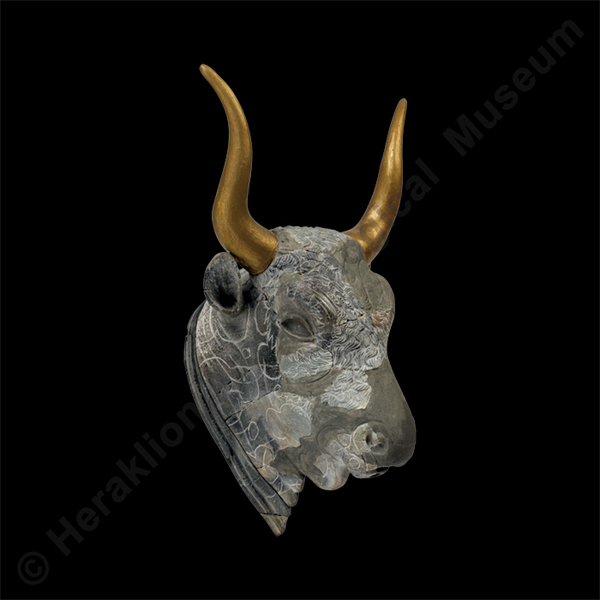
Rhyton in the form of a bull’s head. Small Palace in Knossos, Crete. Minoan culture, 1600–1450 BCE. Rhyton in the form of a bull’s head. Zakros, Crete. Minoan culture, 1500–1450 BCE.
In the rhytons from Knossos and Zakros, the bull’s head is rendered with considerable realism. The artists meticulously captured the shape of the muzzle, the eyes, and the texture of the fur. The rhyton from Knossos is particularly noteworthy, as different materials were used to detail the eyes. Despite the absence of a body, the animal’s form remains recognizable and expressive.
Rhyton in the form of a bull’s head. Mikens, Shaft Grave IV. 16th century BCE. Silver, gold.
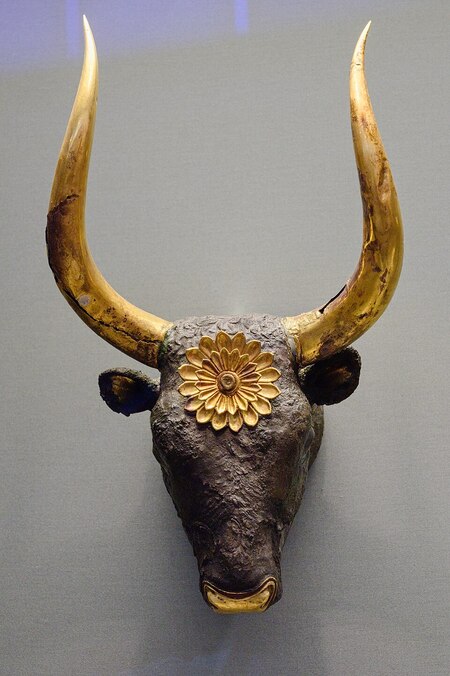
Rhyton in the Form of a Bull’s Head
Mycenaean, Shaft Tomb IV. 16th Century BCE.The silver rhyton from Mycenae is distinguished by its use of precious materials and rich decorative detailing. The bull’s head is crafted from silver, while the horns, muzzle, and the rosette on the forehead are highlighted with gold. The large, curved horns and the symmetrical composition emphasize the majesty of the image. The gold flower serves as the main decorative accent, drawing attention to the central part of the head. The contrast between the dark surface of the silver and the gleaming gold details makes the piece particularly expressive.Rhyton in the shape of a bull’s head. Minoan culture, circa 1450–1400 BCE.
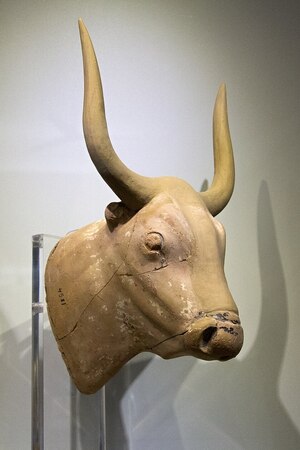
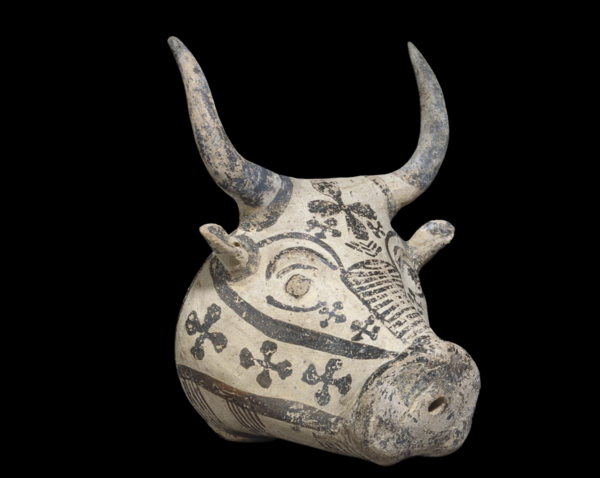
Rhyton in the form of a bull’s head. Paleastro, Crete. Minoan culture, 1500–1450 BCE. Rhyton in the form of a bull’s head. Karpathos, Greece. Late Helladic Period IIIA, 1425–1300 BCE.
The Rithon series differs in its method of rendering form and the depiction of the bull’s head. In the first Rithon, the artist aimed for a more realistic portrayal: the muzzle features smooth contours, the eyes and nostrils are rendered volumetrically, and the surface is nearly devoid of decoration. In the second Rithon, the form is more stylized, with the painting taking the principal role. Large eyes are accentuated with circular lines, and the muzzle is adorned with geometric and botanical patterns. Despite these differences, in both images, the long, curved horns emphasize the recognizable silhouette of the bull.
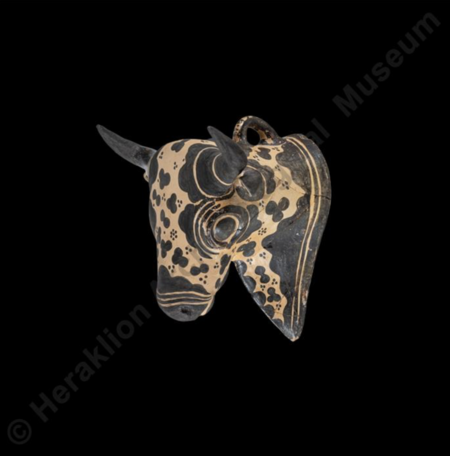
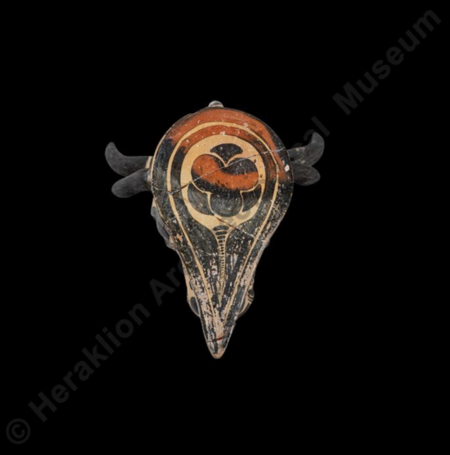
Rhyton in the form of a bull’s head. The Small Palace in Knossos, Crete. Minoan culture, 1450–1300 BCE.
Image comparisons reveal that the head and horns play a crucial role in conveying the image of the bull. In some works, artists meticulously detailed the anatomy, emphasizing the volume of the muzzle and the expressiveness of the eyes; in others, they employed simplified forms and decorative painting. Even without depicting the body, the bull remains recognizable, and its large horns and massive head shape effectively communicate its strength.