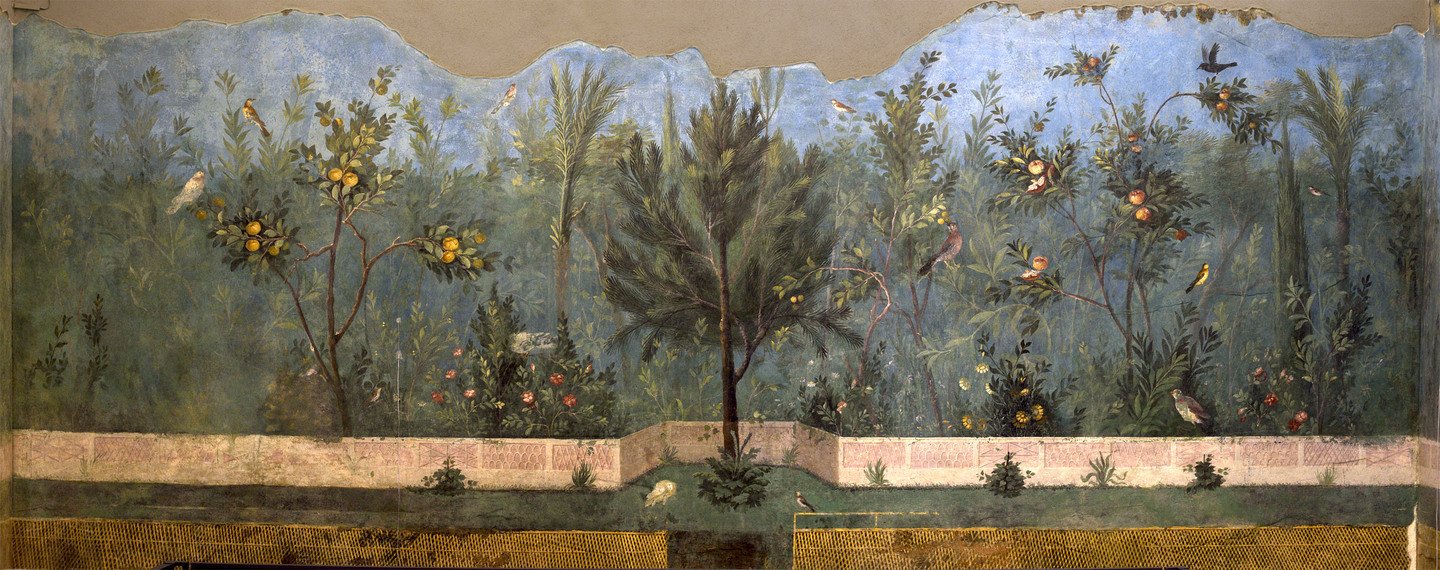
Concept
Flowers accompany humans not only as a part of the natural world but also as a unique form of communication. Throughout history, they have served as a way to express feelings that are difficult or impossible to convey through words: love, affection, admiration, fidelity, hope, and sorrow. A flower could be a gift, a token of attention, a part of a love story, or a detail in an image that reveals the relationship between characters. Its significance changed depending on who it was intended for, who presented it, and the circumstances of its appearance.This research examines how flowers participated in human communication and how their natural characteristics and cultural meanings transformed into visual messages. The focus is on situations where a flower gained emotional significance: when it was gifted, held in hand, depicted alongside a beloved, or placed within a garden setting. Of particular interest is the possibility of expressing emotions through an object that inherently lacks a voice but is capable of conveying meaning understood by participants in a specific cultural tradition.
Hypothesis
The hypothesis is that the flower may have served as a kind of mediator in human relationships. Its meaning was shaped not only by symbolism but also by the circumstances of the depiction, the relationships between characters, the literary plot, and the cultural perceptions of the era. Thus, the floral image is viewed as a unique form of visual expression, allowing art to preserve, convey, and interpret human emotions, even when those emotions remain unspoken.
Material Selection Principle
I curated the material based on the emotional and semantic significance of the floral motif. The primary sources included paintings, book miniatures, and literary texts. Juxtaposing these allows one to examine the flower in various contexts: as a memory of a loved one, an image of a sweetheart, a token of affection, an acknowledgment, or an element of visual narrative. Particular attention was paid to the details through which the relationships between characters are revealed, as well as the distinction between historically documented symbolic meanings and interpretations that arise from the analysis of artworks.
The chronological scope of the study spans from antiquity to the 17th century. This selection permits tracing how the flower participated in the expression of human emotion across diverse cultural traditions—from ancient myths and medieval love literature to Renaissance portraiture and early Modern still lifes. The research does not posit a linear progression from one meaning to another, but rather examines the varied ways humans engaged with the floral motif, ways that coexisted simultaneously and took on new forms.
The main research question
How did flowers become a way to express emotions and convey messages between people in art from antiquity through the 17th century?
Contents
1. The Flower as a Memory of Feeling — Ancient myths about love, loss, and the transformation of humans into flowers. 2. The Flower as an Image of a Beloved — The rose, the idealized garden, and the language of Medieval love literature. 3. The Flower as a Sign of Affection — Flowers in portraits, engagement, and wedding depictions from the Renaissance. 4. The Flower as an Acknowledgment — Floral gifts, wreaths, and visual representations of courtship in 16th–17th century art. 5. The Flower as a Preserved Message — How a floral composition continues to express feelings and relationships even after the depicted people are gone.
A flower as a memory of a feeling
In ancient mythology, flowers frequently originated from the transformation of a human or a deity. The natural form became a peculiar continuation of human history: the flower preserved the memory of the event and the feelings of its participants.
Two plots from Ovid’s Metamorphoses are particularly telling:
— Narcissus — A youth who was in love with his own reflection transforms into a flower after death. His story allows us to examine the flower as an emblem of unrequited love, the impossibility of intimacy, and the turning of emotion inward. — Hyacinth — A young man beloved by Apollo dies while playing with a discus. A flower appears in the spot where he fell. Here, the flower becomes a symbol of mourning and memory for a loved one.
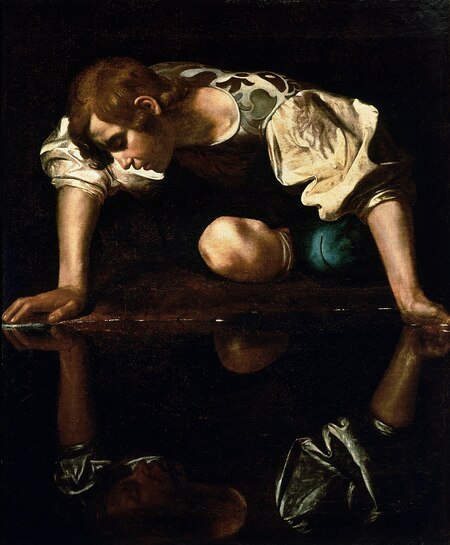
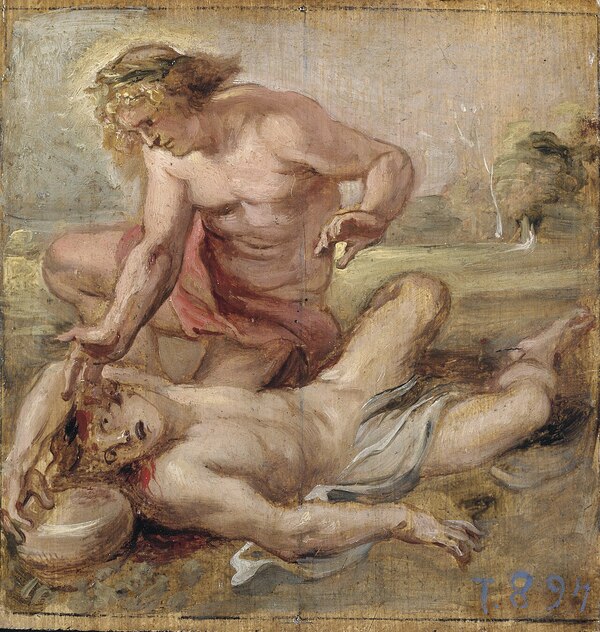
Caravaggio. «Narcissus.» c. 1597–1599. And Peter Paul Rubens. «Death of Hyacinth.» 1636–1637.
I compared Ovid’s literary descriptions with painterly interpretations of myths, paying close attention to how artists convey intimacy, loss, and memory. Furthermore, the flower is not always depicted directly—sometimes its appearance becomes a metaphor for love or loss.
The Flower as an Image of the Beloved
In medieval literature, the flower becomes an integral part of the language of romantic experience. The rose, in particular, holds a significant place—an image around which the narrative of the 13th-century French work, Roman de la Rose, was built, a work initiated by Guillaume de Lorris and continued by Jean de Meun.
In this piece, love is presented through an allegorical journey through a garden. The rose becomes the object of the hero’s desire, and the path to it serves as a metaphor for the longing of love. The garden transforms into a distinct space where emotions are expressed through flora, architecture, characters, and symbolic obstacles.
The visual renditions of the work are especially compelling: the miniatures allow one to see how a literary metaphor was translated into an image. The rose here is not merely a decorative element but the central motif organizing the entire narrative.
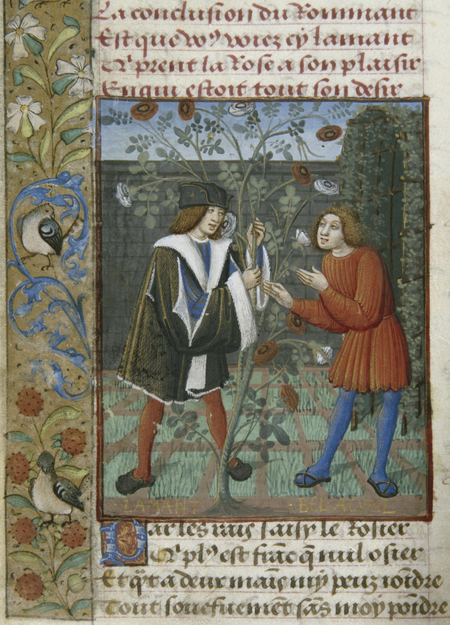
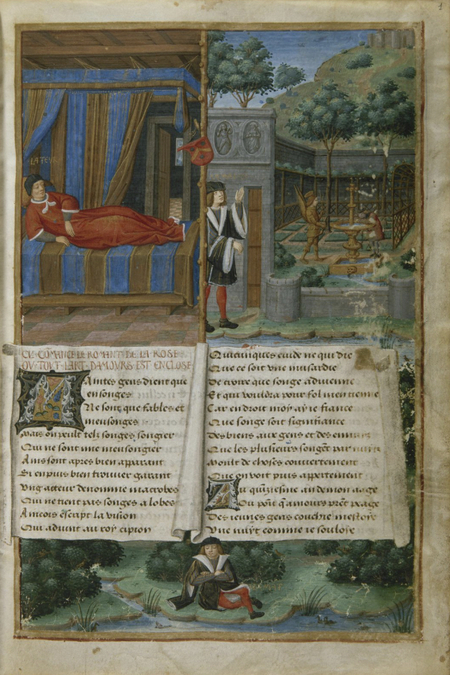
Boecio Lalmanya Master from Bourges. Miniature from the work «The Romance of the Rose.» Circa 1490–1500.
A flower as a token of affection
During the Renaissance, flowers increasingly appeared in portraits—either held by the subject or placed near them. Their presence could communicate something to the viewer about the person’s social status, relationships, and emotional world.
The motif of the carnation is particularly interesting—a flower that in European painting was associated with love and marriage. In some portraits from the 15th and 16th centuries, it served as a symbol of engagement or marital devotion. However, the meaning depends entirely on the context: one cannot automatically assume that every depicted flower signifies a specific event.
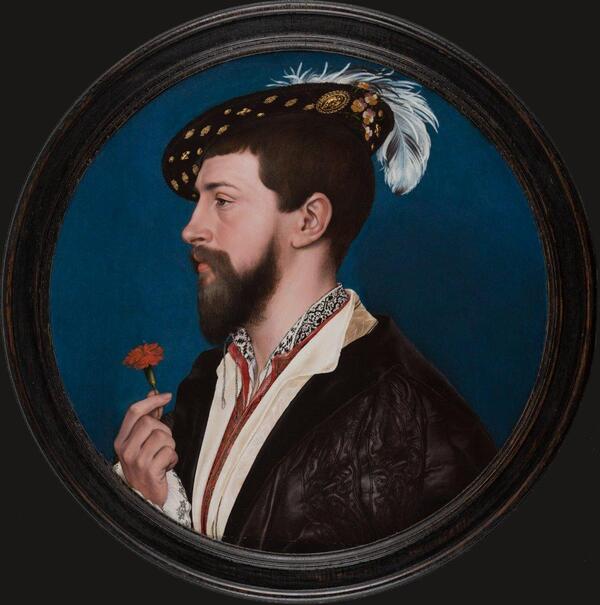
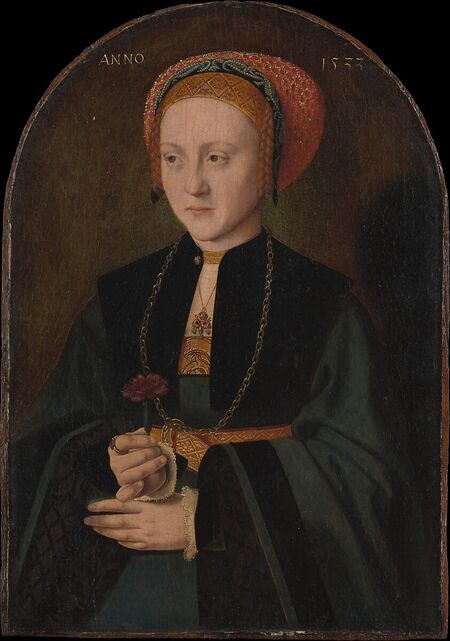
Hans Holbein the Younger. «Portrait of Simon George of Cornwall.» c. 1535–1543. And Barthold Bruegel the Elder. «Portrait of a Woman.» 1533.
A prime example is Hans Memling’s «Young Woman with a Carnation,» dating to around 1485–1490. The small flower held by the depicted woman can be interpreted not only as a detail of nature but also as a possible symbol of love or marital commitment. The Metropolitan Museum of Art notes the enduring association between carnations and love and marriage in European painting and cites this work as one example.
Hans Memling. «Young Woman with a Carnation.» c. 1485–1490.
Flower as Acknowledgment
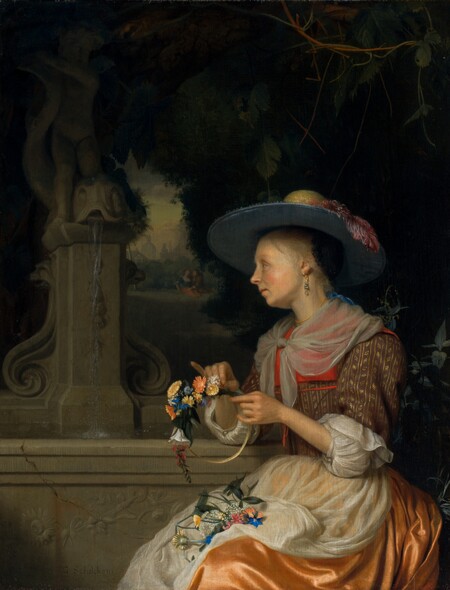
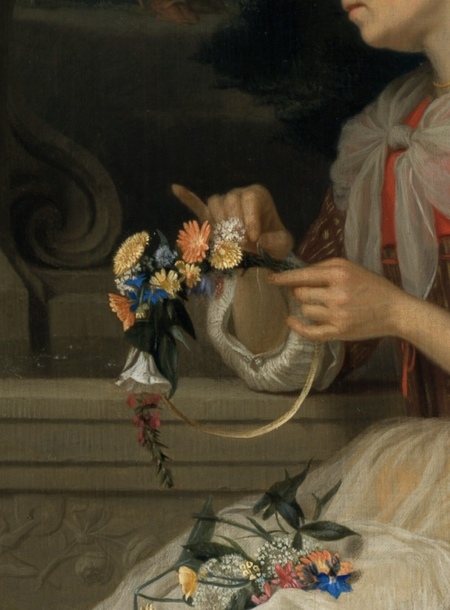
In European culture during the 16th and 17th centuries, wreaths and floral garlands could carry meanings associated with love, youth, and marriage. However, their significance was not uniform across all artworks. One example is Godfrey Sacklen’s painting, «Woman Weaving a Flower Wreath,» dating to around 1675–1680. The woman is gathering a floral wreath, and in the background of the painting, a pair of lovers embrace. The National Gallery of Art in Washington associates the wreath with themes of love and virginity, while the woman’s gaze suggests an anticipation of love and intimacy.
David Vincbons. «The Old Man, the Young Woman, and Winged Cupid (Allegory of Love).» 17th Century.
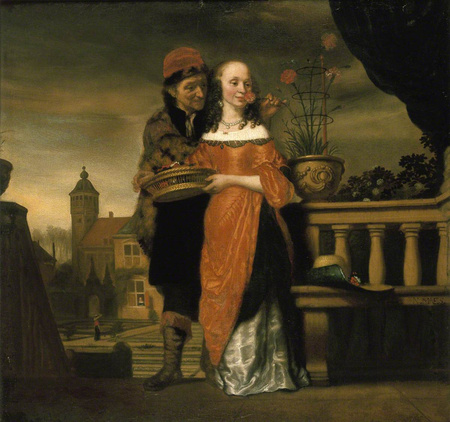
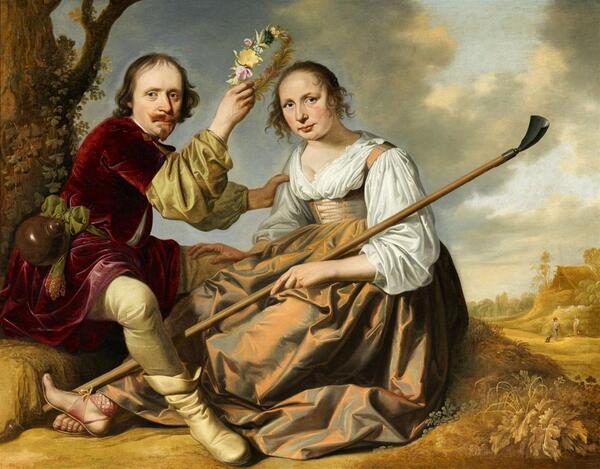
Nicolaes Maes. «Allegory of the Sense of Smell.» c. 1659–1660. And an Unknown Artist of the Utrecht School. «Portrait of a Couple in Shepherd and Shepherdess Disguise.» Mid-17th century.