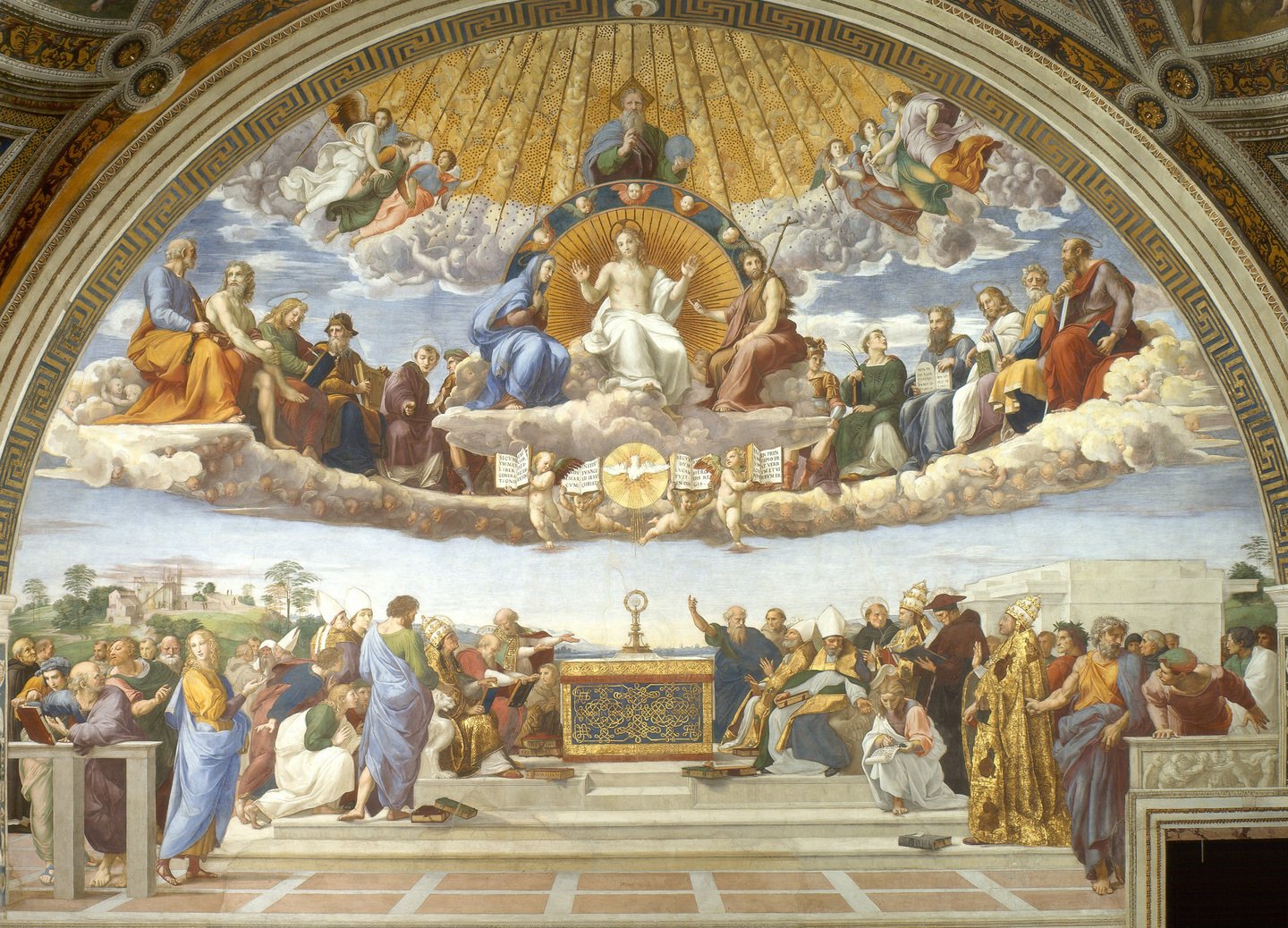
Композиционные способы передачи идеи Святой Троицы в искусстве итальянского Возрождения
Index
- Concept
- The Holy Trinity: Religious Significance
- «Throne of Grace»
- Compositional Techniques
- Conclusions
- Bibliography
- Image Sources
Concept
Religious painting occupied a significant place in the art of the Italian Renaissance. Artists turned to biblical themes, striving to convey not only events and figures through their images but also complex religious ideas. To achieve this, they employed various artistic devices: figure arrangement, spatial construction, gestures, poses, and symbolic details.
One such concept is the Holy Trinity—the Christian depiction of the unity of God the Father, God the Son, and the Holy Spirit. Different artistic solutions were used for this concept across various periods and in different works.
Studying the ways the Holy Trinity was depicted allows one to trace how religious content was embodied in artistic form, what compositional techniques artists utilized, and how the approaches to rendering the same religious idea evolved.
The goal of this research is to identify and compare the visual methods used to convey the concept of the Holy Trinity in Italian Renaissance art, examining compositional techniques.
The selection of material for visual research was determined by two conditions: the work’s connection to the theme of the Holy Trinity and its possibility of comparison with other pieces. A crucial criterion remains the diversity of visual solutions—this is what allows for a comparison of different iconographic types and the specifics of their compositional structure.The study draws upon works by Italian artists from various periods of the Renaissance. Comparing different works allows one to observe both general patterns in the depiction of the three hypostases and variations in their artistic realization.The theoretical foundation of the research comprises scholarly works on the history of the Italian Renaissance, academic publications on the iconography of the Holy Trinity, and studies dedicated to individual artworks. Museum catalogs and descriptions of paintings also serve as supplementary sources, helping to clarify the historical context and the particular features of the depicted scene. These materials are essential for validating the conclusions drawn from the visual analysis.
Hypothesis
Compositional devices helped Renaissance Italian artists convey the idea of the unity of the three hypostases of the Holy Trinity.
The Holy Trinity: Religious Significance
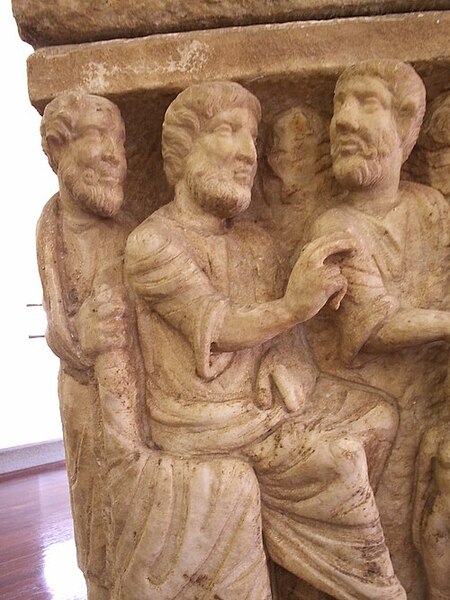
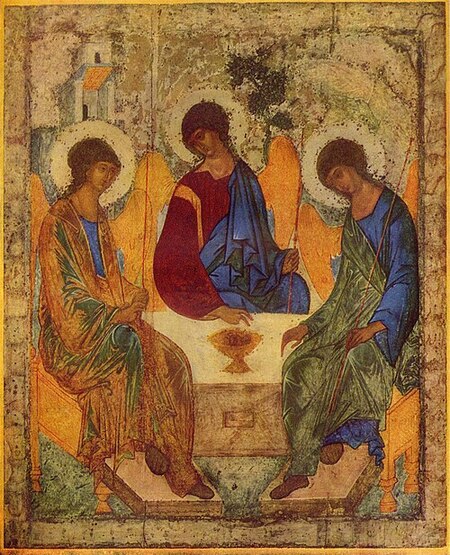
Detail of the earliest known depiction of the Trinity, Dogmatic or Trinity Sarcophagus [English]. c. 350 AD Icon of Andrei Rublev The Trinity, or The Hospitality of Abraham. 1422–1427
The Holy Trinity is a theological term reflecting the Christian doctrine of the Triune Godhead. It is one of the most important concepts in Orthodoxy.The dogma of the Most Holy Trinity is the foundation of the Christian religion.God is one in essence but threefold in persons: the Father, the Son, and the Holy Spirit; the Trinity is one in essence and indivisible.
The Holy Trinity was not depicted in art for a long time after the dogma was formed. Christian theology asserted that God could only be represented in the person of Jesus Christ, because only through this person did God make himself visible and manifest. Everything else was regarded as heretical fantasy.
«Throne of Grace»
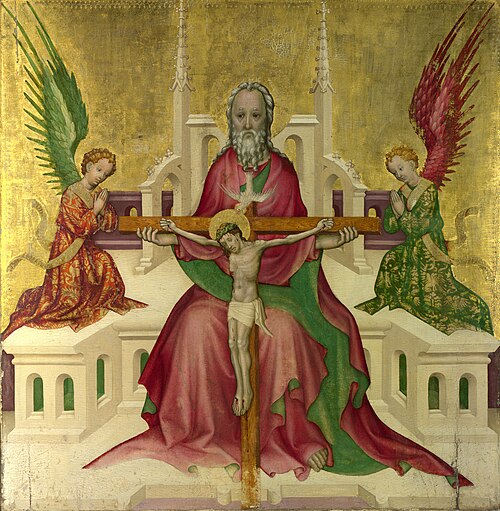
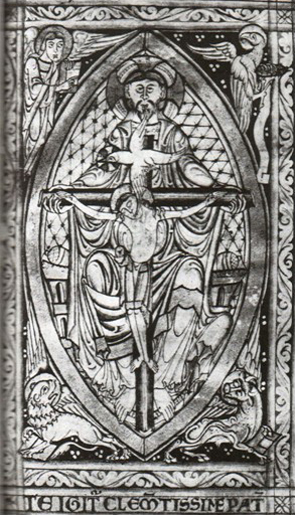
Austrian Master, «Throne of Grace, ” early 15th century Miniature from a Cambro Missal (c. 1120)
Throne of Grace (Latin: sedes gratiae) is a type of image in Christian art depicting the Trinity: God the Father, usually crowned, holds a cross (the Crucifixion) with the dead Christ in both hands, while a dove symbolizing the Holy Spirit hovers above it.The Throne of Grace is considered the most important medieval depiction of the Trinity. «It became a characteristic Western form of its representation» [1]. The image emerged from the combination of the cross with symbols of God the Father and the Holy Spirit. Other depictions existed previously. This new type of image appeared in the early 12th century.
Compositional Techniques
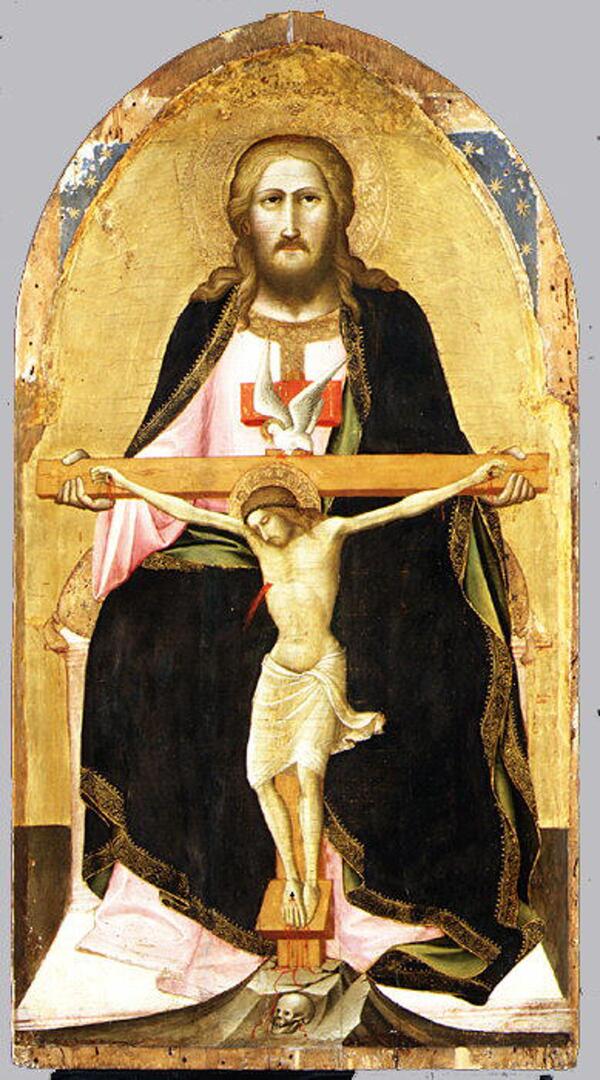
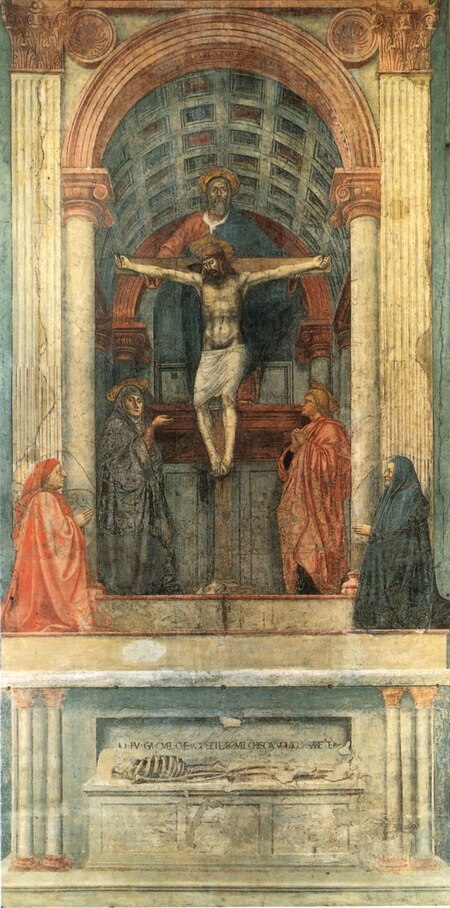
Anolo Gaddi The Holy Trinity. 1390–1396 Mazaccio The Holy Trinity. 1425–1426
Both works utilize the iconographic type of the «Throne of Grace.» Despite a shared structural principle, the artists organize the composition and convey the idea of the unity of the Holy Trinity in different ways.
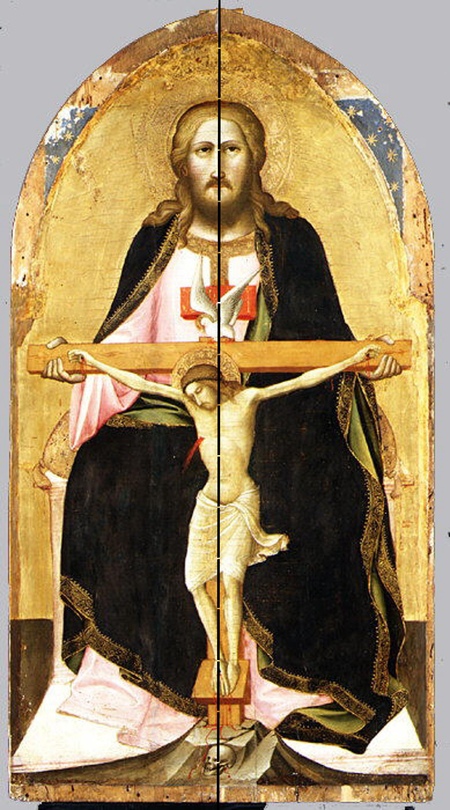
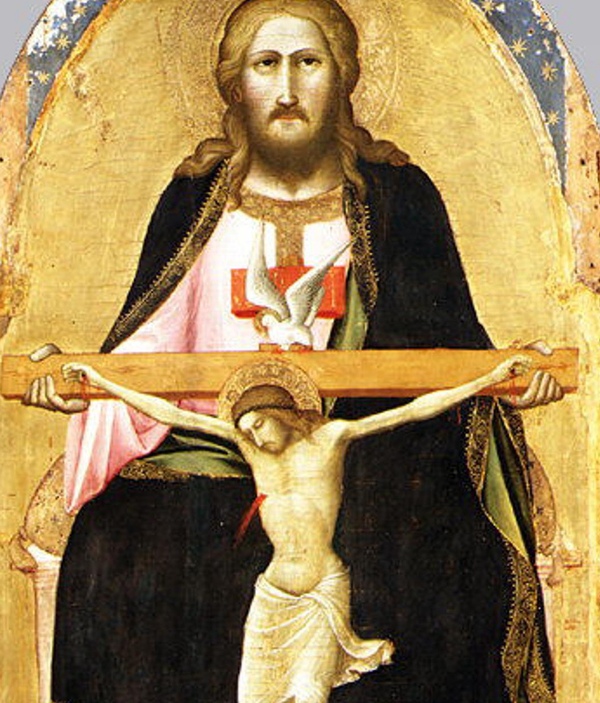
Anolo Gaddi Work Fragments Trinity. 1390–1396
The figures are arranged along a central vertical axis, drawing the viewer’s focus to the main religious scene. The cross serves as the primary compositional element, occupying much of the image. God the Father stands behind it, supporting it, which creates a strong connection between the figures of the Father and the Son. The golden background and decorative details emphasize the sacred nature of the artwork, setting it apart from the mundane earthly realm.
Gaddy’s composition features a simple and fairly static structure. The main focus is on the three hypostases and their interrelationship, rather than on rendering the surrounding space.
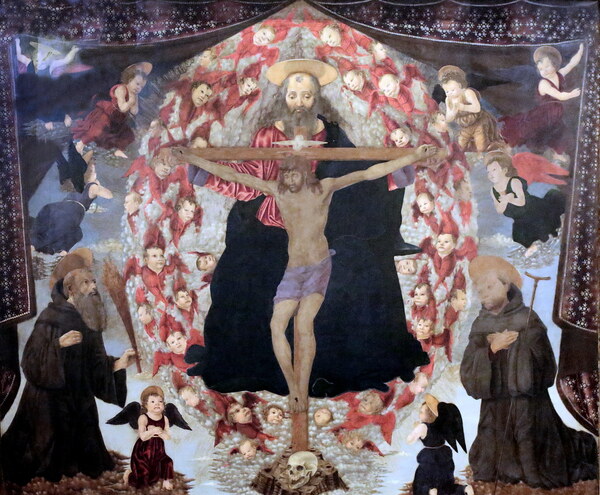
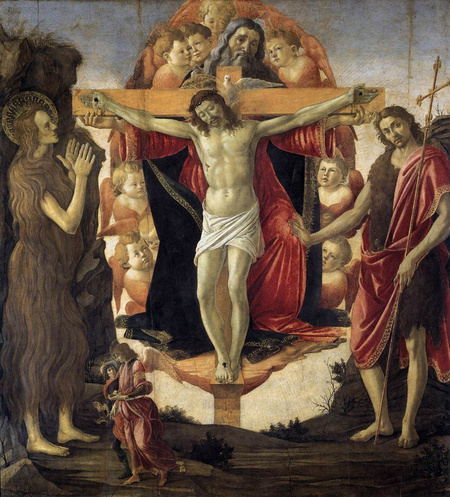
Alesso Baldovinetti The Holy Trinity with Saints Benedict and John Gualbert. 1470–1472 Sandro Botticelli The Holy Trinity. 1491–1494
In addition to Anolo Gadidi’s work, a similar principle of depicting the Holy Trinity can be seen in the works of Alessio Baldovinetti and Sandro Botticelli. All three pieces utilize the iconographic type of the «Throne of Grace,» and the composition is structured around a central group uniting God the Father, Christ, and the Holy Spirit. However, despite this common foundation, the artists organize the space and complement it with other figures and elements in different ways.
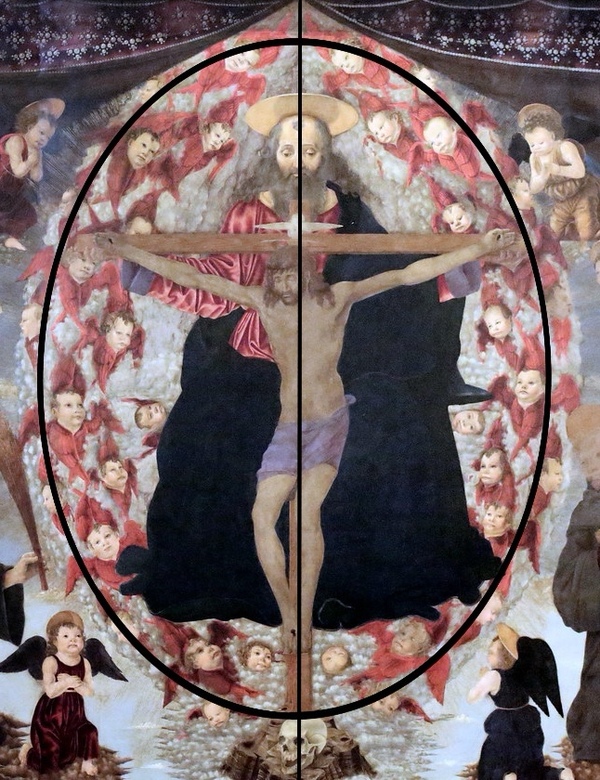
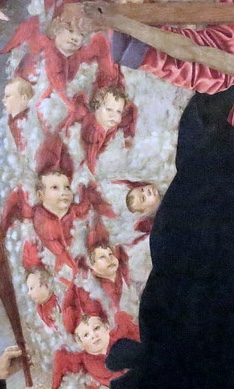
Alesso Baldovinetti Work Fragments The Holy Trinity with Saints Benedict and John Gualbert. 1470–1472
In Alessandro Baldovinetti’s composition, the central placement of the Holy Trinity draws particular attention. God the Father, Christ, and the dove of the Holy Spirit are situated within a mandorla formed by angels and seraphim. This structure highlights the main group, visually separating it from the other elements of the painting.
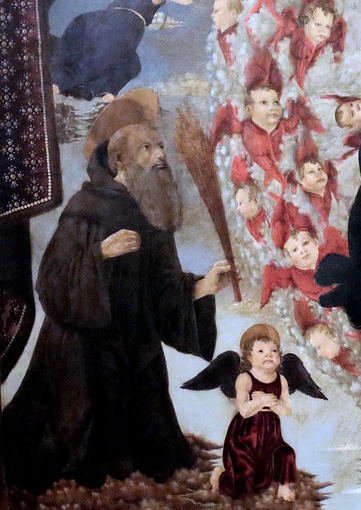
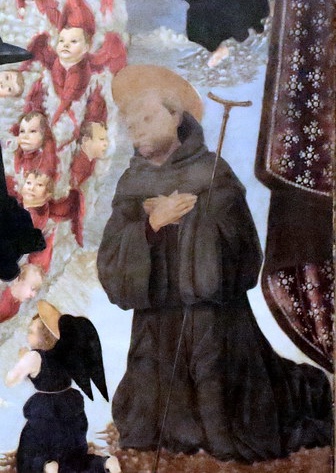
Alesso Baldovinetti Work Fragments The Holy Trinity with Saints Benedict and John Gualbert. 1470–1472
The gaze then moves to the lower part of the work, where two kneeling figures are depicted. Their figures are positioned on either side of the central scene and are turned toward it. This arrangement gives the composition several planes: the celestial vision is situated in the center and higher up, while the saints occupy the foreground of the painting.
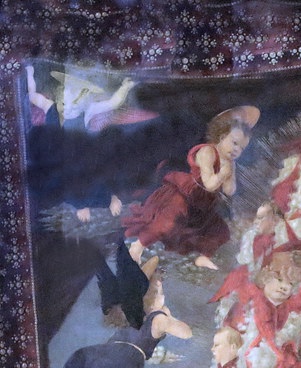
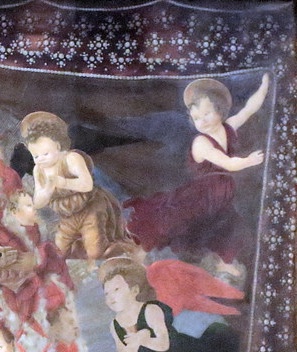
Alesso Baldovinetti Work Fragments The Holy Trinity with Saints Benedict and John Gualbert. 1470–1472
Another distinctive feature is the curtain, which two small angels draw back to reveal the paintings. It evokes a theatrical curtain opening a scene for the viewer. This element not only enriches the composition, making it more interesting and memorable, but also lends a unique quality that distinguishes it from other depictions of the Holy Trinity.