It is hard to believe these days that stealing something from a museum is even possible. Cameras, motion sensors, facial recognition—it seems a museum should be one of the most secure places in the world. Yet, robberies in recent years show otherwise.
Over the past few decades, paintings by Renoir, Rembrandt, Picasso, Van Gogh, Monet, and Matisse have vanished from museums and galleries worldwide. Sometimes the thieves operated in armed gangs, sometimes with the help of museum staff, and other times they would simply smash a window and disappear. When you put these stories together, a pattern emerges—museum thefts follow a recognizable script.
The most famous painting has already been stolen!
You have heard about her, you have read about her, and you have seen her countless times—and yes, she was even stolen. On August 21, 1911, Vincenzo Peruggia, a former Louvre employee, walked out with the «Mona Lisa» from the museum while wearing a white smock and kept it in his apartment for a full two years. Fortunately, the painting was found, and upon its return, it became one of the Louvre’s most treasured gems. During those two years, many Parisians visited the Louvre only to gaze upon the empty spot where Leonardo da Vinci’s Gioconda once hung. It all ended prosaically: in December 1913, the thief attempted to sell the painting to a local antique dealer, who immediately called the police.
Let’s talk about real figures
After every major heist, journalists ask the museum how much the stolen works were worth. Usually, they initially quote a massive sum, and then add: the true value is priceless, as it involves cultural heritage. This creates a paradox. If a work is truly priceless, it is impossible to appraise—yet, the cost becomes the first question following the theft.
Once isn’t… the limit for theft!
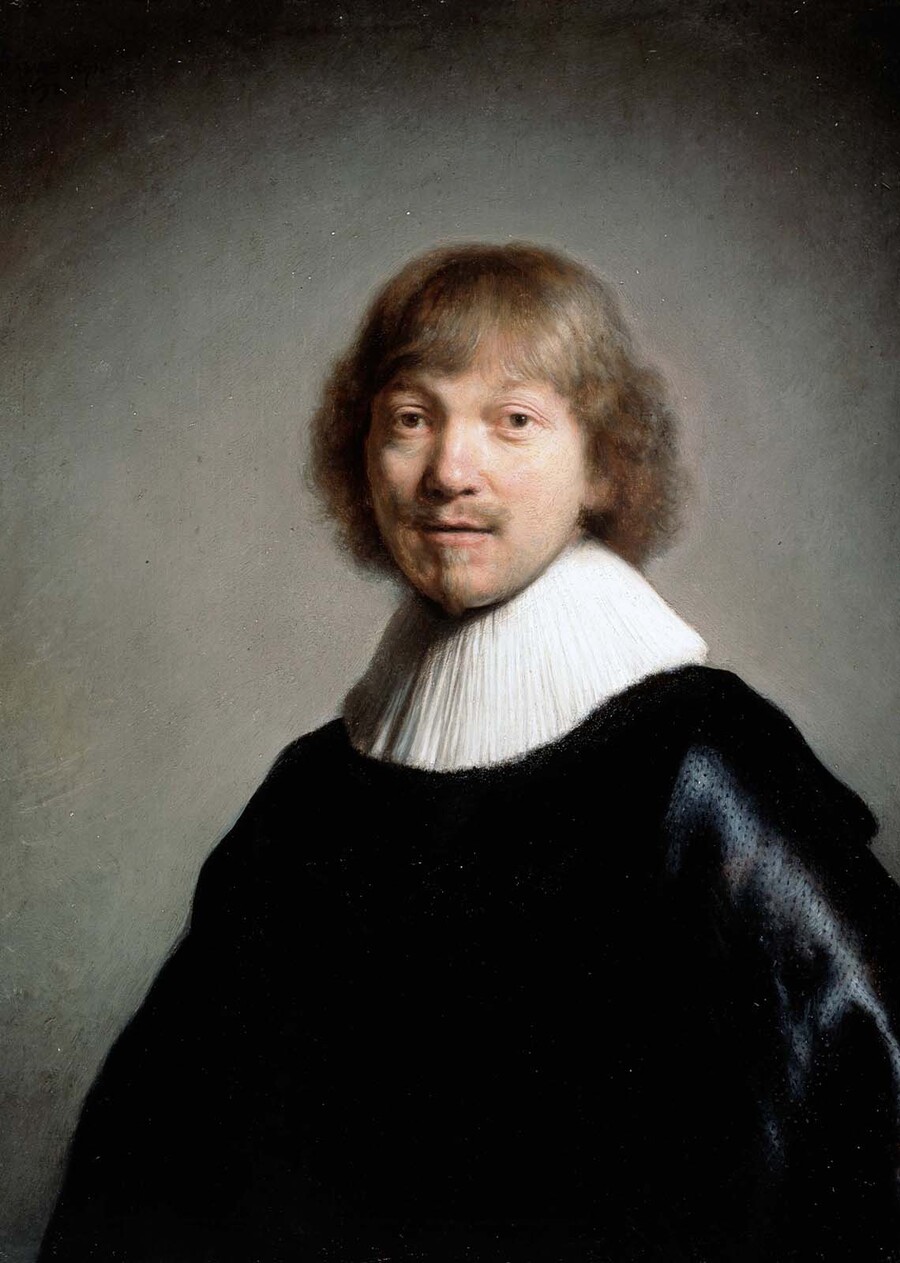
Some artworks seem to deliberately test museum security. For instance, Edvard Munch’s «The Scream» was stolen twice: once in 1994 from the National Gallery of Norway, and ten years later from the Munch Museum, right during operating hours. Vincent van Gogh’s «Sunflowers» shared a similar fate—they were first stolen from a museum in Cairo in 1977, recovered a decade later, and then stolen again in 2010. Rembrandt’s «Self-Portrait of Jacob de Gheyn» is the record-holder, having been stolen four times. It seems that the more famous the piece, the more appealing the loot appears—for a criminal, the mere name Rembrandt or Van Gogh sounds like a promise of a huge reward.
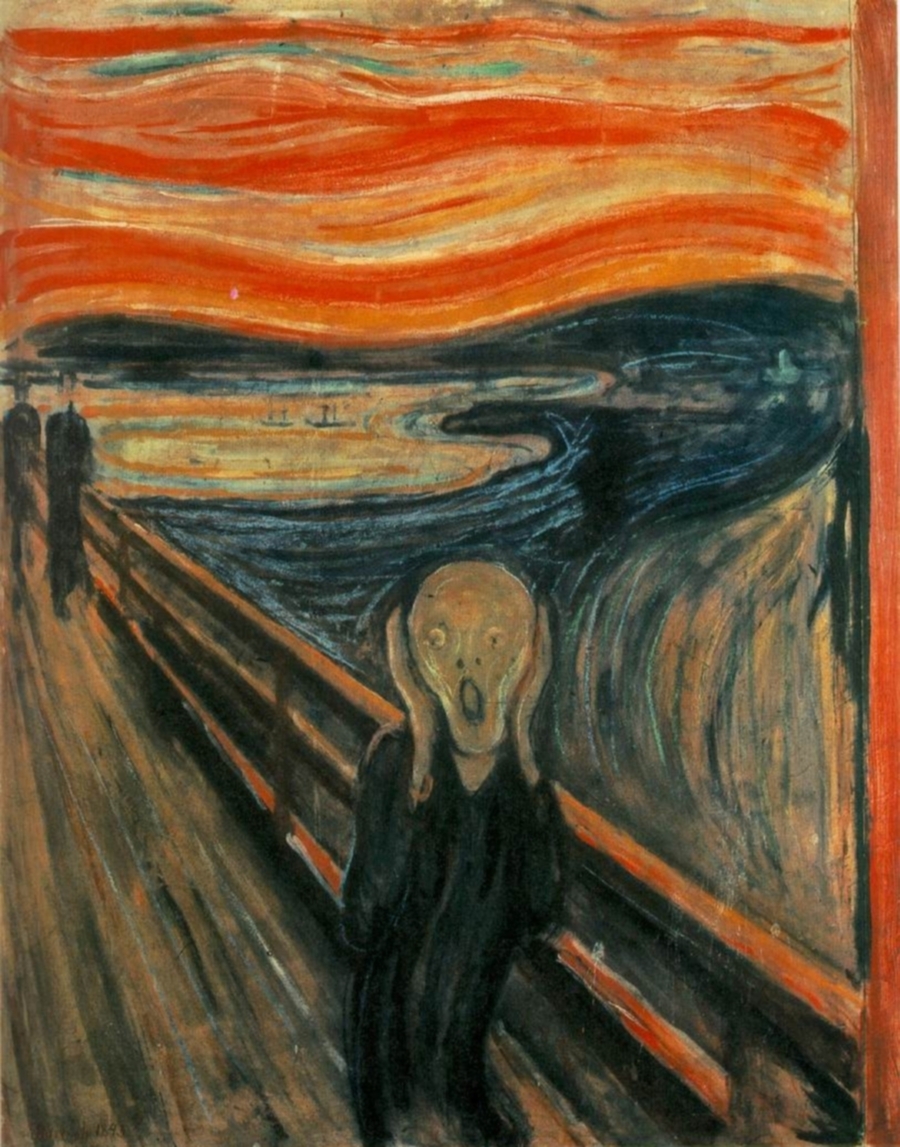

Edvard Munch. The Scream, 1893 | Pablo Picasso. Portrait of Suzanne Bloch, 1904
What next?
What to do after a work of art is stolen—that’s an interesting question. Simply put, you cannot list such an item on auction. Information about missing works quickly enters international databases, and the provenance of every piece is meticulously scrutinized. Former FBI agent Jeff Kelly believes that stealing a painting is the easiest part of the theft; getting rid of it afterward is much harder. Furthermore, this situation occurs more often with works of art—for example, jewelry can be disassembled and sold piece by piece.
In the end, everything will be fine! Or not…
Most high-profile works eventually reappear. «The Scream» was found two years later, Van Gogh’s works were located, and the Picasso stolen from São Paulo was recovered in just a few weeks.
But there is one exception—the 1990 robbery of the Isabella Stewart Gardner Museum in Boston. Two men in police uniforms infiltrated the museum, tied up the guards, and stole thirteen pieces, including works by Rembrandt and Vermeer. The paintings have never been found; the empty frames still hang on the museum walls—a monument to what is gone.
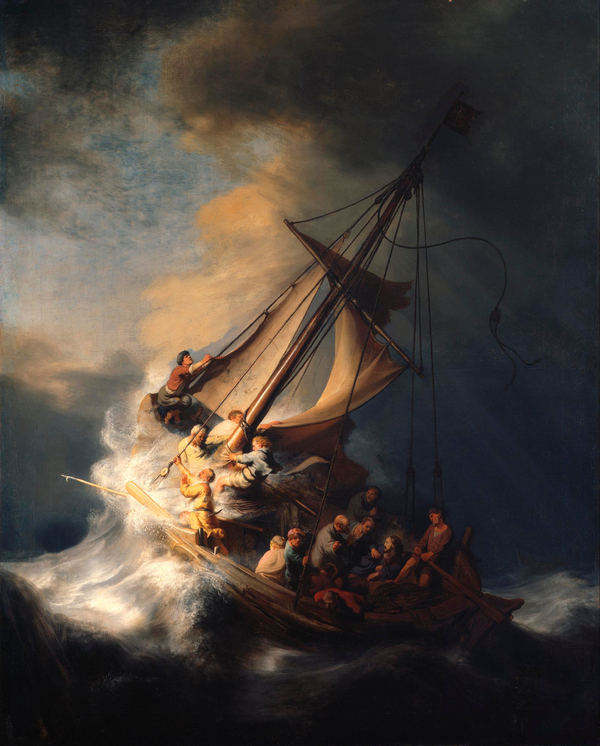
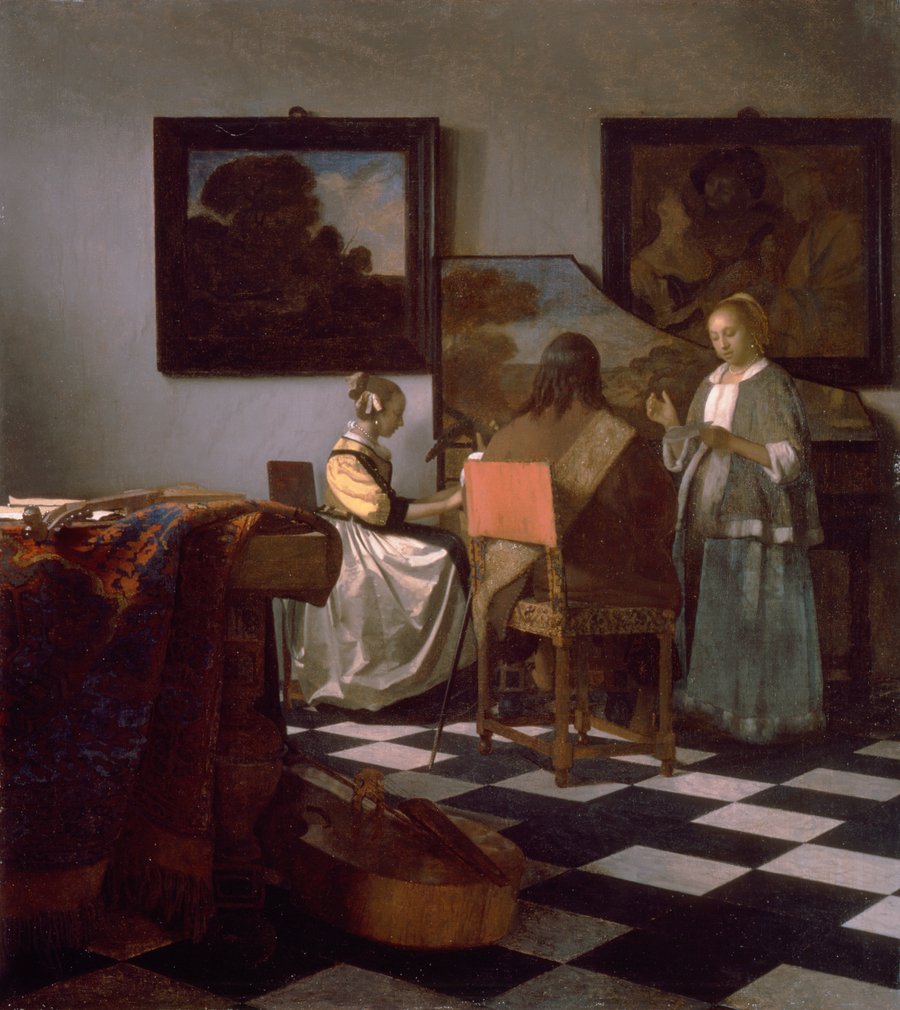
Rembrandt. Christ During the Storm on the Sea of Galilee, 1633 | Johannes Vermeer. Concert, c. 1663–1666 Both were stolen from the Isabella Stewart Gardner Museum in Boston
And who are these thieves anyway?
Cinema often portrays a thief as an interesting intellectual who steals an imaginary Monet purely for pleasure, only to admire it in a luxurious apartment. In reality, things are far more prosaic. According to Kelly, about 80% of museum thefts involve people with inside access—staff members or their associates. In 2023, a scandal involving thefts rocked the British Museum, where it was revealed that curator Peter Higgs stole artifacts worth millions of euros. However, many cases remain secret because it is easier for museums to hide the problem than to explain the failure of their own security system.
The work can be more than just stolen.
In 2005, Banksy secretly installed his own piece in the British Museum—a piece of concrete depicting a prehistoric human and a supermarket cart. He placed a museum label next to it and left. It was an inverse heist: the artist didn’t remove an item from the museum; he brought one in.
In 2024, Brazilian artist Ile Sartuci attempted a similar stunt. He created a replica of an antique coin, intending to swap it with the original and place the authentic item in a donation box. Ultimately, the stunt evolved into a film exploring the line between forgery, theft, and artistic gesture.
Artificial intelligence will help museums!
Museums face a constant challenge: they must simultaneously be open to the public while being protected from them. Artificial intelligence can be a salvation for museums. Modern cameras are capable of not just recording events, but analyzing human behavior—noticing those who linger unusually long near a window, a door, or a specific exhibit.
But this problem also exists in private homes. Owners can meticulously secure expensive watches but leave a million-dollar painting on the wall with standard home security. This creates a paradox: the more familiar a piece is to the owner, the less they perceive it as something that needs protection.
Why does all this continue to interest us?
The world of art theft is an elaborate system: insurance companies, police, media, collectors, criminals, and cinema. We are drawn to the narrative of the heist itself. We can condemn the thief, yet simultaneously observe them with curiosity and even feel a degree of empathy. However, the romance ends where real loss begins. A stolen painting is not merely a commodity that vanished from the market; with it, a piece of visual history disappears from the public sphere.
In a world where an artwork’s image can be instantly viewed on a screen, the physical object becomes ever more significant. It can be copied, scanned, and shown to millions—but it cannot be entirely replaced. Therefore, an empty frame in a museum is more than just a trace of a crime. It is a reminder that art exists not only as an image but also as an object that can vanish.