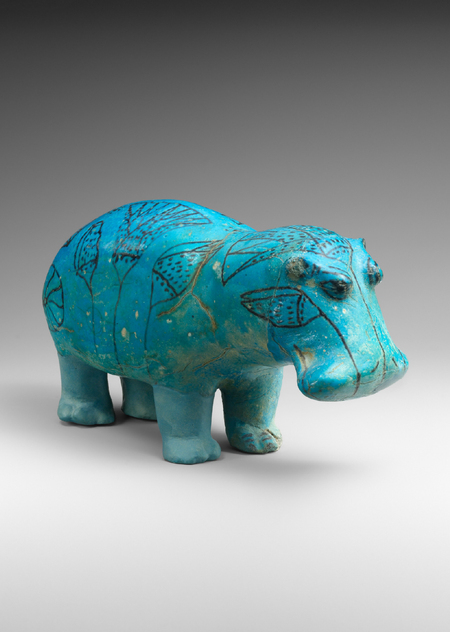
Concept
Rationale for Topic Selection and Relevance
The Art of Ancient Egypt is one of the most enduring artistic traditions of the ancient world. For millennia, Egyptian masters created monumental structures, statues, reliefs, paintings, and ornaments. These works of art were closely tied to religious beliefs, the structure of society, and the desire to preserve human memory. Therefore, the concept of «eternity, ” featured in the research title, is considered not as a poetic metaphor, but as a historically significant idea that, in my view, the ancient Egyptians infused into their creations.
Research Objective
The objective of my research is to identify the visual means through which concepts of order, durability, rebirth, and memory were manifested in various forms of ancient Egyptian art, and to demonstrate the relationship between architecture, sculpture, wall paintings, and decorative arts.
Rubrication Principle
The material is structured not only chronologically but, most importantly, thematically based on artistic problems. The initial section examines worldviews and the key characteristics of visual language—such as canon, hierarchical scale, symmetry, repetition, and the relationship between image and text. Next, the study explores architecture as a means to lend material permanence to ideas of power and afterlife; sculpture as a medium for preserving the image of humanity and divinity; relief and painting as forms for depicting the world, events, and rituals; and applied arts as the domain where symbolic meaning manifests through material, color, and small-scale form. The concluding comparison will reveal shared conventions and significant differences across the various art forms.
Key Question
How were concepts of eternity, order, and memory preservation reflected in the artistic language of Ancient Egypt, and how did they unify various art forms?
Hypothesis
General principles—sustainable forms, idealization, symbolism of color and material, organized composition, and the link between image and text—helped create visual representations designed for longevity and recognition. However, their realization depended on the era, the client’s status, the material, and the object’s function. This hypothesis will be tested by comparing monuments from different periods and art forms, including instances where traditional artistic solutions were altered.
Navigation Menu
1) Artistic Language 2) Architecture 3) Sculpture and the Human Image 4) Painting and Relief 5) Object Art 6) Comparison 7) Conclusions 8) Bibliography
The Artistic Language of Ancient Egypt
Fresco fragment from the tomb of Nebamun, 18th Dynasty. British Museum
In Ancient Egypt, art was closely connected to concepts of the cosmos, divine power, and the afterlife. Many works were created not only for contemplation but also to fulfill specific religious and ritual functions. The Egyptians sought to preserve the images of gods, rulers, and the deceased, ensuring the continuation of their existence and the maintenance of established order.
In the publication The Art of Ancient Egypt by the Metropolitan Museum of Art, it is noted:
«What we call Egyptian art was originally created for religious and magical purposes.»
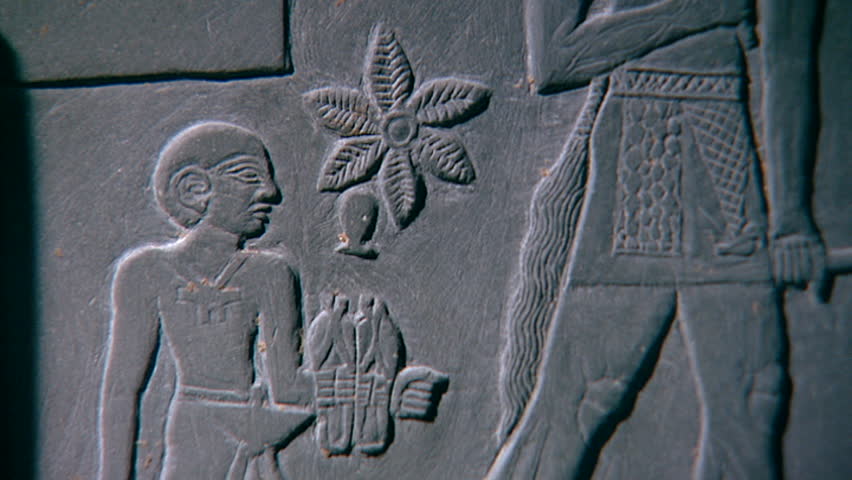
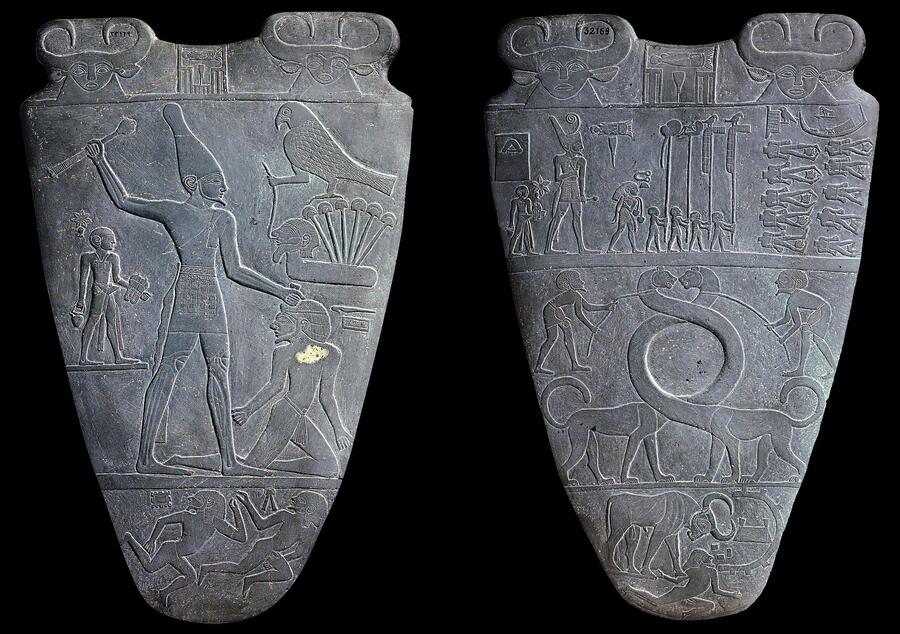
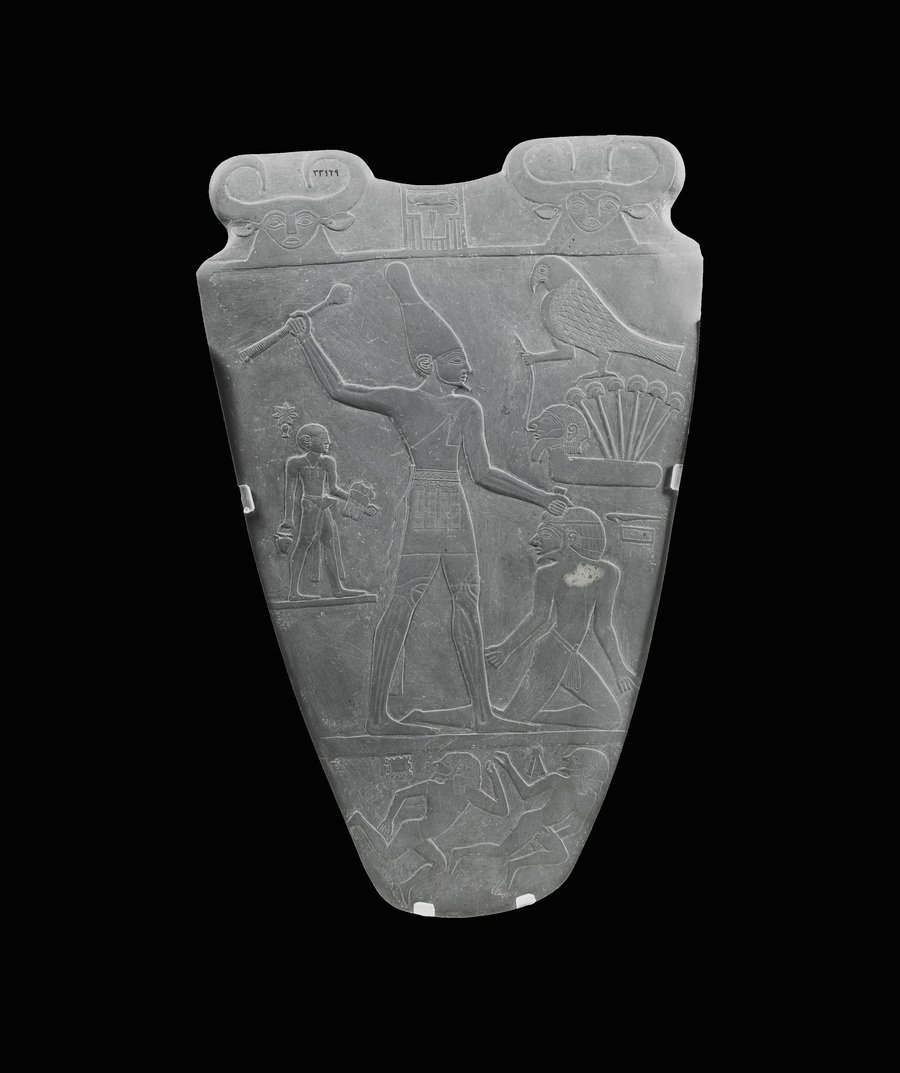
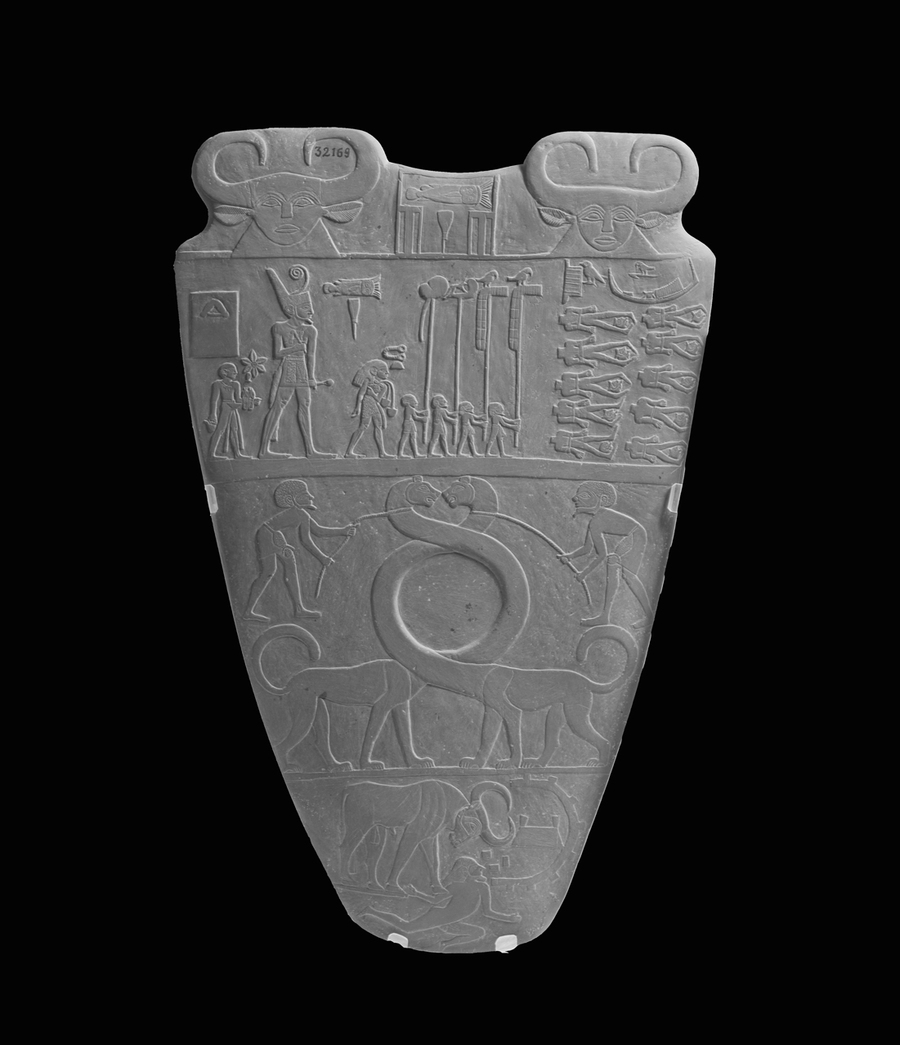
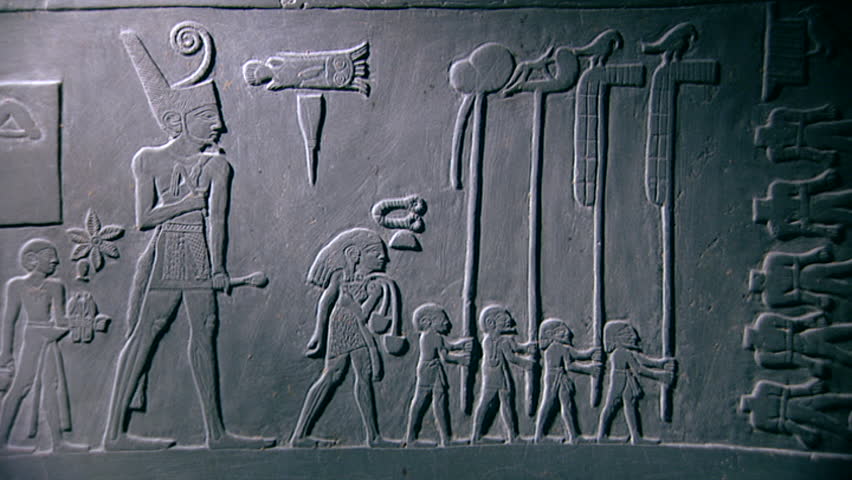
Narmer Palette. c. 3200–3000 BCE
The Narmer Palette—one of the most significant artifacts from the formative period of the ancient Egyptian state.
Its figures are organized into several horizontal registers. The ruler’s figure is emphasized by scale, while the other characters conform to the overall compositional structure. The palette combines relief figures, symbolic animal images, and early hieroglyphic signs.Particular significance is given to the image of the king striking an enemy. This motif was later reproduced numerous times in official Egyptian art.