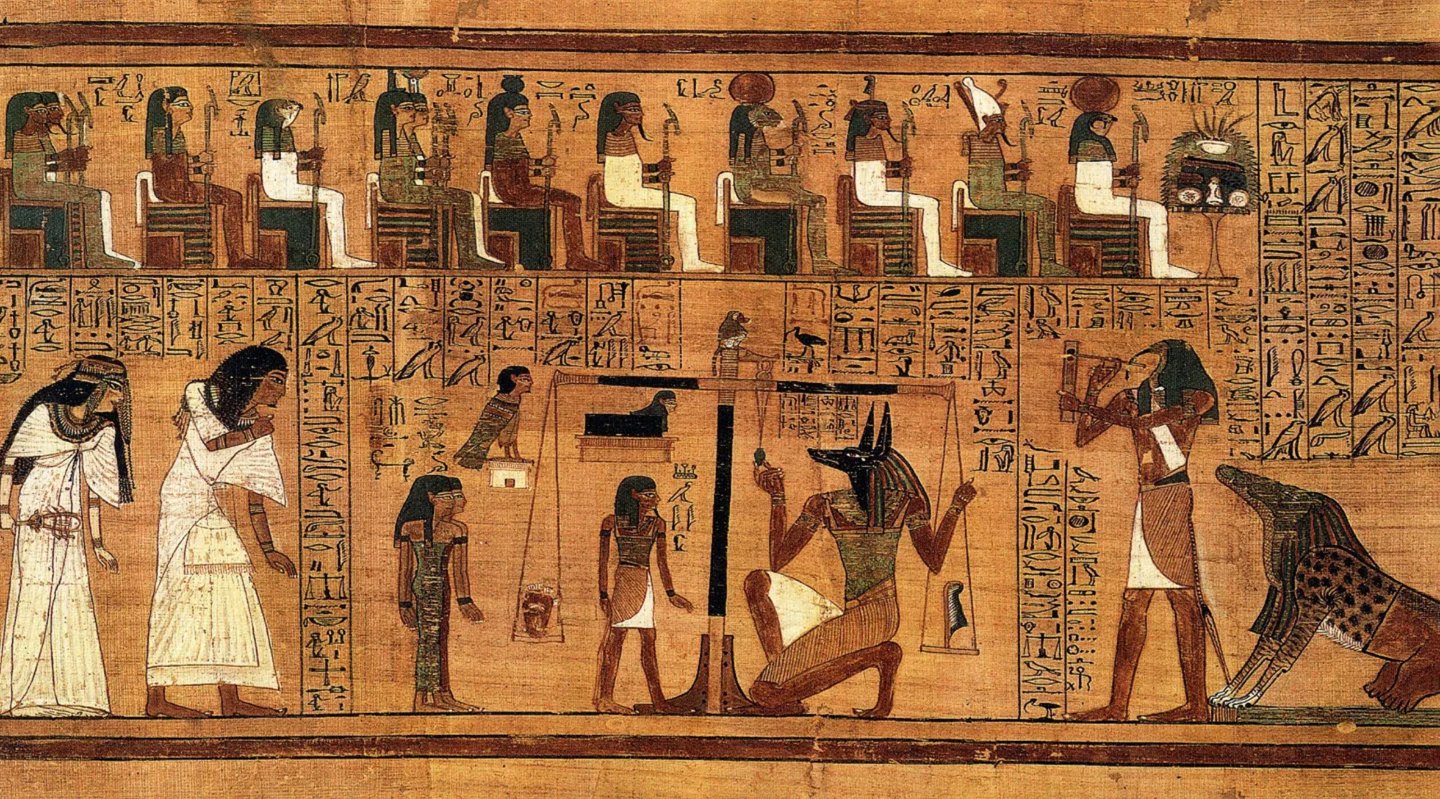
Visual study of a pharaoh’s tomb in Ancient Egypt as a «machine for eternal life»
Navigator
1. Concept
2. Why is the sarcophagus a «machine for eternal life»?
3. Mummification and the Body
4. What was depicted on the walls of the Pharaohs' tombs?
5. Ka, Ba, and Afterlife
6. Texts and the Magic of Imagery
7. The Pharaoh’s Role
8. Conclusion. Takeaways
Concept
The pharaoh’s tomb in Ancient Egypt was not merely a burial site, but a sophisticated «machine for eternal life»: the architecture, rituals, mummification, iconography, and texts were all intended to ensure the ruler’s passage into the afterlife and his perpetual existence alongside the gods. The tomb preserves the body, guides the soul, protects the deceased from dangers, and maintains the connection between the world of the living and the divine realm. The pyramid, the rock-cut tomb, the mortuary temple, the corridors, the burial chamber, the canopic jars, and the offerings—these are not discrete objects, but components of one unified «apparatus» for immortality.
The visual study examines the tomb of an ancient Egyptian pharaoh not merely as an architectural monument or a burial site, but as an integrated religious and symbolic system that, according to Egyptian beliefs, ensured the ruler’s transition to the afterlife and his eternal existence among the gods. Central to the work is the concept of the «machine of eternal life"—a convergence of architecture, rituals, mummification, funerary objects, imagery, inscriptions, and posthumous texts, all unified by the goal of making the pharaoh’s immortality possible.
The ancient Egyptians did not view death as a complete end, but rather as a transition to another state of being. Their primary goal was to achieve immortality; consequently, preparation for the afterlife began during a person’s life and became one of the most critical tasks for the state, the priests, and the pharaoh himself. The tomb was understood as a «house of eternity”—a permanent residence for the deceased where their body, name, images, and everything necessary for life after death were preserved. This significance was especially profound for the pharaoh: he was not considered an ordinary person, but a living embodiment of divine power who, after death, was meant to unite with the gods, especially the sun god Ra.
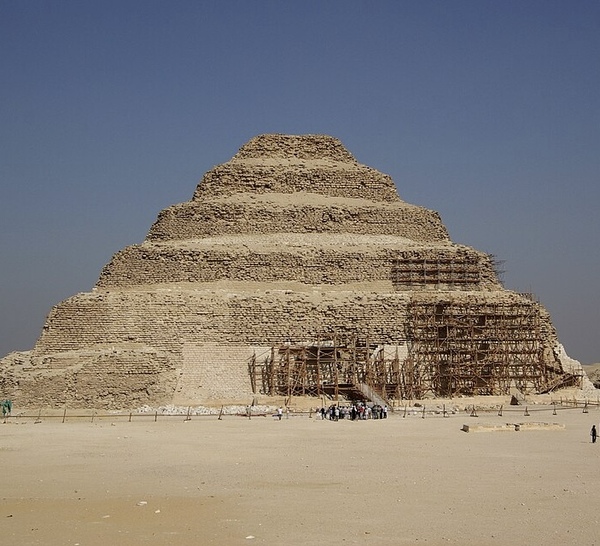
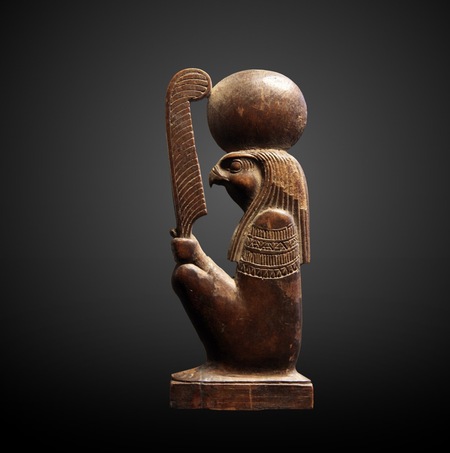
The Step Pyramid of Djoser (2670–2650 BCE) and the statuette of the god Ra (1550–1070 BCE)
Why is a tomb a «machine for eternal life»?
The tomb could be called a «machine for eternal life» because it integrated several elements, each designed to serve a single purpose—to ensure the pharaoh’s resurrection and immortality. These elements included architecture, mummification, funerary objects, religious texts, depictions of gods, and rituals.
A pyramid or rock-cut tomb was not merely a shelter for a sarcophagus. It created a specific sacred space that symbolically connected the earth and the sky, the world of the living, and the world of the dead. Researchers note that the pyramid may have been perceived as a means for the pharaoh’s soul to ascend to the heavens, much like the sun rises over the horizon.
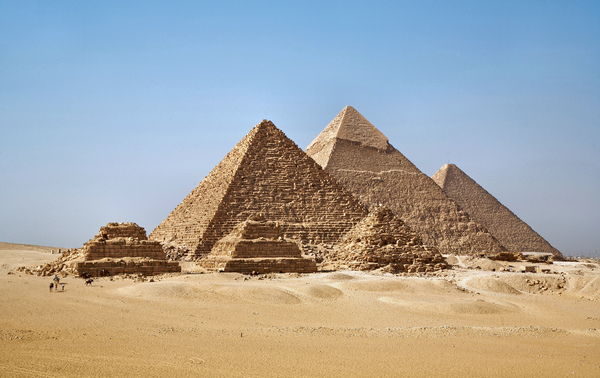
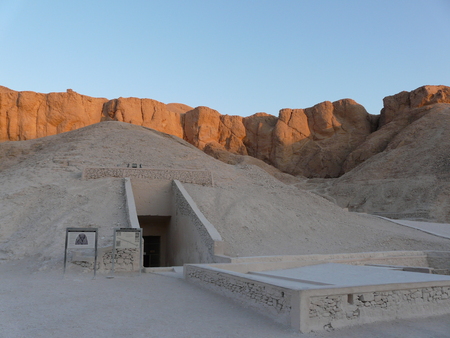
the Pyramids of Giza (2600–2400 BCE) and the Tomb of Tutankhamun (1327–1323 BCE)
Mummification and the Body
The Egyptians believed that preserving the body was one of the key conditions for eternal life. Therefore, the deceased’s body was carefully mummified: internal organs were removed, tissues were dried, treated with special substances, and wrapped in linen. The mummy was intended to become a stable «shell» into which the deceased’s soul could return.
Each mummy was allotted four canopic jars. The lids of these jars were typically adorned with the heads of four gods—the sons of Horus: Hapy with a baboon head, Duamutef with a jackal head, Qebehsenuef with a falcon head, and Amset with a human head.
Specific organs were placed in specific jars: Amset held the liver, Duamutef held the stomach, Qebehsenuef held the intestines, and Hapy contained the lungs.
Canopic Jars of Ancient Egypt (circa 2600 BCE)
For Egyptians, the body, name, image, and soul were interconnected. If the body decayed or the name or image disappeared, the person’s existence in the afterlife was threatened. This is why statues, reliefs, and inscriptions with the Pharaoh’s name were placed in the tomb—they didn’t merely decorate the space; they helped to «recreate» his identity after death.
What was depicted on the walls of the pharaohs' tombs?
The walls of pharaohs' tombs were typically decorated with scenes of funeral rites, the deceased’s journey into the afterlife, gods, hieroglyphic spells from funerary texts, and sometimes scenes of daily life. These images were intended to help the pharaoh pass the trials of the afterlife and achieve eternal life.
Next, we will examine an example—the tomb of Tutankhamun.
The drawings on the eastern wall of the tomb depict the funerary rites of Tutankhamun. Hieroglyphic names of the pharaohs are enclosed in vertical ovals—cartouches—and the scarab is located in the center of Tutankhamun’s name. These cartouches allow us to identify who is depicted in the drawings on this and other walls of the burial chamber.
Tutankhamun’s tomb interior, eastern wall (1327–1323 BCE)
On the north wall of the burial chamber is depicted a successor of Tutankhamun in a leopard skin. In his hands, he holds an instrument for the «mouth opening» ritual, which, according to ancient Egyptian beliefs, allowed the mummy to eat and speak again. The instrument is directed at Tutankhamun’s mummy, wrapped in white linens. Next, Tutankhamun is shown standing before the goddess Nut, who greets him in his own tomb. In the following scene, his Ka, or spiritual double, proceeds before Osiris, the chief god of the underworld.
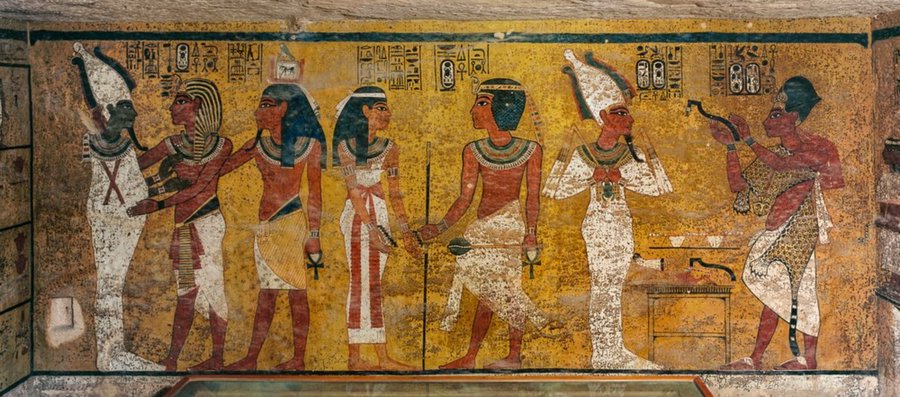
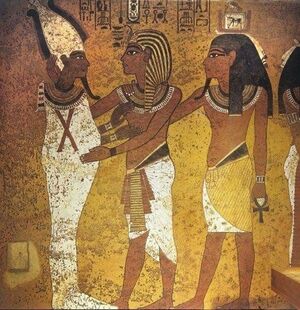
Tutankhamun’s tomb interior, north wall (1327–1323 BCE)
On the western wall is depicted the first hour of the «Book of the Dead» («Amduat»). Twelve baboons are also presented, symbolizing the twelve nocturnal hours. Above them are five gods and the solar barge featuring the god Hepher, who appears with the first rays of the sun in the form of a scarab.
Tutankhamun’s tomb interior, western wall (c. 1327–1323 BCE)
Ka, Ba, and the Afterlife
In ancient Egyptian religion, a person was composed of several spiritual elements. The most crucial were Ka—the life force and human double—and Ba—the soul capable of traversing between the world of the living and the world of the dead. For these elements to survive, a preserved body, name, food, water, and constant offerings were required. The tomb served as the dwelling place for Ka. It contained false doors, through which, according to Egyptian belief, the soul could enter and exit, alongside depictions of food, drink, servants, clothing, and household items. Thus, the tomb provided the deceased with everything necessary for eternity.
The false door in Ancient Egypt was an architectural element of ancient Egyptian funerary structures that served to connect the world of the living with the world of the dead.
Sometimes the false door appeared as a rectangular image on a flat wall, but more often it was constructed as a niche resembling a real doorway—only sealed shut. Typically, the false door was located on the west wall of the chamber where offerings were left.
The connection between Ka and Ba is that Ka—the vital force of the deceased—passed through the false door. Offerings, food, and drink were left for her in the tomb. Ba was a part of the human soul that represented the personality and took the form of a bird with a human head. Ba traveled between the world of the dead and the living and was meant to find Ka so that the two parts of the soul could reunite in the afterlife.