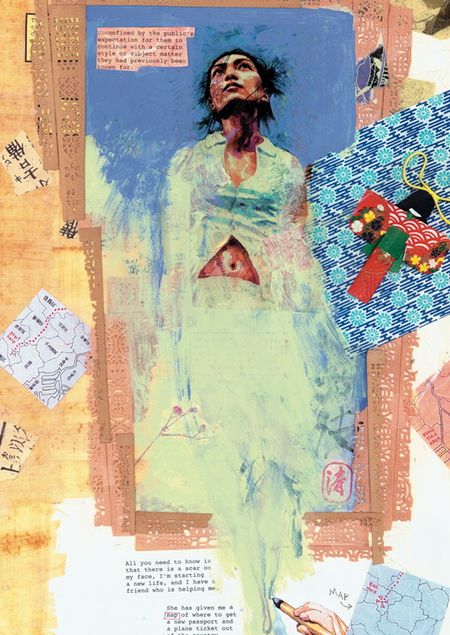
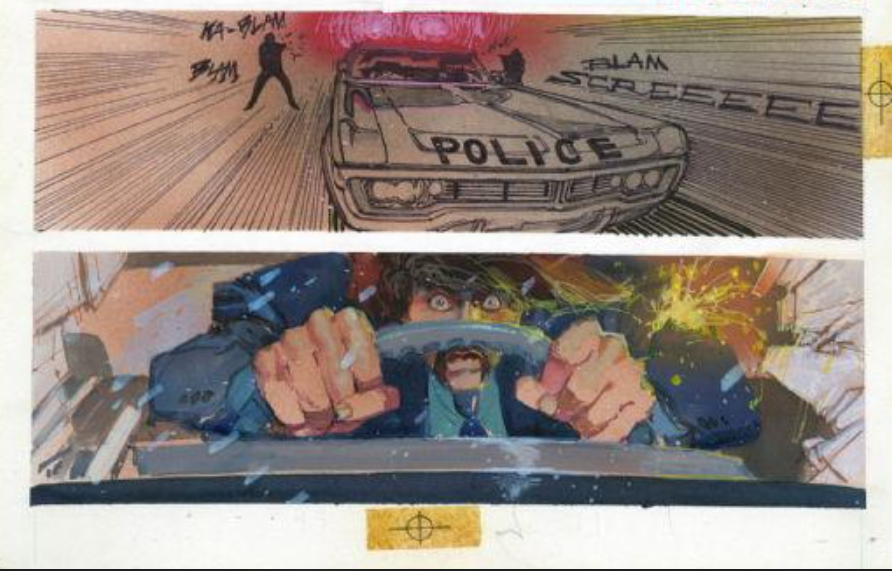
Frank Miller, Bill Sienkiewicz. Elektra: Assassin #4. 1986. Interior page, mixed media.
Navigator
1. Concept.2. From Photomontage to Comic.
3. Memory from Fragments: Violent Cases.
4. Photography and Memory: Mr. Punch.
5. Collage of Real Objects: Kabuki.
6. Compound Reality: Elektra: Assassin.
7. Collage as Space: Arkham Asylum.
8. Photography as Document: Le Photographe.
9. Conclusion.
10. Bibliography.
11. Image Sources.
Concept
Collage enables the creation of images from elements that were not originally connected. Photographs, newspaper clippings, illustrations, handwritten notes, and fragments of paper are brought together into a single composition. Even so, the individual parts do not necessarily lose their original characteristics: their distinct textures, color, printing quality, and edges may remain visible on the page.
I am curious about how this technique is used in comics and why some creators prefer to assemble images from multiple sources rather than developing them using a single graphic technique.
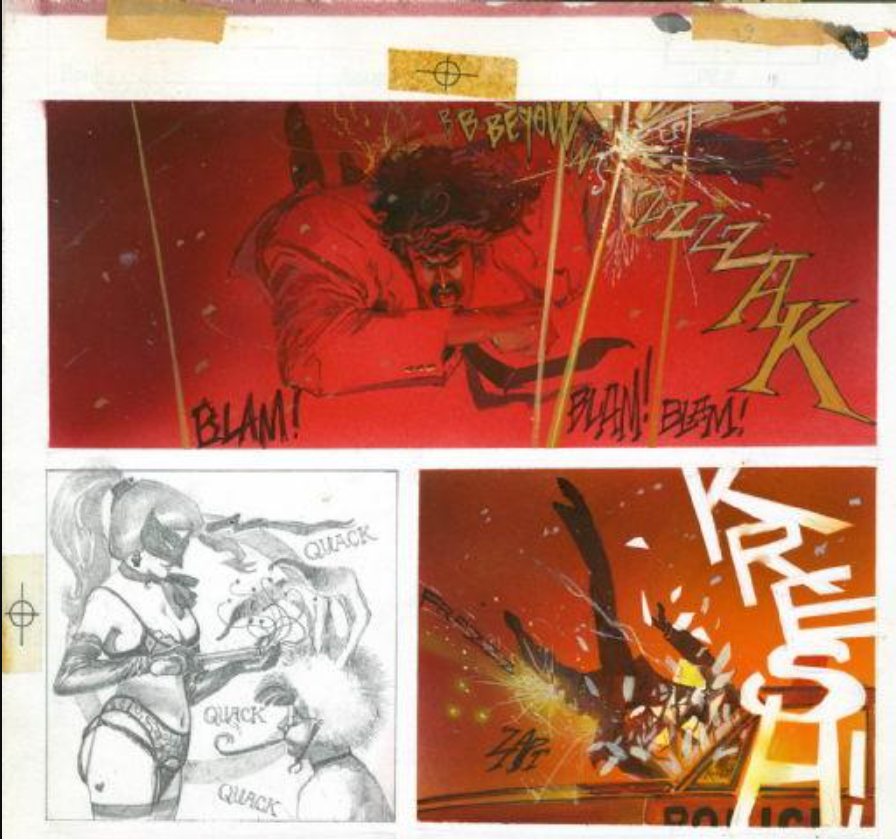
Frank Miller, Bill Sienkiewicz. Elektra: Assassin #4. 1986. Interior page, mixed media.
The work examines two related, yet distinct, techniques. Collage is the combination of diverse materials: paper, photographs, print images, fabrics, text, and other elements. Photomontage is a narrower method of image construction in which photographs or their fragments become the primary material. Mixed media, in turn, may incorporate painting, pencil, ink, and photography, but it does not necessarily imply the physical or visual joining of separate fragments. This distinction is important for analyzing the selected works—not every page created with multiple materials can be called a photomontage.
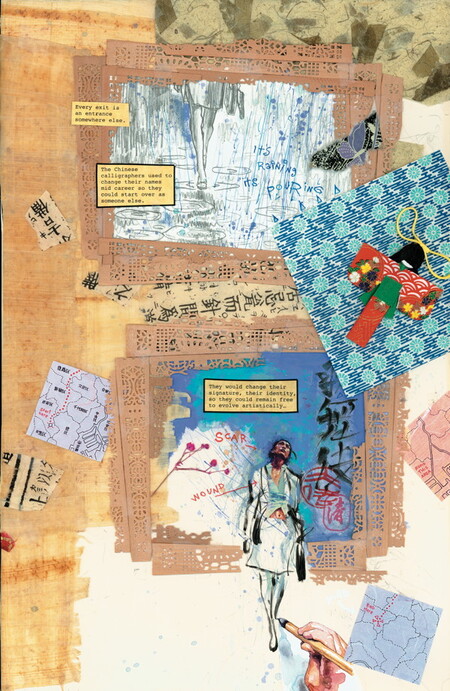
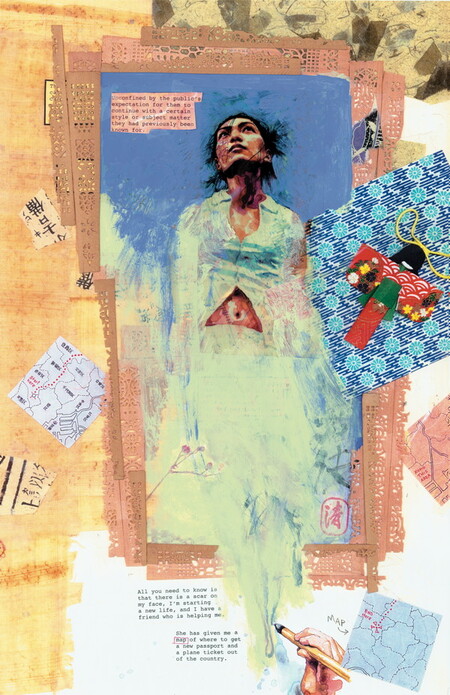
David Mac. Kabuki. An interior page featuring watercolor, cutout paper elements, and handwritten inserts.
For this study, works that demonstrate the use of collage and photographic materials are selected. The core selection includes Neil Gaiman and Dave McKean’s «Violent Cases» (1987), the same authors' «The Tragic Comedy or Comical Tragedy of Mr. Punch» (1994), David Mack’s «Kabuki, ” Frank Miller and Bill Sienkiewicz’s „Elektra: Assassin“ (1986–1987), and Grant Morrison and Dave McKean’s „Arkham Asylum: A Serious House on Serious Earth“ (1989). Additionally, for comparative analysis, the French graphic novel „Le Photographe“ by Emmanuel Guiber, Didier Lefèvre, and Frédéric Lemersie (2003–2006) is examined. In this work, photography becomes integrated into the comic narrative, though it is not always deployed as a photomontage element.
The core research question is: how does photographic montage and collage aesthetics alter the visual language of the comic, and what functions do they serve within the narrative?
Hypothesis is that collage in a comic is not merely a decorative technique. It can serve as a method of conveying content. The juxtaposition of different materials helps illustrate the distinction between document and fiction, evoke a sense of fragmented memory, reveal a character’s nature, or establish a specific narrative atmosphere. Furthermore, the meaning of each element shifts depending on its proximity to other images. A photograph ripped from its original context can become part of a fictional event, while a real note or newspaper clipping can transform into an element of the artistic world.
Through this research, I aim to demonstrate how the process of stitching together individual images allows comics to expand the conventional boundaries of visual storytelling.
From Photomontage to Comic Book
Collage and photomontage gained wide popularity in art during the first half of the 20th century. Artists began using existing images, cutting them out from newspapers, magazines, advertisements, and other printed materials. Individual fragments were rearranged, resized, and combined with text or other images. The resulting composition could completely alter the original meaning of the photographs used.
Hanna Höch. Cut with the Kitchen Knife Dada through the Last Weimar Beer-Belly Cultural Epoch in Germany. 1919–1920. Photomontage from photographs, printed fragments, and inscriptions.
One of the most celebrated works in this movement is Hannah Höch’s «Cut with the Kitchen Knife Dada through the Last Weimar Beer-Belly Cultural Epoch in Germany» (1919–1920). On a single sheet, she combined photographs of politicians, artists, and military personnel, fragments of machinery, inscriptions, and other imagery.
The composition appears as a multitude of separate parts assembled into a dynamic and constantly shifting picture of society. It is particularly compelling that one cannot grasp all the elements in this work at a glance. The viewer examines individual components, notices new images, and gradually assembles the overall picture.
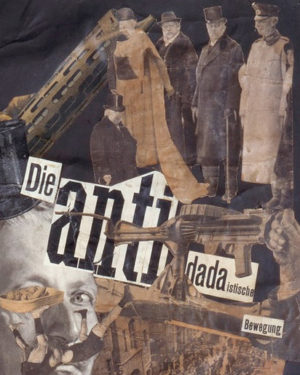
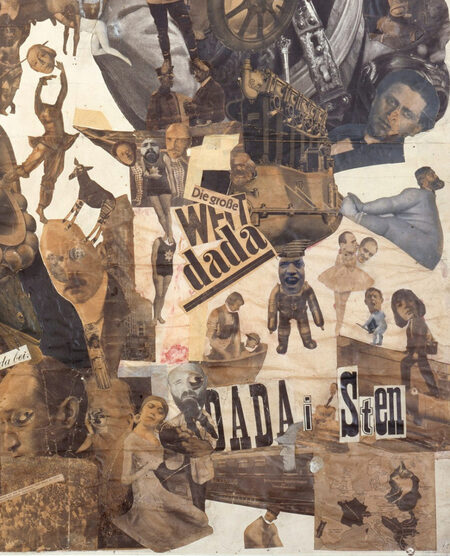
Hanna Höch. Cut with the Kitchen Knife Dada through the Last Weimar Beer-Belly Cultural Epoch in Germany. 1919–1920. Details of the photomontage: cut-out faces, printed fragments, and inscriptions.
However, the boundaries of the fragments remain distinct: the artist does not strive to transform them into a single, realistic image. On the contrary, the difference between the individual materials becomes an essential feature of the work.
Another example is John Heartfield’s photomontage, «Adolf the Superman: Swallows Gold and Spouts Junk» (1932). The artist utilizes a photographic image, combining it with an X-ray depiction of the body and graphic details. Through this technique, the politician’s portrait transforms into a satirical composition that exposes the hidden meaning of the image.
John Heartfield. Adolf the Superman: Swallows Gold and Spouts Junk. 1932. Photomontage.
Such techniques are interesting in the context of comics because they also employ the juxtaposition of independent images. However, in comics, individual fragments are integrated into a sequence and begin to interact with the text, characters, and adjacent panels. The same material can simultaneously fulfill multiple functions: being part of the composition, conveying information about an event, and creating a specific mood.
However, a comic does not necessarily rely on pre-existing newspaper photographs. The author can independently create, process, transfer to paper, combine with painting, or incorporate real-life objects. Therefore, the collage aesthetic in comics is far broader than classic photomontage.
The key difference is that in traditional photomontage, the viewer examines a single composition assembled from fragments, whereas in a comic, this composition becomes part of a sequential narrative.
Memory in Fragments — Violent Cases
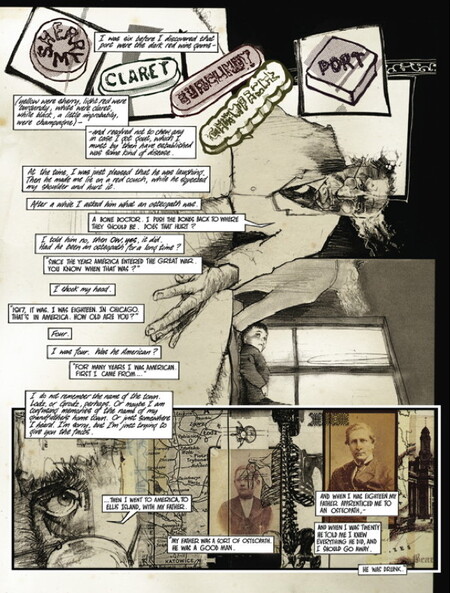
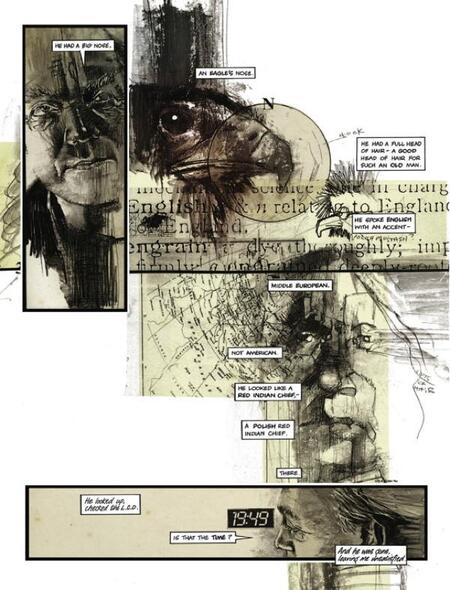
Neil Gaiman, Dave McKinn. Violent Cases. 1987. Interior page.
One of the most compelling examples of collage usage in comics is Neil Gaiman and Dave McKean’s Violent Cases. The story is framed as an adult narrator’s reminiscence of childhood events connected to his family and encounters with an osteopath who once treated Al Capone. The visual structure of the work constantly shifts. Alongside standard comic panel illustrations, fragments of maps, printed materials, fabric, newspaper clippings, and other elements appear. McKean merges disparate materials even within a single composition, without attempting to conceal their origins.
According to researcher Paul Gravett, the work utilized maps, texts, fabric, and movie posters to convey the distorted nature of memories.
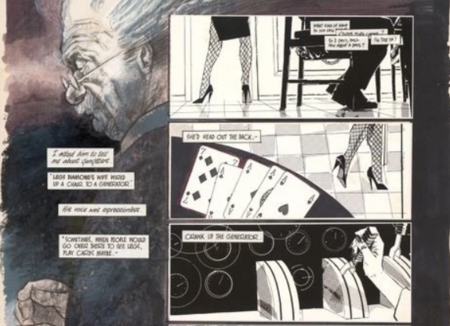
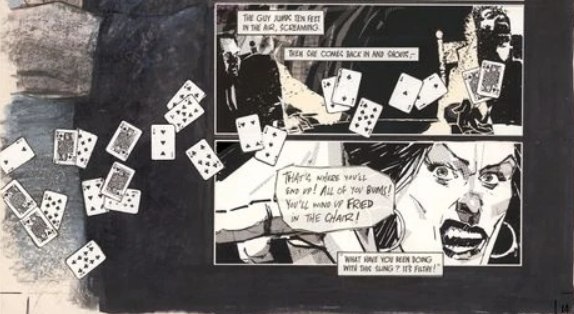
Neil Gaiman, Dave McKean. Violent Cases. 1987. A page featuring card-like images and fragmented scene layouts.
Here, attention can be drawn to the composition of small images, inscriptions, and object details. The individual elements resemble artifacts that might have been found in an old box of documents or personal effects. Furthermore, they do not form a typical sequence of frames—the viewer perceives the page as a collection of simultaneously existing historical fragments.