

Brand positioning and ecosystem

Core functionality of the app and target audience
Duolingo is one of the most popular language-learning applications in the edutainment niche. Initially, it sought to convey support and care for users through its brand communication, but its positioning has changed over time. As of 2026, the number of paid subscribers exceeds 12 million, with a daily active audience of 50 million users.
Initially, Duolingo was an application that improved the accessibility of education, thereby mitigating some aspects of acute social inequality. The mobile application format implies a low barrier to entry, which opens up learning opportunities for a vast number of people, making education free, fun, and universally accessible. The active development of the application led to the adoption of a freemium business model: the core functionality is free, while additional features are available via subscription. However, a challenge arises as the Duolingo application coexists on a single smartphone with numerous social media and entertainment applications. This creates a need to attract the user’s attention in a specific way.
«You see, teaching with the help of a smartphone means expecting people to eat broccoli when placed next to it is the world’s most delicious dessert»
Thus, the startup’s target audience became a highly digitally engaged demographic, consisting of Generation Z (18–24 years old) and millennials. This user group can be characterized as casual learners who consciously reject classical, tedious formats of academic cramming in favor of gamification. They highly value the concept of microlearning, short game sessions, flexible time management, and instant emotional feedback from the product, which allows them to organically integrate daily lessons into their busy and dynamic schedules.
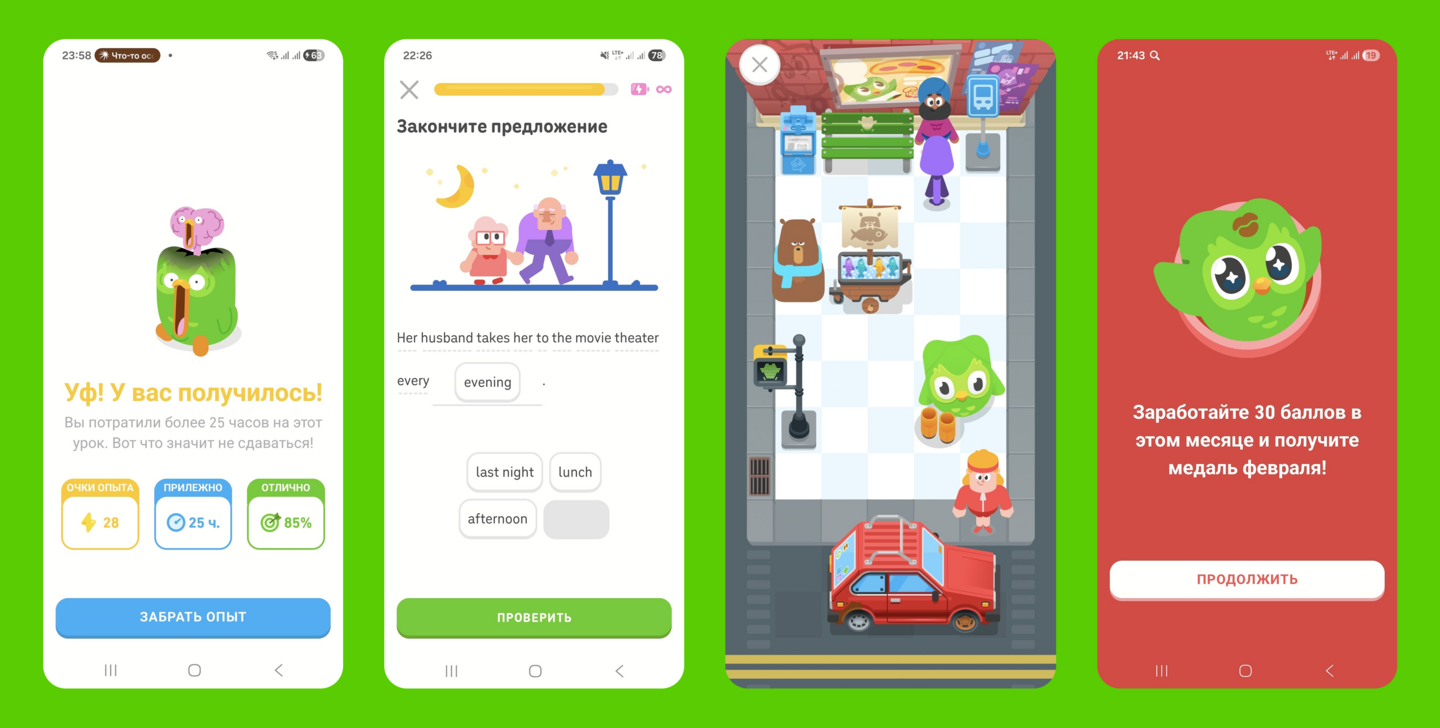
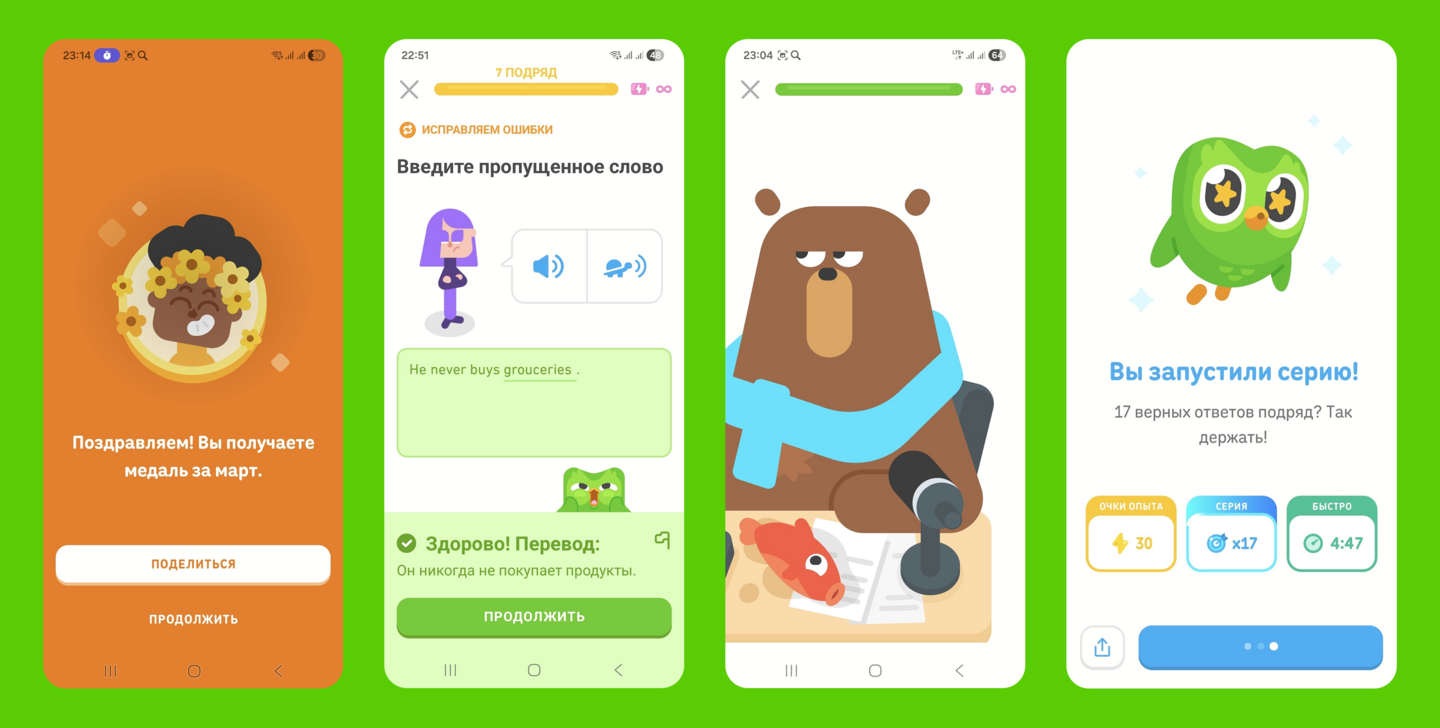
Duolingo app screens
Gamification and instant reward strategies were not the only effective tools for user engagement; various bold marketing strategies also played a massive role in the brand’s popularity.
Duolingo social media posts
Brand communication channels and PR-strategies
Speaking of the brand’s communication channels, it is worth noting that Duolingo’s public activity relies on a diversified system of media resources, where each channel performs a strictly defined task within the communication ecosystem. The flagship tool for viral marketing is its multimillion-follower TikTok account, entirely built on ultra-short entertaining videos featuring the mascot. Social networks Twitter/X and Instagram* serve as platforms for real-time marketing, text memes, and instant, ironic reactions to global news events. Thus, the brand actively monitors trends and news, maintaining contact with the audience and fostering trust.
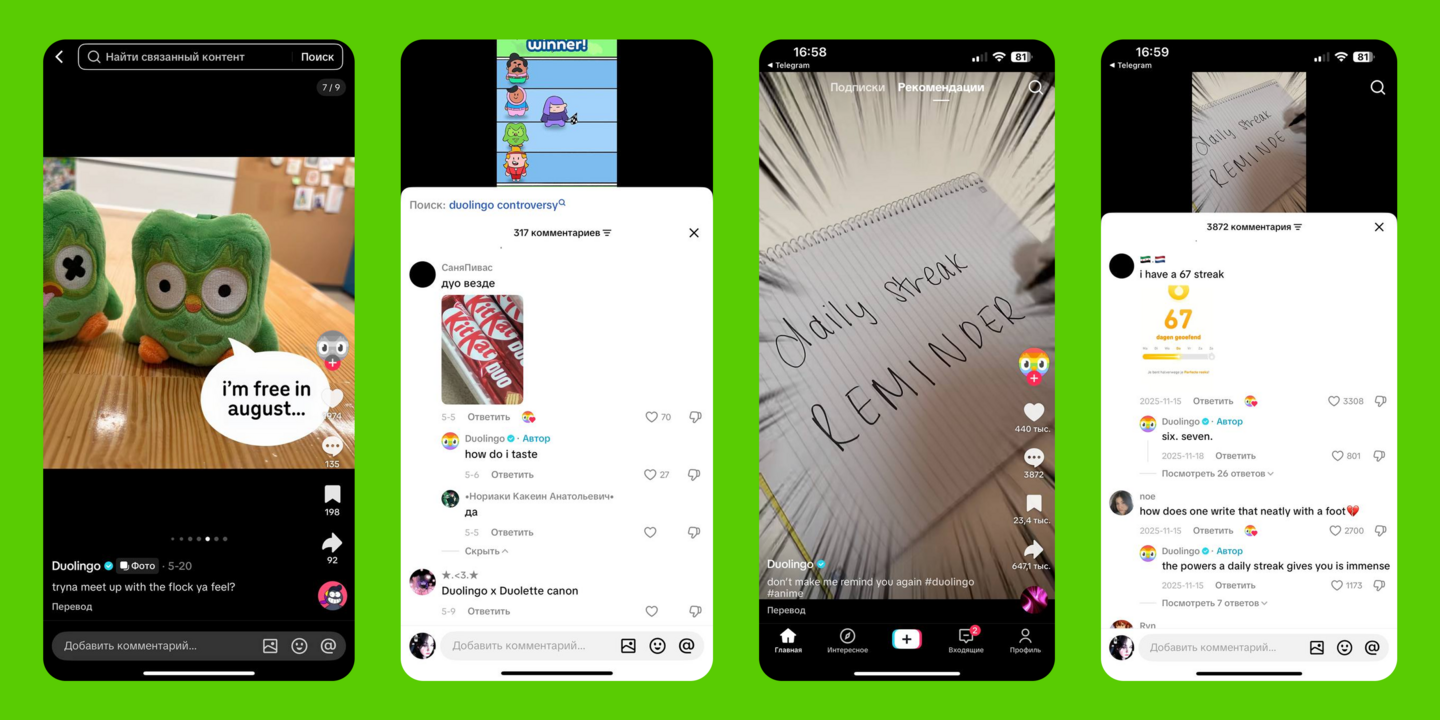
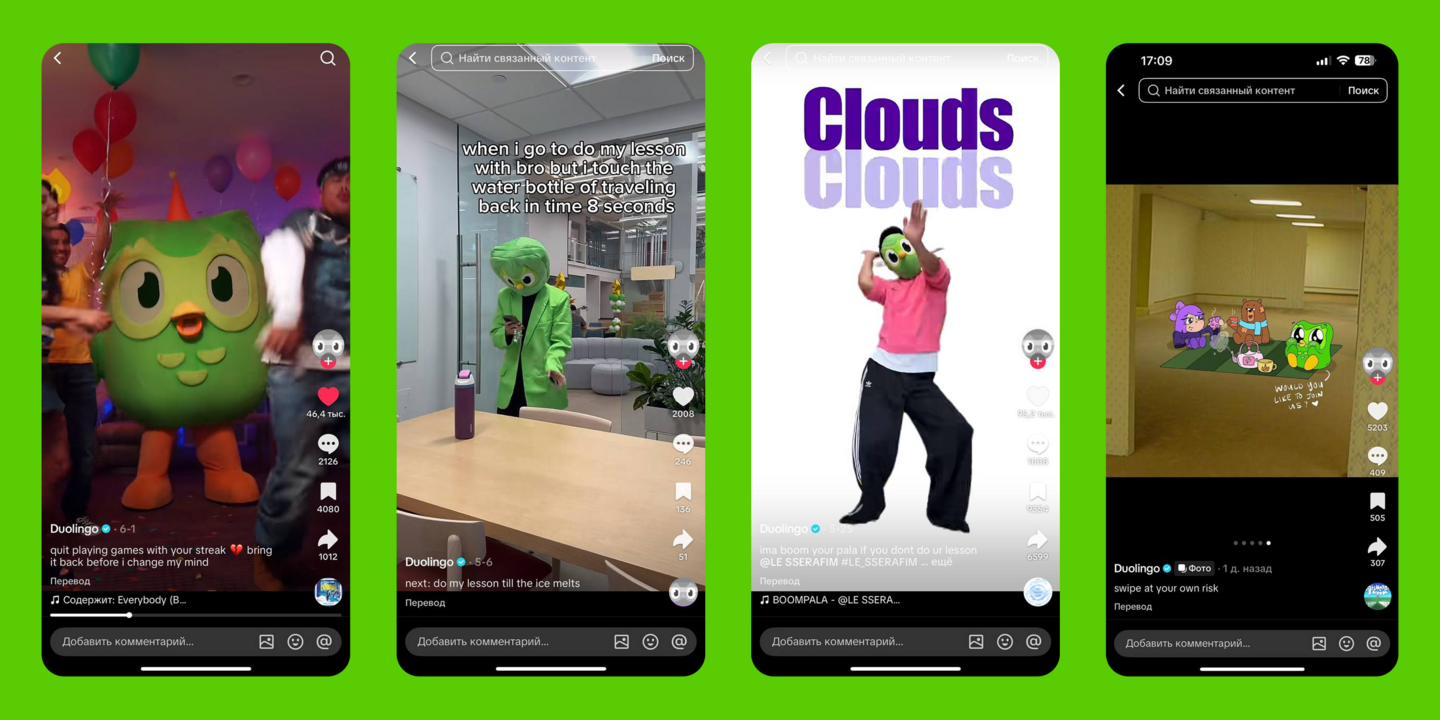
Average Duolingo TikTok posts | Duolingo сommunication with the audience in TikTok
In-app communications also play a crucial role: customized smartphone widgets, personalized push notifications, and strict behavioral micrometrics, such as streaks, create a closed retention loop that regularly brings the user back to the application.
*Meta recognized as an extremist organization and banned in the Russian Federation
*Meta Признана экстремистской организацией и запрещена на территории РФ
Duolingo widgets
Initially, the brand adhered to an approach based on openness, sincerity, and friendliness in its copywriting: «Goodbye language barrier», «Everyone will succeed», and «Language never stands still». Following the 2019 rebranding, Duolingo launched its first advertising campaign in the UK. Its goal was not only to attract a new audience but also to renew the interest of users who had previously stopped using the application. Therefore, posters centered around the mascot were accompanied by unusual and sometimes aggressive copy, urging users to continue learning and become better.
Early Duolingo Communication Strategy
Currently, Duolingo’s modern PR strategy is built on a radical departure from the conservative promotion of IT products in favor of direct participation in mass digital culture through the concept of human branding. The company has completely erased the barrier between a faceless corporation and the consumer by building all communication around the image of a lively, anthropomorphic character — the Duo owl mascot. The personality of this character is intentionally far from idealized corporate standards: Duo is portrayed as an eccentric, self-ironic, and sometimes obsessive and slightly toxic hero. Thanks to the mascot’s deep integration into the current internet discourse, Duolingo is perceived by users not as a utilitarian technological tool, but as a fully-fledged, living participant in the online community.
Duolingo app ads, 2023-2026
For instance, artificial intelligence was initially utilized in the user notification system: the program tracked how long a person had been away from the app, and the longer they went without studying languages, the more dissatisfaction the mascot expressed through messages. At a certain point, the notifications arriving on users' smartphones became the subject of jokes and memes. The brand quickly recognized this and began leveraging it in its advertising campaigns. Duolingo escalated this passive aggression to the point of absurdity. Consequently, Duolingo established humor and irony, expressed through human branding, as its primary marketing techniques.
«Do your lesson, no buts.» 2024
Theoretical models used
Overview
The selection of theoretical frameworks for our project is directly dictated by the unique, dual nature of Duolingo’s communication. On the one hand, the brand is widely known for its absurd, viral memes featuring the Duo owl on social media; on the other hand, it successfully promotes a complex, high-tech educational product with millions of paid subscribers. To investigate in detail exactly how Duolingo manages to combine pure chaotic humor with commercial effectiveness, we have selected two fundamental theories from our course syllabus: the Elaboration Likelihood Model (ELM) and the Dialogic Theory of Communication. These concepts serve as precise analytical lenses: they will help us scientifically explain how the brand manages the psychological mechanisms of perception and builds long-term relationships with its audience.
The Elaboration Likelihood Model
The Elaboration Likelihood Model (ELM), developed by Richard Petty and John Cacioppo, is a tool for analyzing the mechanisms of persuasion. The theory explains that consumers can process brand messages through two different routes: the central route (when the user is motivated and deeply engages with the logic, facts, and value of the product) and the peripheral route (when information is processed quickly or lazily, based on simple shortcuts — humor, affinity for the source, or fear of missing out). This framework is perfectly suited for analyzing Duolingo, as their entire strategy is built on balancing these two routes. Through the lens of the ELM, the brand uses the peripheral route (memes, the mascot’s intimidating jokes on TikTok, and push notifications) to instantly grab the user’s attention, and then activates the central route (performance statistics, scientific justification of methodologies on the website) to convert this fleeting attention into an actual app subscription.
The Dialogic Theory of Communication
The Dialogic Theory of Communication by Michael Kent and Maureen Taylor was chosen by us as a tool to evaluate the brand’s interactivity and social media engagement. This theory proposes shifting away from traditional, «top-down» corporate PR (where a brand simply broadcasts its news) in favor of ethical, two-way interaction, where the company communicates with its audience as equals. Duolingo is a prime example of putting this concept into practice. The brand builds dialogic loops in post comments, instantly reacting to user remarks. Through its specific conversational style, the demonstration of a human touch, and the conservation of visitors within its content ecosystem, Duolingo transforms ordinary commenters into devoted brand advocates.
Practical case study analysis
ELM Analysis
In an oversaturated media environment, users increasingly avoid actively processing advertising. Therefore, to capture their attention, the brand activates the peripheral route, relying on quick emotional stimuli. Meanwhile, to engage target segments and retain them within the product, Duolingo switches to the central route, appealing to intrinsic motivation and the rational value of the product.
Peripheral route
Within the peripheral route, Duolingo actively utilizes peripheral cues such as humor, absurdity, and real-time marketing, which operate under low elaboration likelihood and do not require deep mental effort from the consumer. A prime example is the April Fools' campaign «Duolingo Roll», where the brand suggested printing educational phrases directly on toilet paper. In this way, the company reduces consumer cognitive resistance: the slogan «Language learning is hard, so we made it soft» ironically plays on the audience’s primary barrier — a lack of time. By employing a peripheral shortcut in the form of an everyday metaphor and humor, the brand generated strong liking for the source and led users to associate learning with an easy, unobtrusive process.
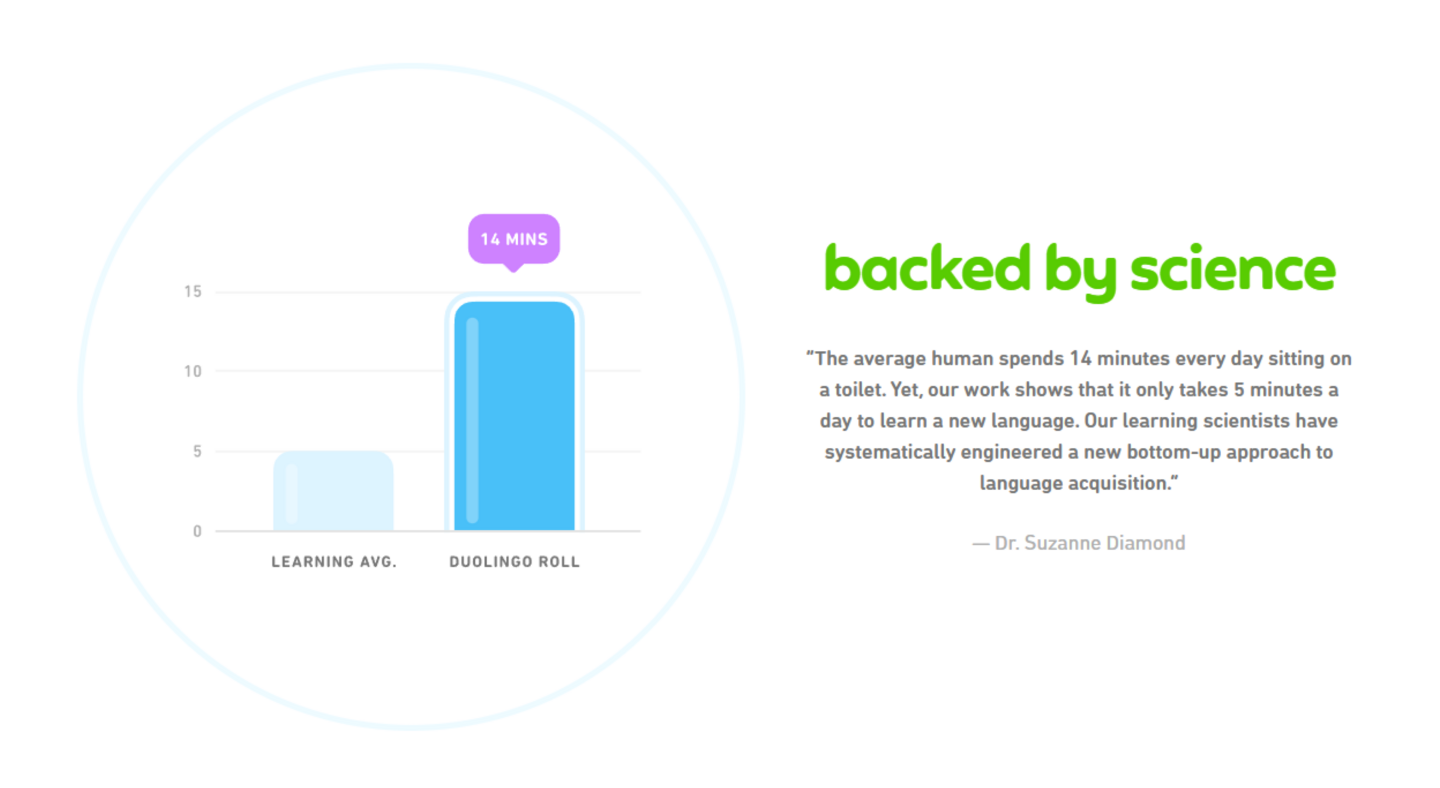
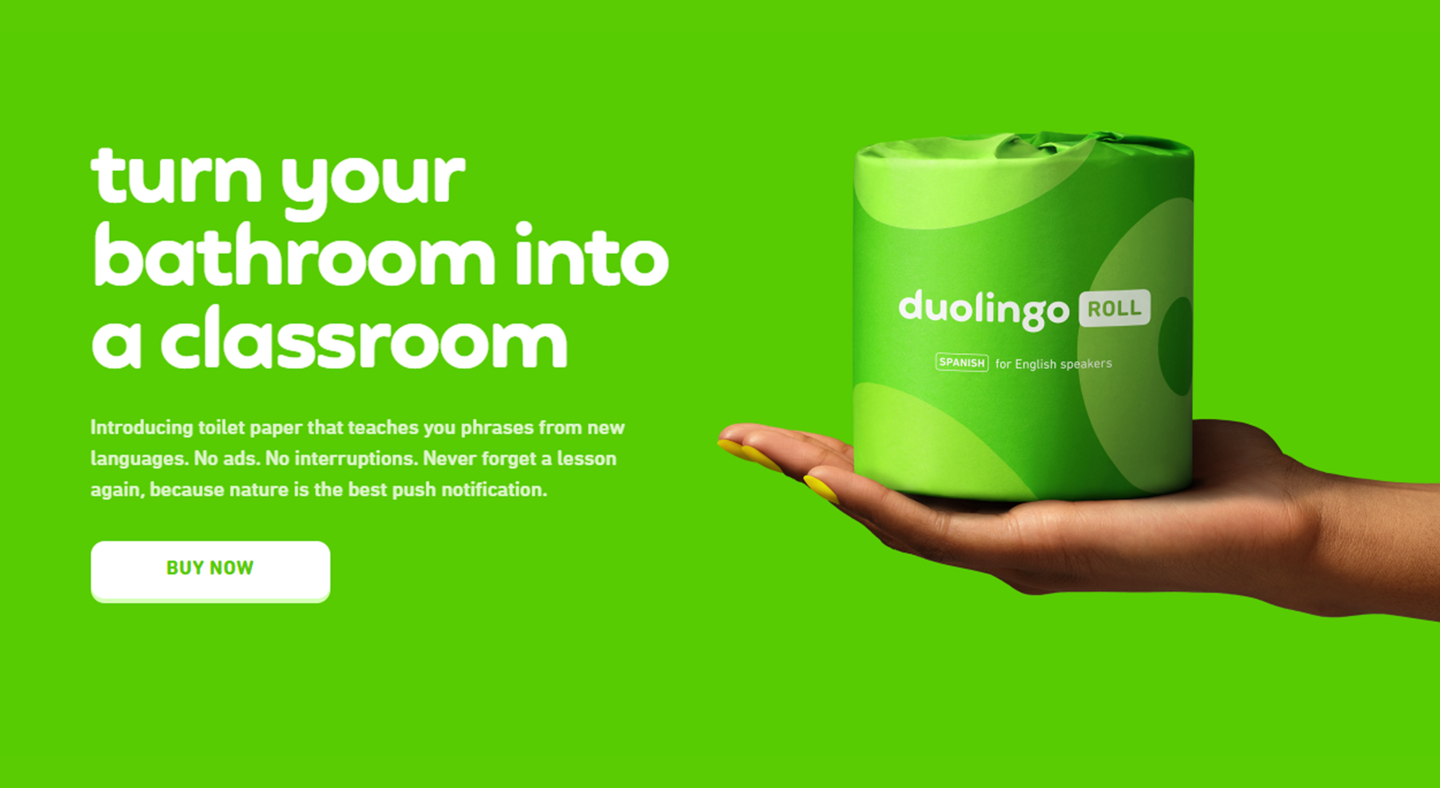
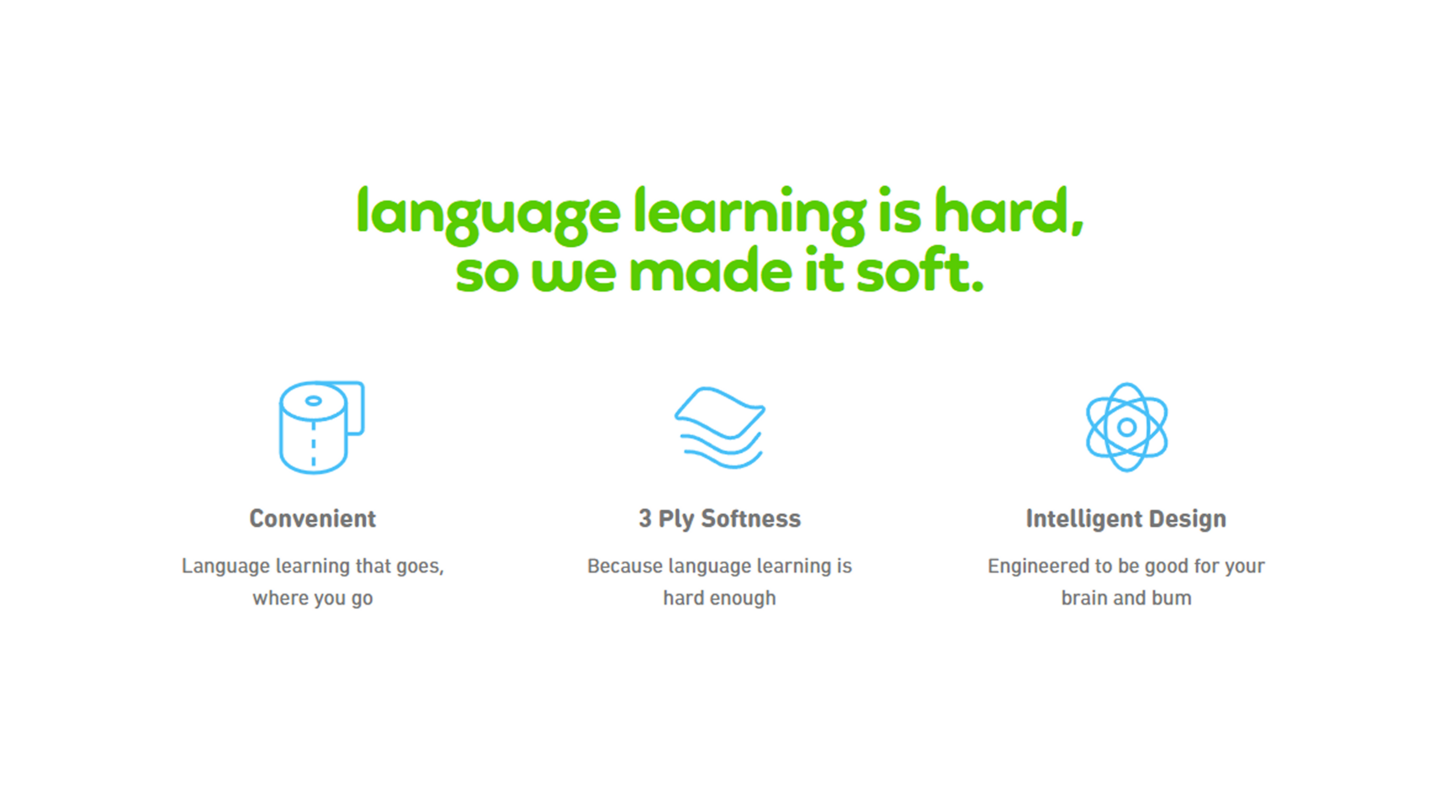
«Duolingo Roll», 2021
«Duolingo Roll», 2021
During the retention stage for its existing audience, Duolingo transforms its peripheral triggers, shifting from pure humor to triggers of fear of missing out and scarcity. Mobile push notifications and customized widgets, where the mascot Duo cries, gets angry, or literally threatens the user, act as instant behavioral stimuli. They compel the user to click on the notification not out of prolonged logical reflection on the benefits of education, but rather to quickly alleviate guilt and preserve their accumulated micrometric — streaks.
Duolingo widgets
Duolingo pushes