
Данный проект является учебной работой студента Школы дизайна или исследовательской работой преподавателя Школы дизайна. Данный проект не является коммерческим и служит образовательным целям
Проект принимает участие в конкурсе
Исходный размер 2390x795

Superstar, The Original

INTRODUCTION

Adidas is a German multinational corporation founded in 1949 by Adolf «Adi» Dassler in Herzogenaurach, Germany. Today, it is one of the world’s largest sportswear manufacturers, operating in over 160 countries with a portfolio that includes footwear, apparel, and accessories across sport, streetwear, and lifestyle categories. Adidas consistently ranks as the world’s second-largest sportswear brand, trailing only Nike.

The brand’s identity is built on a distinctive visual language — the iconic three-stripe logo — and on a philosophy that transcends sport.

Исходный размер 2575x1157

logo

Through sport, we have the power to change lives

Adidas official mission statement
adidas.com

This statement is not merely marketing copy; it is the strategic axis around which every campaign, partnership, and product story revolves.

Adidas positions itself at the intersection of sport and culture. Unlike competitors who lean purely into athletic performance, Adidas embraces creativity, self-expression, and cultural relevance as equally important values. Its sub-brands reflect this duality:

Adidas Performance — technology-driven products for athletes, propelled by high-end innovations like the record-breaking Adizero running franchise and the Supernova Rise Adaptive line.

Adidas Originals — heritage streetwear rooted in cultural movements, driving massive market demand through classic «Terrace» culture silhouettes including the Samba, Gazelle, and Campus.

Adidas x Collaborations — high-profile partnerships with long-term design icons (Stella McCartney, Yohji Yamamoto/Y-3) and cultural figures (Pharrell Williams).

Исходный размер 2752x697

adidas Supernova Rise 3 Adaptive / adidas Samba OG / adidas Y-3 Kaiwa

Following its previous strategic phase, Adidas is now moving under a more decentralized and locally responsive operating model led by CEO Bjørn Gulden. Gulden has been shifting responsibility from headquarters to individual markets, while Adidas itself presents the brand as combining a global presence with a local mindset. This gives regional teams more autonomy to react faster to local trends and consumer needs.

Strategically, Adidas continues to build relevance through market-specific execution and major sporting moments, including the 2026 FIFA World Cup, which already drove early 2026 demand for World Cup merchandise and related bookings.

We need to be closer to the consumer. And that means that the markets will have to take more responsibility in the decisions. Whatever we define a market to be, it can be a country or it can be a region.

Bjørn Gulden
Adidas CEO

Target Audience

Adidas targets a broad yet clearly defined audience:

Primary: Young adults, globally, who are interested in sport, fitness, urban culture, and fashion

Secondary: Professional athletes and performance-focused consumers across football, running, basketball, and tennis

Tertiary: Trend-conscious consumers and streetwear/sneaker culture enthusiasts who follow collaborations and limited-edition drops

Psychographically, the Adidas consumer values authenticity, self-expression, community belonging, and social awareness — particularly around themes of sustainability and inclusivity. This makes communication not just a sales tool for Adidas, but a cultural dialogue.

COMMUNICATION CHANNELS

Note: The activities of Meta Platforms Inc. (Facebook and Instagram) are recognized as extremist and prohibited in the Russian Federation. The social network X is restricted in the Russian Federation.

Digital & Social Media Presence

Adidas maintains one of the most robust multi-platform digital ecosystems of any global brand, leveraging tailored content strategies across different platforms to maximize engagement:

Instagram: Serving as the flagship storytelling platform with 29.3 million followers, it focuses on premium visual campaigns, major product launches, and high-end athlete imagery to build the brand’s aesthetic identity.

TikTok: Operating as the primary vehicle for cultural relevance with 11.4 million followers, this channel thrives on viral trends, user-generated content (UGC), participatory challenges, and creator partnerships tailored for Gen Z.

Facebook: Acting as the largest mass-reach hub with 43.5 million followers, the platform centers on long-term brand stories, corporate news, and comprehensive global event coverage.

X: Functioning as the brand’s real-time engagement engine with 4.1 million followers, it is utilized for live sports commentary, community interactions, and breaking news.

YouTube: Hosting deep-dive narrative media for 2.4 million subscribers, the network anchors long-form brand documentaries, cinematic mini-films (such as the 2026 World Cup Backyard Legends campaign), and emotional athlete-driven behind-the-scenes stories.

Исходный размер 3307x2055

adidas social networks

Beyond these main corporate accounts, Adidas operates an extensive network of specialized sub-accounts—such as Adidas Originals, Adidas Football, and Adidas Running—alongside regional profiles. When multiplied by the personal pages of sponsored elite athletes and cultural collaborators, this decentralized matrix exponentially amplifies the brand’s organic digital reach.

Key PR and Marketing Strategies

Celebrity & Athlete Endorsement: Adidas maintains a high-impact matrix of global partnerships. Its current elite ambassador roster features football icons Lionel Messi, Jude Bellingham, and Lamine Yamal, alongside cultural heavyweights like Pharrell Williams (Human Race) and Bad Bunny. Rather than transactional sponsorships, these stars actively co-create product franchises and anchor major cinematic campaigns, driving massive organic media value.

Collaborations as PR Events: High-profile, limited-edition drops function as major cultural and media events. Partnerships with luxury fashion houses like Gucci, designer labels such as Wales Bonner, and brands like LEGO continue to generate extensive social conversation and reinforce Adidas’s positioning at the exact intersection of premium fashion and sport.

Purpose-Driven Communication: The brand’s messaging centers on authentic social and environmental action. Moving through 2026, Adidas’s flagship narrative is driven by the global «You Got This» campaign series, which focuses on disarming performance pressure and promoting sports accessibility. On the sustainability front, the long-running «Run for the Oceans» initiative (in partnership with Parley for the Oceans) remains a cornerstone, transforming intercepted ocean plastic into high-performance footwear as part of the company’s auditable climate transition goals.

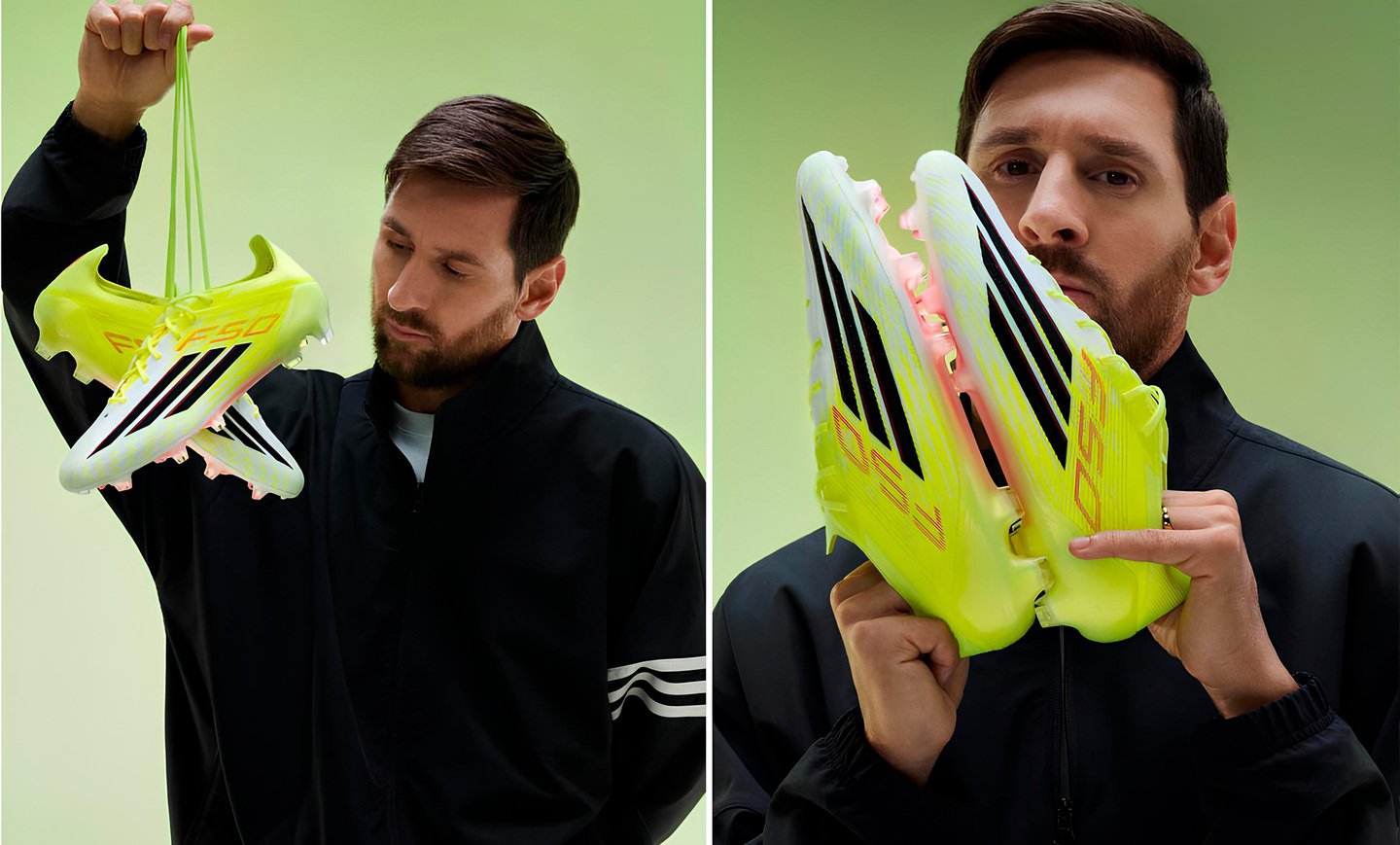
Lionel Messi debuts the adidas F50 Elite FG boots / LEGO x adidas Grand Court 2.0 / Run for the Oceans

User-Generated Content & Community: Adidas scales brand loyalty by transforming consumers into active creators on platforms like TikTok and Instagram. The Adidas Runners network operates as a highly active global community, while mobile ecosystems like the Adidas Running app incentivize user engagement, merging digital tracking with real-world athletic communities.

Website as a Digital Editorial Hub: The official platform adidas.com serves as a unified digital ecosystem blending e-commerce with rich narrative storytelling. It hosts interactive athlete profiles, localized campaign content, and transparent sustainability indexing. This editorial space directly feeds into the adiClub loyalty program, creating an ongoing data-driven relationship with over 300 million registered users.

THEORETICAL FRAMEWORK & ANALYSIS

Uses and Gratifications Theory

Why This Theory for Adidas?

From the syllabus options, Uses and Gratifications Theory (UGT) was selected as the analytical lens because it is uniquely well-suited to understanding how Adidas builds and sustains its digital communication ecosystem. UGT answers a foundational question: why do audiences actively choose to engage with Adidas content at all? For a brand that has built a global social media community running into tens of millions of followers across platforms, understanding the audience’s motivations — not just the brand’s strategies — is essential.

Adidas itself communicates in a way that matches this logic. On its official «Social Space» page, the brand invites people to «tweet, like, share, post and discuss» and says, «Join us online, choose your channel and get involved.» On the official profile page, Adidas also presents a clear purpose and mission, and its roadmap emphasizes a global brand with a local mindset, giving markets more decision-making autonomy so they can react to local needs. This matters for UGT because it shows that Adidas does not communicate with one static message only; it creates content and interaction opportunities that can satisfy different audience motivations in different contexts.

Analysis: Classification of needs by Blumler and McQuail

Diversion

Diversion is defined as the use of media to pass time, escape routine, and experience something pleasurable or emotionally engaging. Adidas is particularly effective at satisfying this need through cinematic campaigns, emotional sports stories, and high-quality digital films.

Исходный размер 1672x941

adidas short film «Backyard Legends»

From a theoretical perspective, such content offers users entertainment, emotional stimulation, and a temporary escape from everyday life. Audiences do not simply receive information; they consciously choose branded media content for pleasure and emotional release.

Исходный размер 2837x1342

adidas website

Personal Relationships Personal relationships in UGT refer to the use of media to feel connected to others, maintain social ties, and participate in shared social experiences. Adidas fulfills this function through commentary, community formats, and campaigns that invite interaction. A strong example is the official Trionda/WhatsApp press release: Adidas writes that the update places the brand «at the center of football conversation, ” allowing fans to share predictions, celebrate goals, and react to moments in WhatsApp chats during the tournament. This is a clear case of social gratification. Media use here is not private; instead, it creates a shared communicative space and supports belonging through interaction.

Personal Identity Personal identity is one of the most important gratifications for Adidas. People use media to communicate their self-concept, compare themselves with others, and negotiate who they are. Adidas’s communication is built precisely on this logic: athlete imagery, aspirational storytelling, and sport-as-lifestyle visuals allow users to project their identity through the brand. When Adidas features athletes, creators, or culturally significant figures, it offers not only a product but also a symbolic model of confidence, discipline, performance, and style. In other words, the brand becomes a resource for self-presentation.

Surveillance Surveillance in UGT is the need to stay informed, monitor current events, and reduce uncertainty. Adidas meets this need through newsroom updates, product announcements, campaign pages, and official communication across its platforms. Adidas aims to be closer to the consumer and empowers markets with locally relevant product development, storytelling, partnerships, and distribution. The Trionda press release is another strong example because it provides detailed information about the product, the partnership with the World Cup, and how the campaign will operate during the tournament. In UGT terms, audiences use Adidas media as a source of information. They want to know what is new, what is being launched, and what the brand will do next. This is surveillance in its practical form.

Исходный размер 2560x1440

TRIONDA

Important Limitation to Acknowledge The course notes a key limitation of UGT: it may overestimate the rational agency of the audience. As the course material states, «we should not neglect the media effects from the previous theorists and think that the audience can definitely control themselves and all their behavior.» For Adidas, this is relevant because the brand’s communication also operates through peripheral persuasion mechanisms (ELM logic) — through aesthetic cues, celebrity transfer of attitude, and algorithmic amplification — which audiences may not consciously recognize as influencing them.

Elaboration Likelihood Model (ELM)

Why This Second Theory for Adidas?

While Uses and Gratifications Theory helps explain why consumers actively choose to engage with Adidas content, it does not fully explain how that content influences attitudes and purchasing behavior once exposure occurs. To address this gap, a second theoretical framework is applied: the Elaboration Likelihood Model (ELM), developed by Petty and Cacioppo. Whereas UGT explains audience motivations, ELM explains how communication shapes brand perceptions and consumer attitudes — the two theories therefore operate on different levels and complement one another.

According to ELM, persuasion occurs through two distinct routes. The central route involves careful evaluation of arguments and evidence, while the peripheral route relies on cues such as attractiveness, credibility, popularity, emotion, and visual appeal. Which route is taken depends largely on the audience’s motivation and ability to process information.

This distinction is particularly relevant for Adidas because the brand communicates with audiences that differ substantially in their level of involvement. Professional athletes, runners, and performance-oriented consumers are often motivated to evaluate technical product information, while casual consumers encounter Adidas primarily through social media, celebrity culture, and lifestyle content. As a result, Adidas strategically combines both routes of persuasion across its communication ecosystem.

Central Route Persuasion

The central route is activated when audiences are motivated and able to process information carefully. For Adidas, this type of communication is most visible in product and technology-related messaging aimed at performance-oriented consumers.

Performance Technology

The Adizero running franchise provides a strong example of central-route communication. Adidas presents detailed information regarding lightweight construction, energy-return foam technologies, carbon-fibre plate systems, and race-performance results, with product pages frequently including measurable specifications alongside evidence from elite athletic competition.

Исходный размер 1920x1080

adidas Adizero Adios Pro Evo 3

From an ELM perspective, such communication encourages consumers to evaluate objective product attributes rather than rely on simple emotional associations. Running enthusiasts are likely to compare these claims with competing products, assess their credibility, and incorporate them into purchasing decisions. According to ELM, attitudes formed through this route tend to be stronger, more durable, and more resistant to counter-persuasion — Adidas therefore builds credibility among serious athletes through evidence-based communication rather than emotional appeal alone.

Sustainability Communication

Adidas also employs central-route persuasion through sustainability initiatives such as Run for the Oceans and its partnership with Parley for the Oceans. Rather than relying solely on environmental symbolism, the brand provides measurable information regarding recycled materials, carbon-reduction targets, and broader sustainability goals.

These messages require audiences to evaluate factual claims and assess their credibility. In ELM terms, consumers who are highly involved with environmental issues are likely to process such information through the central route before forming attitudes toward the brand.

Product Innovation and Sporting Events

The launch communication surrounding the Trionda match ball for the 2026 FIFA World Cup provides another example of central-route persuasion. Alongside emotional campaign elements, Adidas presented technical specifications concerning ball construction, aerodynamics, and performance testing.

For highly involved football audiences, such information serves as issue-relevant evidence that supports rational evaluation rather than emotional response.

Peripheral Route Persuasion

While central-route processing is important for highly involved consumers, much of Adidas’s audience encounters brand communication in low-involvement environments such as Instagram, TikTok, or YouTube. In these situations, persuasion often occurs through peripheral cues rather than detailed information processing.

Celebrity Endorsements

Adidas maintains partnerships with globally recognised figures such as Lionel Messi, Jude Bellingham, Lamine Yamal, Pharrell Williams, and Bad Bunny. In ELM terms, these figures function as peripheral cues. Audiences may not evaluate the technical characteristics of the product itself; instead, they transfer positive perceptions associated with the celebrity — success, talent, creativity, and cultural relevance — onto the brand. The resulting attitude is based primarily on association rather than product evaluation.

Adidas Originals and Lifestyle Communication

Many Adidas Originals campaigns contain relatively little factual information about the product. Instead, they rely on visual aesthetics, fashion symbolism, music culture, and aspirational imagery to generate emotional and identity-based associations that influence attitudes without requiring extensive cognitive effort. This communication appeals to how consumers want to feel rather than what they want to know.

Исходный размер 1672x941

adidas Originals

Scarcity and Limited-Edition Collaborations

Collaborations with brands and designers such as Gucci, Wales Bonner, LEGO, and cultural figures like Bad Bunny create demand through scarcity, exclusivity, and cultural prestige. Consumers often respond to countdowns, limited availability, and social-status signals without deeply evaluating product characteristics. In ELM terms, these campaigns rely on peripheral processing because perceived value emerges from symbolic meaning rather than from objective performance attributes.

Social Proof and Community

Adidas also benefits from powerful social-proof cues. Its global social media following, user-generated content campaigns, and the Adidas Runners community communicate popularity and widespread participation. For many consumers, visible engagement from others serves as evidence that the brand is worth following, reducing the need for extensive evaluation and encouraging positive attitudes through peripheral processing.

Dual-Route Communication: Combining Central and Peripheral Strategies

A key strength of Adidas’s communication strategy is that major campaigns rarely rely on a single route of persuasion. Instead, the brand frequently combines central and peripheral strategies within the same communication initiative.

The 2026 FIFA World Cup campaign illustrates this clearly. Emotional storytelling, celebrity athletes, cinematic visuals, and music-driven narratives attract broad audiences through the peripheral route, while linked product pages simultaneously provide detailed information about football footwear and the Trionda match ball, allowing interested consumers to engage in central-route processing

A similar pattern appears in the Run for the Oceans initiative, where emotional environmental storytelling is paired with measurable sustainability data. This dual-route structure allows Adidas to attract low-involvement audiences while also providing highly involved consumers with information that supports more durable attitude formation. Rather than choosing between the two routes, Adidas frequently designs campaigns that enable both forms of processing to occur simultaneously, helping to maximize both reach and long-term persuasion.

Limitation to Acknowledge

ELM’s central limitation is that it models persuasion primarily as an individual cognitive process. The theory does not fully account for the social and interactive environments in which contemporary brand communication operates. For Adidas, this limitation is particularly relevant because consumers do not simply process messages individually — they also share content, participate in communities, create user-generated content, and engage in discussions surrounding campaigns and products.

These social dynamics are better explained by Uses and Gratifications Theory, particularly through its concepts of personal relationships and belonging. Consequently, ELM and UGT should be viewed as complementary rather than competing theories: UGT explains why audiences seek out Adidas content, while ELM explains how that content influences attitudes after exposure.

CONCLUSION AND RECOMMENDATIONS

Overall Effectiveness

Evaluated through the combined lens of Uses and Gratifications Theory and the Elaboration Likelihood Model, Adidas’s communication strategy is, on balance, highly effective at the level of reach, engagement, and brand association. The brand systematically addresses the full range of gratifications identified by Blumler and McQuail — diversion through cinematic campaigns, personal relationships through participatory formats such as the Trionda/WhatsApp integration, personal identity through athlete-driven aspirational storytelling, and surveillance through structured newsroom and product communication. At the message level, Adidas also operates effectively across both ELM routes: peripheral cues such as celebrity endorsement, scarcity-driven drops, and aesthetic campaign films generate broad, fast attention, while central-route content such as technical product specifications and sustainability statistics gives a smaller but highly engaged audience reasons for durable, considered loyalty.

Identified Weakness

Distance between aspirational content and everyday audience identity. While athlete-driven storytelling strongly serves the ‘personal identity’ and ‘esteem’ gratifications for highly engaged sport and fashion audiences, it may feel remote to more casual followers, creating a gap between the brand’s aspirational self-actualization narrative and the everyday self-concept of a broader audience.

Исходный размер 2378x780

Superstar, The Original

Recommendations

  1. Bridge peripheral exposure with central-route content. Every major peripheral-driven campaign (celebrity films, collaboration drops) should be paired with a clearly signposted, easy-to-access piece of central-route content — a short explainer, an infographic, or a simplified product or sustainability page — so that interested viewers can move from a fleeting impression to a more durable, considered attitude.

  2. Diversify social proof beyond elite athletes. To strengthen the ‘personal identity’ and ‘belonging’ gratifications for a broader, non-elite audience, Adidas should further amplify everyday user-generated content from the Adidas Runners community and the Adidas Running app, positioning ordinary participants — not only Messi or Pharrell — as relatable models of identity and achievement.

  3. Maintain message consistency across the decentralized model. As Adidas shifts more communication authority to local markets under CEO Bjørn Gulden’s ‘global brand, local mindset’ approach, the brand should ensure that core consistency cues — the three-stripe identity and the ‘Through sport, we have the power to change lives’ mission — remain recognizable across regional campaigns, preserving the long-term consistency cue that ELM identifies as valuable for peripheral processing.

Overall, Adidas’s communication strategy demonstrates a sophisticated, multi-theory-consistent approach to audience engagement. The recommendations above are incremental refinements rather than fundamental changes — aimed at converting the brand’s already substantial reach, explained by UGT, into more durable, resistant attitudes, explained by ELM, across a broader segment of its audience.

Библиография
1.

Adidas. Adidas Official Website. https://www.adidas.com/us (accessed 14.06.2026)

2.

Cabiddu, F., De Carlo, M., & Piccoli, G. (2014). Social media affordances: Enabling customer engagement. Annals of Tourism Research, 48, 175–192 (accessed 14.06.2026)

3.

Einwiller, S. A., Laufer, D., & Ruppel, C. (2017). Believe me, I am one of you! The role of common group affiliation in crisis communication. Public Relations Review, 43(5), 1007–1015 (accessed 14.06.2026)

4.

Core Course Materials. Lectures.

5.

Despite Macro Challenges, Adidas Is Banking on Its Innovation Pipeline to Drive Growth // WWD (Women’s Wear Daily). — URL: https://wwd.com/footwear-news/shoe-industry-news/adidas-bjorn-gulden-innovation-products-football-running-1238647082/ (accessed 14.06.2026)

Источники изображений
1.

Pinterest. Pinterest Official Website URL: https://ru.pinterest.com (accessed 14.06.2026)

2.

Adidas. Adidas Official Website. URL: https://www.adidas.com/us (accessed 14.06.2026)

3.

YouTube. YouTube Official Website URL: https://www.youtube.com/?app=desktop&hl=ru (accessed 14.06.2026)