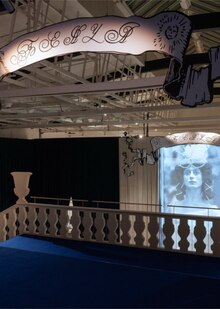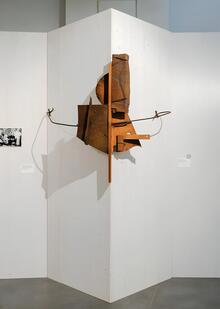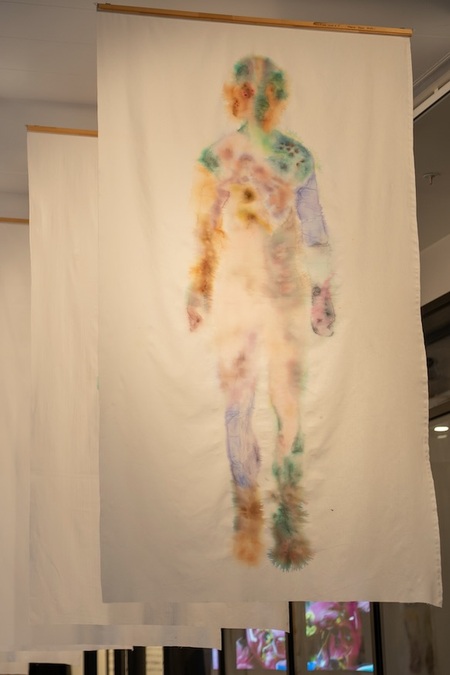
Located on the outskirts of Moscow, within the new premises of Oncology Hospital No. 62, the hosts are not patients, but guests—and they are greeted not by doctors or medical staff, but by artists, art critics, and gallery curators.
From April 17 to May 17, the new wing of Oncology Hospital No. 62 in Skolkovo transformed into the venue for the international contemporary art exhibition «TOGETHER.» Over 70 artists from 18 countries presented more than 200 works, and over 100,000 people visited the venue during the month.
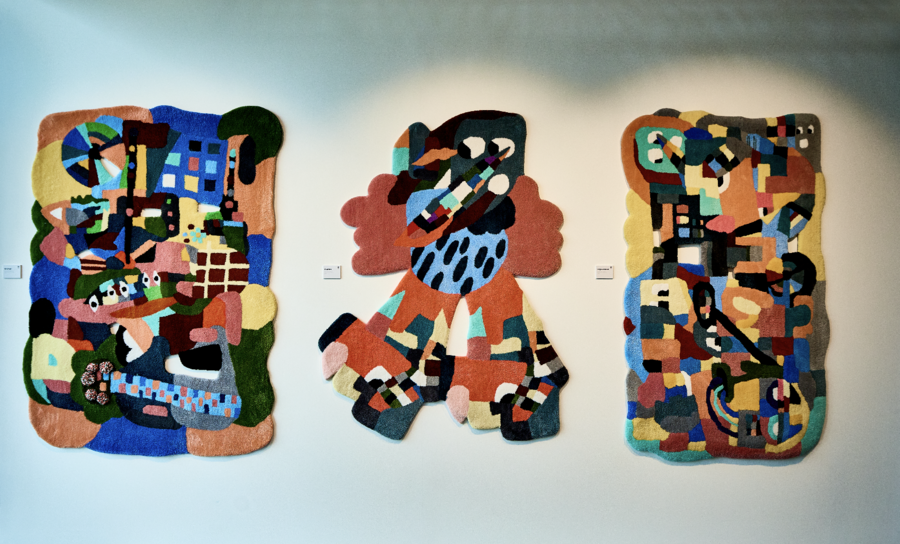
Roma Peeks «Contour, ” „Synthesis, ” „Reflection“
At first glance, the idea seems strange—even a bit crazy. Why fill a space designated for treating serious illnesses with installations and objects, such as Sasha Frolova’s inflatable sculptures or Roman Opal’s philosophical pieces? But this very question became the starting point for the project.
The idea was to shift the focus slightly away from hospital walls toward a more creative environment—so that people would look not at the white walls, but at the paintings of contemporary artists, installations, and other art objects. Oncology today is not a sentence. It is an illness that can be successfully fought. And contemporary art can help with that.
Vitaly Barabanov «Reliquary of Organic Painting»
The exhibition «TOGETHER» was an attempt to see if art could become part of such an environment. Instead of the usual sterile emptiness in the new building, works by artists from Russia, Brazil, South Korea, the United States, Nigeria, Poland, and other countries were displayed.
«Together» is a convergence point for the individual who is alone with their thoughts, fears, and pain. Art should help them emerge from that isolation.


Evgeny Zhelvakov «Myth, ” Dmitry Aske „Healing“
This approach determined not only the composition of the participants but also the fundamental principle of the project: the exhibition was intended to become an integral part of the space where individuals would undergo treatment and recovery.
This project is more than just a move beyond sterility and anonymity; it is an attempt to make art a full participant in the healing process. It does not illustrate therapy or distract from illness; instead, it helps the patient understand that they are not just a patient, but a person—that doctors, loved ones, and people ready to help are always present. For us, this is a vital sign that we are on the right track. Because «TOGETHER» is not a one-time project, but rather a search for the answer to the question, «What should a modern healing environment look like?» and a potential model for hospitals of a new kind, where everything is interconnected: technology, architecture, art, and medicine.
Perhaps this is the project’s most significant outcome. The «TOGETHER» exhibition was less an art event and more an experiment at the intersection of art, architecture, and healthcare. After its completion, a significant portion of the work will remain in the interiors of the new oncology center, and the project itself could serve as a model for what future public and medical spaces might look like.
Misha Most «The Path»
And most importantly, no matter how cliché the phrase «art heals» sounds, it seems to be true. When you are in interiors like this, you have no other choice but to recover.