Things aren’t soulless. It contains the meanings of peace. Modern artists, like philosophers, view the most common things as cultural signs and secret knowledge, as vessels containing the potential of being. You’re looking at five personal exhibitions about the things and routines of charm. Five perspectives on the philosophy of things as proof of human existence, a culture of production and consumption.
Art Museum Multimedia (Moscow) 27.09.2025 — 15.02.2026


Types of personal exhibition «Identified Object» by Andrei Grossičky in MAMM
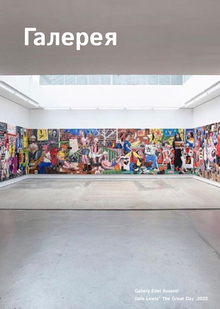
A classic of Soviet and Russian art, Andrei Grossisky, presents in the MAMM halls works that examine, at times from strange and elaborate angles, the everyday things that shape the human world, the background to human behavior. An artist-nonconformist from the early stages of creative activity has tended to do something that she-she-she-she-she has to do with her «usuality, uncooperativeness, prosaicity. But Grossisky goes on thinking about things, looking at the life of a non-living object as a special morphological system. Painting shows some portraits of things — the artist has them on a one — ton background, as if they were isolated from the context. In such a sterile way, there’s plastic analysis, a form experiment, an invoice, and a composition experiment. The sensitivity and sensitivity of the artist to a variety of things, from a tube of paint to a piece of fabric, reveal the inner magic of the object, its sensitivity. In addition to personal, dense paintings, specimens of the „reactivation ritual“ can be seen at the exhibition with lighter and thinner graphics. They associate things with the mysterious ghosts of our lives. ♪ Curators: Anna Zaitseva, Maria Lavrov ♪
Totibadze Gallery (Moscow) 21.01.2026 — 01.03.2026
Alexander Florensky. From the Naturmorets with inscriptions project, 2025. Halst, Vinza plant oil
Alexander Florensky, founder of the «Mitki» art group and author of naive works, presents a relatively new and never-presented series of unturmorets with inscriptions. The «Palitary of Arts» is what the artist calls after Mathis, which he has been collecting for a long time in various places, forming a working arsenal for artistic works. By forming ranks and compositions, the paintings presented form untranslable ironic statements about the existence and organization of everyday life through things. Collecting things is a very thorough and long job in the practice of Florence. Looking for an object, building an emotional and physical connection to it — everything must come together before the artist decides to complete the collection with a new subject for the turmurmores. Another equally important layer of exhibition and works presented on it is the inscriptions on the images. Semi-washed, as if nothing mattered, the text of the boxes and boxes, the destination of the goods, the names are a sign system, a givenness that does not require a special look. But at the same time, it’s a particularly meaningful fabric, depending on the object being studied, its nature, and the message the artist wants to deliver about the world.
ArtZIP Gallery (Moscow) 21.02.2026 — 08.03.2026


Invented 1: ''Vita brevis ars longa''.), 2026. Halst, butter / Izor 2: Left: «Archid Naturmort» (fragm.), 2026. H., m. / Right: 'Vita nostra. 27' (fragmt), 2023. X., Mr. ARTZIP
The title of the exhibit is played by the famous slogan McDonald’s: «I’m lovin' it», translating it from present to past, «I loved it.» Why did love pass away? Viktor Ponomarenko’s artist project, in its creation of a realistic naturmort, where the main actors are things and fast food, explores socially used cultural codes and images. The focus is on the transition of a popular object to an archive space, nostalgia and memories of unrecoverable times. The core of the exhibition consists of paintings with vivid visual motives that send us back to the Russian McDonald’s, a social reality on which many are still bored. An artist thinks of the past as an archive from which rare material can be extracted to keep up memory of the past. The paintings are made in the style of old pictures and simulate their properties: coloured images, noises, distortions. The Naturmortas, with the participation of those very dishes from the Russian PBO market, those packages with the typical «M» logo, those trays, the wrappings, are all built in the form of some kind of monuments that are considered to be collective communisms about another era. These things are ephemeral phantoms that can be called into reality by the discovery of an archive vault. McDonald’s in «I Loved It» is an indication of the everyday environment of my time, a hero of my time.
Triumph Gallery (Moscow) 30.01.2026 — 22.02.2026


Types of exposure of the personal exhibition «Hypersification» by Surjana Shirabdorzhiev at the Triumph Gallery «Triumph» (Photo: Sasha Kowalchuk)
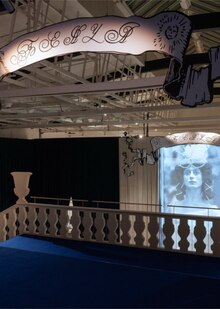
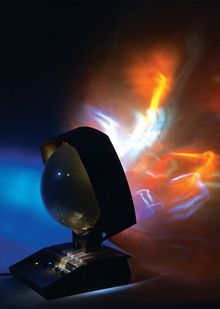
Day-to-day objects in artist’s works mutate and become abstract forms by which she thinks about the nature of art, its autonomy and its boundaries. The exhibition presents graphics and textiles, sculptures and installation. The key medium is the video. Working with experimental forms of visual and sensitive presentation of things and spaces, Surjana focuses on three main experiences: transformation, tactileness and liberation, with every opportunity for creative expression. It becomes a daily exhibition, a digital exhibition is a material one. The usual images of the house are found in an invoice, a new materiality, and a multiplicity. Hypersification is a special skill in the understanding of materiality. / The curator: Arthur Princes
Russian State Youth Library (Moscow) Small Room 20.01.2026 — 22.02.2026


The species of the personal exhibition «Black is White. ♪ White — Black ♪ Andrei Artuhin in the Little Room of the WGBM ♪
At the center of the exhibition is the original book of an artist, which consists of 100 pages of black and white abstract content. It can be left as it pleases; the entry point to the object is not strict; you can sink into the visual world of the author from the middle, from the beginning, or even from the end. The book, as a form of education, is deconstructed to an object for free interaction without a rigid framework and pre-defined installations. In such a publication, the time is different and depends on the pace of reading. The abstractions exist on the thinst line between the letter and the drawing. The line and the dot here are models of recording and leaving their mark. Relying on the usual book model, Andrei Artyuhin asks what happens when the canon stops working and the boundaries between the model and the experiment become permeable. When particular fluctuations and accidents arise, the book ceases to function as a doctrine. ♪ Curator: Daniel Levittes ♪
P. S. If you want to go deeper into the study of the world of objects surrounding us and forming not only a visual culture, but also a creative economy, we suggest that you take a course at the INE Design School of the ECU «Creative entrepreneurship: Substantive design». The program is designed to create a personal unique brand in subject design, ranging from generating ideas and working with local workshops to collaborating with large companies and investors.


The subject is part of the creative economy and modern market of the ICU School of Design.
The author of the text: Michael Arutyunyan on the cover: Victor Ponomarenko. «I loved it» (fragment), 2026. Halst, butter.