Concept
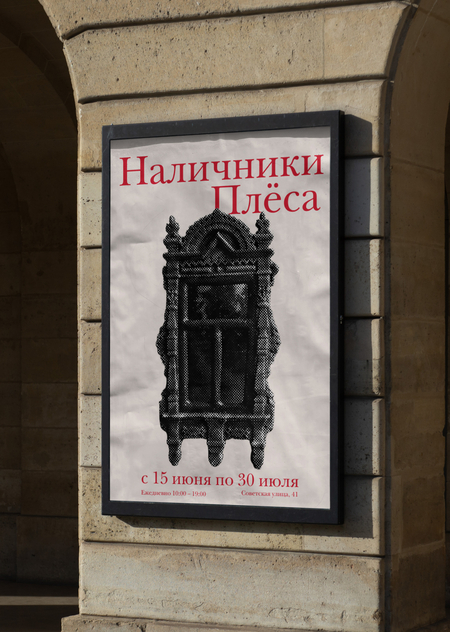
An exhibition dedicated to the carved ornaments on the window frames of old houses in Plyos. Historically, windows were considered the «eyes of the house, ” through which fortune or negativity could enter the dwelling. Therefore, the window frames were viewed as talismans: the carved patterns reflected negative energy and protected the residents. Each pattern held a specific meaning.
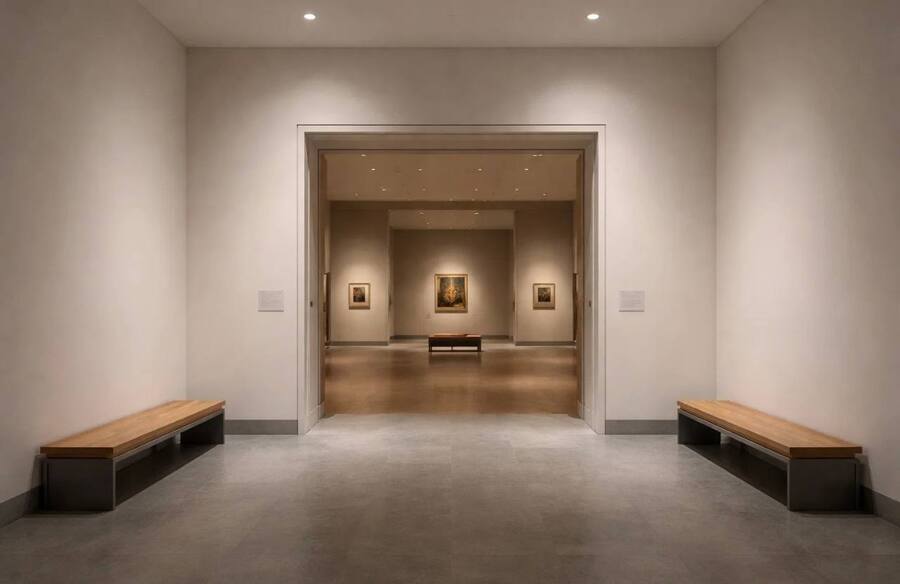
Room 1. Genesis
The first hall is dedicated to the origins of window casings and their appearance in Russian architecture. It explores how the tradition of decorating windows arose, how the shape of the casings evolved, and what significance the window held within a home. The space features photographs of houses with carved casings, fragments of authentic elements, copies of lost patterns, old records, and diagrams. Brief texts help viewers understand the casing’s role as protection, ornamentation, and an important cultural symbol.
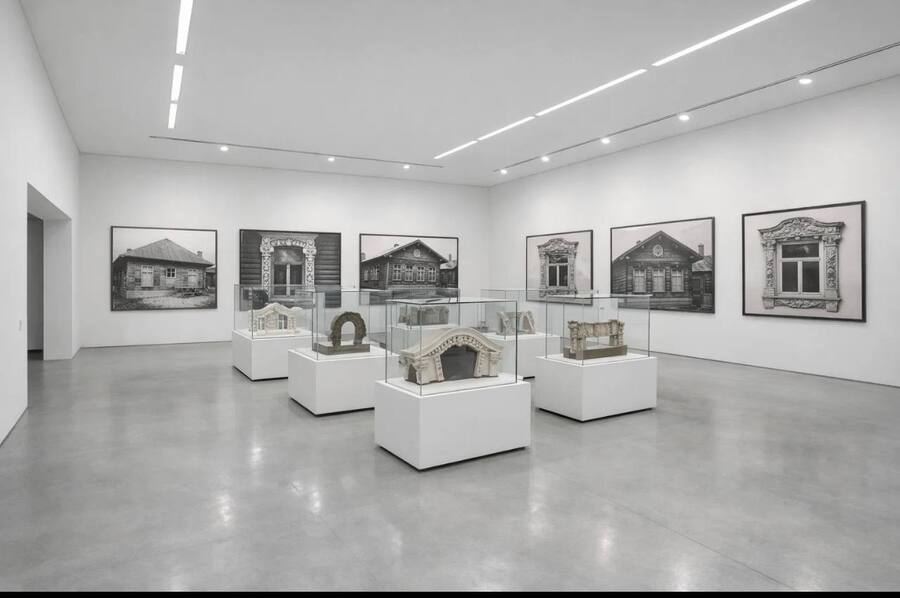
Hall 2. Carving
The second hall showcases the uniqueness of Plyos carving, its fundamental techniques, and materials. The bright space, featuring display cases, resembles a woodworker’s workshop. Here, visitors can view samples of pierced, solid, and scroll carving, as well as the tools used by the masters: plane irons, chisels, and axes. Comparison charts allow observers to see the differences between Plyos carving and ornaments from other regions and trace the specifics of the local tradition.
Room 3. Symbols
The third hall is dedicated to ornaments and motifs as carriers of meaning and cultural memory. The walls are decorated with large, graphic images of the sun, bird, wave, star, and botanical forms. Brief explanations detailing their meanings and functions are displayed nearby. Sketches by masters, large photographs of patterns, and wooden elements help visitors see how a symbol transforms into carving and becomes part of the home.
Hall 4. Project
The fourth hall serves as the culmination of the exhibition, integrating everything the visitor has learned previously. At the center of the space is an authentic window casing, mounted at eye level and highlighted by soft, focused lighting. Visitors can examine it from all angles, grasping the volume and depth of the carving. Photographs of houses and symbol diagrams help connect this object to the real architectural environment and tradition.
Room 5. Workshop
The fifth hall concludes the exhibition with an interactive zone. Here, visitors are invited to assemble patterns independently at a large table using wooden modules and templates. Sample compositions provide guidance, but each person can create their own variation. This space offers the opportunity not just to see and understand, but also to practically experience ornamental logic.
Identity