INDEX
1. Concept 2. Kotofey Kotofeyevich 3. It’s Hot in Africa 4. Brave Sailor 5. Conclusion 6. List of Sources and Literature
CONCEPT
How did American animation change the faces, movements, and plots of early Soyuzmultfilm films? In 1930s Soviet cartoons, surprisingly common details appear that are already familiar to us: white gloves, large eyes, round faces, and the movements of elastic toys. It seems as if Disney characters simply changed clothes to become characters from Russian fairy tales. A large number of visual and production techniques from those years came to us from American animation, despite the fact that much of it remained Soviet.
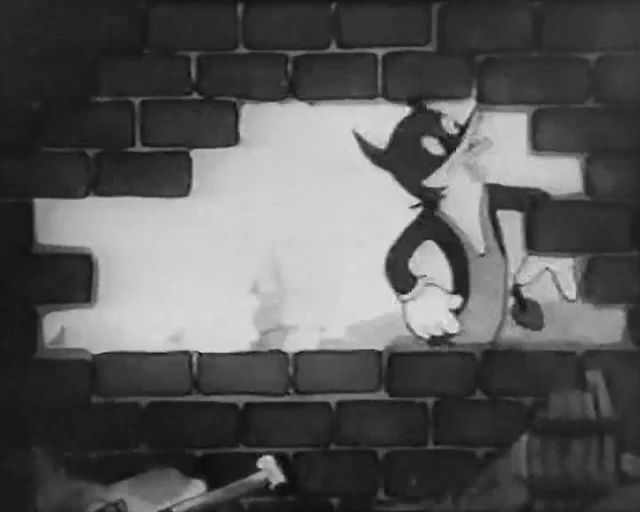
Frame from «The Fox-Builder,» 1936
First, your own path—then Disney. This isn’t about wholesale imitation, but about adopting professional techniques, and it didn’t begin immediately: a sharp turn occurred in the mid-1930s.
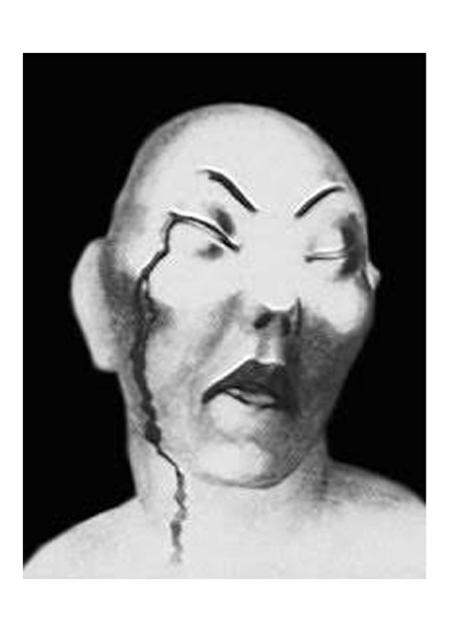
If we trace the timeline of events, Soviet animators began their first experiments in the 1910s and 1920s. They were searching for their own visual language, experimenting with graphics, cutout, and drawn animation. There was no single, Disney-esque formula, nor was there yet a clear indication of an American signature in the work of Soviet creators. Their creations were distinct. For example, during this time, «The Beautiful Lucanida, or The War of the Horned and Moustached» (1912) and «China in Flames» (1925) emerged. Each one is unique in style and unlike the other works, including American ones. The creators invented their own worlds and their own stories, telling them in their individual styles.
Subsequently, from 1924–1935, Soviet masters, while continuing to experiment with various styles, began to look to American animation as a significant benchmark: sound, expressive plasticity, and musical structuring became experiences borrowed from international counterparts. Through official imports and cultural exchange of the time, the first screenings of American short animated films (such as «Silly Symphonies» and «Three Little Pigs») were held in the USSR. Around 1935, a turning point occurred as these cartoons generated tremendous interest among both audiences and industry professionals. Concurrently, active debates and discussions emerged in the press regarding the working methods of the Disney studio, assembly-line production, and how to adapt this experience for the nascent domestic studio, Soyuzmultfilm.
Still from the short film «Dance of the Skeletons,» part of the «Silly Symphonies» series, 1929.
The American example is noticeable, and this similarity is apparent to the naked eye. Soviet animators actively employ Disney’s methods and the visual character designs of Elsie Chrysler, Pat Sullivan, and other prominent international professionals.
In 1936, the new studio Soyuzmultfilm launched, adopting assembly-line production, the division of manufacturing tasks, and celluloid animation technology from its American counterparts. To conduct a detailed analysis of these borrowings, the animated features «Kotofey Kotofeyevich» (1937), «Hot in Africa» (1936), and «The Brave Sailor» (1936) were selected. They showcase rounded shapes, «rubbery» plasticity, and musically organized comedy.
KOTOFEY KOTOFEEVICH
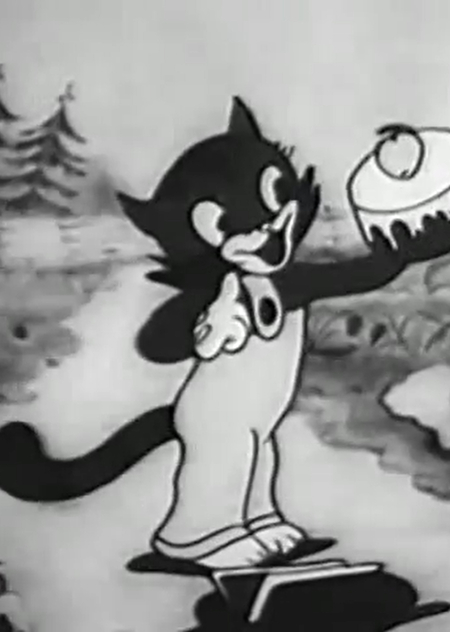
Kotofey Kotofeyevich, 1937
One of the earliest cartoons from Soyuzmultfilm references a Russian folk tale. Here, we meet a trusting rooster, a clever cat, and a cunning fox. The plot belongs to the Russian fairy tale tradition, yet it feels structured according to the conventions of a familiar American screen comedy. What matters is not a specific facial detail, but the character’s entire manner of existence: a simplified form, active facial expressions, and exaggerated gesture. The cat doesn’t behave like a real cat, nor does it behave exactly like an animal from a book illustration. It plays a role, like an actor in an animal costume. The main character of the cartoon, «Kotofey Kotofeyevich,» adopted several different characteristics devised by American masters.
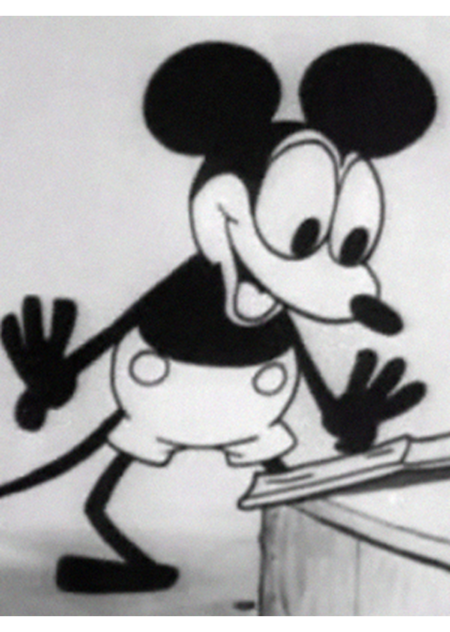
First and foremost, Mickey Mouse certainly had an influence. Mickey has a contrasting black head, large eyes with small triangular pupils, white gloves, and «hose"-like hands. In «Cat Cafe,» the Soviet fairy-tale character also acts not like a real cat, but like a comedic American actor: his gestures are exaggerated, his silhouette is simple, and his facial expression is instantly readable. And, of course, it wouldn’t be complete without the signature Disney white gloves—every character in the Soviet cartoon has them. But the most intriguing detail isn’t just the surface-level resemblance. Researcher Valery Pozner cites criticism of the film regarding the «American cat» who bakes an «American pie» in an «American oven.» In other words, his contemporaries already noticed the similarity.
A Comparison of Mickey Mouse and Kotofey Kotofeyevich
It results in a very strange combination. The narrative seems meant to reference a familiar folk tale, but the character’s language is reminiscent of an American short film. There is something charming and slightly awkward about that.
Soviet artists at the time had not always managed to connect the external appearance with the character’s internal logic: making a character expressively «American» happened faster than finding a unique set of habits for them. But these are the films that show the artists were not just learning to copy round eyes; they were mastering a highly complex way of telling a story through the body.
A Comparison of Felix the Cat and Kotofey Kotofeyevich
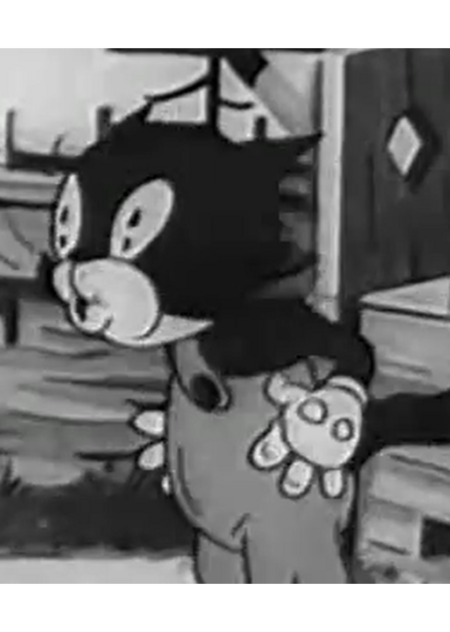
However, Mickey Mouse is not the only character with whom Kotofey shares external expressive similarities. Another character that Ivan-Vano relied on when creating the animated film was Felix the Cat. Placing them side-by-side reveals obvious resemblances in silhouette, facial features, eyes, and small triangular ears. But, of course, this resemblance is far broader than just a stylistic choice. In this comparison, the American film serves as an example of an already established language of movement and acting expressiveness, rather than a presumed original for redrawing. My goal was not to find a formal overlap between two shots, but rather a broader reason why the Soviet character seems so familiar to the viewer. The more closely one observes his behavior, the clearer it becomes that the American influence pertains to the very method of bringing the character to life.

Both Felix and Kotofey act as little comedic performers. They require little complex character explanation: their manner of movement, hand gestures, and reaction to events are enough. The character’s body is composed of simple, rounded forms. The arms and legs bend more freely than real limbs, and emotion easily transforms into movement of the entire torso. This convention makes the character simultaneously funny and very convenient for animation—the viewer almost instantly understands whether the character is rejoicing, angry, embarrassed, or trying to make an impression.
IT’S HOT IN AFRICA
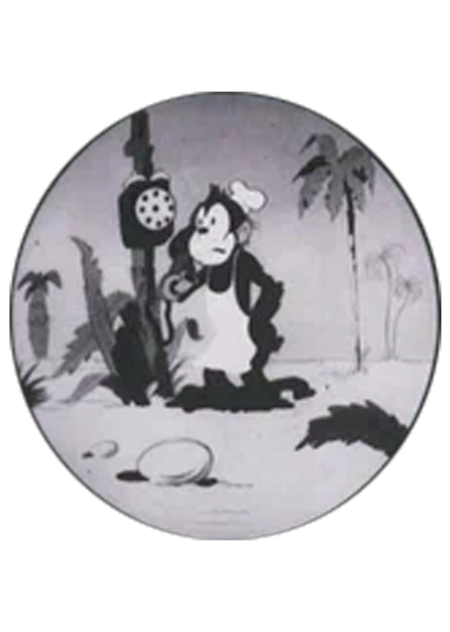
«It’s Hot in Africa,» 1936
«It’s Hot in Africa» by Dmitry Babichenko and Alexander Belyakov (1936)—another of the earliest films from the new studio. Its plot revolves around African animals suffering from the heat and the unusual journey of a monkey seeking ice cream. Here too, some of the most recognizable principles of American animation are visible: the animals exhibit human behavior, yet they remain abstract enough to allow for impossible movements. The protagonist can behave as a musician, a slacker, a worker, or a comic failure, and its animal appearance only makes the role more expressive. Movement becomes an extension of the character. The viewer recognizes the archetype by the walk, the pace of reaction, and the nuances of gesture. Even when the story is simple, it is filled with small scenes that rely on this differentiation of characters.
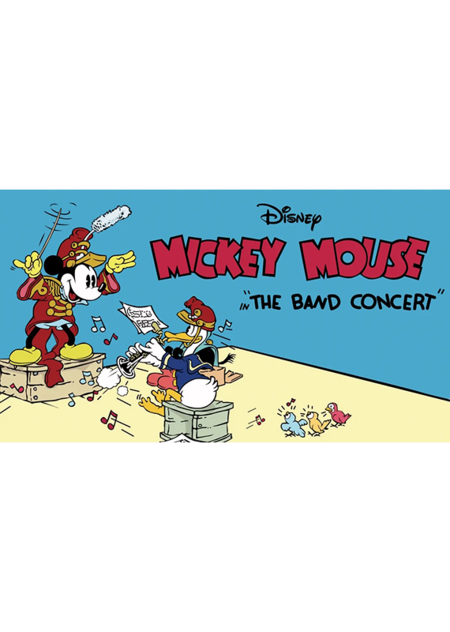
This organization is reminiscent of American comedy shorts, particularly films where the narrative is built not around a single dramatic conflict, but around a series of expressive actions. However, it is impossible to convincingly argue that «Hot in Africa» reproduces any specific scene from, for example, «The Wise Little Hen» or «The Band Concert.» The American films of that era serve as exemplars of a general approach to depicting animals and working with comedy—it is a comparison of school and aesthetics.
Comparison of «Concert» and «It’s Hot in Africa»
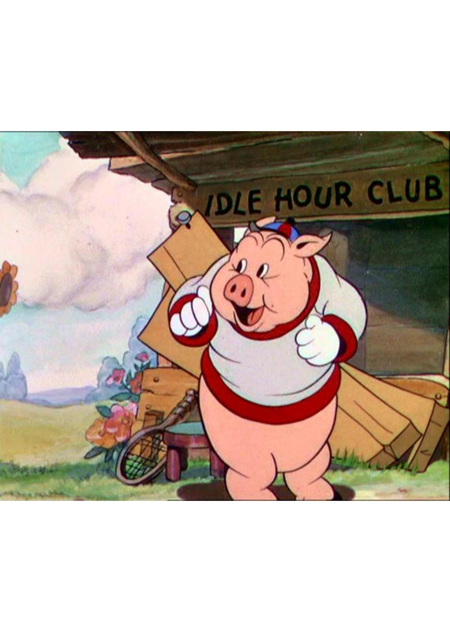
It is impossible to ignore the external similarities in the characters: eyes, faces, paws, expressions, and «rubber» limbs. It is difficult to state definitively, but I surmise that the very style and the way the characters were drawn in the animation were inherited by Soviet masters with the understanding that such forms are easier to animate, given that they already had a visual reference of how they should move. While studying the art of animation and mastering new techniques and methods, the Soviet masters had to rely on what had already been invented.
«It’s Hot in Africa» effectively illustrates both the strengths and the limitations of the American experience. On one hand, the characters are highly accessible to the viewer, and their exaggerated actions help make the story understandable without lengthy exposition. However, within such a universal design, some individual animals can sometimes lose their distinctiveness.
They become participants in a larger comedic system rather than independent characters. The situation is immediately clear without complex setup: what matters is not the psychologically deep backstory of each animal, but the shared comedic world governed by conventional rules. The animals behave like people, easily join the collective narrative, and help propel the episode’s momentum. Perhaps it was this very limitation that later prompted Soviet artists to seek alternative ways to depict animals—making them more characteristic, more literary, and occasionally more psychologically nuanced.
«It’s hot in Africa,» 1936