MEDIA CONCEPT
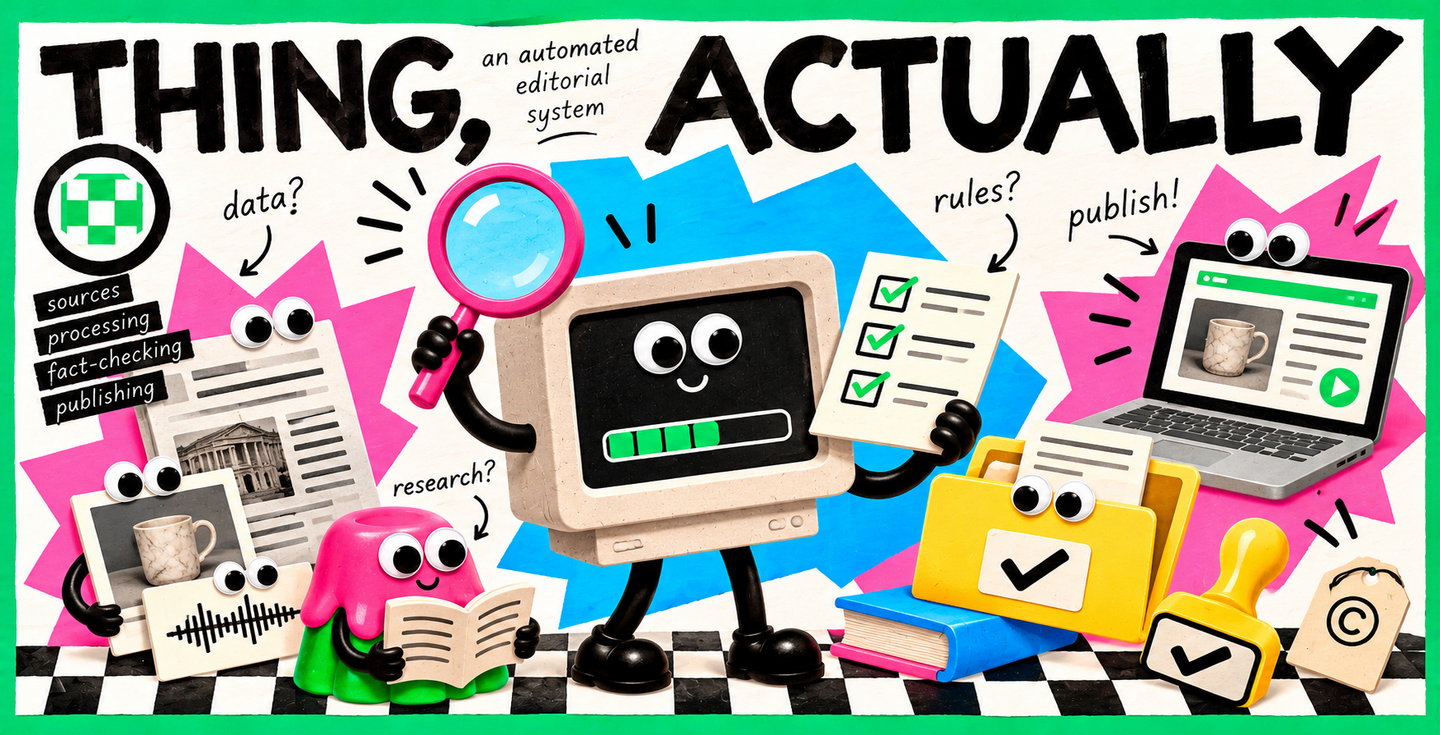
THING, ACTUALLY — a cultural media platform about everyday objects and the meaning they acquire in human life.
We use dozens of objects every day, rarely pausing to consider why they are designed the way they are, or what habits, norms, and relationships underpin their use. Media offers a way to view familiar objects from a different perspective—not merely as functional items, but as cultural artifacts.
Key Question: What can ordinary objects tell us about people and society?
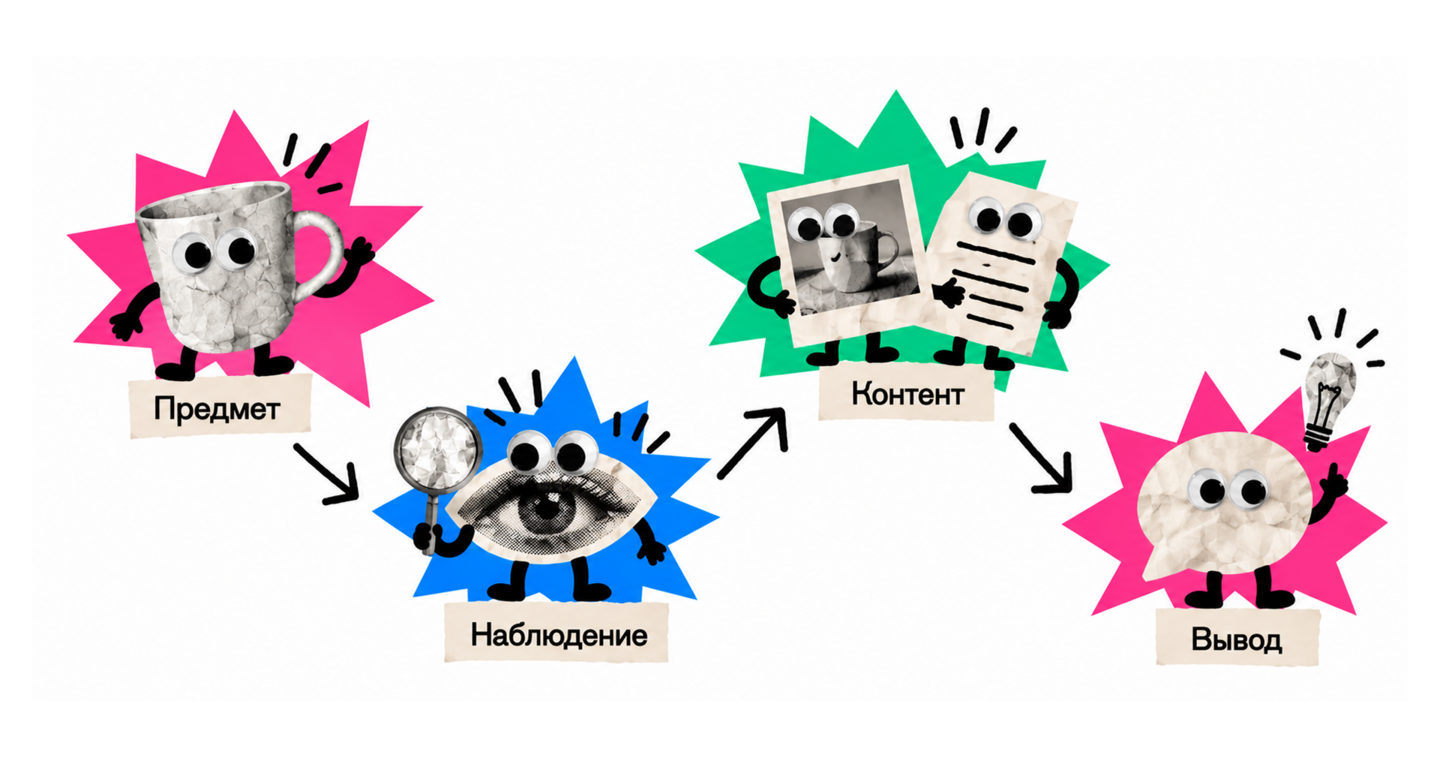
Goal: To explore everyday objects through their connection to human behavior, social norms, values, and cultural practices.Key Feature: Each project begins with a specific object but gradually expands into a broader inquiry about the human condition. For instance, headphones can prompt a discussion about personal boundaries, pockets—about independence and social roles—and a chair—about hierarchy and etiquette.
Editorial Principle
The media is targeted at a B2C audience: students and professionals in creative industries, humanities scholars, active consumers of culture, and individuals curious about the unusual aspects of the familiar.
MEDIA DATA SOURCES
The informational basis of THING, ACTUALLY is composed of: museum collections, scientific research, cultural media, visual archives, and observations of daily life.
Museum and Historical Sources help establish the origin and function of objects.Academic Research explains their social and cultural significance, while user observations and narratives allow us to examine things in the context of contemporary life.
Categories of Media Sources
Source Utilization Principles
Sources serve diverse functions: cultural media and communities aid in identifying topics, while museum and academic materials are used to substantiate historical and theoretical claims, and personal observations provide examples for further investigation.
Thus, this data is used not only for collecting facts but also for identifying cultural connections that form the basis of our original editorial content.
DATA SCHEMA WITH PROCESSING SEGMENTATION
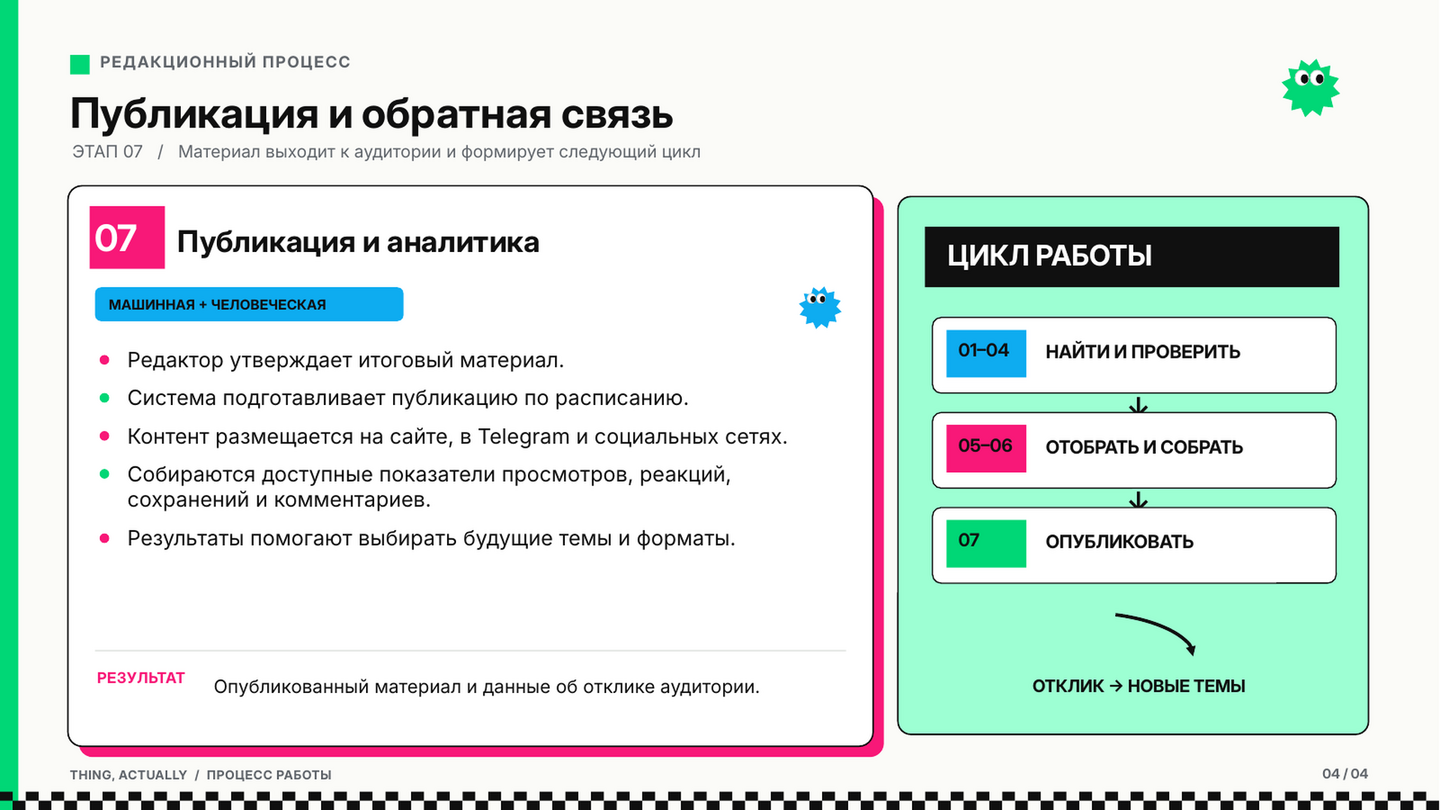
Core Principle: the machine handles data collection, structuring, and preliminary processing, while the human is responsible for authenticity, interpretation, and editorial decisions.
Every piece of content goes through several sequential stages, from initial research to final publication.
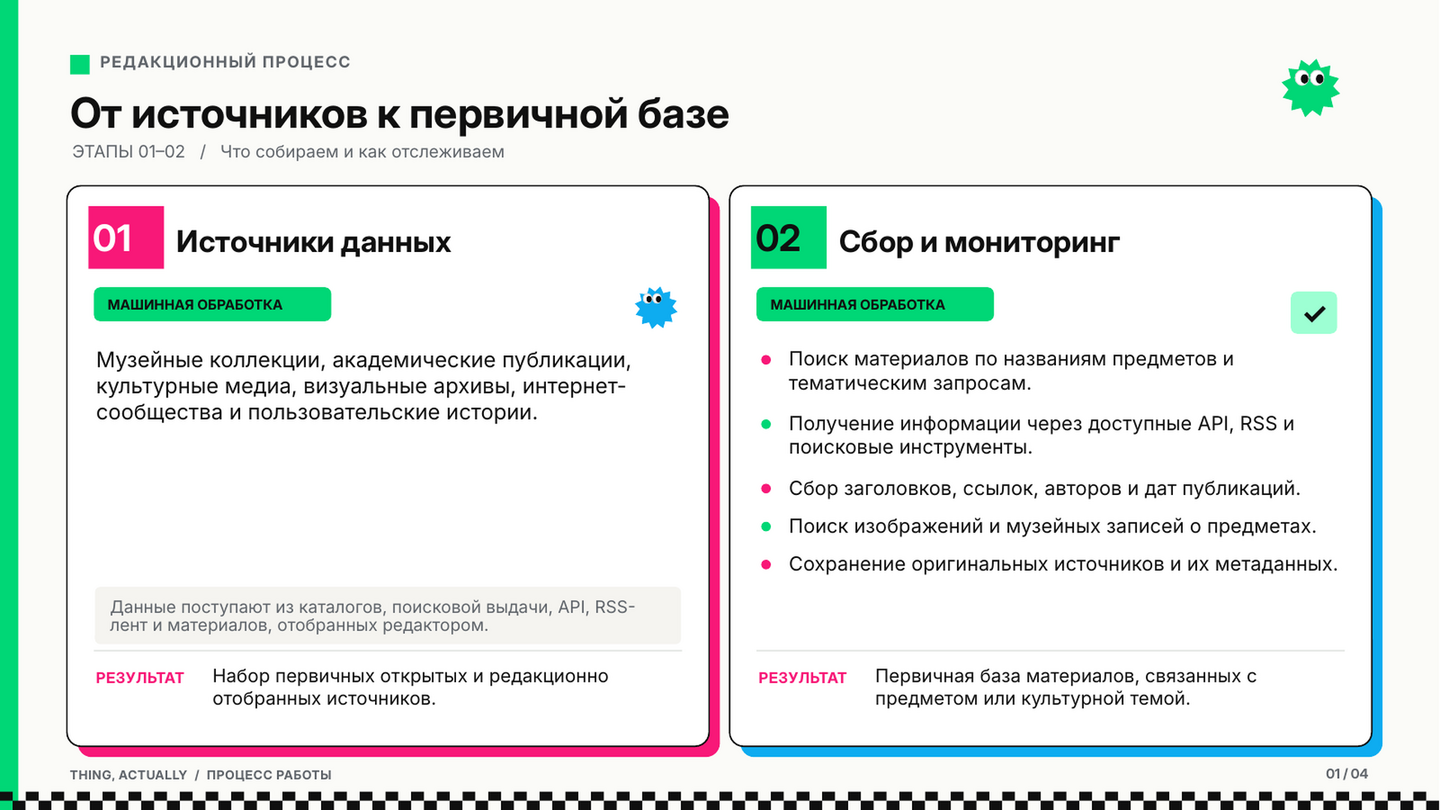
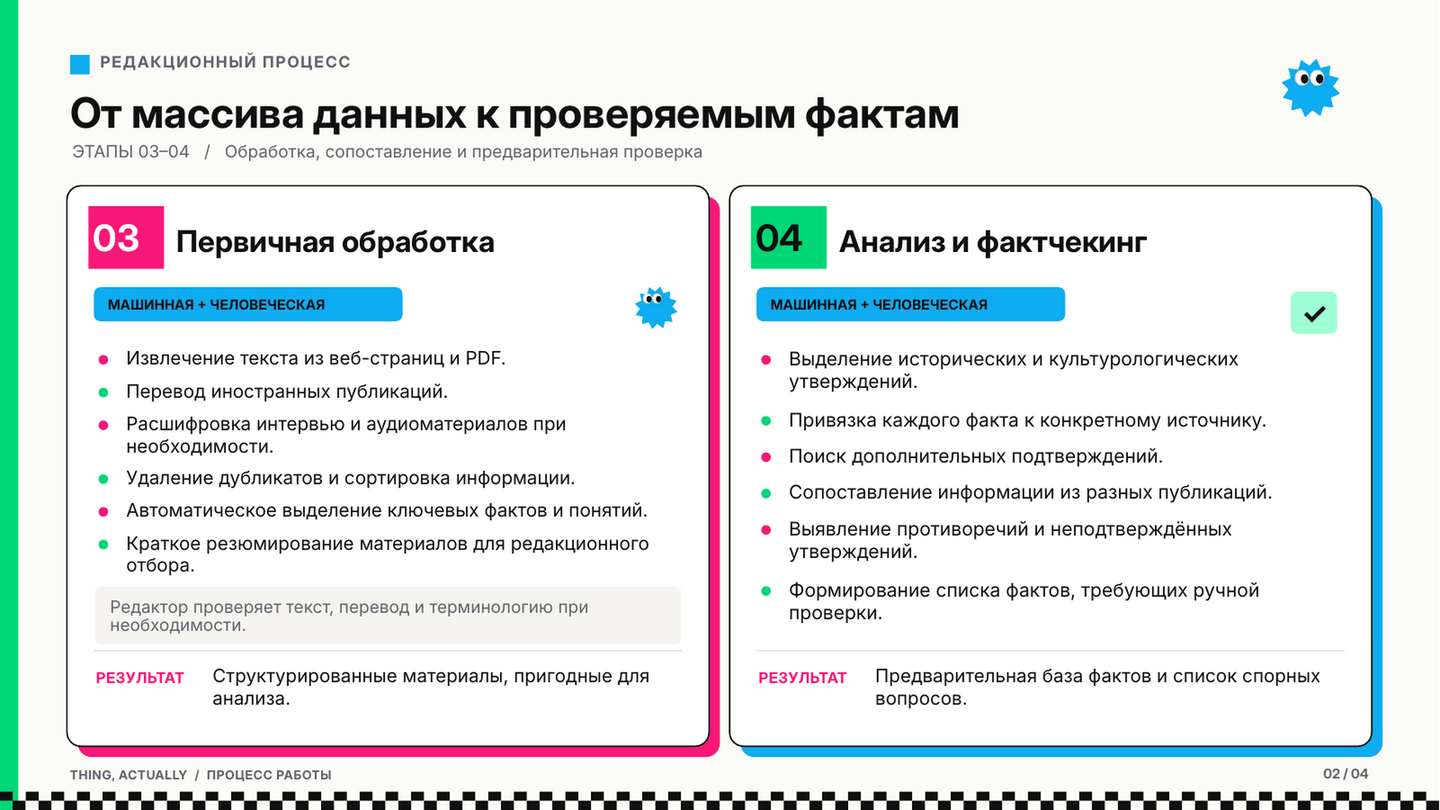
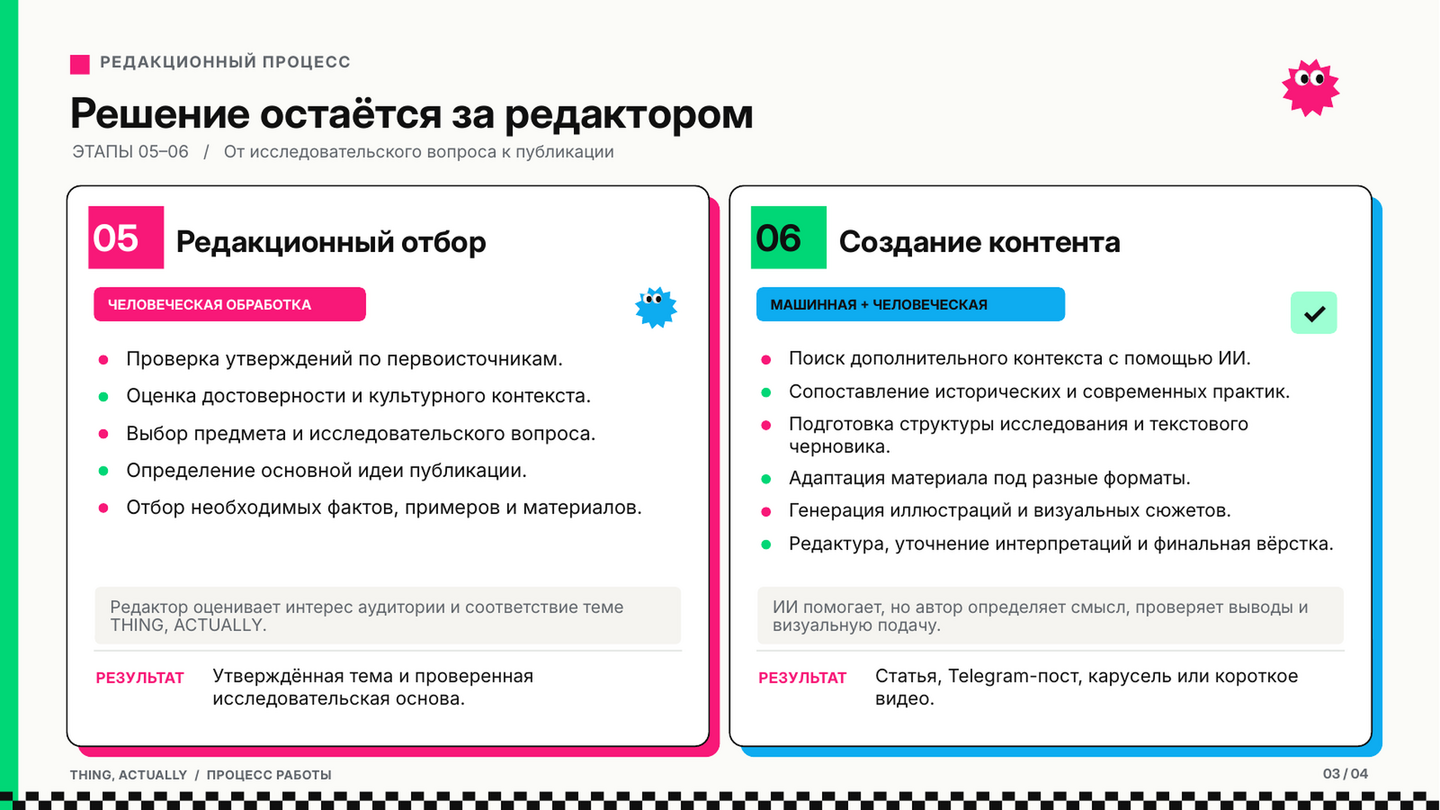
Data Schema with Processing Separation
Final WorkflowData Sources → Collection and Monitoring (machine) → Primary Processing (machine + human) → Preliminary Analysis and Fact-Checking (machine + human) → Editorial Selection (human) → Content Creation (machine + human) → Review and Publication (human + automation)
GUIDELINES FOR AUTOMATED SERVICES IN THE SCHEME
THING guidelines establish the rules for working with automated tools at every stage of content production. Their goal is to maintain informational accuracy, a unified editorial approach, copyright integrity, and a recognizable visual language.
Tools and Processing Guidelines
Additional Editorial Guidelines
1. Factual Accuracy
Any historical or cultural assertion must be supported by a specific source. The AI must not invent facts, quotes, authors, or research findings independently.
If sources contradict each other, the information must be forwarded for editorial review.
2. Cultural Context
Isolated practices cannot be presented as universally applicable to all of humankind. When comparing different societies, it is necessary to take into account the historical period, geography, and social conditions.
For example, differences in clothing design or storage methods should not be explained solely by gender without considering the historical context.
3. Text and Tone of Voice
Materials should be research-driven yet accessible. Irony, unexpected comparisons, and colloquial phrasing are permissible, but they must not supersede factual accuracy.
Every publication must transition from a specific object to a broader inquiry concerning humanity and culture.
4. Visual SystemGenerated images must align with the THING, ACTUALLY style: bright, experimental graphics, collage compositions, anthropomorphic everyday objects, and small narratives between them.Illustrations are created without embedded text. Typography is added during the layout phase.Generative images are intended as artistic interpretations, not as documentary evidence.5. Copyright and Personal DataBefore using archival images, you must review the license terms and cite the source when required.User stories, photographs, and interviews are published only with the consent of the participants. Personal information is not transferred to generative services without proper authorization.6. Editorial ControlThe final publication decision rests with a human editor. Automated tools can create drafts, suggest interpretations, and adapt content, but they do not replace fact-checking or editorial judgment.
CONCLUSION
THING, ACTUALLY uses artificial intelligence to automate routine stages of media production: data searching, extraction, and systematization, draft preparation, visual generation, and publication adaptation.
However, the cultural interpretation, verification of accuracy, and editorial decisions remain with the human team. This system allows for the regular release of materials across various platforms while maintaining the project’s research depth and integrity.