Световая архитектоника и микроархитектура
Light architecture is a method of spatial organization in which light is used not simply to illuminate an interior, but as a physical and metaphysical building material. Microarchitecture is a phenomenon where small decorative and applied arts, or small architectural art, re-enacts the logic, proportions, and tectonics of a monumental building.
Primitivism and the Ancient East: The Göbekli Tepe Sanctuary and the Temple of Amun-Ra at Karnak
Archaic perceptions of light were built upon the astronomical orientation of structures. In the megalithic complex of Göbekli Tepe (c. 9600–8200 BCE) and subsequent ancient Egyptian temple complexes, such as the hypostyle hall of the Temple of Amun-Ra at Karnak (c. 1290–1224 BCE, New Kingdom), the light architecture functioned as a grand sacred director. At Karnak, the architectural volume is constructed through a gradual deepening of shadow as one moves from the open sun court toward the deep sanctuary.
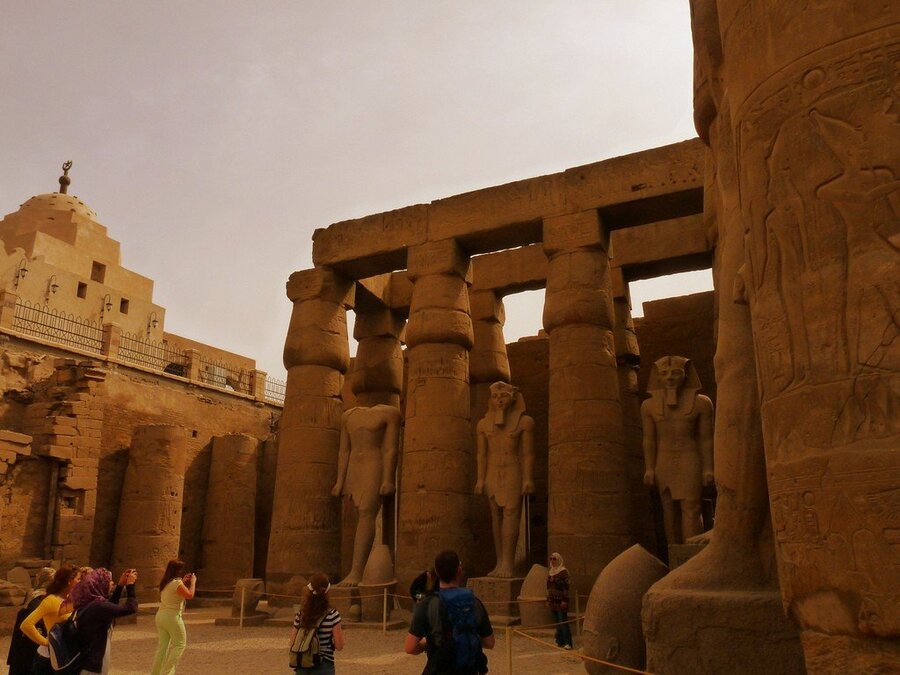
Upon entering the hypostyle hall, the visitor experiences a stark optical contrast: the bright, blinding light of the Egyptian sun gives way to a cool, rhythmically segmented twilight. Monumental columns, topped with capital capitals shaped like unfurling papyri, capture the upper rays of light, emphasizing the deep relief of the hieroglyphs and the surface’s colored pigmentation. The texture of the sandstone absorbs the soft light, amplifying the sense of eternity and the immutability of the sacred center.
Antiquity: The Parthenon and the Luminous Architecture of the Greek Sanctuary
In the art of Classical Ancient Greece (5th century BCE), light was viewed as an manifestation of rational order and harmony (cosmos). The Parthenon (447–432 BCE), created by architects Ictinus and Callicrates under the direction of sculptor Phidias on the Athenian Acropolis, is a peripteral structure made of Pentelic marble.
The light architecture of the Parthenon is based on a meticulously calibrated system of exterior illumination. The building lacks large interior windows; the primary stream of light entered through the eastern doorway on the upper level, reflecting off a shallow pool of water (or oil) situated before the 12-meter Chryselephantine statue of Athena Parthenos. The exterior peristyle creates a complex interplay of light and shadow: the fluted columns of the peripteral colonnade catch the natural light from various angles, visually lightening the mass of the marble entablature.
Roman Empire: The Pantheon and Its Light-Filled Oculus
The Roman architectural revolution of the 1st–2nd centuries CE, spurred by the invention of monolithic concrete (opus caementicium), fundamentally altered how space was illuminated. The Pantheon in Rome, reconstructed by Emperor Hadrian around 118–128 CE, stands as the apex of ancient light architecture.
The only source of direct light in the rotunda is the oculus—a circular opening 8.9 meters in diameter at the apex of the hemispherical dome. The light does more than simply illuminate the interior; it forms a focused solar beam that moves across the coffered vault and the marble wall cladding throughout the day, acting as a giant sundial. The building is isolated from the surrounding urban noise, containing the entire luminous and sacred experience within an ideal sphere (the diameter of the rotunda equals its height—43.3 m).
The Pantheon demonstrates the absolute triumph of interior space over external volume. The coffers of the dome (5 rows of 28 coffers) visually lighten its mass and create a complex chiaroscuro pattern that intensifies toward the center. The shaft of light falling from the oculus possesses a palpable density («tangible light»). It illuminates the polychrome marble floor and the niche statues of the gods, connecting the earthly temple to the celestial dome. In the Roman state-religious concept, the Pantheon symbolized a model of the cosmos, where the emperor and Rome were under the direct gaze of the heavenly eye.
Crystal and silver reliquary model of a temple (Microarchitectural Object)
This piece is a unique example of ancient microarchitecture, reproducing in miniature the form of a tetrastyle (four-columned) Roman temple.
The object’s light architecture is based on the optical properties of rock crystal: the transparent walls allow light to pass through, refracting it and causing the interior space of the miniature temple to glow from within. The silver frame accentuates the pediment, entablature, and ordered proportions.
The micro-architectural object exhibits the highest degree of detail: delicate fluting on silver columns, a miniature acroterion atop the roof. Light passing through the faceted crystal creates a play of highlights, transforming the object into a jewelry model of a sacred space.
In antiquity, similar objects served as votive offerings in large sanctuaries or as repositories for sacred oils and relics. They vividly demonstrate the principle of scalability within the ancient orders system.
The concept of a transparent micro-architectural vessel made of crystal and precious metals directly transitioned into early Christian and medieval art through the creation of reliquaries—edicules and tabernacles.
Santa Maria Maggiore Basilica Santa Maria Maggiore is a quintessential example of an early Christian basilica, where the light architecture serves the idea of a triumphant procession from earthly to heavenly Jerusalem. The space is divided into three naves by rows of ancient marble columns.
Natural light enters through numerous tall windows on the side walls of the main nave (the clerestory). Since the walls are not burdened by heavy vaults (the ceiling is flat and coffered), the light floods the interior in a uniform flow, creating a solemn, bright atmosphere reminiscent of a Roman basilica.
The compositional scheme of the early Christian basilica, featuring a developed clerestory and a triumphal arch, laid the foundation for all Western European church architecture of the early and High Middle Ages.
Basilica of San Vitale in Ravenna (San Vitale)
San Vitale is a unique monument of Byzantine architecture, featuring a centralized octagon topped with a high central dome. The light architecture here radically differs from longitudinal Roman basilicas: light streams in from all sides through numerous windows on the upper level of the dome’s drum and the galleries (emporia).
The Exedra system (semi-circular niches with arcades) fragments the light flow, creating a complex play of soft transitions from deep shadow in the flanking galleries to the blinding brilliance of the central vaulted space.
In Byzantine aesthetics, light was interpreted as the «Uncreated Light» of Mount Tabor—a manifestation of the divine essence that transforms coarse matter of stone and brick into the image of the Heavenly Jerusalem.
Interior and Mosaics of St. Vitale’s Basilica
Procopius of Caesarea wrote that the cathedral «is not lit by the sun from the outside, but the light is born within itself.» The flow of light here completely dissolves the heaviness of the stone walls, clad in thin layers of multicolored marble cut to create symmetrical patterns («watery» swirls).
The golden mosaics on the walls and vaults reflect the rays, filling the space with a soft, pulsating glow. In Byzantine theology, Sophia (Divine Wisdom) was identified with the divine Logos and the Light that illuminates every person.
Hagia Sophia became the absolute archetype for Orthodox church architecture for centuries, and during the Ottoman era, its structural and lighting principles were reinterpreted in Islamic mosque architecture.
Byzantine Cross Reliquary (Microarchitectural Object)
The microarchitectural composition of the cross mirrors the structure of a church iconostasis and altar screen: the front face is engraved with images of Christ and the Theotokos, surrounded by geometric ornamentation that mimics architectural arcades.
In Byzantine culture, the reliquary cross was perceived as a portable temple and a cosmic bastion of protection for its owner. The light playing across the gold and enamel emphasized the sacred purity and timelessness of the relic.