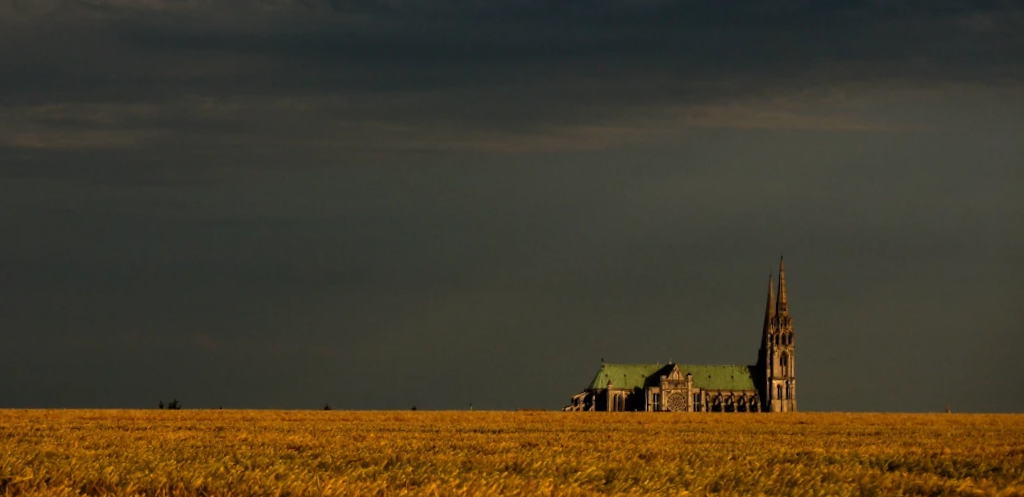
страшно красиво
concept
Gothic cathedrals have always drawn me in with their architecture. The high vaults, arches, stained glass, and stone carvings create harmonious compositions. However, along with my admiration, I feel a sense of unease. The cathedrals seem mysterious, and at times, frightening. I became curious about why such contrasting impressions arise when viewing the same structure.
First, I tried to understand exactly which features of the cathedral elicit these feelings. From a distance, the sheer size of the façade and the rhythm of its elements are particularly noticeable. As I get closer, my attention shifts to the delicacy of the carving and the beauty of individual details. Inside, the gaze is directed upward, and the stained glass alters the perception of light. The sculptures, in particular, produce a contradictory impression: among the decorative elements are depictions of demons, suffering, and the Last Judgment.
I wondered if this perception was unique to me. By consulting the writings of later authors, I discovered various descriptions of the expressiveness of the Gothic style. Victor Hugo, in The Hunchback of Notre-Dame, creates an image of a building that sometimes seems almost alive and terrifying. John Ruskin highlights the severity and grotesque nature of Gothic forms. Horace Walpole deliberately references the gloomy atmosphere of medieval abbeys and cathedrals. Their views differ, but they all demonstrate the ambiguity of the Gothic image.
All these testimonies appeared centuries after the medieval cathedrals were constructed. Therefore, I wondered if my own perception has been influenced by literature, art, and film, where the Gothic is often associated with mystery and danger. But if its dark image developed later, why is it tied specifically to this architecture? Perhaps subsequent culture focused on characteristics that were present in the cathedrals from the very beginning.
The central question of my study is: why do Gothic cathedrals appear both beautiful and frightening to me, and what is the foundation of this impression?
To find the answer, I will first consult medieval monuments. Using Amiens Cathedral as an example, I will examine how height, arch rhythm, and vaulting structure influence the sense of scale. Then, I will investigate the role of light in Saint-Denis and Chartres, tracing how the colored composition of the stained glass reveals the religious narrative. I will compare the Portal of the Last Judgment at Bourges with the West Rose of Chartres: how a single narrative in stone and glass allows for an exploration of the connection between beauty, judgment, and punishment.I want to begin with the most basic observation—how the impression of a cathedral changes depending on distance and viewpoint. To do this, I will first look at the building as a whole, and then I will zoom in on its architectural details.
Beauty that provokes anxiety
First Impression
When viewing a Gothic cathedral as a whole, the sheer scale is the first thing that captures attention. Tall spires, pointed arches, and numerous sculptures unite to form a rigid architectural composition. Yet, this harmony does not eliminate a sense of unease.I am interested in what specific features of these buildings allow them to be perceived as both beautiful and somewhat frightening simultaneously.
From Whole to Detail
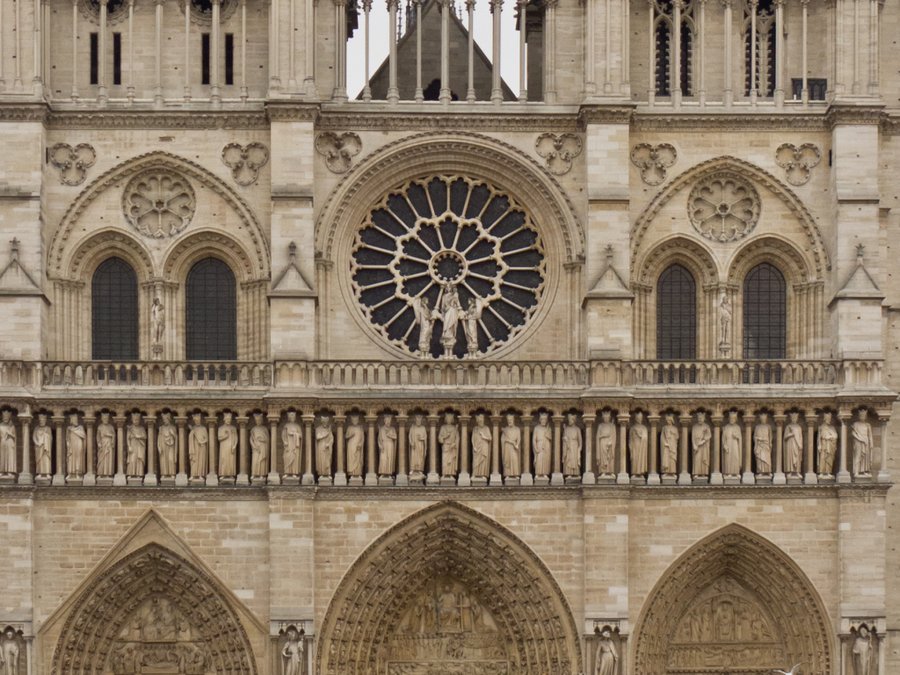
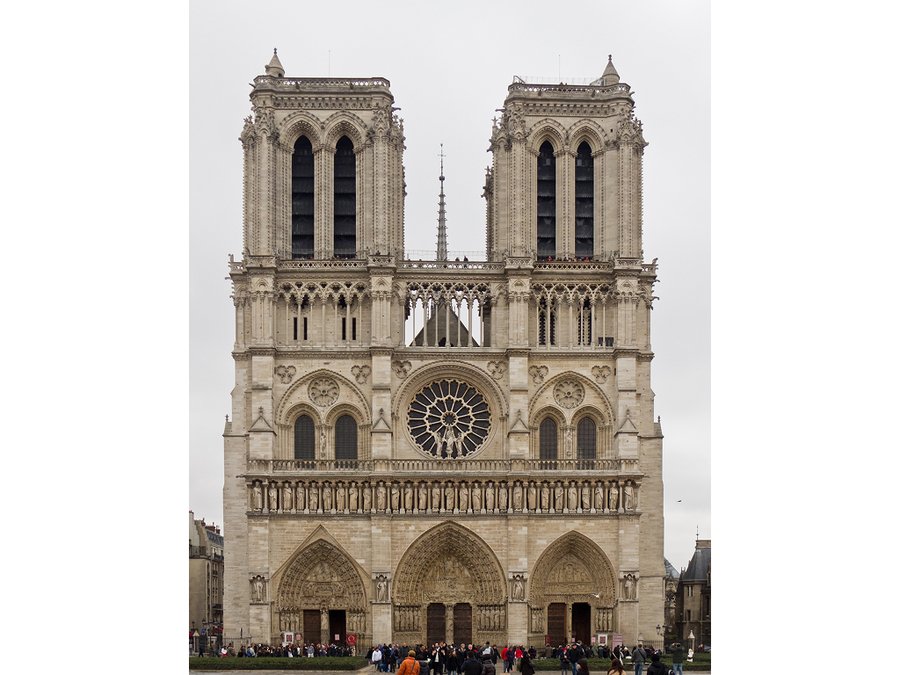
As the façade approaches, the impression shifts. The monumental structure transforms into a composition of carefully executed elements—arches, decorative carvings, and sculptures. Individual details draw attention with their masterful craftsmanship, while the overall appearance emphasizes the building’s immense scale. This suggests that different sensations can arise depending on the distance from which we view the same architecture.
A Different Perspective on Gothic
Drawing from literature and art history, I discovered that the unusual expressiveness of Gothic architecture appealed to authors of later eras. Victor Hugo crafted a fantastic and sometimes frightening image of the cathedral in his novel The Hunchback of Notre Dame. John Ruskin emphasized the severity and grotesque nature of Gothic forms, while Horace Walpole deliberately evoked the somber atmosphere of medieval abbeys and cathedrals. These authors interpreted Gothic architecture in different ways, yet their texts attest that its architecture could become the foundation for unsettling and mysterious artistic imagery.
Where does the somber image originate?
All three authors addressed medieval architecture centuries after its creation. Later, Gothic forms were frequently employed in literature and cinema to establish an atmosphere of mystery and danger.
Therefore, I hypothesized that my own perception might also have been shaped by later culture.
However, a question arises: why did Gothic cathedrals become associated with such imagery? To answer this, it is necessary to turn to the medieval monuments themselves.
The Grandeur of Architecture and the Space of Light
Architecture Beyond Humanity
The interior space of Amiens Cathedral is organized by a system of tall piers, pointed arches, and ribbed vaults. Vertical lines direct the gaze upward, and the repetition of architectural elements emphasizes the building’s expanse.Yet, the sense of grandeur arises not from chaotic complexity, but from strict order. This harmonious architecture makes the scale particularly palpable.
Order and the Sensation of Height
Gothic vaults rely on a complex structural system where arches, ribs, and supports are interconnected. This allows vast spaces to possess a visual lightness.
When examining the interior, it becomes evident how the sequence of vertical lines and arches forms a unified direction for the gaze. This creates a sense of space that significantly surpasses human scale.
This impression can be linked not only to anxiety but also to the awe inspired by sacred grandeur.
Light as part of architecture
Light holds particular significance in the Gothic cathedral. It affects the perception of proportions, highlights individual architectural elements, and connects the interior space with the stained-glass compositions.
The Church of Saint-Denis is one of the most important monuments of early Gothic architecture. Under Abbot Suger, its eastern section was reconstructed and consecrated in 1144.
Suger placed great importance on the beauty of the church’s furnishings and the capacity of material objects to guide human thought toward the spiritual. Thus, the artistic expression of the space was intrinsically linked to religious meaning.
Color and Unusual Lighting
In the Chartres Cathedral, light filters through numerous medieval stained-glass windows, transforming the windows into complex fields of color. Depending on the lighting, the viewer’s attention shifts between the brilliant window compositions and the surrounding stone surfaces. This interplay of color, light, and architecture distinguishes the cathedral’s interior from everyday space. This unique quality can create a sense of mystery, although it is not inherently frightening.
Beauty preceding substance
From a distance, a stained-glass window is perceived primarily as a combination of colored fragments and geometric shapes. Only upon approaching can the figures, gestures, and religious narratives become distinguishable. This suggests that the visual impression occurs before the comprehension of the image. Initially, the artistic composition captures attention, and only then is its meaning revealed.
When beauty depicts the Last Judgment
The Western Rose of Chartres Cathedral is dedicated to the Last Judgment. Its circular composition, symmetry, and rich colors create an impression of harmony, even though the subject matter involves the resurrection of the dead, judgment, and human destiny. This example demonstrates that the artistic beauty of a medieval work could coexist with a deeply anxious religious narrative. To understand the reasons behind this combination, we must examine the imagery of the Last Judgment in greater detail.
Stunning images of horror
Judgment Day on the Cathedral Facade