Navigation
01. Concept and Topic Selection
02. Seeing the Unseen
How artists depicted divine presence.
03. The Moment of Wonder
How the supernatural event was conveyed through gesture, movement, and sequence of actions.
04. Witnesses to the Impossible
How characters' emotions and reactions drew the viewer into the unfolding events.
05. Space of Presence
How composition and environment brought the Gospel story closer to the human experience.
06. From Contemplation to Empathy
A comparison of artistic approaches to depicting miracles by Giotto, Duccio, and their contemporaries.
07. Conclusion
Concept and Topic Selection
Can you witness a miracle that happened centuries ago?
In medieval art, artists sought not merely to recount Gospel events, but to make them visible to the human eye. But how does one depict what transcends ordinary reality?
This study focuses on Italian painting from 1280–1350. Using the works of Giotto, Duccio, and their contemporaries as examples, it examines how gestures, gazes, composition, and character reactions helped convey a sense of the miraculous.
The core question: how does an artist transform the viewer from a detached observer into a witness to a wondrous event?
Hypothesis: The sensation of presence during a miracle is created not only through the depiction of the supernatural, but also through human reactions, the sequence of events, and the organization of space, all of which allow the viewer to mentally become part of what is unfolding.
I. Seeing the Unseen
In the evangelical miracles, the ordinary order of the world is disrupted: the blind begin to see, the dead return to life. However, the divine act itself cannot be conveyed in the same way as ordinary movement or an object. Artists turn to what is accessible to the human gaze: gestures, changes in the characters' states, and the reactions of witnesses. Thus, the miracle becomes visible through the trace it leaves in the human world.
A miracle you can see twice
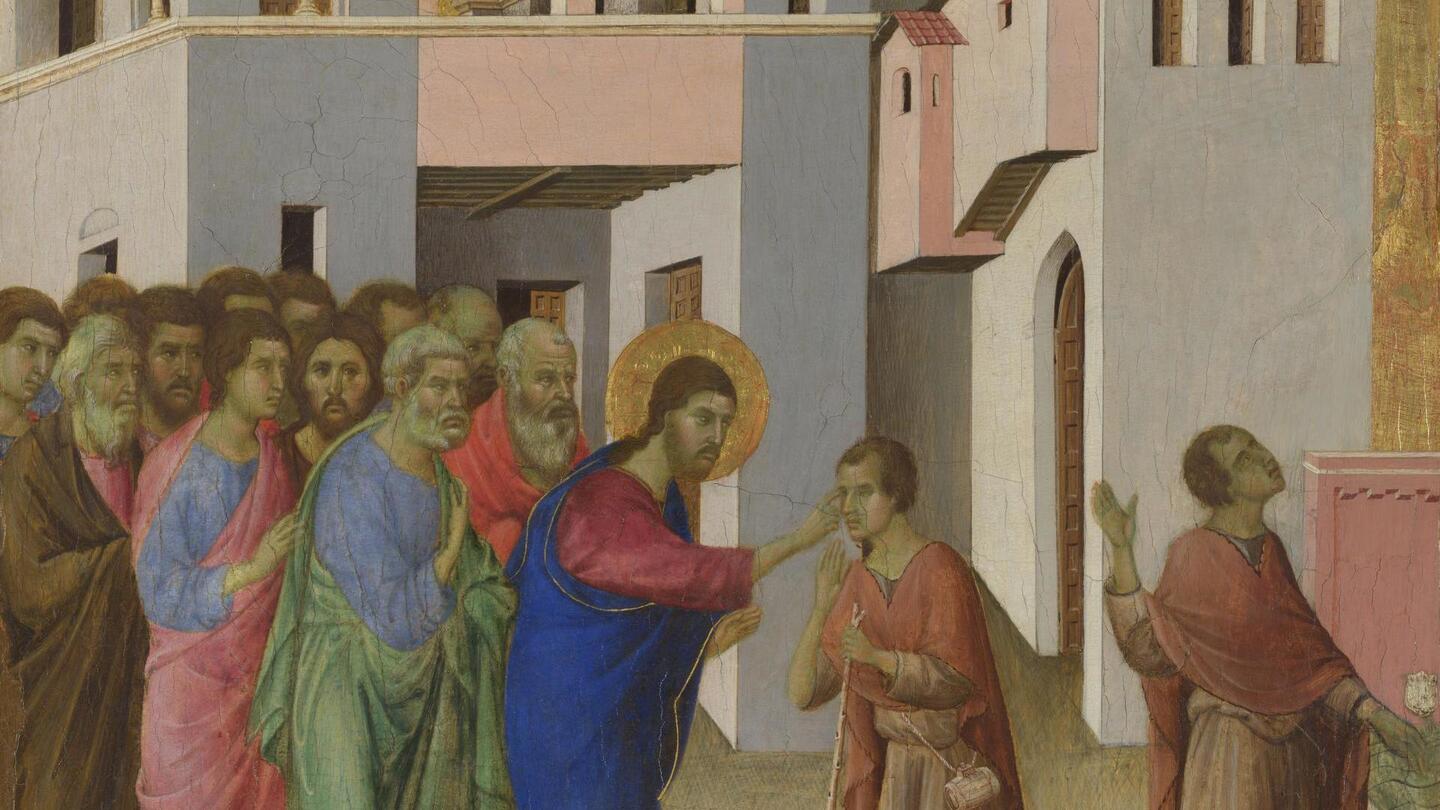
Duccio di Buoninsegna. «The Healing of the Blind, ” 1307/1308–1311. Tempera on wood, 45,1 × 46.7 cm. National Gallery, London.
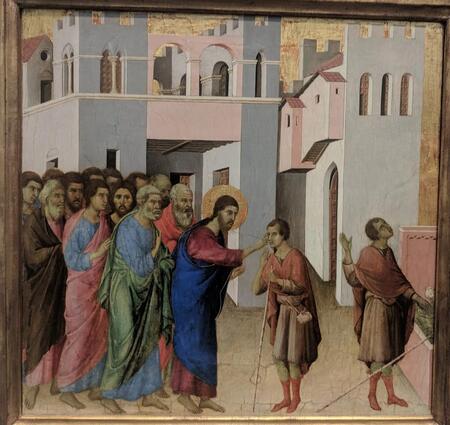
In the painting «The Healing of the Blind Man,» Duccio depicts an episode from the Gospel described in the ninth chapter of the Gospel of John.
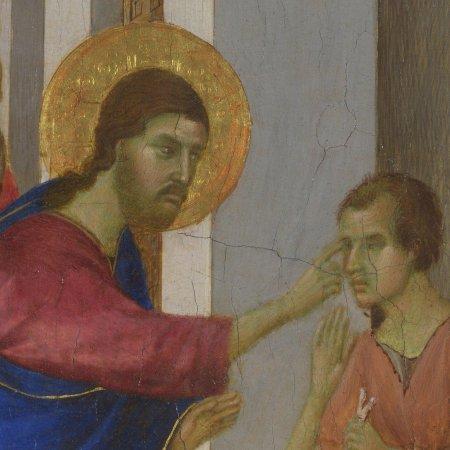
On the left, Christ touches the eyes of the blind man. On the right, the same man reappears—now sight restored.
By unifying two successive moments within a single composition, the artist allows the viewer to simultaneously see both the cause and the effect of the miracle. We observe not only Christ’s action but also the transformation that has occurred in the man.
The miracle becomes visible through the juxtaposition of two states: before and after.
Момент исцеления
Человек после исцеления
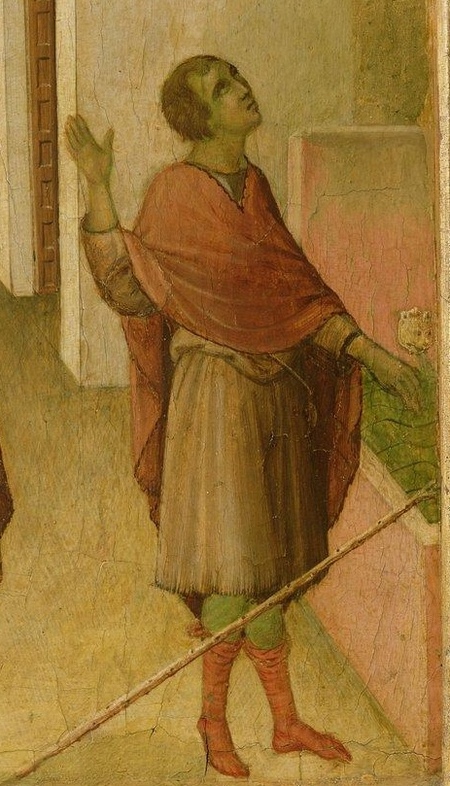
On the left, the blind man leans on a staff while Christ reaches out a hand toward his eyes. This gesture becomes the thematic center of the image. On the right, the man no longer needs support. His staff is left by the source, and his gaze is directed upward. The viewer sequentially examines both figures and reconstructs the event that occurred between them independently. Thus, the artist transforms the perception of the painting into a process of recognizing a miracle.
A sacred event in a familiar space
Duccio depicts an evangelical miracle set against the backdrop of architecture reminiscent of a medieval Italian city. The towers, arches, and urban structures bring the distant biblical event closer to the contemporary viewer. The audience is invited to view the miracle not in a completely alien space, but within an environment that echoes their own world. Thus, architecture becomes not merely a background, but a means of bringing sacred history closer to the human experience.
A Marvel Through Witness Eyes
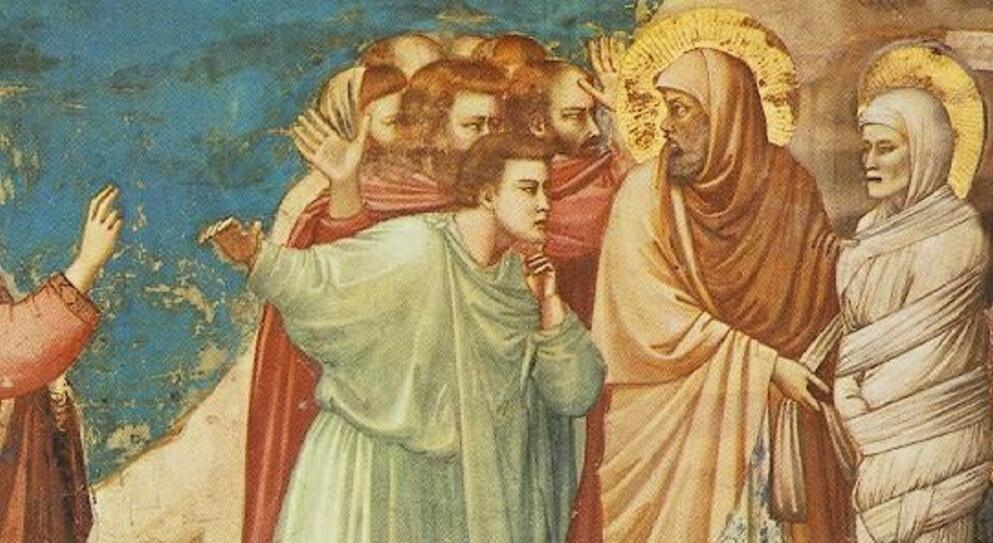
Giotto di Bondone. «The Raising of Lazarus,» c. 1303–1305. Fresco, c. 200 × 185 cm. Scrovegni Chapel, Padua.
Unlike Duccio, who depicts healing through the repetition of a single character, Giotto focuses on a single moment of intense tension—the resurrection of Lazarus.
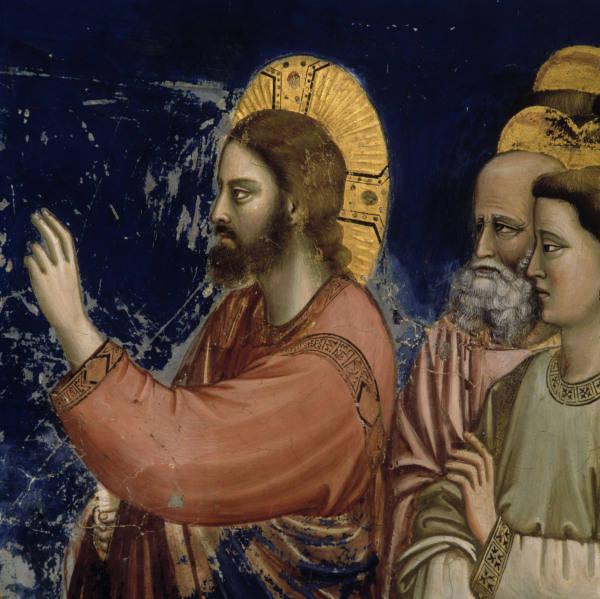
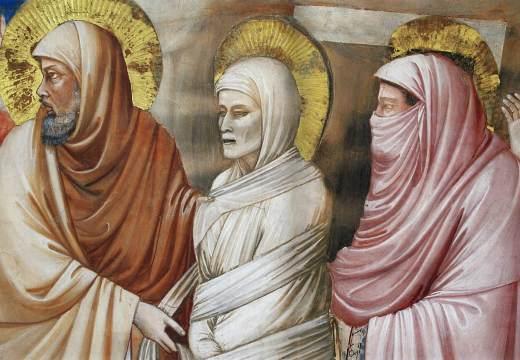
On the left, Christ raises a hand toward the deceased. On the right, Lazarus stands wrapped in burial shrouds. Between them are people reacting differently to the event.
Some look at the resurrected figure, others are turned toward Christ, and a third group expresses amazement through gestures.
The viewer recognizes the miracle not only through Christ’s action but also by how it is reflected in the surrounding people.
When the gesture becomes testimony