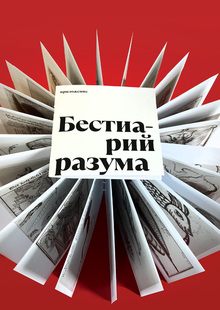
There is nothing more complex than «childish» questions. Why is the sky blue and the grass green? Why do people have two legs while cats have four? This book is dedicated to one of these «childish» questions—why is the night sky dark? Despite its apparent naïveté, this question touches upon conceptions of the very general structure of our universe—is it finite in space and time, and when did the first objects arise in the universe?


The book is a collection of short popular science articles that explain the photometric paradox in simple, accessible language. Furthermore, the publication also functions as a photobook, inviting readers to admire photographs of the night sky, thereby making the book lighter and more relaxed.
The issue is designed in a brochure format, reminiscent of popular science publications in the spirit of the journal «Science and Life,» which simultaneously underscores the scientific nature of the publication and its accessibility to the novice reader.
Pink serves as the accent color, threading through the entire photo series and acting as its unifying element.
The book’s illustration sequence initially presented a minor challenge. We all know what the night sky looks like. Moreover, each of us has seen photographs from space. Because of this, there is no direct need for illustrative material in the book, as it would be superfluous to explaining the publication’s topic.
Therefore, specific images related to the text were selected for each section—however, these images function more as a standalone photographic series that transforms the book into an opportunity to admire the night sky. The chosen types of imagery include: solarography, lightography, aurora borealis shots, experimental images, and views of space taken from telescopes and the ISS.
The illustrative sequence is presented on two-page spreads, devoid of headers or footers, with captions placed beneath each image. This entire presentation helps to maximize focus on the visuals and shifts the semantic emphasis onto the imagery.
Sometimes images are designed to be viewed sequentially—for instance, when photographs examine a specific similarity, like the central line of the river here, and then the horizon of space.
The conclusion of the book is also resolved through a high-contrast monochrome image and a final epigraph quote.
You can also view the full version of the book and its video flipbook here.