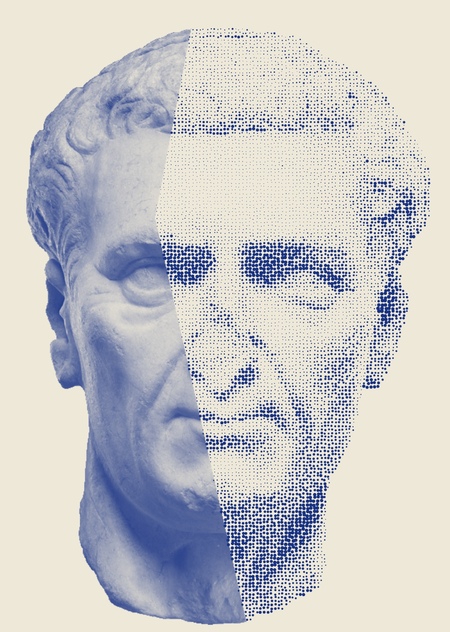
ONE HEAD — TWO RULERS
The Transformation of Roman Imperial Portraits from the 1st to the Early 2nd Century CE
When a sculptural portrait acquires a different visage, the subject remains the same—the object persists—but the person it represents changes. Where is the boundary between preserving an image and erasing a personality?
This study traces the evolution of facial features, hairstyles, and cranial construction. Its central question is: which hallmarks of the former imperial image were eliminated, which were retained, and under what conditions could a preserved feature remain recognizable?
The mere presence of an older fragment does not prove the intent to evoke a previous ruler. Therefore, each analysis will separate the observable trace from its historical interpretation.
CONCEPT The research focuses on reworked Roman imperial portraits from the 1st to early 2nd centuries AD. The subject matter will be the heterogeneity of the resulting sculpture: the potential mismatch between the face, hairstyle, head structure, and surviving body. Political history will be examined only where it helps explain the choice of a new image or verify the interpretation of a specific artifact.
The starting point is the distinction between the physical eradication of old features, the creation of a new recognizable image, and the alteration of memory regarding the former ruler. Their convergence cannot be taken for granted. The preservation of a fragment from the original depiction does not automatically prove an intent to recall it; a successful shift in identity does not necessarily require the destruction of all old forms. This allows us to view the reworking as an issue of representation, rather than merely an illustration of political punishment.
The central question is: which features of the former imperial image were eliminated during the reworking, which were retained, and under what conditions could a preserved feature remain recognizable? The working hypothesis is that the transformation of identity might have depended on the coordinated action of several elements—the facial form, hairstyle, body, and inscription—whereas the retention of individual details might have different explanations. Testing this hypothesis requires comparing specific operations performed on the sculptures.
CORPUS AND METHOD
The main corpus comprises heads for which arguments supporting ancient reworking have been published and images from multiple angles are available. Selection criteria include attribution clarity, preservation status, photo quality, and records of restorations. Complete head replacements, the installation of new faces, and relief alterations are considered in a separate comparative group—these operations cannot be described as the same technical process. Late Antique modifications are excluded from the main corpus.
Visual analysis proceeds from the whole to the detail. A frontal view allows for examination of signs of a new image, the profile, and the back of the head—helping to check processing heterogeneity and to localize the basis for attribution in enlarged fragments. Other specimens of corresponding portrait types are used for comparison. These pairings are not documentary «before and after» examples; the original appearance of the studied object often needs to be reconstructed through analogy. Ancient alterations are separated from losses and later additions.
Particular attention is paid to conditions of visibility. The ability of a modern viewer to zoom in on a photograph of the back of the head is not equivalent to the experience of a person who saw the statue in its original setting. Therefore, observations regarding the preserved form are separated from hypotheses about its historical interpretation. If the location and height of installation are unknown, this limits conclusions.
The objective of this work is to build a comparative model: what changed in the portrait, how the new identity became convincing, and what assertions about the preservation of the old memory are truly supported by the visual material. The scholarly foundation for this inquiry is based on the research of Paul Zanker, Erik Warner, Francesca Boloni, and Raffaella Bucolo.
DOMITIAN TO NERVA: HOW MANY FACES IN ONE HEAD?
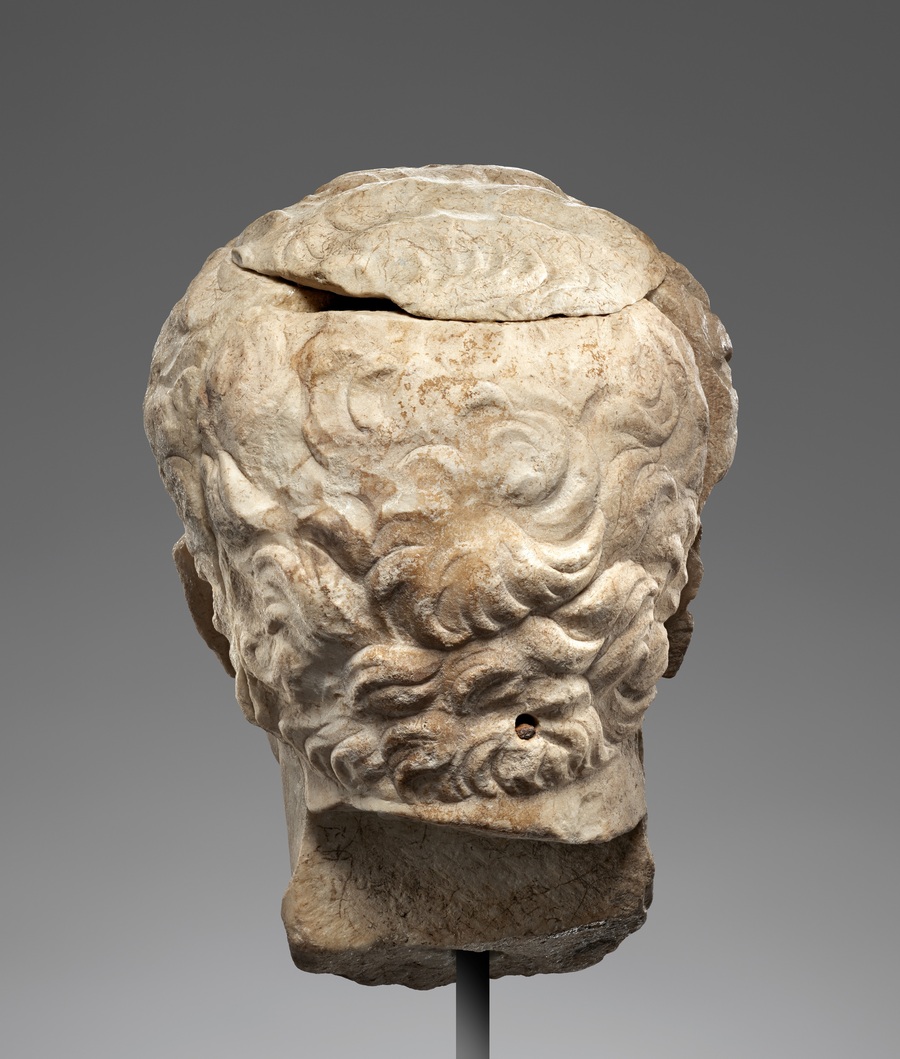
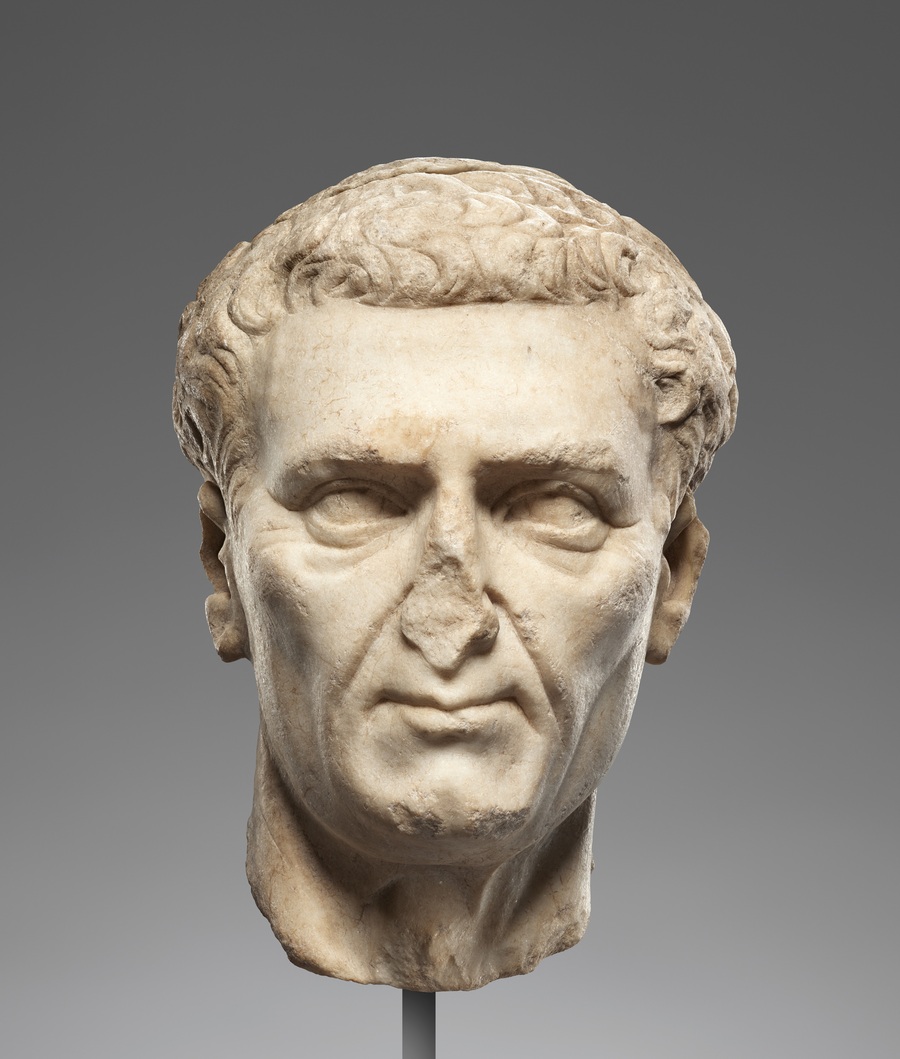
Unknown Roman sculptor. Portrait head of Nerva, reworked from a portrait of Domitian. 96–98 CE. Marble. Getty Museum, 83.AA.43. Photos: J. Paul Getty Museum, Open Content, via Wikimedia Commons. The gallery displays two views of the same object.
The frontal view suggests one reading: deep folds near the mouth, sunken cheeks, and heavy eyelids form the face of an elderly man. When the head is turned, attention shifts from the physiognomy to the object’s construction. A joint on the back of the skull reveals the seam separating the upper section. The impression of a unified face gives way to an observation of a composite structure.
However, the structural seam itself does not prove the change in emperor. Such a conclusion requires a comparison of portrait types. Eric Warner links the surviving upper and rear sections of the hairstyle to a third type of Domitian, and the reworked lower facial section to Nerva. He interprets this combination as an intentionally composite image (Varner, 2015, pp. 53–54).
It is important here to distinguish between two claims. The first concerns what has been preserved in the material. The second concerns what the viewer might have perceived. Modern photography allows one to get close to the back of the head and examine the seam. It does not prove that the ancient installation afforded every viewer such a view.
Therefore, this object raises questions about the preservation of identity but does not provide an automatic answer regarding deliberate commemoration. It requires examining which signs of the old image were available to the eye and whether they are specific enough to identify Domitian. The object may retain traces of a previous identity more convincingly than the evidence of how that identity was perceived.
TWO CLAUDIUSES: WHY FACIAL SIMILARITY IS NOT ENOUGH
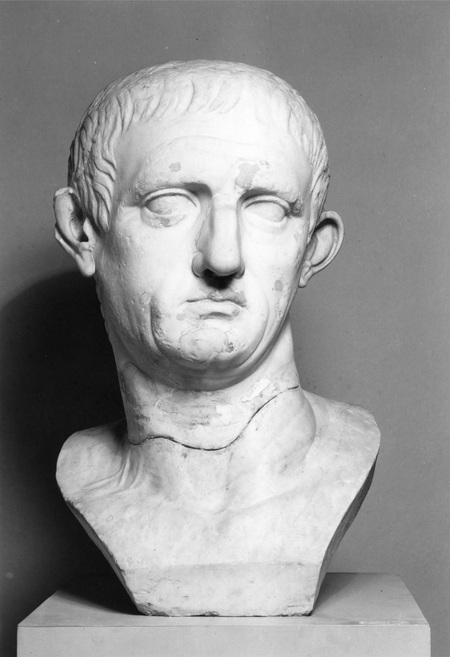
Left: unknown Roman sculptor. A portrait likely modified from Nero to Claudius. Originally dating from 54–68 CE, the modification is around 70 CE. Marble. Walters Art Museum, 23.118. Photo: Walters Art Museum / Wikimedia Commons, CC BY-SA 3.0.
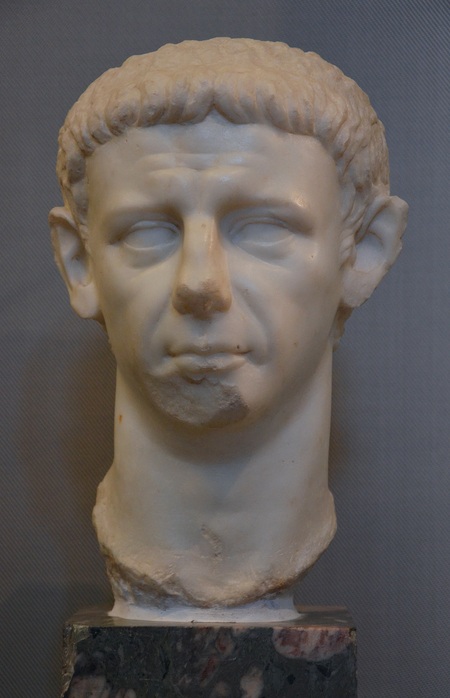
Right: unknown Roman sculptor. A portrait of Claudius, linked to a modification of an earlier head of Caligula. Claudius’s era, 41–54 CE. Marble. Centrale Montemartini, S2443. Photo: Carole Raddato, 2015 / Wikimedia Commons, CC BY-SA 2.0. The original identity is debated in the literature; the attribution to Caligula is not undisputed.
The two individuals differ in brow structure, hairline, and the degree of facial folds. However, a conclusion about the modification cannot be drawn simply by comparing how similar one Claudius is to the other. Each object requires its own history of change.
The museum separately notes modern alterations on the left portrait—the nose, lower lip, chin, and ears. Consequently, the current facial contour unites the ancient and the restored. If the entire chin is assumed to be an antique form, the comparison will begin to prove what the monument has not preserved. The ancient modification is determined by other areas: the cheeks, the jaw, the oral area, and the surviving hair in the back (Walters 23.118 entry).
This case also shifts the narrative direction. The purported replacement of Nero with Claudius refers back to an earlier ruler. The «old emperor $\rightarrow$ next emperor» schema does not account for all transformations.
Intermediate conclusion: identifying the new figure, establishing the ancient modification, and reconstructing its meaning are three separate tasks. The museum’s label helps name the portrait, but a visual study must demonstrate on which features and correspondences the history of its change rests.
Sources: Walters Art Museum, object23.118; Varner, 2015, p. 40; Bologna/Bucolo, fig 14. Full citations are in the project bibliography.
CALIGULA → AUGUST? HOW THE HISTORY OF REWORKING IS VERIFIED
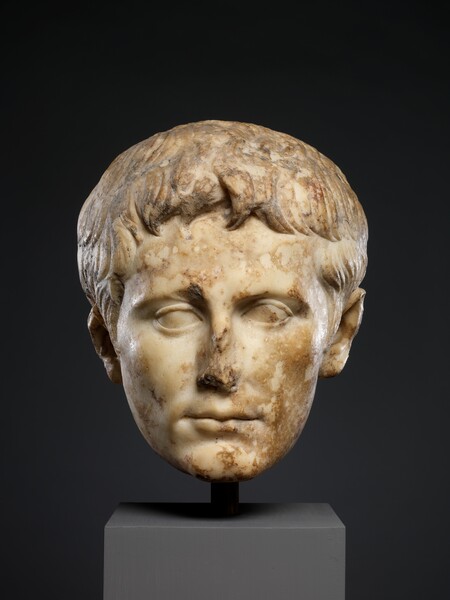
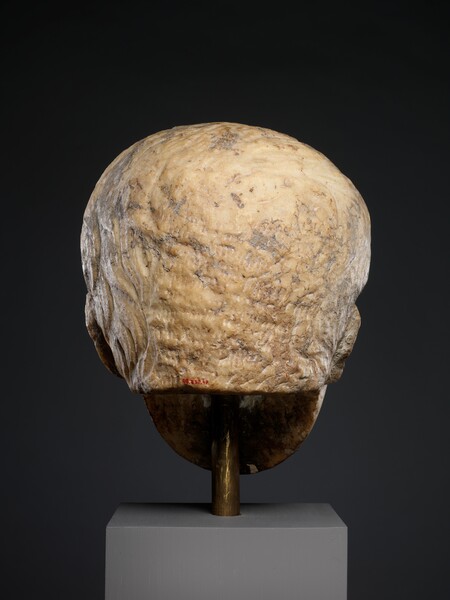
Unknown Roman sculptor. Portrait of Augustus. Marble. Metropolitan Museum of Art, 08.258.47. Museum dating: circa 14–37 CE; in Paul Zanker’s 2016 catalog—after 41 CE, as a result of reworking Caligula. Photographs: The Metropolitan Museum of Art, Open Access. One object is shown from the front and back.
Upon frontal examination, the face appears compact relative to the volume of the head. The hair framing the forehead forms a distinctly defined border, whereas the nape of the neck exhibits a different degree of detailing. This difference alone allows for several potential explanations.
Zanker links the facial compactness, the flattening of the hair in the frontal rows, and the remnants of longer hair at the back to the reworking of the Caligula portrait. His argument is based on several features, not just one anomalous section (Zanker, 2016, Cat. 15, pp. 64–65).
However, for research purposes, simply choosing a more striking attribution is insufficient. The proposition of reworking after 41 CE and the museum dating of 14–37 CE cannot simultaneously describe the same stage of the object without further explanation. Therefore, this portrait is examined here as a case study for source verification, not as an indisputably dated illustration.
He clarifies our methodology: the photograph reveals the difference in treatment; comparing portrait types allows one to propose the original identity; correlating the museum record and the scholarly catalog verifies the chronology. These steps cannot be replaced by the assumption that «a similar head was surely reworked.»
Until the discrepancy is resolved, this object is not used to draw conclusions about the dates of reworkings. The question of what remains of the former face must also include the question of how reliably we actually know that former face.
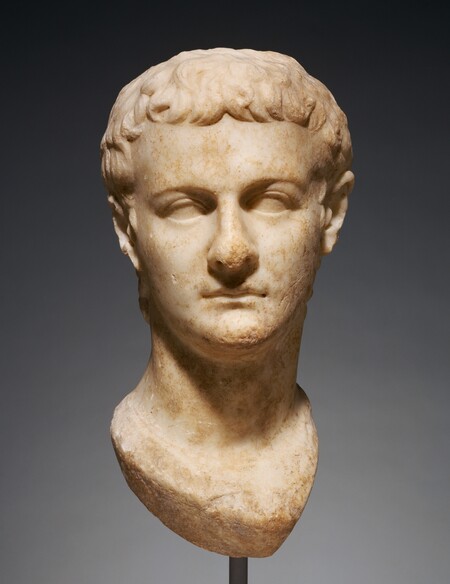
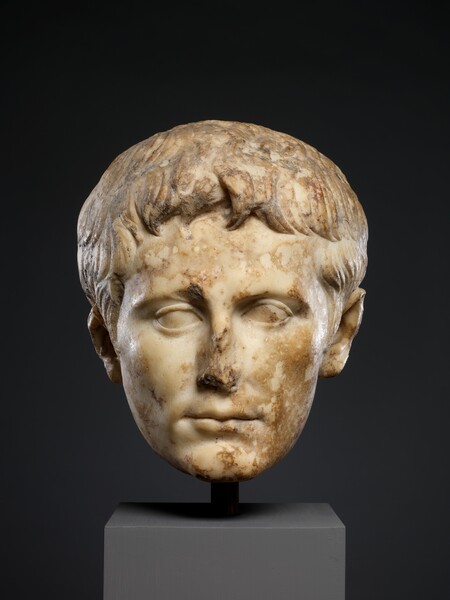
Similarity does not yet prove a remake. One image may resemble another without retaining its original material.
On the left: an unknown Roman sculptor. Portrait head of Caligula, 37–41 AD. Marble. J. Paul Getty Museum, 72.AA.155. Museum photograph, CC0. On the right is a repetition of Augustus’s frontal view, Met 08.258.47; the information and date discrepancies are provided above. Photograph from The Metropolitan Museum of Art, public domain. These are two different pieces, not documentary states of one head. The scale of the images is not a single measuring scale.In both portraits, the hair forms directed strands above the forehead; small lips and smooth cheeks contribute to an overall impression of youth. However, the direction of individual strands and the contours of the faces differ. The comparison provides a visual analogy, which is still insufficient to reconstruct the history of a specific object.In the Getty museum description, Caligula’s hairstyle is explained by referencing the image of Augustus and the dynastic connection to him. Consequently, similar features may arise even when creating an independent portrait. They are not necessarily remnants of another face that physically existed here.To move from similarity to a conclusion of reworking on the Met piece, additional grounds are needed: a consistent system of alteration traces, a comparison of specific replica types, and consideration of restorations and chronology. The pair shown does not substitute for such an investigation and is not declared an accurate model of the original state of the Met piece.For our topic, the distinction is fundamental: one image may reference another ruler without altering their head. Memory expressed through similarity and the preservation of original material are different ways of connecting images.Source for the Caligula description: J. Paul Getty Museum, 103SXA; the museum description is reproduced on the Wikimedia Commons file page. The link is in the image sources.
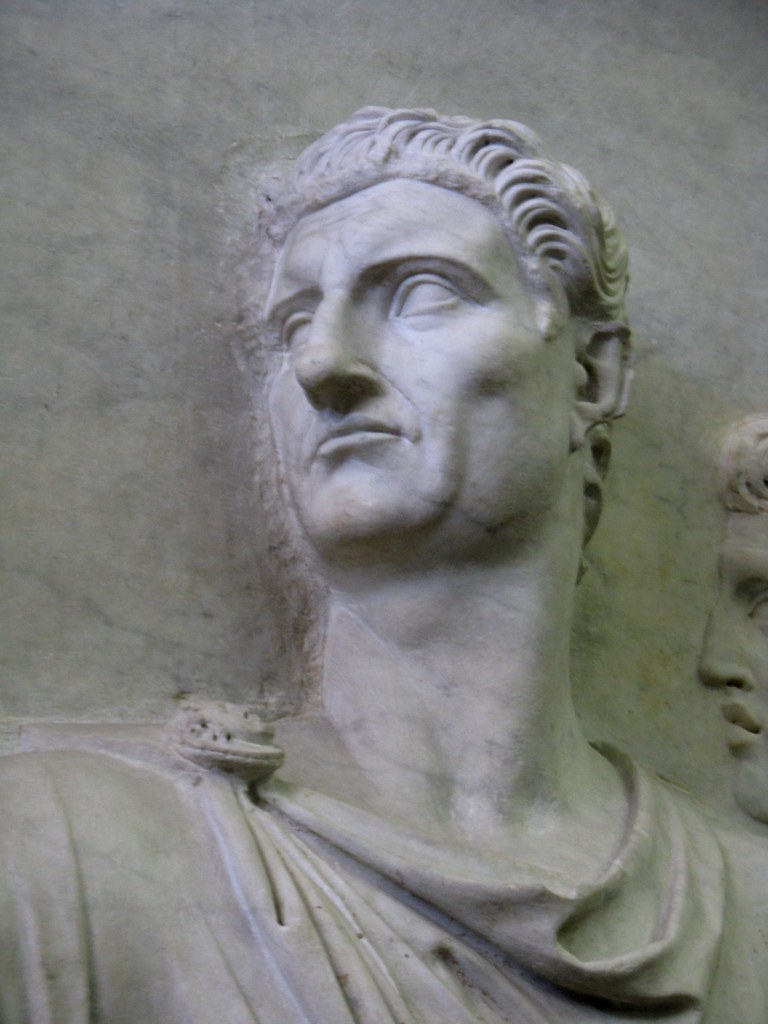
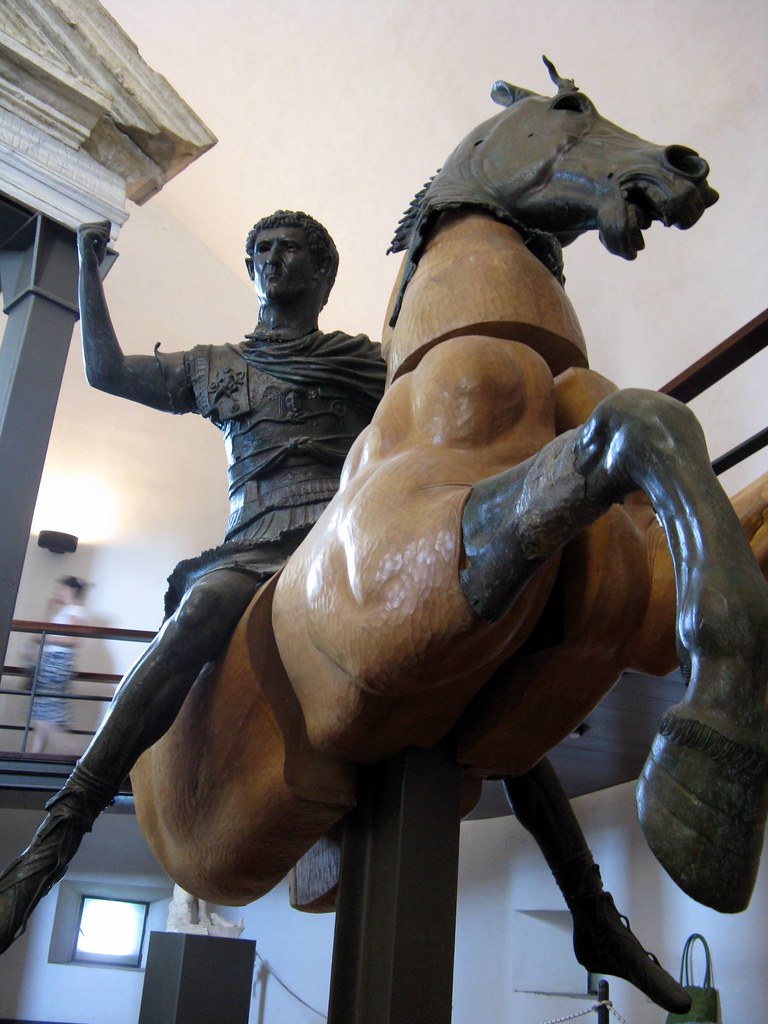
A New Face in an Old Role
The first image in the gallery: the equestrian statue of Domitian, remodeled into Nerva, from Misenum. Originally dating to 94–95 CE; modification after 96 CE. Bronze. Museo Archeologico dei Campi Flegrei, 155743. Photo: Erin Taylor, CC BY-NC-ND2.0. This shows a modern exhibition assembly; not everything visible in the photograph is original ancient bronze.
This monument shifts the scope of the question. The face is only a small part of the equestrian figure: the gaze first encompasses the rearing horse, the rider, the armor, and the gesture. Their combination conveys an image of authority even before the viewer discerns individual features.
The museum describes the seam around the contour of Nerva’s new face and the preserved rear portion of Domitian’s head. In bronze, the face could have been replaced with an inlay, rather than simply reducing the original volume with a chisel. However, the surviving body does not become a neutral support for the new head. The martial image continues to establish the role of a ruler. The museum considers the connection between the statue and the reworked dedication inscription probable, rather than definitively established.
From this, we derive our observation: the change of a specific individual can rely on the preservation of modes of representing the emperor. In this case, the remodeling operates by eliminating the former face and assigning power to an already established figure. It is impossible to determine the motif of every commissioner based on a single artifact; however, the relationship between the altered face and the preserved body allows us to address this question thematically.
Source of facts: Parco Archeologico dei Campi Flegrei, Domiziano Nerva card, 155743. Technical comparison: Varner 2015, p. 54. Interpretation of the role of the whole—author’s observation.
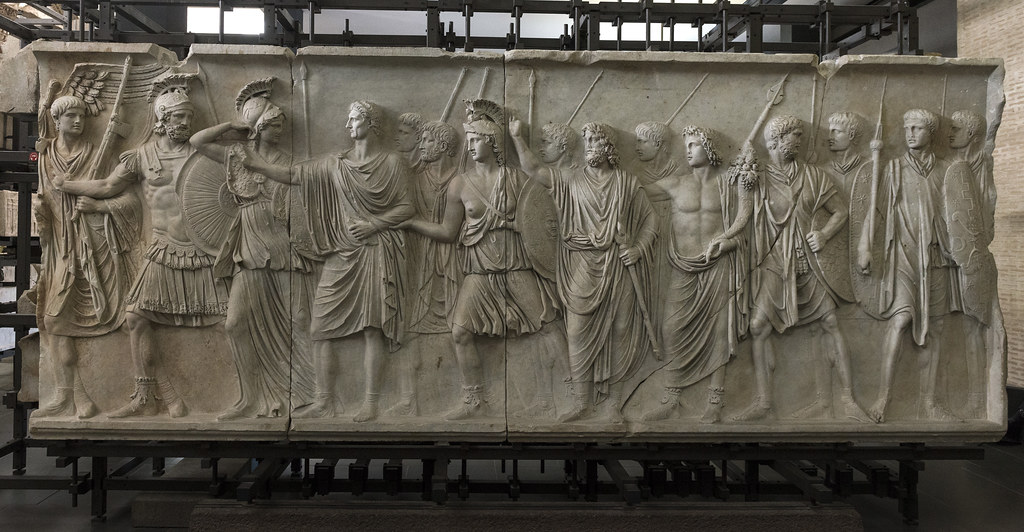
A NEW FACE—AN OLD SCENEThe second and third panels of the gallery: the relief from the Cancelleria, a profectio scene. Initially set in the time of Domitian, 81–96 CE; the emperor’s likeness was reworked into that of Nerva after 96 CE. Marble. Vatican Museums, Museo Gregoriano Profano. Overall view: Egisto Sani, CC BY-NC-SA2.0. Detail: separate photograph by Erin Taylor, CC BY-NC-ND2.0.In the relief, the new portrait is inserted into an existing scene. The ruler’s face is changed, but the surrounding deities, figures, and directed movement continue to establish the ceremonial meaning of the image. Therefore, the individuality here is distributed unevenly: the face answers the question «who, ” while the composition answers the question „in what role and among whom.“Visually, the face does not exist apart from the long neck, the drapery folds, and the neighboring heads. Its proportions must be considered within the entire scene, not just in a close-up photograph. Otherwise, the zoom, which is useful for analyzing detail, simultaneously obscures what explains the monument’s significance.Comparing it with the equestrian statue leads to an intermediate conclusion: the material determines the possibilities of the operation, but its outcome also depends on the unchanged parts of the image. Replacing the face does not automatically rewrite the entire narrative. Nevertheless, the new face is capable of redirecting the same image of power to a different ruler.This mechanism is different from the simple destruction of a portrait. A specific identity disappears, but the image of the emperor as a participant in a ceremony or a military leader remains. Therefore, our corpus should be compared based on two independent questions: what was done to the specific face, and what representative role survived this operation.Source of attribution and subject matter: Vatican Museums, Reliefs from the Palazzo della Cancelleria. Analysis of the composition and comparison with the bronze—observation by the author of the study.
NERO $\to$ VESPASIAN: WHAT MAKES THE FORMER FACE VISIBLE?
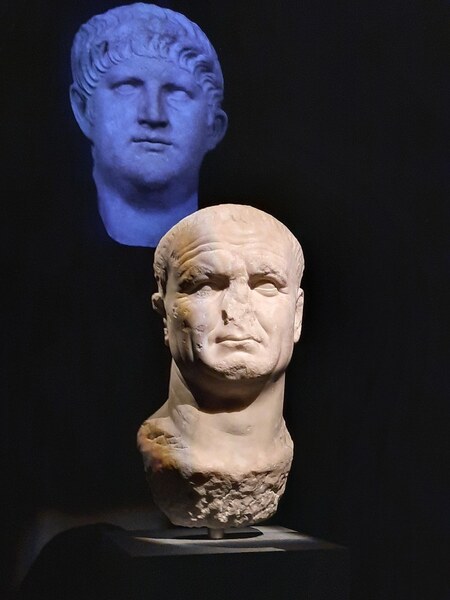
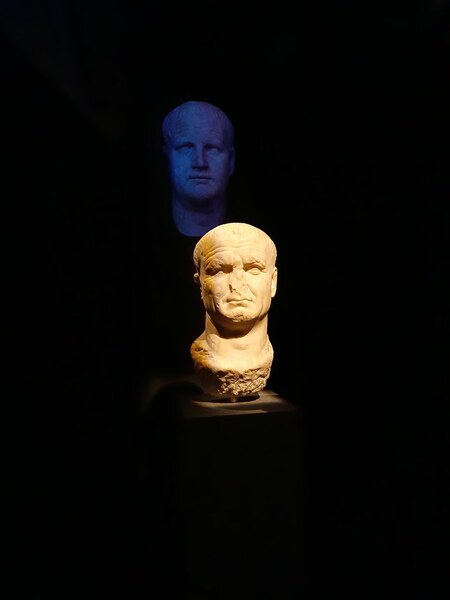
Unknown Roman sculptor. The head of Vespasian from Carthage, associated with the rework of Nero’s portrait. Circa 70–80 AD. Marble. British Museum, 1850, 0304.35. Two exhibition photographs: MumblerJamie, 2021, CC BY-SA4.0; uploaded from Flickr. This is one object in a museum setting, not two states of ancient sculpture.
In a study by Bologna and Bucolo, this portrait serves as an example of processing all available sculptural aspects. The authors point to traces of removing Nero’s long strands of hair from the nape (Bologna/Bucolo, pp. 501–502, fig 13). Therefore, the old likeness can be established not only by the surviving lock of hair but also by the trace of its removal.
These photographs display another level of interpretation—the contemporary exhibition. The light-colored head is placed below a blue projected image. The color contrast and the positioning of the figures in one vertical line invite the viewer to connect them as a history of transformation. However, the photographs do not show those specific nape traces; a technical argument requires published views from the back.
This distinction is significant. The projection helps to present the replacement, but it itself is not proof of the original condition of this particular head. The «before» image here is created to explain the object, whereas the ancient artifact bears the preserved traces of the operation. One cannot subtly transform an illustrative museum narrative into a documentary comparison of two states.
This leads to an additional finding from our comparison: the visibility of the former persona depends not only on how many of its features survived the rework. It also depends on the mode of presentation. A modern exhibition can make a past identity clearer than it reads on the sculpture without accompanying commentary. Therefore, the question «Did Nero remain?» requires clarification: in the artifact’s material, in our reconstruction, or in the narrative accompanying the image?

WHAT THE COMPARISON REVEALED
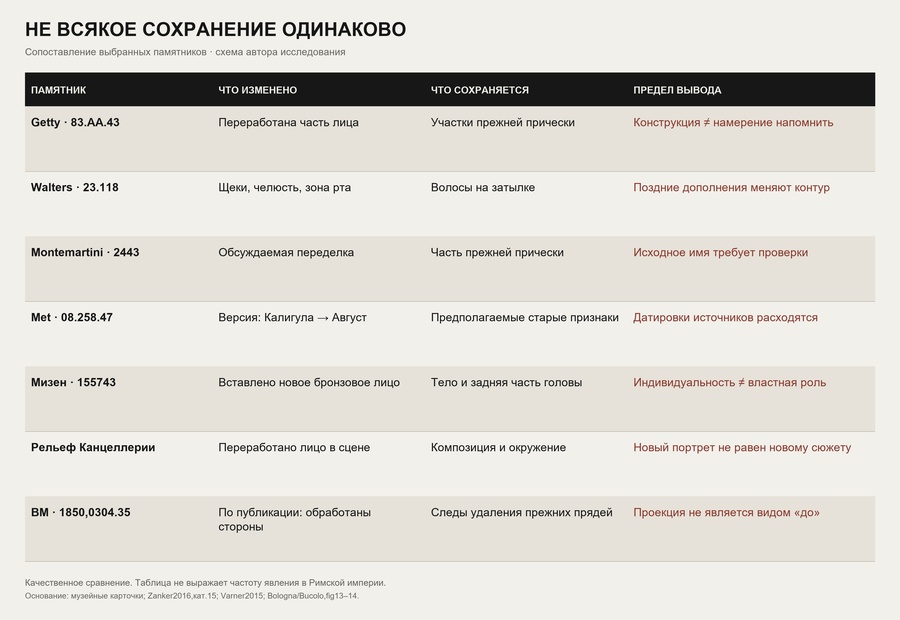
The retention of identity in a reworked portrait cannot be described with a simple answer of «it remained» or «it disappeared.» At least three types of preservation are discernible across the selected monuments.
01. The material retains a trace, but does not guarantee recognition. An old lock of hair or a section of surface can sustain the attribution to the former image. However, the mere presence of a detail does not prove that the viewer noticed it. The reverse case is equally crucial: the original form can be established by the trace of removal. Evidence of the past can be either a surviving detail or its absence, which leaves a trace.
02. The face changes, but the representative role continues. In the equestrian statue from Misenum and the relief from the Chancellery, a new face is incorporated into the already formed image of the emperor. The body, gesture, and surroundings continue to function even after the alteration of individual features. Remodeling can break the connection with a specific ruler while simultaneously preserving the language of his public authority.
03. The contemporary presentation re-renders the past visible. A photograph of the back of the head, a close-up detail, a museum projection, and a caption reveal the history of change. This is not a neutral addition to the object: depending on how it is presented, the former image is read with different clarity. Recognizability today cannot be automatically transferred to the ancient viewer.
Consequently, it is important not just to count the surviving features, but to determine precisely what was preserved, at what level, and for what viewer. Identity may be eliminated as the current name of the monument, yet survive as a material trace; the image of imperial power may remain intact despite changes to the face. It is the discrepancy between these processes that reveals the problem of representation in a reworked portrait.
The comparative table documents the qualitative differences in the selected cases, not the frequency of the phenomenon throughout the empire. Contested attributions and date conflicts are marked separately. The patron’s intent and the reaction of historical viewers are not considered established solely based on the preserved form.
IMAGE SOURCESGetty Museum, 83.AA.43. J. Paul Getty Museum, Open Content. Front — CC0; Back — free use.Walters23.118. Walters Art Museum, CC BY-SA3.0. Photograph.Montemartini2443. Carole Raddato, 2015, CC BY-SA2.0. Photograph.Met08.258.47. The Metropolitan Museum of Art, Open Access / public domain. Front; Back.Mizen155743. Erin Taylor, CC BY-NC-ND2.0. Overall view.Chancellery Relief. Egisto Sani, CC BY-NC-SA2.0: Whole. Erin Taylor, CC BY-NC-ND2.0: Detail.BM1850,0304.35. MumblerJamie, 2021, CC BY-SA4.0: View 1; View 2.The comparative table and diagrams are materials from this research. The cover uses the aforementioned front view from Getty. Some files have been resized to meet platform limitations without retouching the sculptures. CC BY-NC-ND photographs were used in their entirety. Date of access: 11/04/2026.
Zanker, Paul. Roman Portraits: Sculptures in Stone and Bronze in the Collection of The Metropolitan Museum of Art. New York: The Metropolitan Museum of Art, 2016. Cat.15, pp.64–65. https://resources.metmuseum.org/resources/metpublications/pdf/Roman_Portraits_Sculptures_in_Stone_and_Bronze.pdf
Varner, Eric R. Fluidity and Fluctuation: The Shifting Dynamics of Condemnation in Roman Imperial Portraits. In: Bodies in Transition: Dissolving the Boundaries of Embodied Knowledge. Ed. D.Boschung, A.Shapiro, F.Wascheck. Morphomata23. Paderborn: Wilhelm Fink, 2015. Cited pp.40, 53–54. https://kups.ub.uni-koeln.de/12120/1/Morphomata23_USB.pdf
Bologna, Francesca; Bucolo, Raffaella. Quantifying recarved Roman imperial portraits: from Augustus to Carinus. Journal of Roman Archaeology38, pp.484–516. Issue 2025; online April 13, 2026. https://doi.org/10.1017/S104775942610066X
The Walters Art Museum. Portrait of Emperor Nero, Re-Carved as Claudius. 23.118. https://art.thewalters.org/object/23.118/
The Metropolitan Museum of Art. Marble portrait of the emperor Augustus. 08.258.47. https://www.metmuseum.org/art/collection/search/248119
Paul Getty Museum. Portrait Head of Nerva. 83.AA.43. https://www.getty.edu/art/collection/object/103VDN
Parco Archeologico dei Campi Flegrei. Domiziano Nerva. 155743. https://pafleg.cultura.gov.it/it/4406/opere/121/domiziano-nerva
Musei Vaticani. Reliefs from the Palazzo della Cancelleria. https://www.museivaticani.va/content/museivaticani/en/collezioni/musei/museo-gregoriano-profano/Rilievi-della-Cancelleria.html
Date of Access: November 4, 2026.