Остранено
Медиа о «бродячих сюжетах» в литературе и принципах остранения при работе с ними внутри текста
«Ostraneno» is a media platform for writers that explores how different authors distorted nomadic plots while writing, teaching readers how to find an unconventional (strange) approach when building their own narratives.
Defamiliarization is a technique intended to pull the reader out of «automatic perception.» The term was introduced by literary scholar Viktor Shklovsky in 1916.
What are wandering motifs? Wandering motifs are complexes of plot and thematic ideas that form the basis of a work and change their form depending on the new environment. According to Christopher Booker, there are seven main motifs: triumph over the monster, rising from obscurity to prominence, adventure, journey and return, comedy, tragedy, and resurrection.What is the focus of Media? Media specializes not merely in telling stories about these motifs, but in the methods and approaches to working with them—how unusually or atypically writers wove a wandering motif into their narrative, and how unusually or atypically they approached working with it. Media is designed to show how one can approach text non-traditionally, and also to teach emerging authors techniques for effective and unconventional storytelling.
Media Goals
Discuss non-standard approaches of various writers to developing the wandering narrative thread within a work, explain how this alters our perception of the story, and demonstrate how a single motif transforms into entirely different statements across various authors—from satire to tragedy.
Christopher Booker, in his book The Seven Basic Plots: Why We Tell Stories, argues: «No matter what story you tell, it will somehow belong to one of seven basic plots.» This is not a verdict; it is a starting point. More accurately, seven starting points—plots: triumph over the monster, rags-to-riches, adventure, journey there and back, comedy, tragedy, and rebirth.
**But if there are only seven plots, why do some texts fade away after a year while others become classics? **
Because the canon is not a list of correct plots; it is the history of how a specific author defies reader expectation. Alexey Ivanov writes in his book How to Come Up With an Idea If You Are Not Ogilvy: «If you are afraid of failure, you will never hear the trumpets of victory. For the ceremonial costume of any success is sewn from the rough fabric of hundreds and thousands of failures.» An unconventional approach to a familiar plot—that is risk. It is the refusal of safe repetition and an attempt to make the familiar strange. Ivanov also notes: «Leave the chase for success to others. It is wiser to chase failures. To value them and cherish them. Because for every ten failures, there will surely be at least one victory.» The media outlet Ostraneno exists so that the author does not fear «failures"—meaning non-typical decisions that might not work—but learns to transform a classic plot into an extraordinary story. It is not complicated. You only need to remember one rule:
The plot is not a cage; it is a keyboard. What matters is not which key you press, but how you press it.
If you follow this rule, you will write a truly good story—yes, you will.
When discussing the global objective, media aims to show how to capture the reader’s attention with the most minute details of the text—details through which an additional layer of the story’s essence is revealed.
Future Media Themes
Segment Educational media for beginner writers on the theory and practice of literary craftBroad Topic The theory and practice of storytelling: how universal narrative structures work and how an author can utilize themNiche Topic The strategy of defamiliarization when working with conventional plots and the influence of this technique on text perceptionReader’s Main Question How to write a story based on a familiar plot so that it interests the reader and remains memorable after reading?The focus is on the techniques by which the same motif, when treated by different authors, transforms into completely different expressions—from satire to tragedy. The media is aimed at beginner writers, teaching them not to fear unconventional choices and transforming a classic plot into an original story. Its global goal is to demonstrate how defamiliarization and attention to detail can capture the reader’s interest and reveal additional layers of meaning.
Competitors and their analysis
The analysis was conducted based on search queries from Yandex and Google, the study of open data from social networks (Telegram, VKontakte, Zen), and publications regarding media projects in the field of literature. The following services were utilized: TGStat, Telemetr.io, and open data from LiveDune. All conclusions are drawn from information available in official sources and public publications.
Competition Criteria
1. Depth vs. Accessibility. Competitors fall into two camps: those who provide academic analysis (requiring prior preparation) and those who reduce topics to «five quick tips.» «Ostraneno» occupies an intermediate position: serious theory delivered through practical breakdowns.2. Unique Thematic Focus. Most literary media discuss books broadly. «Ostraneno» focuses on a single, narrow aspect—the mechanisms of working with wandering narratives—and builds its entire identity around it.3. Practical Application. An audience of emerging authors seeks tools, not just «interesting facts.» Competitors either offer theory without practice or practice without theory. «Ostraneno» connects both levels.4. Tone of Voice. Academic, popular, or provocative. «Ostraneno» employs an intellectual yet conversational tone: serious ideas presented using lively language, without pretension or oversimplification.5. Content Formats. Long-reads, podcasts, video, stories, interactive content. Competitors primarily utilize one or two formats. «Ostraneno» can work with multiple formats simultaneously.6. Platforms and Reach. Where competitors publish and how actively they adapt content for each platform.
Direct Competitors
Direct competitors are media outlets and projects that work with the same themes (literary theory, plot construction, writing craft) and target the same audience (writers).
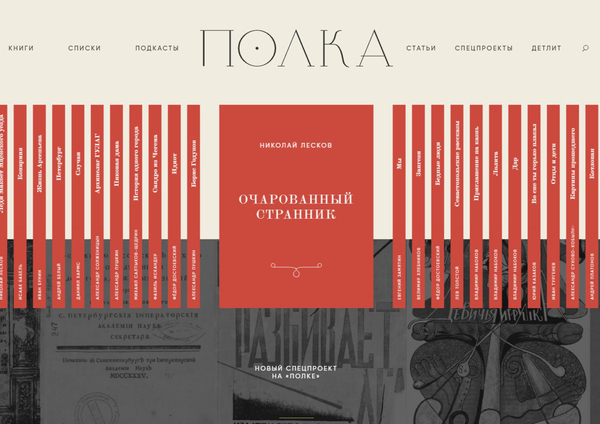
Polka (polka.academy) An educational online project focusing on the most important books of Russian literature. It includes long-form articles, podcasts, and video materials. Editors include Yuri Saprykin, Varvara Babitskaya, Lev Oborin, and Elizaveta Podkolzina. The project provides information on 108 seminal works of Russian literature and positions itself as a «new perspective» on literary study.Selection Criteria: Searching for terms like «Polka media literature» and «literary canon in media, ” and studying academic articles on media projects in literature.Strengths: Deep analysis, authoritative editing, and multimedia content (podcasts, texts, videos).Weaknesses: Focus on the reader rather than the author. Lacks practical advice for writers. Does not engage with plot theory as a tool.
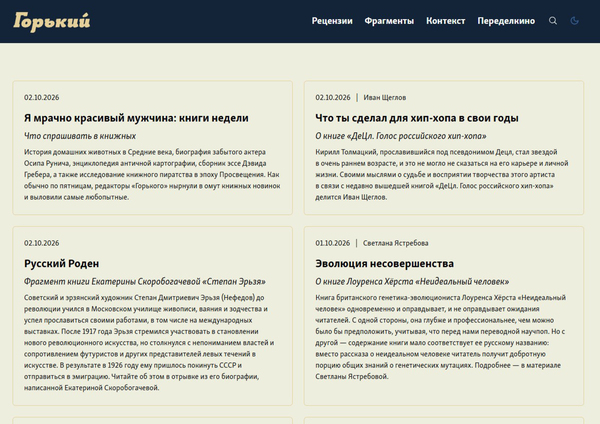
«Gorky» (gorky.media)A network publication dedicated to books, featuring materials on Russian and international literature—both fiction and popular science, both new and timeless. In 2019, the literary online project «Zhurnalny Zal» was revived on the platform. Its structure resembles a traditional, long-form literary and artistic journal in a digital format.Selection Criteria: Searching for «Gorky media literature» or «literary criticism media.»Strengths: Broad thematic coverage, strong reputation, high-quality criticism.Weaknesses: Focus is on the reader and the critic, rather than the author. It lacks systematic craft training.

«TheStoryTech» (Dzen) A channel dedicated to crafting stories in modern formats. It offers tips and articles on storytelling, art, and creativity. It operates at the intersection of narrative theory and practical advice.Selection Criteria: search queries such as «storytelling channel for writers» or «plot theory blog.»Strengths: practical focus, contemporary formats, and engaging with a broad audience of authors.Weaknesses: lack of focus on a specific aspect (disparate themes), and the content is somewhat general and superficial.
Indirect Competitors
Indirect competitors are projects that compete for the same audience’s time and attention, but with a different focus—such as courses, schools, and educational programs.

Igor Shulinski Storytelling School (HSE)An authorial program developed by the writer, journalist, and publisher Igor Shulinski, dedicated to storytelling and the role of narratives in literature, film, media, and public communication. This is an educational product built on an academic foundation.Selection Criteria: Search terms like «writing masterclass courses» or «storytelling course for writers.»Why it is a tangential competitor: It takes the time and money of the audience who might consume the «Ostraneno» content. It offers systemic training, rather than isolated case studies.

«Zakhar Prilepin’s Literary Workshop»An educational program for emerging writers, poets, and publicists: lectures, seminars, and text analysis led by leading Russian authors and critics. It features a Telegram channel and a VKontakte community.Selection Criteria: Search terms such as «literary workshop channel» or «writing mastery Telegram.»Why it is a tangential competitor: It builds an author community that could become an audience for «Ostraneno, ” yet simultaneously competes for their attention through its live seminar and analysis format.
Maya Kucherskaya Creative Writing School (CWS)Literary workshops founded by writer Maya Kucherskaya and philologist Natalia Osipova. The school’s mission is «conceptual training for Russian writers.» CWS has been operating since 2015 and has become one of the largest writing masterclasses in Russia over the last decade: over 150 active programs, over 200 instructors, and more than 20,000 graduates. Among the instructors are Dmitry Danilov, Marina Stepnova, Olga Slavnikova, Tatiana Tolstaya, Alexandra Marinina, and other renowned authors. Selection criteria: searches for «creative writing masterclasses, ” „Creative Writing School, ” and studies on literature education in Russia.Why it is an indirect competitor: CWS consumes the time and money of the audience that might otherwise consume „Ostraneno“ content. The school offers systemic education through online courses, webinar workshops, in-person sessions, and a subscription-based writing club. The CWS audience—both aspiring and practicing authors—overlaps with the target audience of „Ostraneno.“
Potential Competitors
Potential competitors are projects currently operating in adjacent fields but which could occupy the «Ostraneno» niche should we expand.

«Arzamas» (arzamas.academy)An educational project that, according to researchers, «quite successfully merges traditional classical content with modern information delivery formats.» It offers courses on literature, history, and culture.Selection Criteria: Searches for «Arzamas literature» and an analysis of articles about media projects in literature.Why it is a potential competitor: If «Arzamas» launches a course or a series of materials specifically about plot theory for authors—it would become a direct competitor. Currently, it is indirect, but with the potential to become direct.

Book Media «BILLY”(billybookmedia)A printed newspaper and media outlet by Maxim Mamligi. It publishes reviews, articles on trends in literary life, and a column with advice for aspiring authors. It operates as both a print and online media source.Selection criteria: searching for terms like „literary media for authors“ and „literary canon media.“Why a potential competitor: If it strengthens its online presence and adds systematic analysis of plot theory—it could become a direct competitor.
The «Seteratura» PodcastA literary podcast focused on samizdat and writing, featuring interviews with authors and discussions on practical aspects of the writing process. It maintains a Telegram channel and a VK community.Selection Criteria: searches using the terms «writing podcast» or «literary media for authors.»Why it is a potential competitor: the audience overlaps. If the podcast incorporates analytical breakdowns of wandering narratives, it will become a direct competitor.
Competitor Analysis Insights