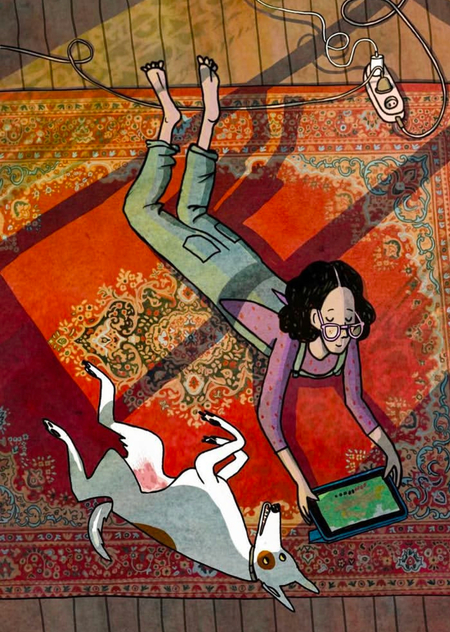
«Homeland is not the geometry of geographical maps. Homeland is the details of childhood.» — Sergei Dovlatov
I. Concept
The city as a subject of representation has appeared in illustration for a long time, and its image has changed along with book culture. In Russian art of the early 20th century, the urban landscape was closely tied to themes of memory and disappearing identity. Mistislav Dobuzhinsky’s Petersburg graphics belongs to this group, in which the city functions as an almost independent, thoughtful, and anxious protagonist.
In the 1920s, the Leningrad picture book school, to which Vladimir Lebedev belonged, recognized in the modern city a source for illustrations that were clear, graphically precise, and rhythmic. Here, an urban subject—whether it was a streetcar, ice cream, or a sign—was transformed into an independent object of examination.
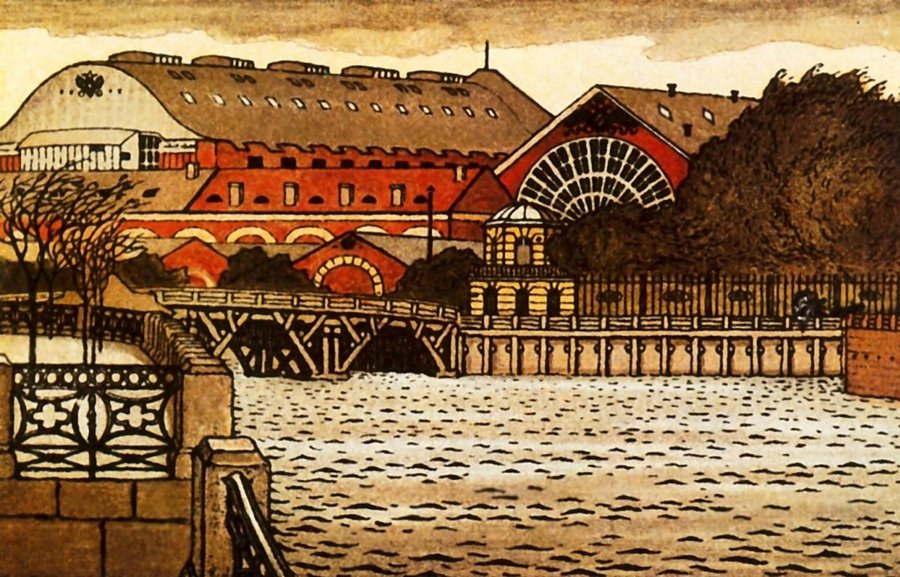
Dobuzhinsky M. V., Petersburg. Moika at the New Admiralty, 1903
In foreign traditions, a similar line of development appeared in urban guidebook books, where the city is presented through recognizable views, as well as in dense, detailed worlds where city life unfolds like a stage featuring dozens of simultaneous plots.
In all these examples, the city ceases to be a mere backdrop and becomes an environment that the reader learns to understand and analyze.
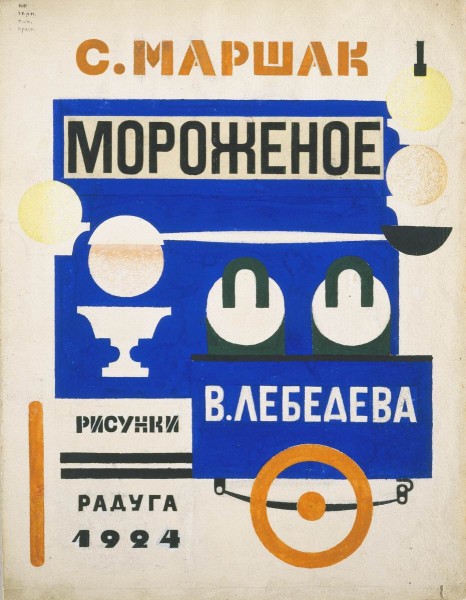
Lebedev V. V., Cover of S. Ya. Marshak’s book «Ice Cream,» 1924
Contemporary Russian illustration continues and reinterprets this tradition. The focus shifts from the grand image of the city, with its landmarks and iconic sites, to the portrayal of lived-in, everyday spaces and intimate, touching moments.
This is the vector in which Anna Desnitskaya works—a Russian artist, illustrator, and collage artist who graduated from the Moscow State University of Printing. She collaborates with Alexandra Litvina on new-type books designed for family reading; these are non-fiction works that invite deep contemplation and discussion.
In their collaborative publications, «Metropolis Above and Below Ground» (2015), «History of an Old Apartment» (2016), and «Trans-Siberian Journey Across Russia» (2019), the story of the country, the city, and daily life is told primarily through imagery. Anna Desnitskaya’s work, including these pieces, narrates a deeply personal story—one that evokes the feeling of home that every individual carries within them. In these illustrations, space ceases to be a mere backdrop; it begins to become the main character. The aim of this study is to uncover how the artist constructs this image and to determine its place within the history of Russian illustration. The central question is how the artist conveys the warm feeling of a native place through her chosen means.
Hypothesis: Desnitskaya’s depiction of place is rooted in inhabitability. Recognition is created not by a landmark, but by everyday details and the presence of people. The city and the village are not contrasted; rather, they are presented as two scales of the same inhabited space.
Each section includes an analysis of the illustrations, the artist’s visual language, and the representational qualities that evoke a sense of home: composition and spatial organization, color and light, selection of details, graphic style, and the role of the human figure. The illustrative series is conceptually structured—moving from enclosed spaces to open ones, and from place to the people who inhabit it. The main body is divided into four sections: the image of the home (apartment, interior, household items), the image of the street (courtyard, entryway, neighborhood), the image of the village (small settlements, stations, roads), and the image of the people (family, neighbors, residents).
II. The Image of Home


III. The Streetscape
IV. The Image of the Village