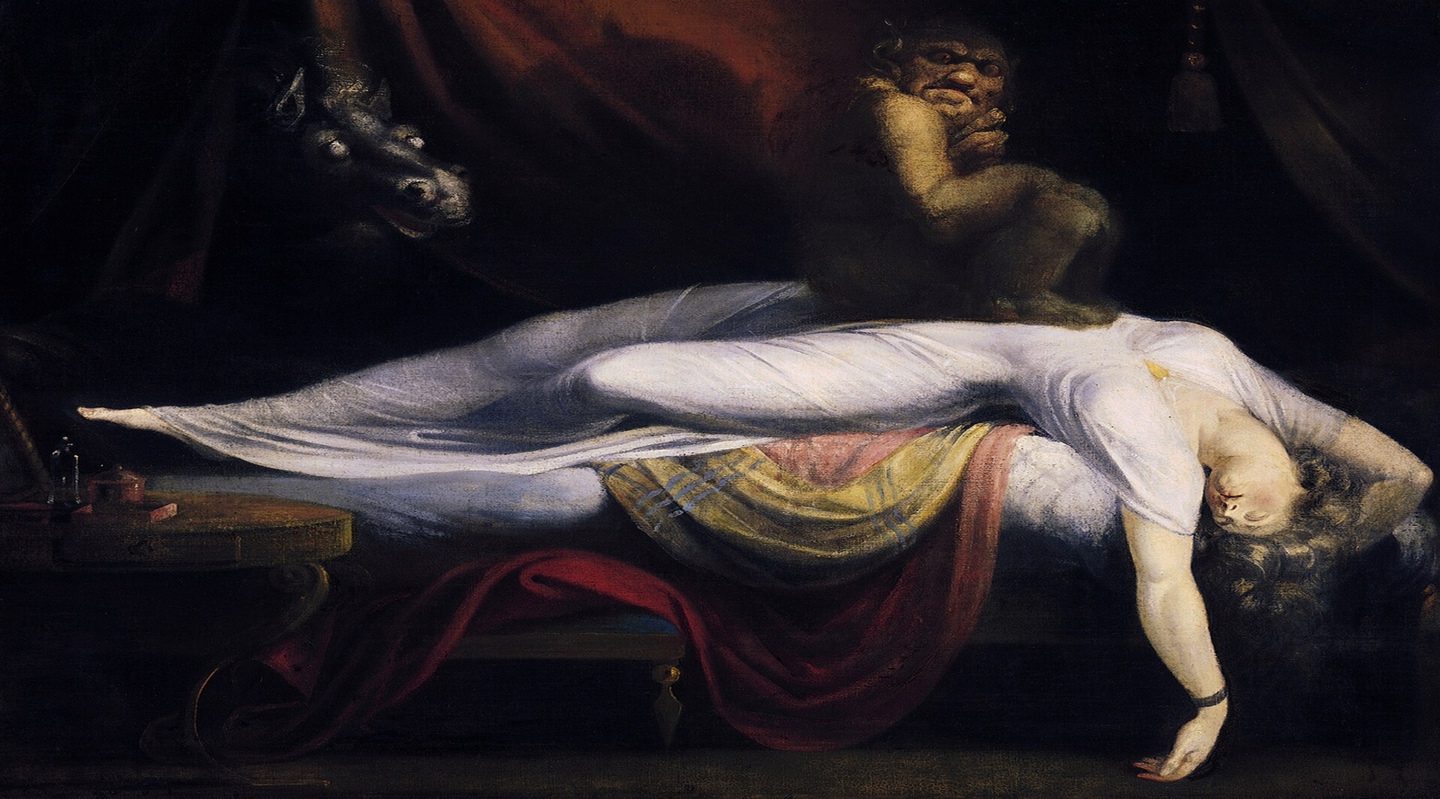
Нппннппнпнпннпнпнп
Гоннпнпнпнпнп
Categorization
1. Chapter 1. Antiquity: Sleep Has a Face and Wings.
2.
3.
Concept
Chapter 1. Antiquity: Sleep Has a Face and Wings.
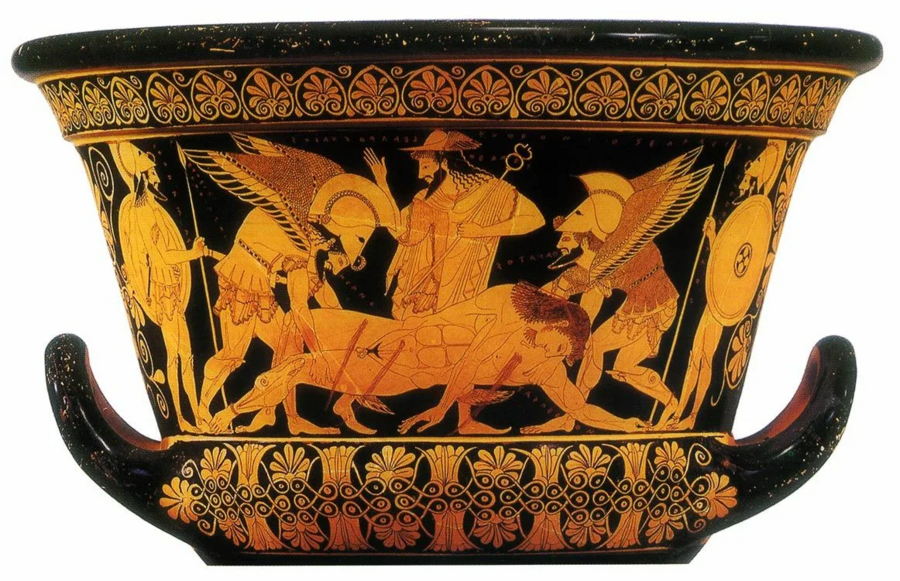
Hypnos and Thanatos carry the corpse of Sarpedon in the presence of Hermes. Crimson-figured krater-kylix, signed by Euchephos (potter) and Euphronios (artist). Terracotta, c. 515–510 BCE, Cerveteri, National Museum of Chiri named after Claudia Ruspoli.
Hypnos on the left, Thanatos on the right, Hermes in the center, flanked by two Trojan warriors: Laodamas on the left, Hippolytus on the right.In Sarpedon’s death scene, the god Hermes instructs the personifications of Sleep (Hypnos) and Death (Thanatos) to carry the fallen warrior home for burial.
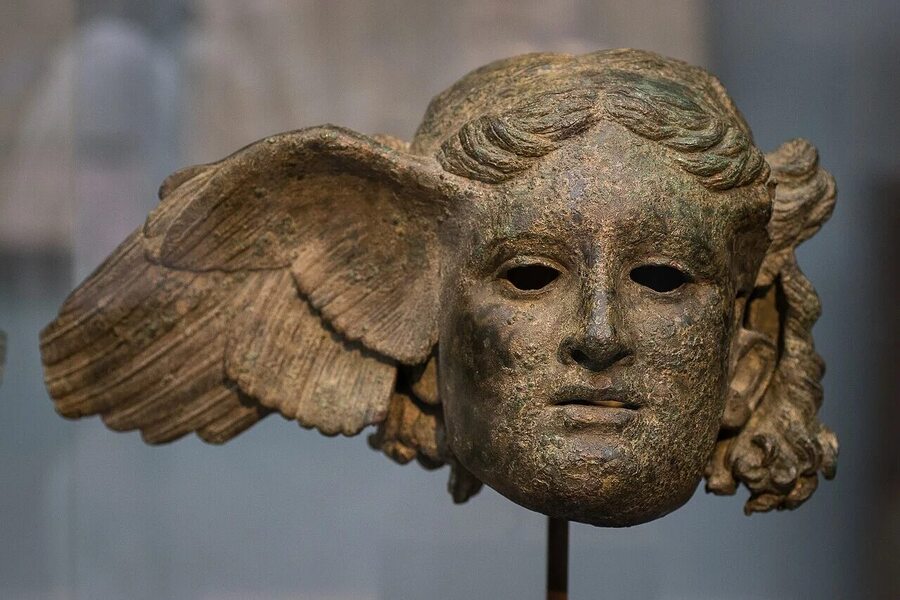
Bronze Head of Hypnos. The British Museum, 1st–2nd century CE (Roman copy of an ancient Greek statue; original: c. 350–200 BCE).
Sarcophagus of Lenoe with the myth of Selene and Endymion. Marble, early 3rd century CE, New York, The Metropolitan Museum of Art.
On the relief of Selene (the goddess of the Moon), she descends from her celestial chariot and approaches the sleeping Endymion. The young man lies in a typical posture: nude, slightly reclined, his right arm behind his head—this is how the sleeping figure was traditionally depicted in Greek art. A female figure leans over Endymion; it is widely believed that she represents an embodiment of Hypnos (the god of Sleep): in her hand, she holds a stalk with poppy heads—she pours a soporific draught over the youth, personifying eternal slumber.
Antiquity addresses the invisible problem simply: it visualizes sleep and personifies it. Sleep is a god who comes from outside, and he can be seen because he has a body. In antiquity, sleep is not a physiology, but a mediator between the world of the living and the world of the dead. From this origin come the images of Hypnos (Somnus in Latin)—the god of sleep and his son Morpheus, who takes human form in dreams. It was believed that every time a person dreamed, a god came to them from the outside. In antiquity, the content of dreams is rarely depicted; there is only the body of the sleeper and the god. From the above, the main question arises: if sleep is merely an external visitor, what happens inside the sleeper?
Chapter 2. The Middle Ages: Sleep as Revelation and Journey.
Giotto di Bondone’s fresco «The Dream of Joachim.» Painting, 1306, Cappella Scrovegni, Padua.
The fresco scene depicts the moment an angel appears to Joachim, who lives in exile among shepherds, while he is asleep. The angel brings good news: God has heard Joachim’s prayer, and his wife Anna will bear a daughter—the future Virgin Mary.
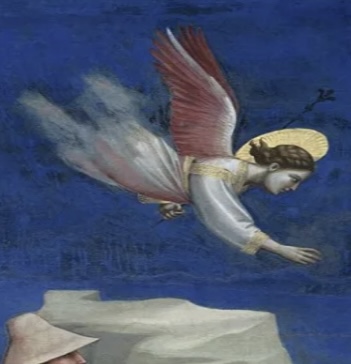
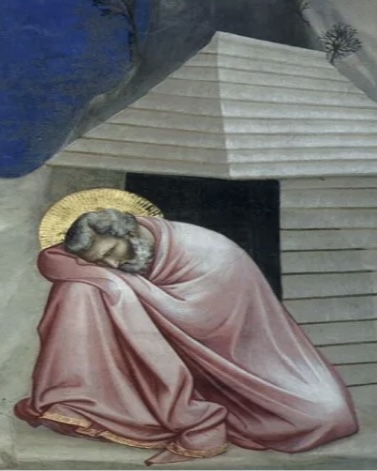
Fragments from Giotto di Bondone’s fresco, «The Dream of Joachim.»
The Middle Ages begin to move away from depicting the sleeper himself and the gods. The focus shifts to depicting the journey—the destination the sleep leads to, and what awaits upon waking. It was believed that God (in the understanding familiar to us, Jesus) and the Devil sent «messages» to humanity; therefore, the focus needed to be on the divine or infernal foundation of the dream, rather than the dream itself. In this aspect, the Middle Ages still resemble Antiquity: Christianity arrives, the gods of Sleep and Death cease to play a major role, but the content of the dream itself remains largely unexplored. The primary visions are paradise, hell, and the ladder to heaven. In miniatures and frescoes, the sleeper is almost always depicted with closed eyes and seated near an angel or a demon. Sleep becomes a trial of the human soul.
https://ancientrome.ru/art/artwork/img.htm?id=1765 (Accessed: 11/14/2026).
https://translated.turbopages.org/proxy_u/en-ru.ru.53206294-6af88464-8858a426-74722d776562/https/en.wikipedia.org/wiki/Euphronios_Krater (Accessed: 11/14/2026).
https://ru.wikipedia.org/wiki/%D0%93%D0%B8%D0%BF%D0%BD%D0%BE%D1%81 (Accessed: 11/14/2026).
https://www.theoi.com/Daimon/Hypnos.html (Accessed: 11/14/2026).
https://www.britannica.com/topic/Hypnos (Accessed: 11/14/2026).
https://translated.turbopages.org/proxy_u/en-ru.ru.52abd506-6af88d68-c54368d1-74722d776562/https/en.wikipedia.org/wiki/Ancient_Roman_sarcophagi (Accessed: 11/14/2026).
https://diletant.media/articles/45281680/(Accessed: 11/14/2026).