RUBRICATOR.
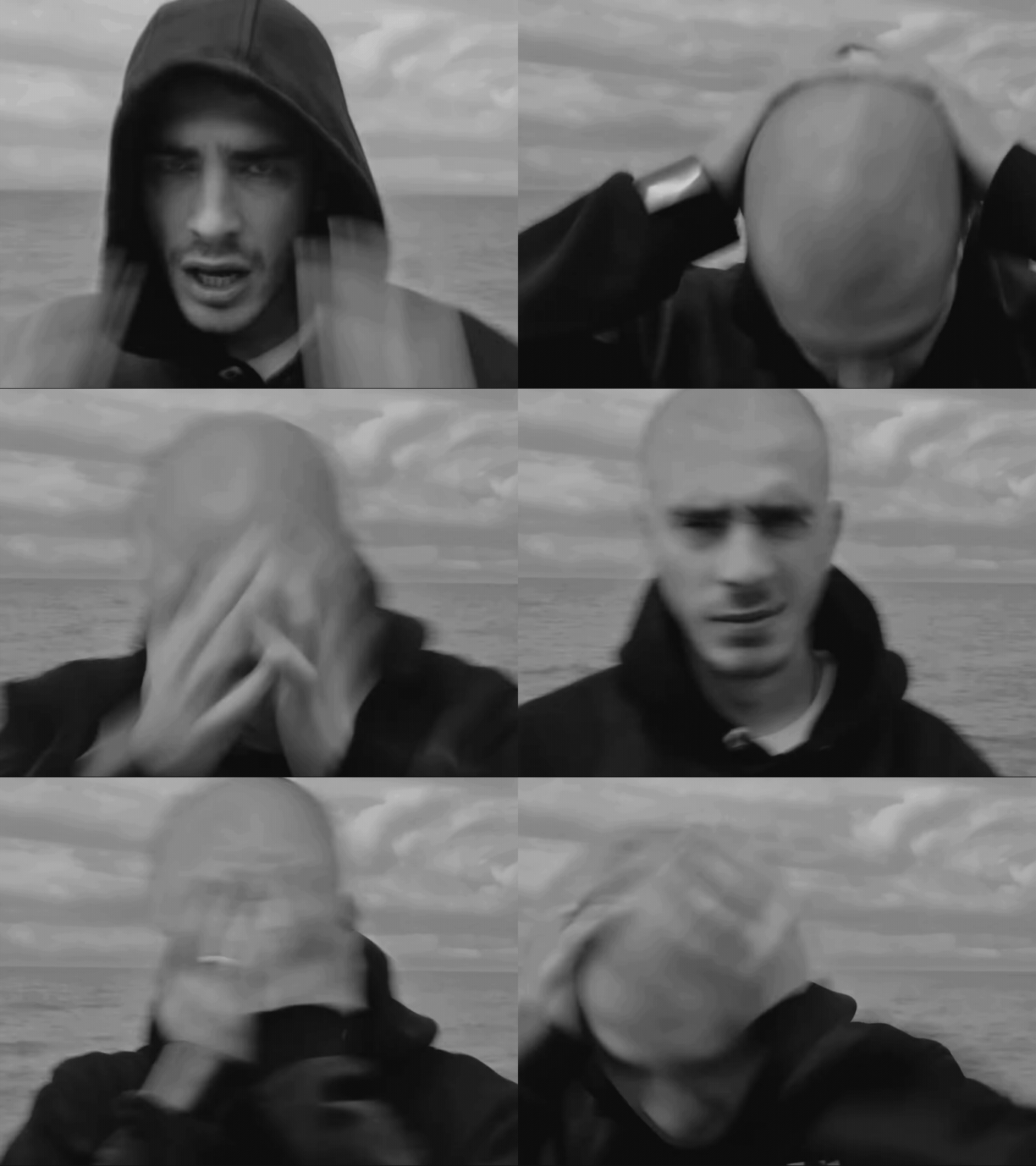
Stills from the music video «Poem about the Motherland, ” directed by Igor Klepnev, 2017
- concept.
- space.
- eye contact.
- everyday action.
- conclusion.
CONCEPT.
In recent years, music videos and an artist’s self-positioning in media have changed significantly. Where an artist once struggled to break free from an untouchable star persona, the focus is increasingly shifting toward the everyday life of an ordinary person—complete with their fears, doubts, and mundane problems.
In my view, a particularly important marker of this shift is that modern music videos are less and less built around deliberate shock value, performance, and spectacle. Instead, they are more often about feelings and emotions that are easily understood by the viewer. Moreover, it seems to me that the desire to show life as it truly is, rather than its idealized version, primarily requires the creator to have the courage to be vulnerable. Showing a large audience not a «perfect life,» but its underside—fears, internal struggles, dirty dishes in the sink, and life off-stage, which previously was not conventionally shown, at least not so candidly. However, far from every artist is willing to exist within such honesty.
Reflecting on my research topic, I realized that I could only recall a few contemporary Russian musicians who dare to be so open and «imperfect» within their own visual presentation. The first names that came to mind were Husky, Shortparis, and Maslo of Teaspoon. Their music videos and lyrics are not only built around an exaggerated stage persona of someone who has «mountains to climb» but also around genuinely compelling questions posed by the artists.
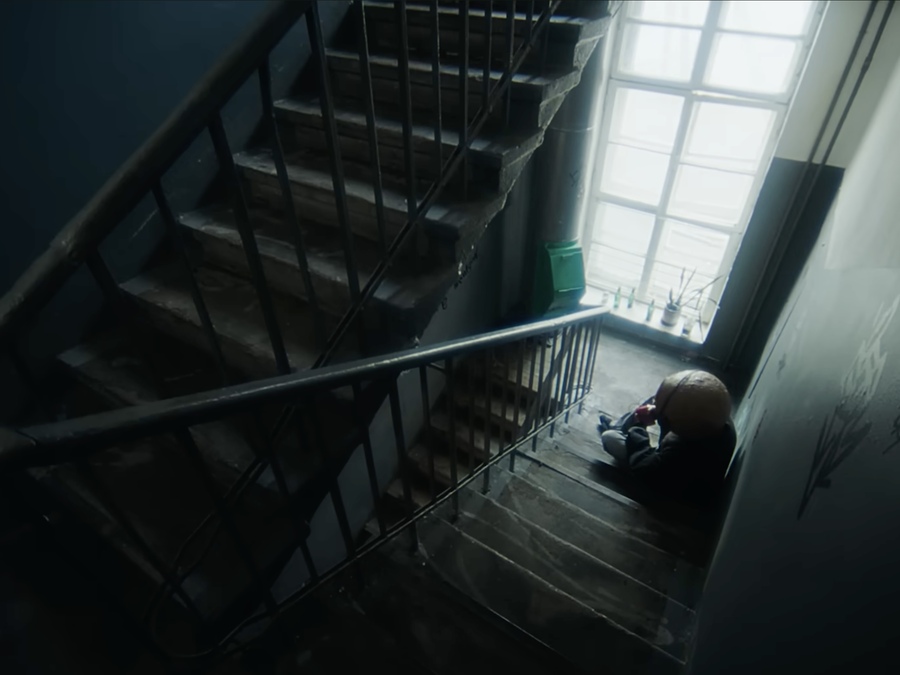
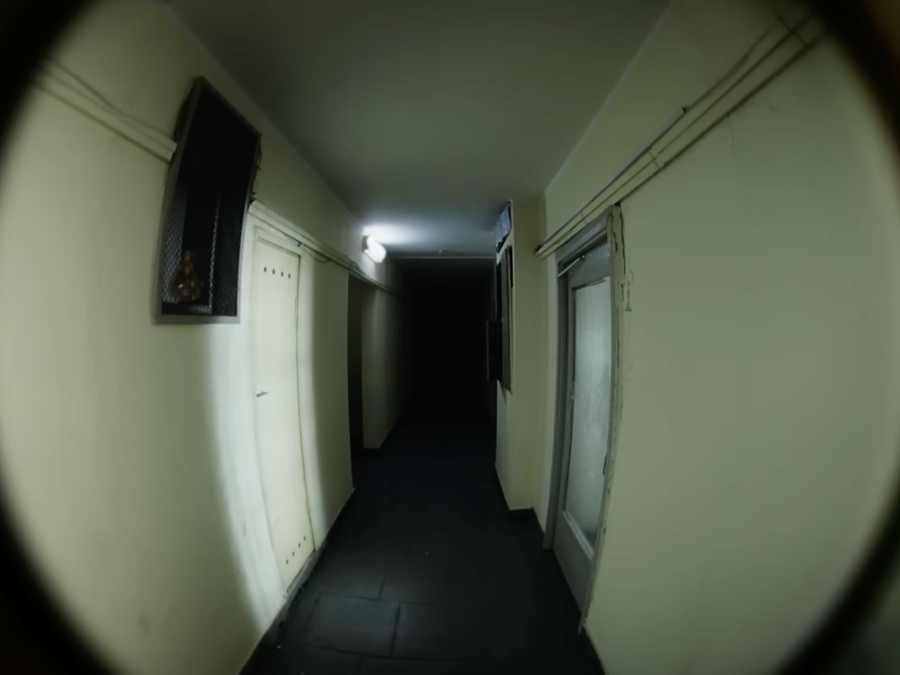
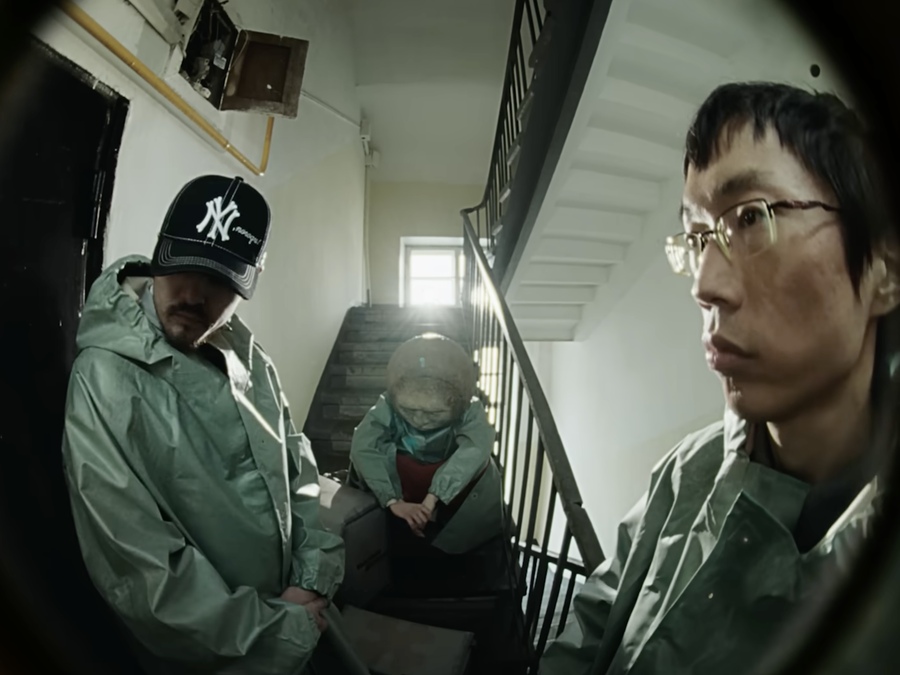
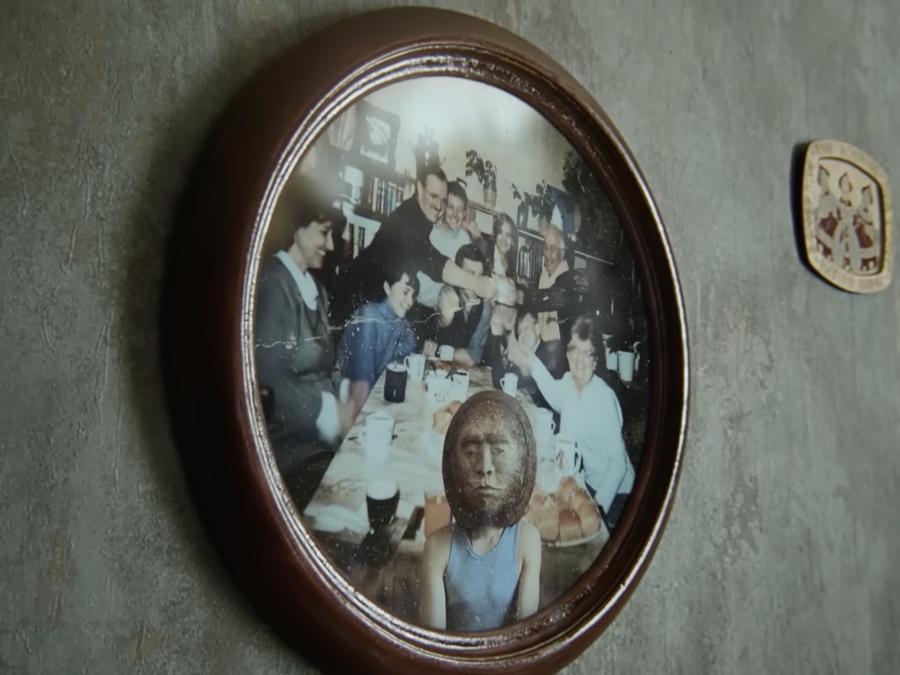
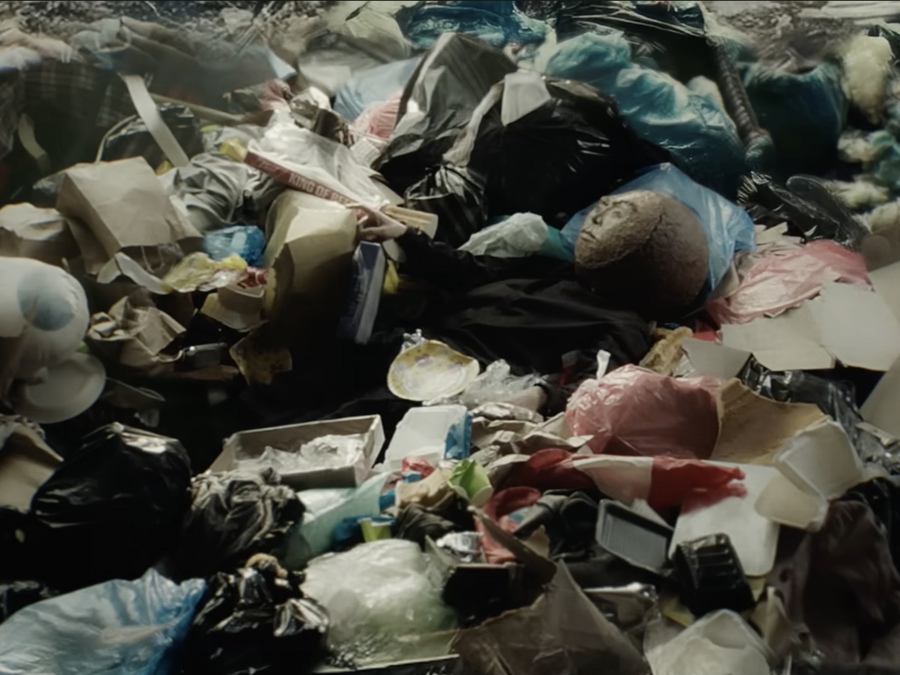
Stills from the «Kolobok» video, directed by Pyotr Shilov, 2025
However, the Husky clips were the most interesting for me to research. In them, simple everyday actions become not a separate artistic technique, but virtually the foundation of the visual language.
A still from the music video «Poem of the Motherland, ” directed by Igor Klepnev, 2017.
In these clips, scenes that challenge the conventional image of the rapper—who often exaggerates his confidence, status, and self-importance—take up a significant amount of screen time. The characters (and Husky himself) are not trying to prove their significance or demonstrate superiority over the world; rather, they strive for an accurate representation of everyday life actions, which do not always evoke positive emotions or admiration.
An artist cannot be partially sincere, just as art cannot be merely an approximation of the beautiful. Art is the very form of existence of the absolutely perfect and complete.
Director Andrei Tarkovsky, in «Tempered Time,» wrote that life itself already possesses immense artistic expressiveness. I believe this is precisely why Husky’s music videos resonate so powerfully. Their emotional impact is built not on trying to create a beautiful, unattainable image, but rather on attentive observation of ordinary human life.
Stills from the music video «Ai,» directed by Igor Klepnev, 2017 In my opinion, it is precisely this honest depiction of everyday life that contributes to creating a completely unique resonance between the listener and the creator—a feeling I experienced with Husky as well. Once this feeling emerges, it becomes impossible not to empathize with the protagonist and believe in the sincerity of the author’s thoughts.
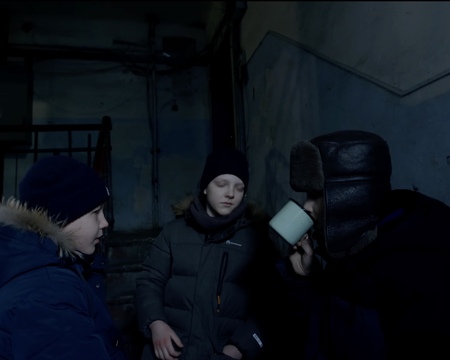
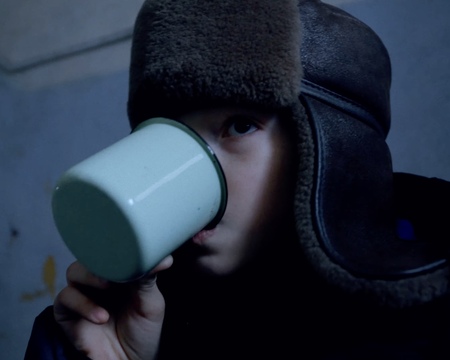
Stills from the video clip «Young Russian,» directed by Dima Kraemglaz, 2024
In my work, I investigate not song lyrics, nor the artist’s biography—including their numerous performances, film, and theater roles—but rather the recurring visual motifs within the music videos: the staging, the absence of constant eye contact between the artist and the camera, and the mundane actions of the characters set within real-world spaces.
The key research question is: what visual techniques help construct the image of a «living» person in Husky’s music videos?
My hypothesis is that Husky’s videos form the image of a real individual through a focus on everyday actions and commonplace environments. The setting, the characters' gaze, and ordinary life become the foundation of the artistic statement, dismantling the familiar image of an unattainable star.
SPACE.
Stills from the music video «Panełka,» directed by Vladislav Zizdok, 2017
The space in Husky’s music videos has become one of the most critical elements of the artistic image. Through everyday and recognizable environments, the artist becomes part of the real world. Rather than using glossy or artificially constructed locations, he exists within spaces familiar to the average person: panel buildings in Chertanovo, kitchens, stairwells, cars, and playgrounds.
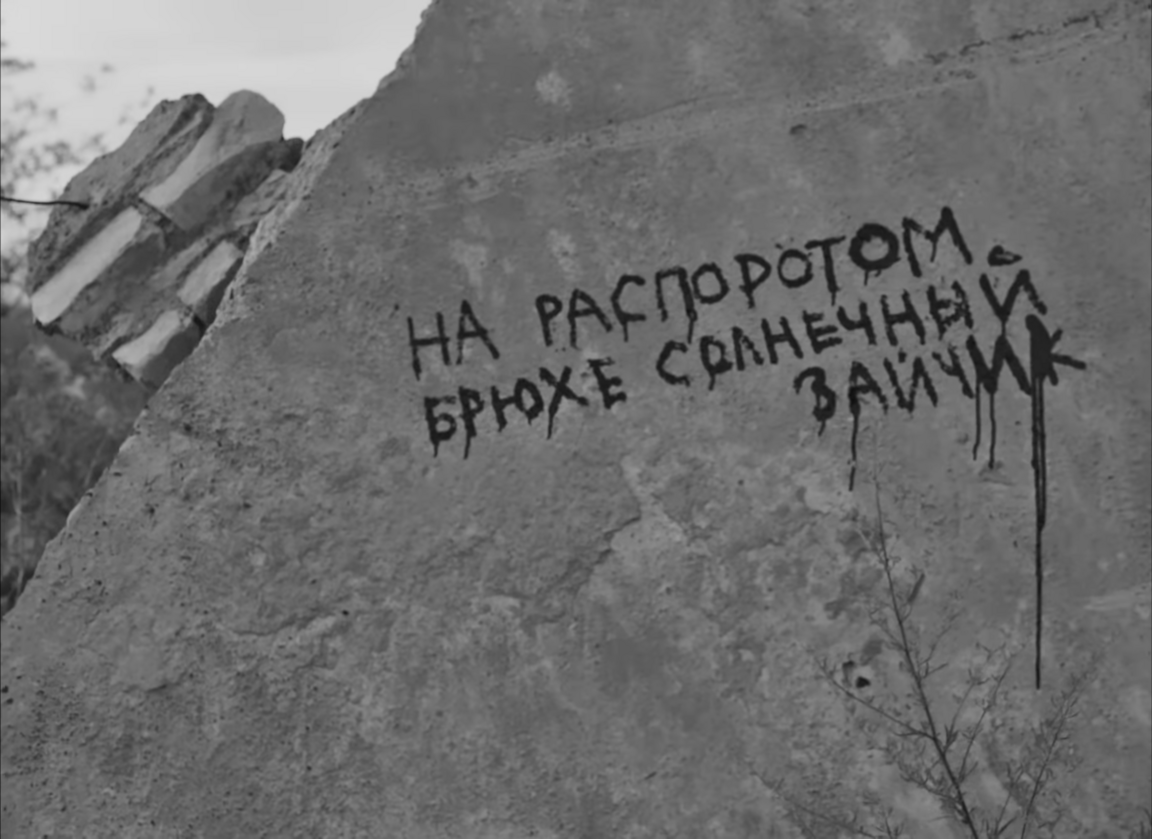
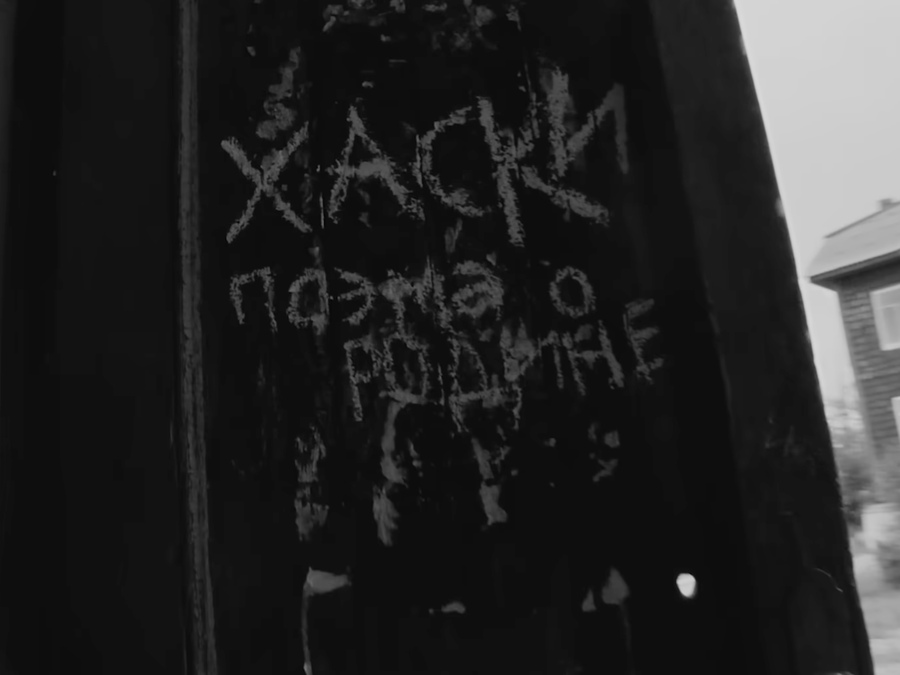
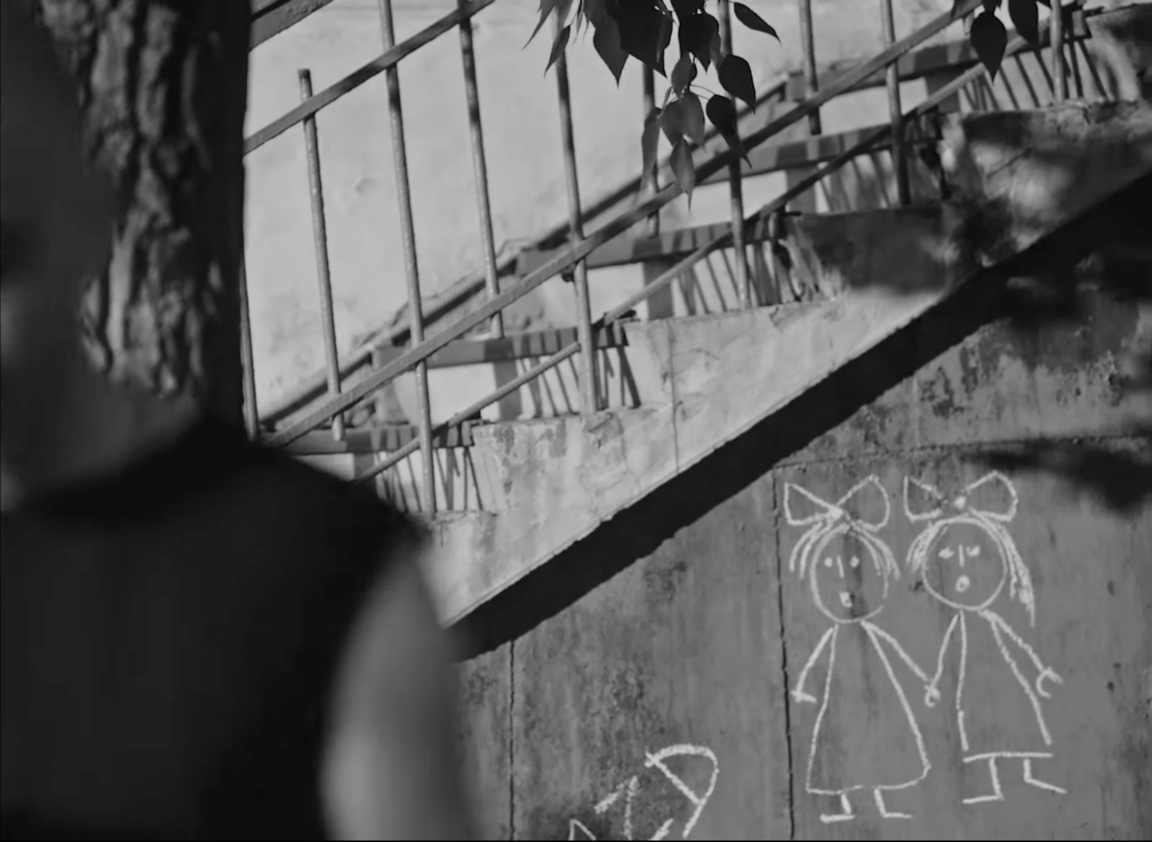
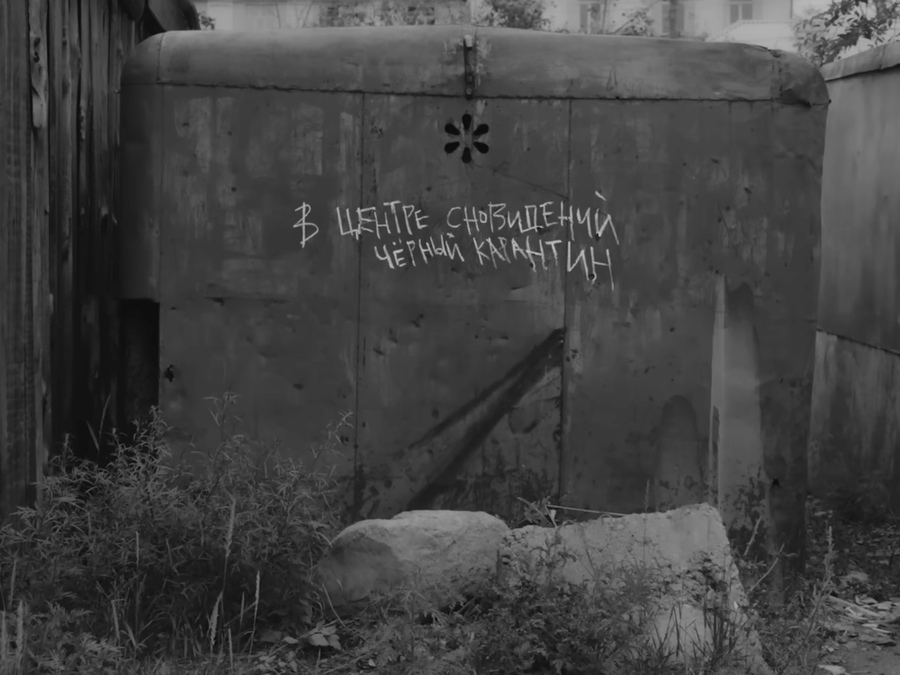
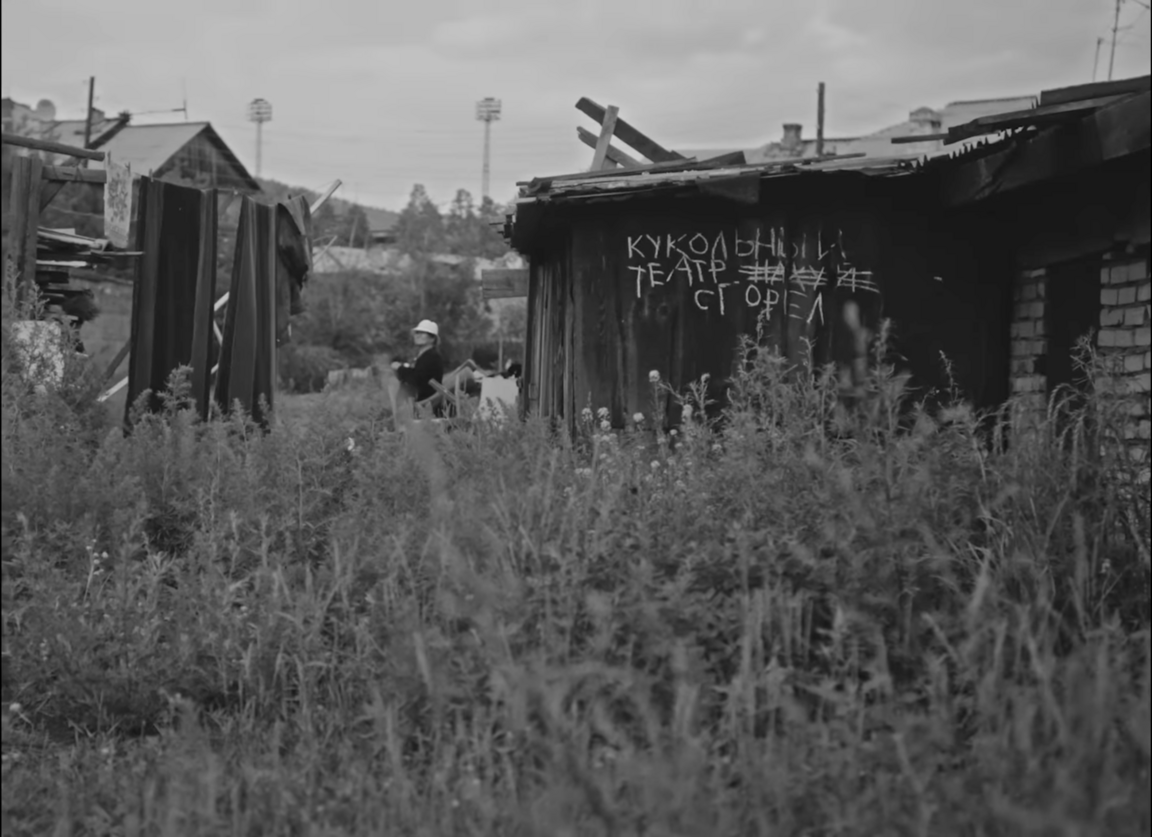
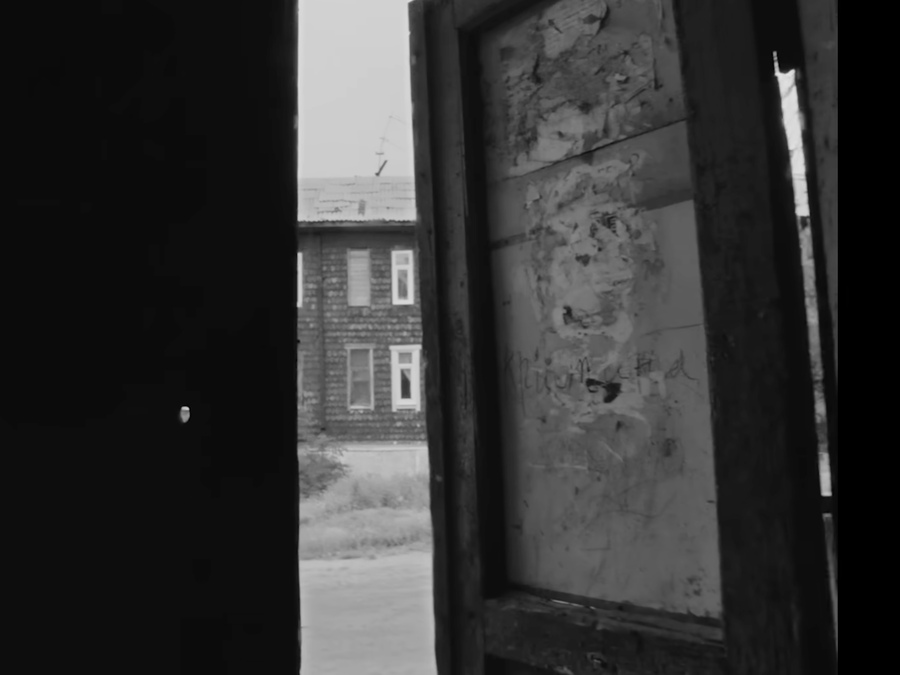
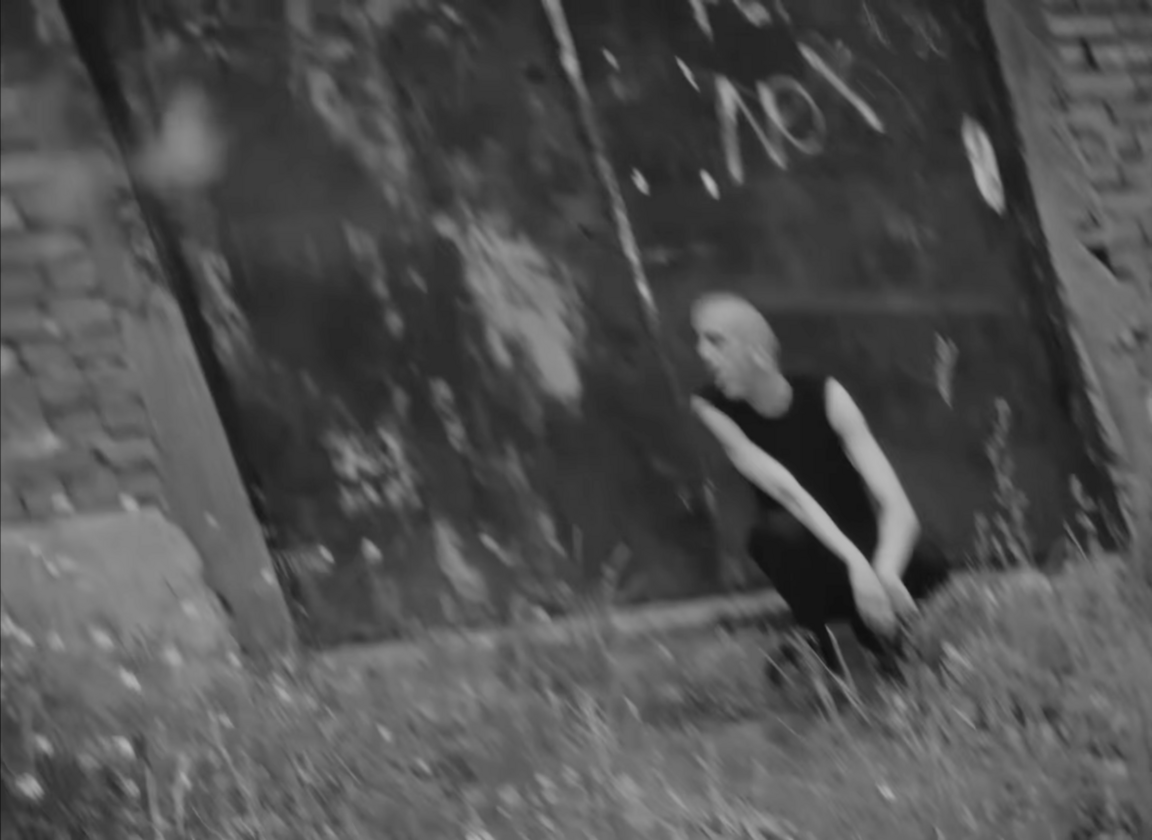
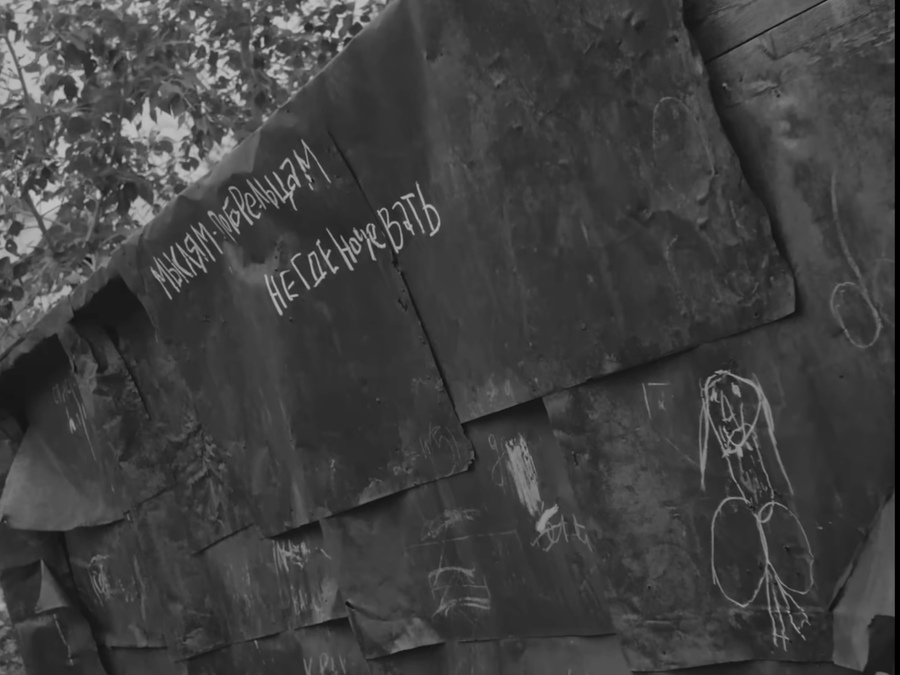
Stills from the music video «Poem of the Motherland,» directed by Igor Klepnev, 2017
In the music video for «Poem of the Homeland, ” numerous inscriptions appear on fences throughout the entire clip—likely created by the rapper’s team for the shoot—but because viewers encounter such street art artifacts so frequently in daily life, they don’t look like artificial set dressing. Interestingly, even the credits are rendered in the same style.
Credits for the music video «Poem About the Homeland, ” directed by Igor Klepnev, 2017
The kitchen is another space understood by every Russian person, especially in the context of a family gathering. But even greater delight comes from the work of the set designer on the music video; he filled this already evocative space with important details: plastic washbasins for laundry, a crystal vase with carnations, a kettle with a wooden handle (which begs for a slight char to instantly transport me back to my childhood at my grandmother’s house), and a string of laundry hanging from the ceiling.
Stills from the music video «Revanche,» directed by Lado Kvataniya, 2021
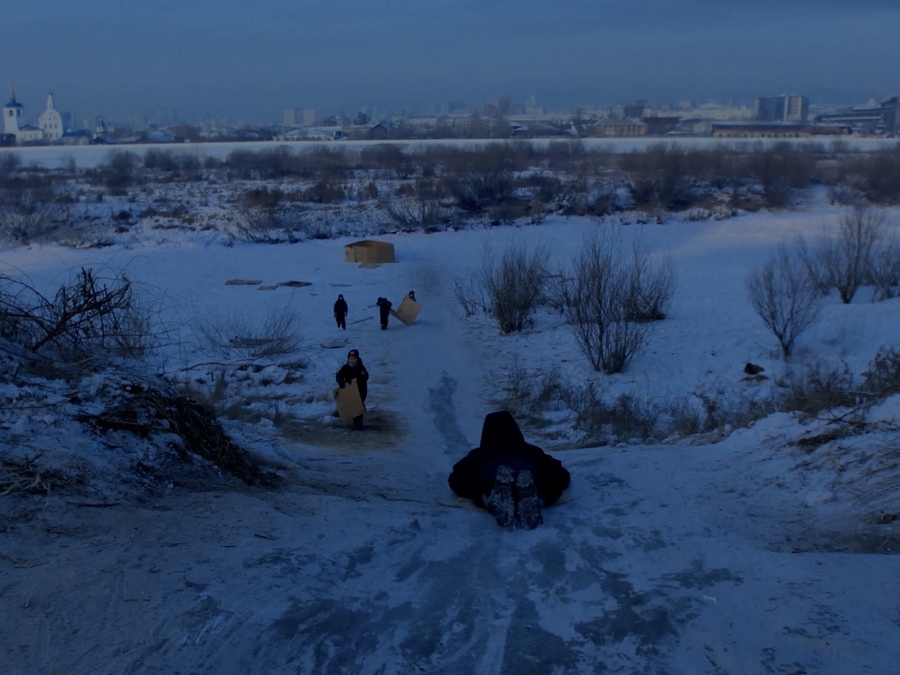
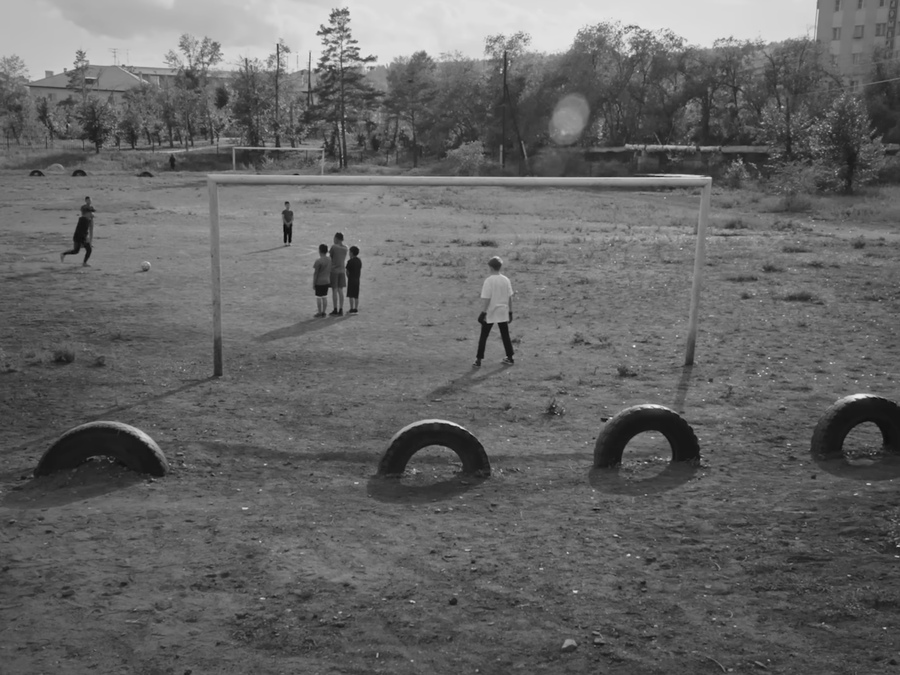
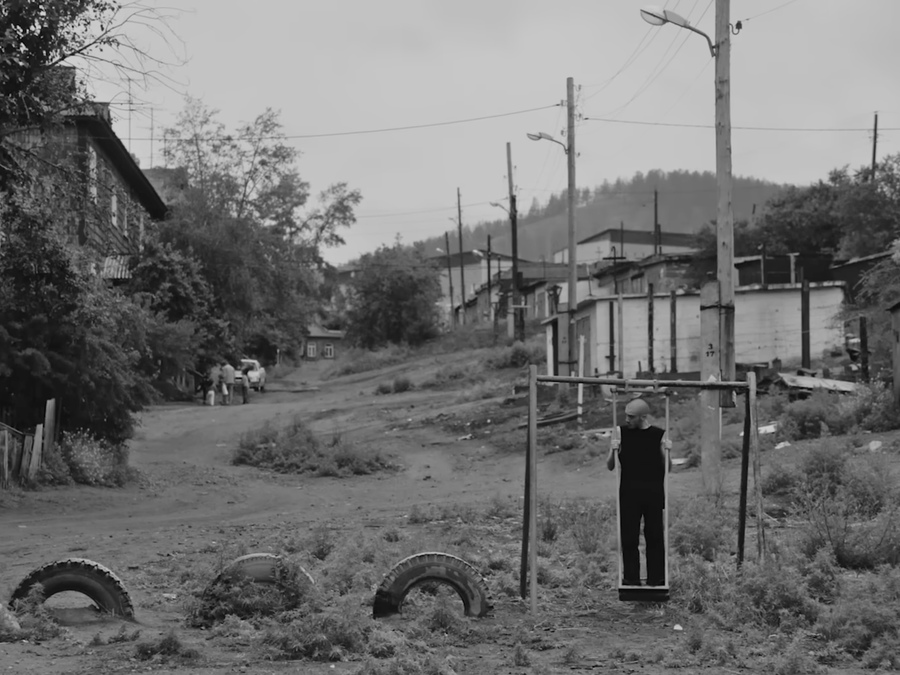
(1, 2) Stills from the music video «Poem of the Motherland, ” directed by Igor Klepnev, 2017 (3) Stills from the music video „Young Russian, ” directed by Dima Kraemglaz, 2024
Regarding the exterior shoots, in several clips, the Husky itself, as well as the heroes his team selects to participate, are featured in playgrounds, tire-enclosed soccer fields, and ice slides—settings familiar to every person from the CIS countries from childhood.
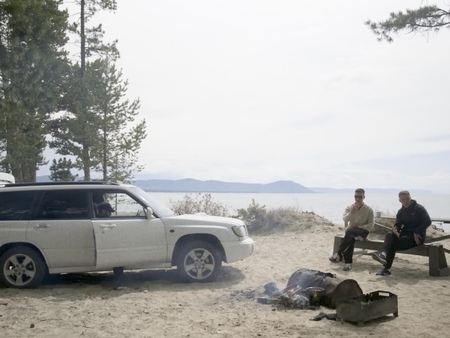
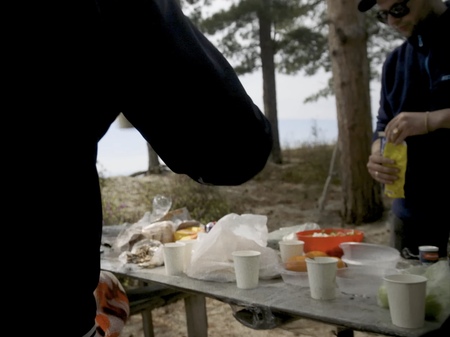
Stills from the «Shanson 2» clip, directed by Vitaly Akimov, 2024
Or, for example, in the «Shanson 2» music video, the action takes place on the shore of a body of water, featuring a barbecue grill for shashlik, an open car trunk, and an improvised table for a May celebration feast.
Still from the music video «Poem About the Motherland, ” directed by Igor Klepnev, 2017
The space in Husky’s music videos does not exist as a discrete backdrop; rather, it becomes a complete and autonomous unit of artistic expression—a part of the artist’s collective memory with their audience. In this way, through the depiction of everyday environments, an emotional distance between the viewer and the musician is gradually erased.