Media Concept
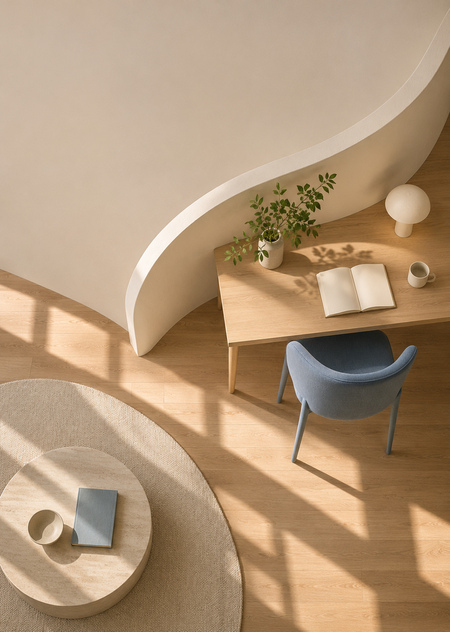
«Space Matters”—a Telegram media outlet exploring how interior design and urban environments influence daily comfort. The project helps us understand why some spaces feel conducive to working and relaxing, while others generate discomfort. Publications cover apartments, workspaces, cafés, libraries, and courtyards. Key themes include lighting, acoustics, furniture arrangement, storage, and the opportunity for privacy.
Media goal: To help readers identify sources of discomfort and improve their surrounding space through small, achievable changes.
Key formats: analysis of subscriber photos, short explanations, checklists, surveys, and experiments with follow-up evaluations one week later.
Data Sources for Media
// Source // Data Received // How It’s Used //
Submissions from Subscribers:
1. Photos of the spaces, descriptions of discomforts, limitations, and suggestions.
2. We prepare analyses and propose changes.
Audience Surveys:
1. Responses on daily habits, comfort, and common issues
2. Selecting topics for future posts
Author’s Observations:
1. Photography, notes on light, sound, furniture arrangement, and traffic flow
2. Deconstructing apartments and public spaces
Academic Publications:
1. Research findings on environmental perception, lighting, and acoustics 2. Verification of explanations and addition of primary source citations
Expert Commentary: 1. Explanations from designers, architects, and lighting and acoustics specialists 2. Clarifying complex issues and reviewing recommendations
Feedback following changes:
1. Re-photographs and participant testimonials
2. Demonstrating which solutions proved useful
Channel Statistics:
1. View counts, reactions, shares, and poll participation metrics
2. Gauging interest in topics to refine the plan
To search for research, you can use Google Scholar and CyberLeninka. The source for publication is the work itself—the piece the author has read and verified.
For each material, the following are documented: the source, the date of retrieval, the link or file, the topic, the verification status, and the publication permission, if required.
Data Schema: Human and Machine Processing
Here, machine processing includes standard automation and AI tools. Launching only requires a material collection form, a table, an AI assistant, and scheduled publications.
Stage // Machine Processing // Human Work
Collection: 1. The form saves answers and photos to a unified database 2. The author determines the questions and terms of material use
Systematization:
1. Tools group materials by themes: light, noise, furniture, storage
2. The author reviews the categories and selects interesting examples
Review: 1. The system flags unfilled fields and materials lacking citations. 2. The author verifies facts, publication consent, and refines details.
Preparation: 1. AI suggests a structure, headings, and a draft based on verified data. 2. The author formulates conclusions and evaluates the applicability of the advice.
Layout:
1. The template helps organize the cards and prepare images in the required dimensions.
2. The author checks for readability, composition, and the alignment of illustrations with the text.
Publication:
1. Deferred publication releases the approved material.
2. The author sets the date and confirms the final version.
Analysis: 1. The table calculates metrics and gathers feedback. 2. The author interprets the results and modifies the thematic outline.
Example: A subscriber sends a photo of their desktop and complains about glare. The material is saved in the database with the theme «Lighting.» The author clarifies when the glare occurs and what elements can be moved. The AI helps draft a response based on this information. The author reviews the suggestions, approves the use of the photo, and prepares the publication. A week later, the participant receives an invitation to share the result.
Guidelines for Automated Services
Material Submission Form
— Request the space type, specific problem, constraints, and photographs.
— Include a separate consent form for the publication of photographs and text.
— Store contact information separately from the materials intended for publication.
— Ask participants to redact documents, addresses, and other personal information from the images.
Table or database — Assign a number and a thematic category to each material. — Use the following statuses: «Received, ” „Needs Clarification, ” „Verified, ” „Draft, ” „Approved, ” „Published.“ — Keep links to sources and original files. — Do not automatically transition the material to the „Approved“ status.
AI assistant for text preparation
— Work only with provided materials and verified sources.
— Do not invent research, specialist quotes, testimonials, or experimental results.
— If data is insufficient, formulate clarifying questions.
— Do not determine noise level, precise dimensions, or a person’s feelings from a photograph.
— Separate observation, assumption, and confirmed fact.
— Write in simple language, avoiding definitive promises.
— Suggest feasible changes while accounting for the participant’s limitations.
Image Processing Tools
— Save the original photograph.
— Do not alter the details that form the basis of the analysis.
— Use arrows and highlights to point out specific issues.
— Label generated options as «Proposal Visualization.»
— Use «after» images only when real photographs of the result are available.
Delayed Publishing Service
— Post only materials with the status «Approved.»
— Verify the presence of text, images, and necessary links.
— Adhere to the schedule—three posts per week.
— Do not publish new versions of text after AI edits without the author’s re-verification.
Analytics Tools
— Compare publications within the same period, for example, seven days after release.
— Consider the topic and format when comparing.
— Do not count reactions as proof that the advice was helpful.
— Evaluate changes based on participant feedback.
— Use survey results as the opinion of responding subscribers, not the entire audience.