Media Concept
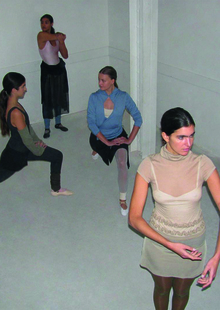
«Contact”—a media platform about the collaboration between students of the HSE Art and Design School and the British School of Design. Designers and photographers from both schools pair up to create joint fashion projects. The media covers their work—introducing the creators, showcasing the development of ideas, fittings, shoots, and the final results.
Goal
To help emerging creators find collaborators outside of their own institutions and present joint projects to audiences, brands, and editors.
The main platform is Telegram.
Supplementary platforms include VKontakte and the festival website.
School collaborations are outlined as a concept for an academic project.
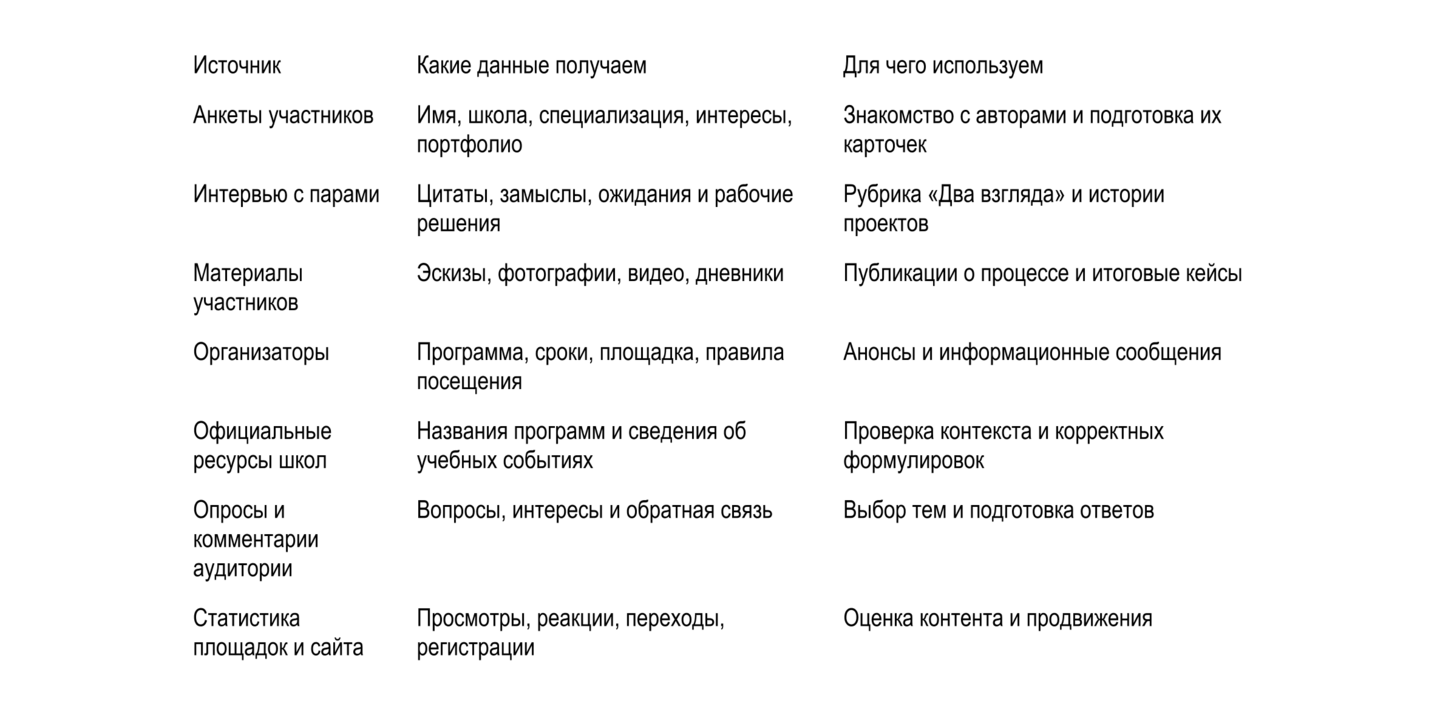
What data do the media need?
About the Participants
Names, schools, fields of study, creative interests, portfolios, and roles in the project.
On Collaboration
Concepts, references, interviews, partner journals, fitting and shoot photos, commentary on design decisions.
About the Festival
Program, time and location of events, participation and attendance terms, schedule changes.
About the Audience
Questions, survey responses, comments, views, reactions, and shares.
This data helps in creating publications, answering questions, and adjusting the editorial plan.
Data Sources
How We Gather Information
Before the Project Begins
Participants complete a questionnaire and indicate what content is cleared for publication. The editor reviews names, links, and the institution.
During the Partnership
Once a week, participants send updates on the process, plans, photos, and videos, specifying authorship.
Before the Festival
Organizers provide the approved program and communicate any changes through the coordinator.
After Publication
The team gathers statistics and audience feedback. The editor adjusts the content plan weekly.
Unified Materials Database
Data Processing Schema
Sources Questionnaires, interviews, participant materials, organizer program, feedback, and statistics.Machine Processing Transferring responses into a table, checking field completion, transcribing audio, and technical file preparation.Human Curation Fact-checking, verifying quotes, authorship, and permissions. Selecting the theme and editorial angle.Machine Assistance Drafting text based on verified data, creating headline options, and adapting the content for the specific platform.Human Review Editing, verifying meaning, finalizing quotes, and giving final approval for publication.Automated Publishing Publishing the approved version on schedule using the platform’s authorized tools.Analytics The service gathers available metrics → the editor interprets the results → the team adjusts the plan.
Automated services in the diagram
General Automation Rules
Work only with approved dataSend the service only the materials necessary for the task. Exclude personal contacts and private correspondence unless they are required for processing. Maintain connection to the sourceEvery draft must retain links to the original materials and the date they were received.Do not invent informationIf data is missing or contradictory, the service must flag this and send a query to the editor.Keep originals Transcriptions, abbreviations, and processed images must be stored separately from the original files.Publish after reviewAutomatic posting is only permitted for material marked as «approved.» Any changes to the text or attachments after approval require a new review.
Guideline: Interview Transcription
Service TaskTranscribe the audio recording into text, preserving the meaning and conversational sequence.Rules-Separate lines according to the speaker. If the voice is unidentified, use the designation «Speaker 1». -Add timestamps for verification. -Mark unintelligible speech as «[unintelligible]». -Do not invent words, names, or titles. -Do not turn a summary into a direct quote.Human ReviewThe editor cross-references the selected quotes with the recording, clarifies names, and approves the lines intended for publication.
Guideline: AI Text Assistant
Service ObjectivePrepare a draft based on verified editorial materials.Guidelines— Use only the provided facts. — Do not invent quotes, achievements, dates, or events. — Preserve the names, roles, and affiliations of the participants' schools. — Do not impose a uniform style on all students from HSE or British Design. — Write calmly and specifically, avoiding hyperbole and marketing clichés. — Acknowledge the contribution of both co-authors. — Note any questions or gaps in the data separately from the text.Assignment Example«Prepare a Telegram post between 700 and 1000 characters based on the attached verified materials. Discuss one project solution and the contribution of each participant. Do not add new facts or quotes. If information is missing, list your questions for the editor.»
Guidelines: Imagery and Publication
Image Preparation-Automation is used to resize, reformat, and compress copies. Originals are saved separately. -Changes to the garment structure, fabric color, participant appearance, or details of the original work cannot be made without approval. Cropping requires the designer to verify that important elements remain visible. -Generated illustrations are labeled as illustrations and are not presented as documentary photographs from the festival.Scheduled PublicationThe scheduler receives only the approved text, attachments, placement location, and posting time. Before launching, the editor verifies links, captions, credits, and the timeliness of the program.If the festival schedule changes or a loading error occurs, the publication is suspended and passed to the responsible editor.
Guideline: Analytics
What We AutomateGathering available metrics: publication counts, clicks on tagged links, and registrations. Preparing a weekly summary.Rules-Record the platform, date, and measurement period for each metric. -Compare publications within the same time frame after release. -Differentiate between views, users, clicks, and registrations. -Account for paid promotion separately if such data is available. -Mark missing data as «no data» rather than substituting it with zero. -Do not aggregate audiences from different platforms as unique individuals. What the Editor DecidesWhich topics to continue, which formats to change, and which conclusions require further verification.
Quality Control
Festival CoordinatorConfirms the program, deadlines, participation terms, and changes.Editor Verifies sources, facts, and quotations; approves the text and is responsible for publication.DesignerChecks visual materials, framing, captions, and adherence to the media’s style.ParticipantsClarify details about their work and coordinate the use of materials.In a small team, one person may hold multiple roles. Every publication must have a designated person responsible.