Concept
In my research, I examine the symbolic language of art from the catacomb period and its possible visual parallels with European Symbolism from the late 19th to the early 20th century. I am interested in how artists used familiar motifs of animals, plants, objects, and natural phenomena to convey ideas that cannot be expressed solely through direct depiction. Furthermore, the meaning of the same image changed depending on the era, religious beliefs, and the artist’s intent.
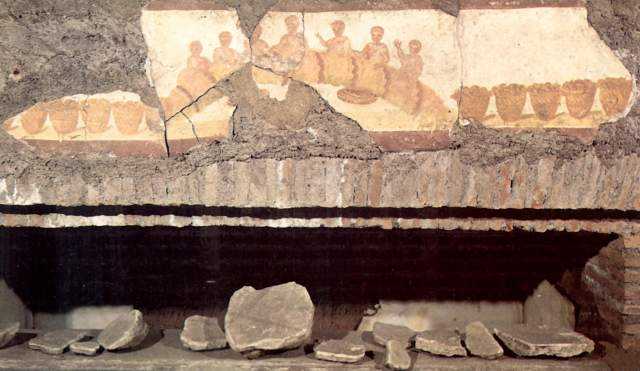
It is interesting to trace how the principle of symbolic representation formed and how it manifested across different historical periods.
The focus is on imagery found in early Christian art that can be compared with the works of European Symbolist artists. Furthermore, I examine not only the similarities but also the differences in the meaning of these images. It is important to consider that external resemblance between two images does not necessarily imply identical meaning or direct borrowing.
image
The research is divided into two thematic parts. The first examines natural imagery—animals, birds, and plants—that was used to convey religious concepts. The second analyzes objects and conventional signs that acquired symbolic meaning, as well as their potential parallels in European symbolism. This sequence allows the progression from recognizable images of the natural world to the more conventional and abstract forms of symbolic language. Works by European Symbolist artists are used for comparison. When selecting these works, consideration is given to their content, historical context, and the possibility of a reasoned comparison with Early Christian imagery.
image
Despite differences in historical context and artistic objectives, early Christian art and European Symbolism share a commitment to conveying complex ideas through recognizable imagery. However, in early Christian art, symbols relied on a shared religious system of meanings, whereas in Symbolism, their content often depended on the individual conception of the artist.
image
It should be noted that religious themes also attracted Symbolists because they offered the opportunity to address questions beyond the visible world. Through biblical narratives and the imagery of saints, angels, and mystical beings, artists contemplated the nature of the soul, life and death, faith, and the afterlife. Furthermore, they often reinterpreted traditional religious icons, infusing them with their own philosophical and emotional content.
image
The Emergence of Symbolic Language in Early Christian Art
During the 2nd–4th centuries CE, Christian communities faced periodic persecution and public disapproval. Christianity was not yet a recognized religion of the Roman Empire, so believers could not always openly profess their faith. Catacombs—underground burial complexes whose walls and ceilings were decorated with frescoes depicting biblical scenes and symbolic imagery—played a vital role in the development of early Christian art. During this period, symbols became one way of transmitting Christian concepts. Familiar images of animals, plants, and objects acquired new religious meaning.
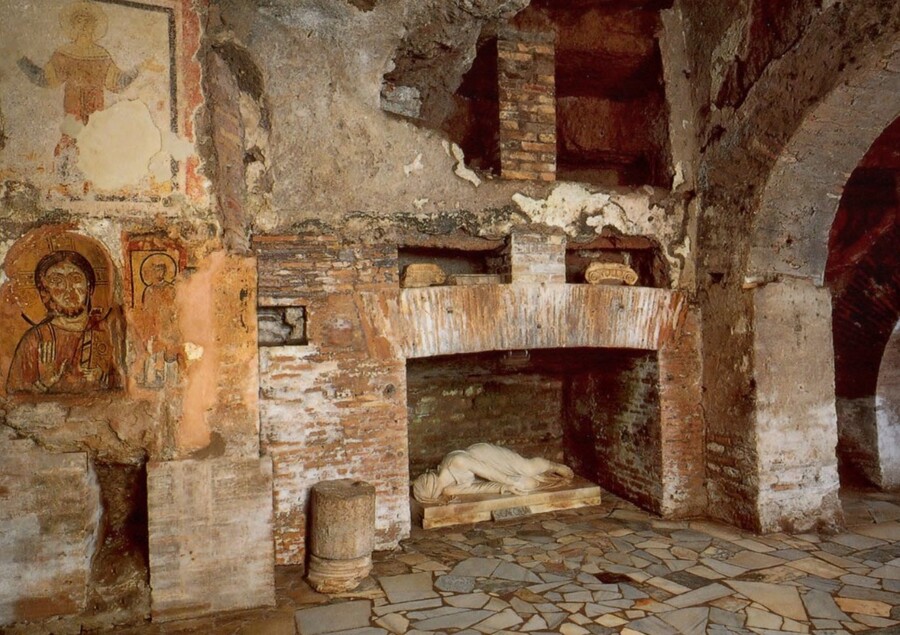
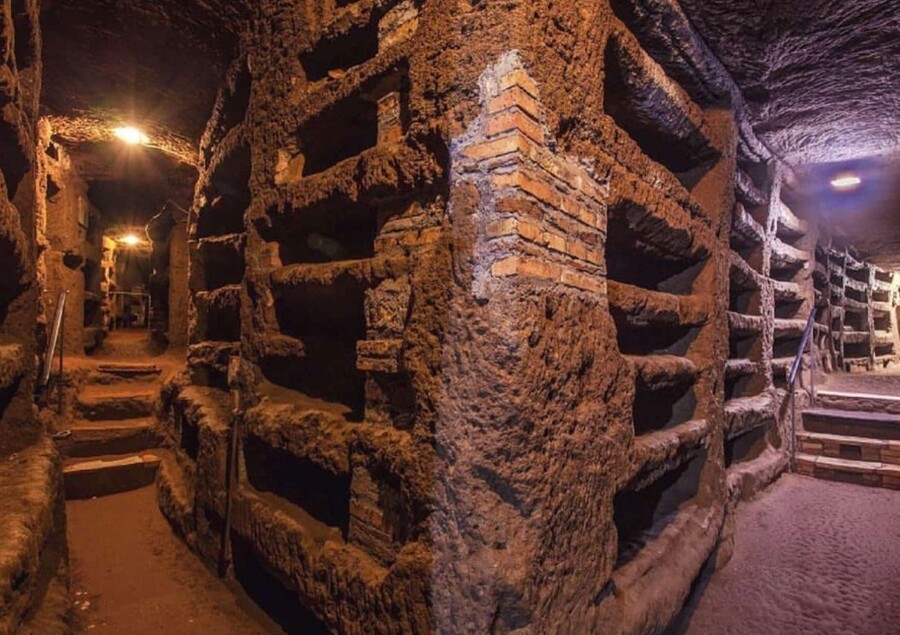
This created a distinct visual language where familiar imagery from the surrounding world was used to convey spiritual concepts.
Natural Images as Carriers of Symbolic Meaning
In early Christian art, depictions of animals, birds, and plants held significant importance. Familiar images of the natural world were employed to convey religious concepts of salvation, resurrection, eternal life, and faith. Thanks to their added symbolic meaning, these recognizable natural forms became part of a distinct visual language.
image
Fish
The fish became one of the most recognizable symbols of early Christianity. Its significance is linked to the Greek word ΙΧΘΥΣ («ichthys»), which is formed from the first letters of the phrase «Jesus Christ, Son of God, Savior.» In catacomb art, the fish was depicted alone or alongside bread.
image
Odilon Redon depicts a fantastic creature combining human and animal traits. Here, the fish becomes part of an unusual image that reaches into the world of fantasy and mythological conceptions. Unlike in early Christian art, where it held specific religious meaning and signified Christ, in Redon, its image is integrated into a more fluid system of associations. (Revise the analysis and conclusion)
The Sheep and the Good Shepherd
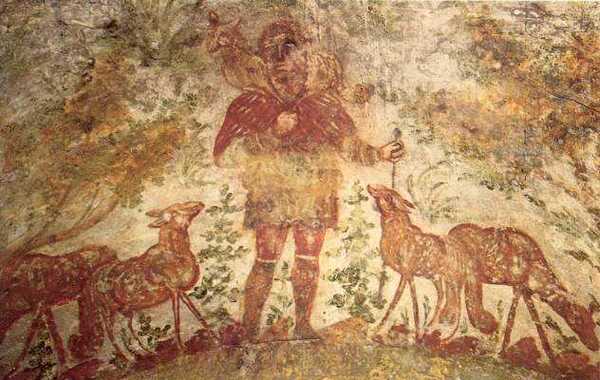
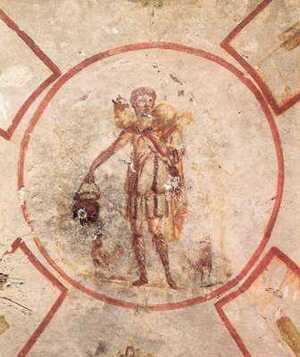
The image of the Good Shepherd is associated with care, protection, and the salvation of the human soul. For example, in the fresco «The Good Shepherd» from the Catacombs of Priscilla (3rd century), Christ is depicted as a shepherd carrying a sheep on his shoulders. This narrative references the biblical parable of the good shepherd and the lost sheep. It illustrates Christ’s concern for the faithful and his desire to lead them to salvation.