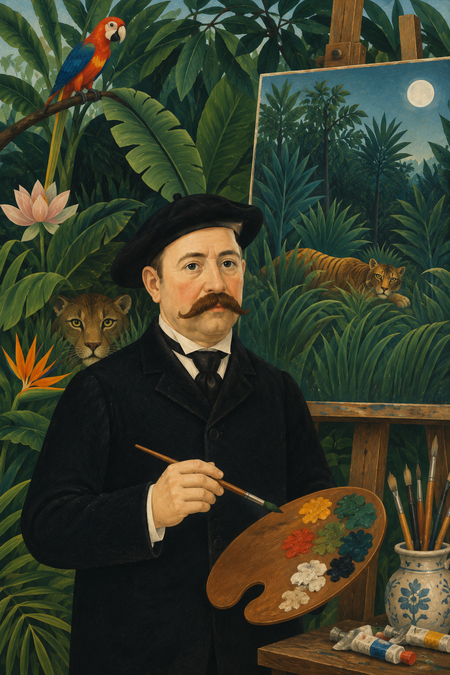
You probably think that before you draw a jungle, you should at least visit it once. Hear the monkey cries, feel the hot, humid air, see the enormous palms and vines. But one French artist succeeded in convincing the entire world that he knew the jungle better than many travelers. There is just one small problem—he never saw them.
Henri Rousseau lived almost his entire life in Paris, where he worked as a customs officer. Every day, he inspected the documents and goods brought into the city. He did not become an artist immediately, nor did he do so thanks to an art academy—Rousseau never attended one. In the evenings, he visited museums, copied paintings by the Old Masters, analyzed how compositions were constructed, and gradually learned to draw on his own. This is precisely why many of his contemporaries long considered him merely an amateur.
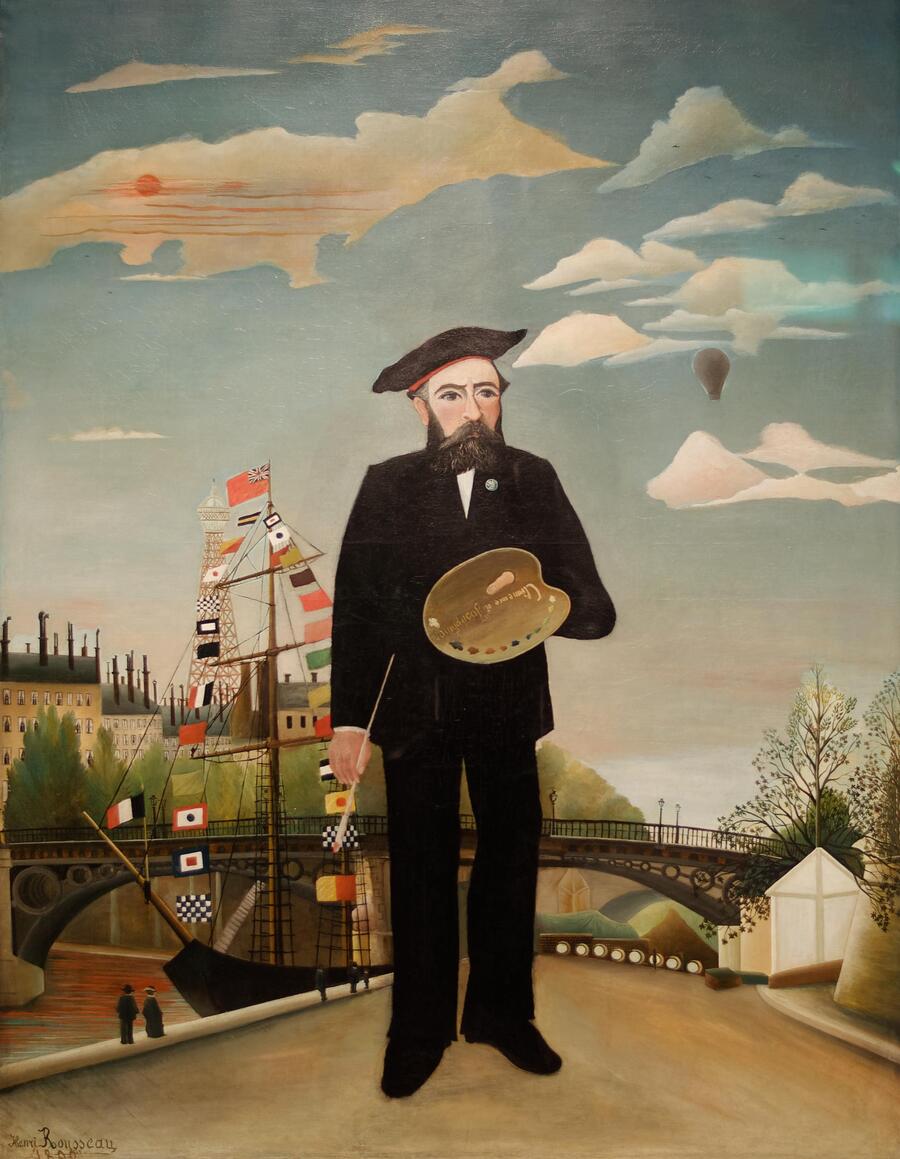
Henri Rousseau. «Self-Portrait» («I Myself. Portrait-Landscape»), 1890. National Gallery, Prague.
But one day he developed a new passion—the Botanical Garden. In 19th-century Paris, it felt like a true window into another world. Banana palms, bamboo, giant leaves, cacti, and dozens of plants brought in from Africa, Asia, and South America grew there. Rousseau could spend hours observing them, then return home and begin designing his own jungles. He meticulously studied travel books and visited the zoo to see lions and snakes, blending what he witnessed with his imagination.
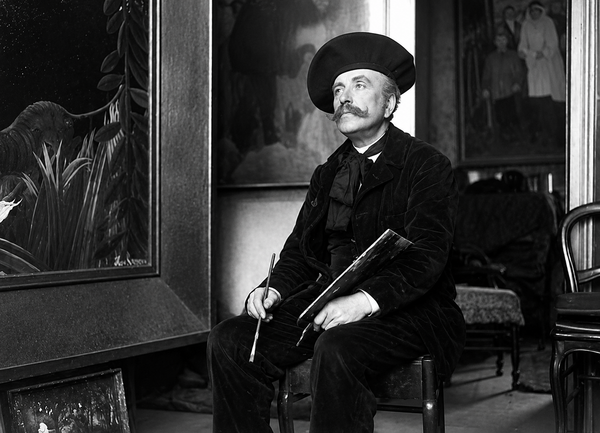
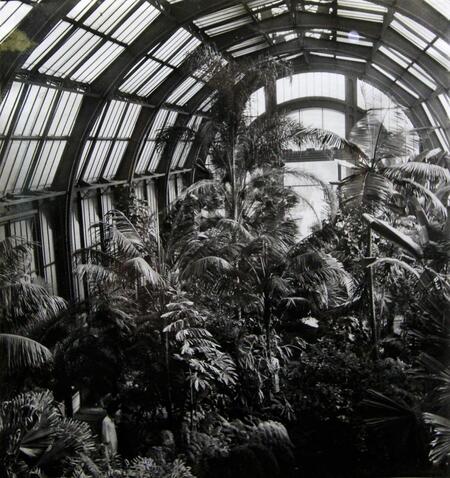
But to prevent ridicule, Rousseau invented a legend. He claimed to have once participated in a French military expedition to Mexico, where he witnessed the tropical forests firsthand. The story is certainly beautiful, you have to admit. It’s just a pity that it’s untrue. Rousseau never visited Mexico, Africa, or South America. All his travels took place in his imagination.
Now, let’s look at two of Henri Rousseau’s most famous paintings. I’ve analyzed them in my Telegram channel, «Explain the Renaissance,» but now let’s try to find the most interesting details ourselves.
«Sleep, ” 1910
At first glance, it appears to be nothing more than dense jungle. But look more closely. How many animals can you find? A lion? Yes. Birds? Yes. Now try to find a snake. Rousseau intentionally hid the animals among the foliage, turning the painting into a genuine game. To make the jungle feel alive, the artist used about twenty shades of green. And now look at the woman lying on a sofa right in the middle of the forest. How did she end up here? Perhaps everything taking place is a dream?
Museum of Modern Art (MoMA), New York
«Sleeping Gypsy, ” 1897
Now, try to imagine what will happen in a minute. Will the lion attack? Or will it simply walk away? In reality, Rousseau deliberately left the answer ambiguous. He wanted every viewer to create their own narrative. The artist himself recounted that the gypsy had fallen asleep under the moonlight during a long journey across the desert. Next to her lies a mandolin, and the jug serves as a reminder that water was a true treasure on the road. Therefore, this painting is less about fear and more about mystery.Museum of Modern Art (MoMA), New York
While he was alive, many mocked Rousseau. They said he drew incorrectly. Today, he is considered one of the most renowned artists of naïve art, and his paintings are housed in the world’s largest museums. It turns out that sometimes you don’t even have to attend an academy to change the history of art. The most important thing is to never stop looking at the world with curiosity.