Once, the artist Rostan Tavasiyev was sitting before a canvas, painting a plush hippopotamus. The task turned out to be tedious: the toy looked similar, but the process itself was not enjoyable.
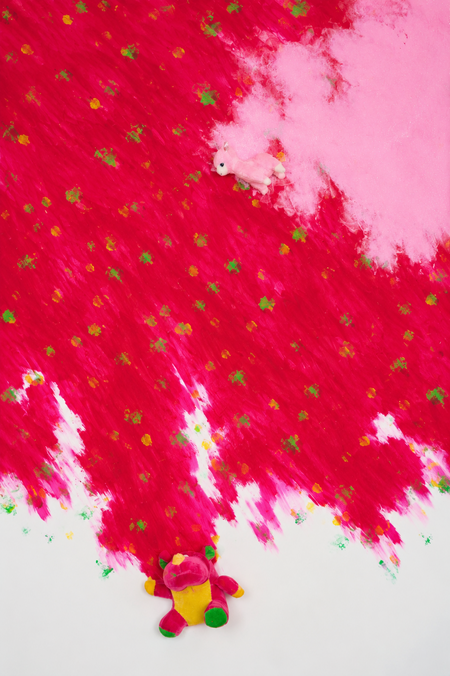
Then the artist took the hippopotamus, dipped it in paint, and dragged it across the canvas like a brush. The mark turned out to be so interesting that the experiment quickly evolved into a new technique. Thus, «hippo-painting» was born—a form of art where a soft toy is used instead of a paintbrush.
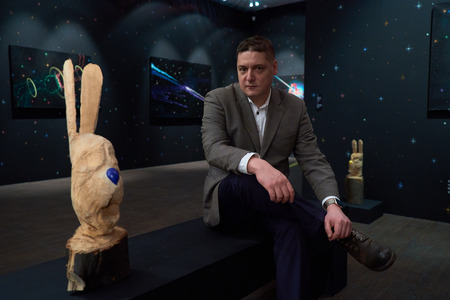
At first glance, it resembles a children’s game. But there is a very serious idea behind it. Tavasiev grew up in an artistic family: his grandfather, the sculptor Soslanbek Tavasiev, created a monument to Salavat Yulayev in Ufa, and his father painted silk. It seemed that Rostan would follow in his family’s footsteps. However, he did not want to repeat his family’s experience. It was important for him to find his own artistic language, and one of the results of this search was the hippopotamoglyph.
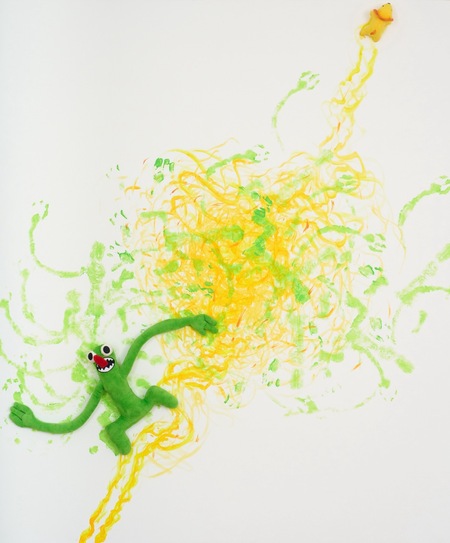
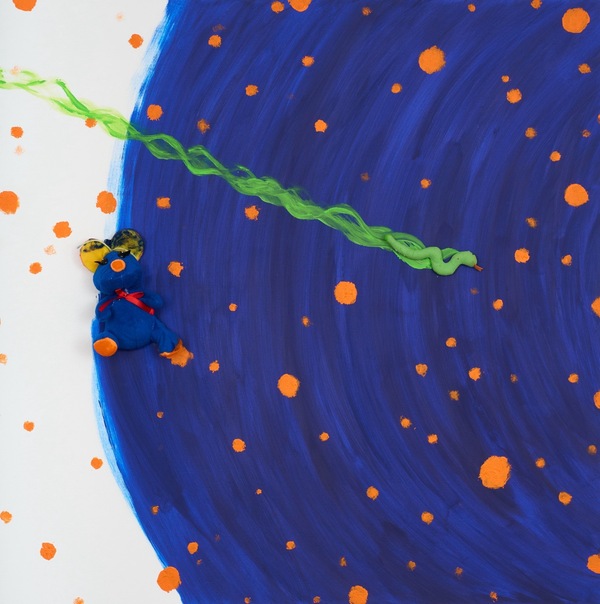
At first glance, it looks like a children’s game. But there is a profoundly serious idea behind it. Tavasiyev grew up in a family of artists: his grandfather, sculptor Soslanbek Tavasiyev, created a monument to Salavat Yulaev in Ufa, and his father painted silk. It seemed that Rostan would follow in his family’s footsteps. But he did not want to repeat his family’s experience. It was important for him to find his own artistic language, and one of the results of those explorations was the hippopotamus inscription.
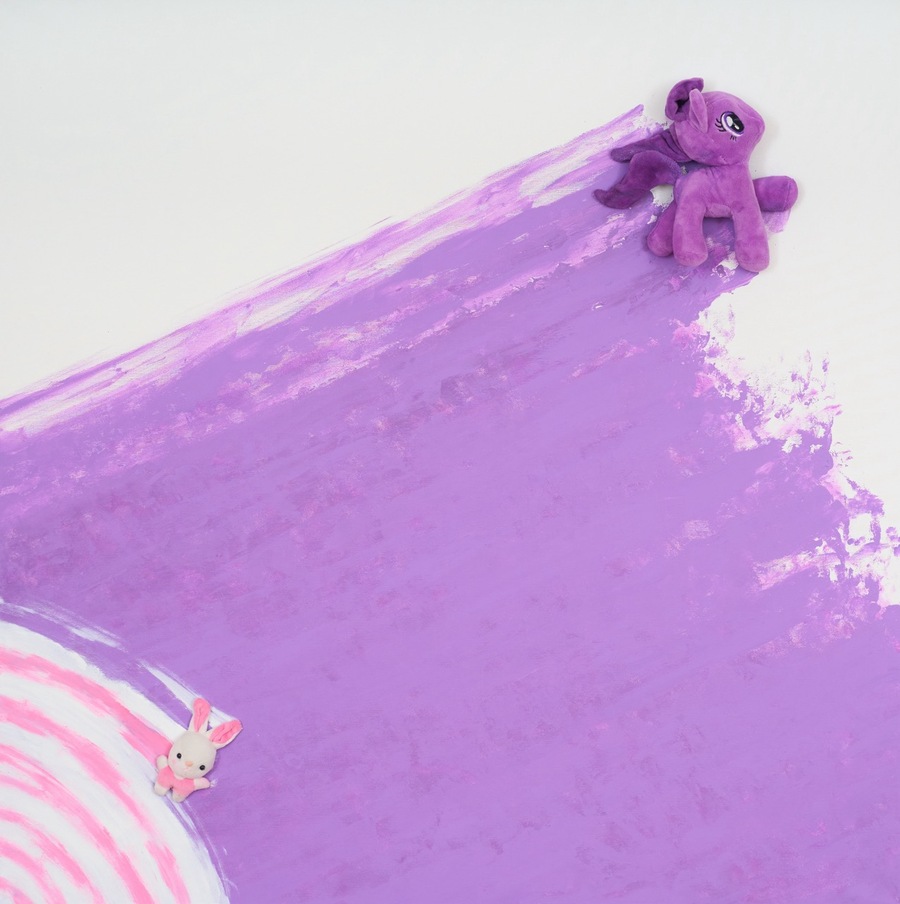
In his practices, Tavasiy draws upon Johan Huizinga’s theory of the «playful human"—he consciously avoids dark colors and aggression because, in his own words, scaring the viewer is a tactic for the lazy. It’s easy to frighten. Creating a work that one wants to look at again and again—that is the truly difficult challenge.
The method was first presented to the public in 2011 at the «Aidan» gallery—and within a year, several paintings made from toys were featured in the Tretyakov Gallery exhibition, displayed alongside classical masterpieces. From there, the «hippopotamus writing» traveled the world: London, St. Petersburg, Ekaterinburg, Tomsk, Krasnoyarsk, Grozny—and this is only a fraction of the route. Over the years, almost nothing has changed. Instead of a brush, Tavasiev still uses a soft toy. It can substitute for a palette knife, a roller, or even an airbrush. And once the work is complete, the artist sews the toy onto the canvas, and it becomes an integral part of the painting.