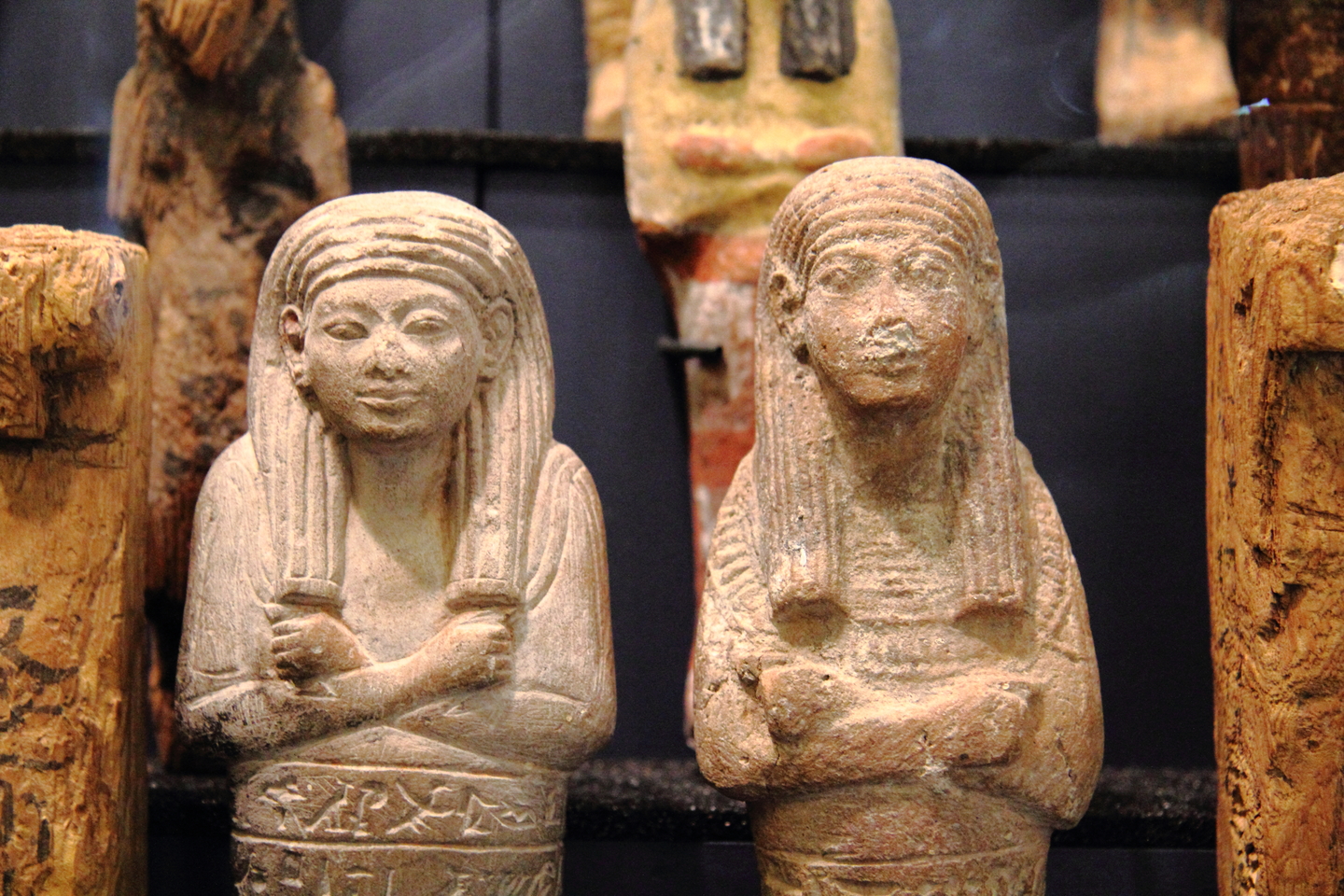
Concept
Egypt is one of the most ancient civilizations known to humankind. It was located in North Africa and flourished from 8000 BCE to 30 BCE. The Egyptians themselves called their country Kemet (the Black Land). Thus, they honored the fertile lands of the Nile, upon which the first settlements were founded. For the Egyptians, the Nile was not only a river that provided resources and prosperity but also an important part of their spiritual culture.
The primary religious belief of the ancient Egyptians was in eternal life after death. They believed that a person did not completely vanish after death but continued to exist in the afterlife. This is precisely why sculpture held such an important place in their culture. It was not merely an object of art or ornamentation, but a means of preserving a person’s memory and helping them achieve true immortality.
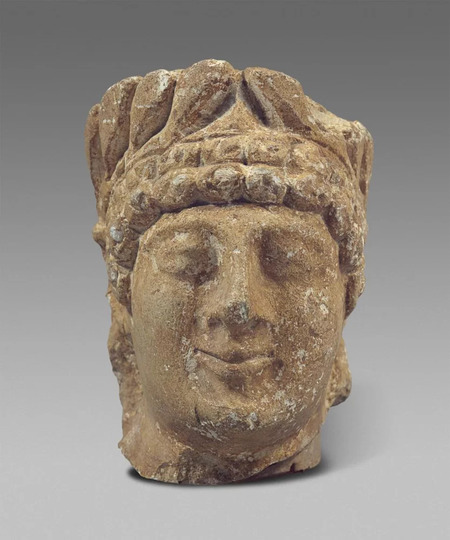
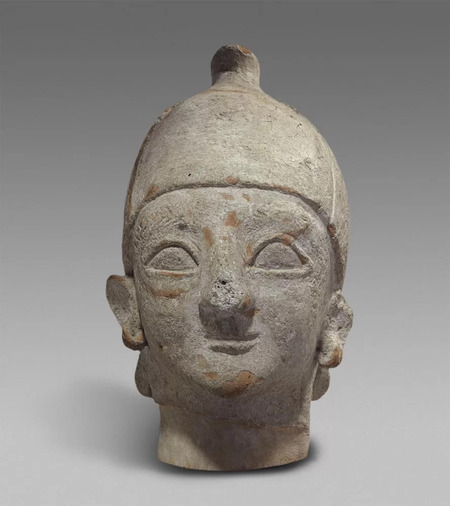
Youth’s head in a wreath / Head of a terracotta statue
Most often, sculptures were located inside tombs. The ancient Egyptians believed that thanks to the statue—which they called the «Ka"—the spirit of the deceased person could continue to live in the afterlife and more easily pass Osiris’s judgment. Furthermore, the statue served as a kind of body for the deceased to reside in, even if the original body was damaged. For this reason, sculptors were given particular importance and were referred to as «life-creators.»
However, people also utilized their many skills to praise the gods and depict their grandeur. The ancient Egyptians loved creating magnificent sculptures of the gods and divine beings in whom they believed. Even the famous Sphinx is a magnificent sculpture, though not an ordinary one.
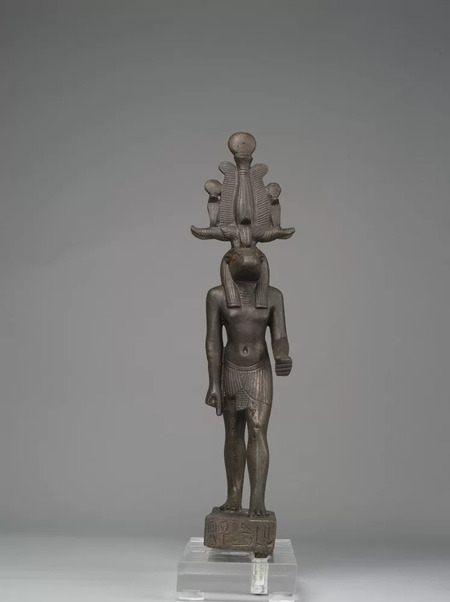
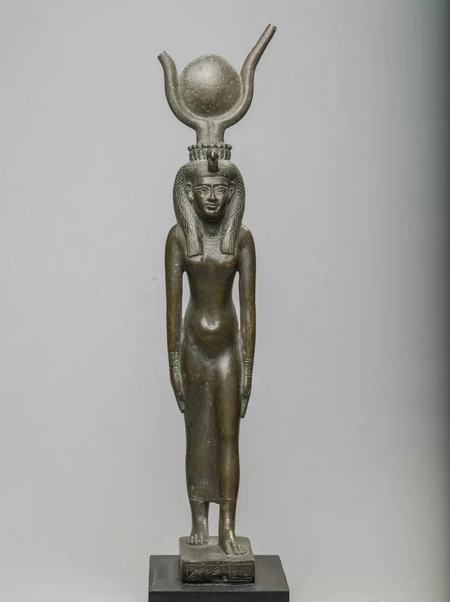
Statue — the god Sekhmet depicted as a standing human figure with a crocodile head / Statue — the standing goddess Isis
This very connection between religion and art formed the primary foundation of this visual research.
The study will focus exclusively on Ancient Egyptian sculpture, without an in-depth examination of other art forms such as painting or architecture. The main part of the research will be dedicated to analyzing the primary characteristics, key features, function, and significance of these sculptures to the ancient Egyptians. This includes the creation canons, the most common materials, and various types of sculpture.
To gather information, we plan to use articles or news resources dedicated to history and art, as well as materials from official museum websites. This will allow us to rely on verified sources and obtain accurate information on the chosen topic.
The main goal of this research is to closely examine the most characteristic features of ancient Egyptian sculptures, understand the role they played in the lives of people of that era, and assess their significance and contribution to the history of world art.
Canons
Ancient Egypt Half-Statue of Pharaoh Amenemhat III
Ancient Egyptian statues were designed for a frontal view; therefore, everything was developed so that the sculptures would appear well and clearly from the front. The head looked forward, toward eternity, while the body stood strictly vertical and motionless.
Faces and figures were most often idealized, especially when depicting high-ranking citizens. Men were shown with well-proportioned, muscular figures, while women were portrayed as slender with graceful forms.
The statue was also intended to have the deceased’s name inscribed on it, allowing anyone to claim the statue by simply changing the name.
The figure of the scribe was also frequently depicted. Sculptures of scribes most often showed a person sitting with crossed legs, holding inscriptions. Other artisans were also depicted in sculptures, holding their characteristic tools.
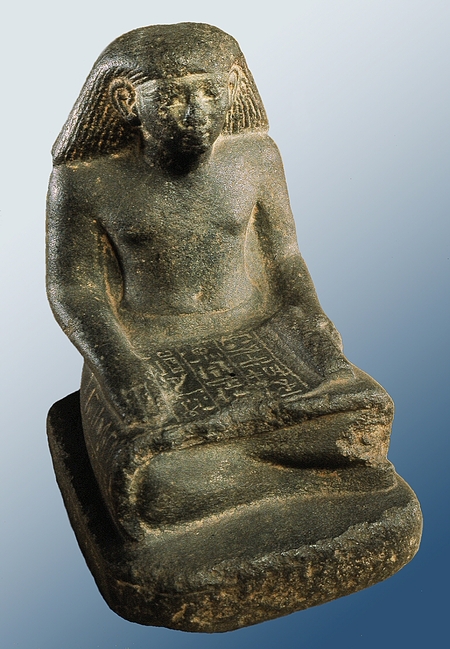
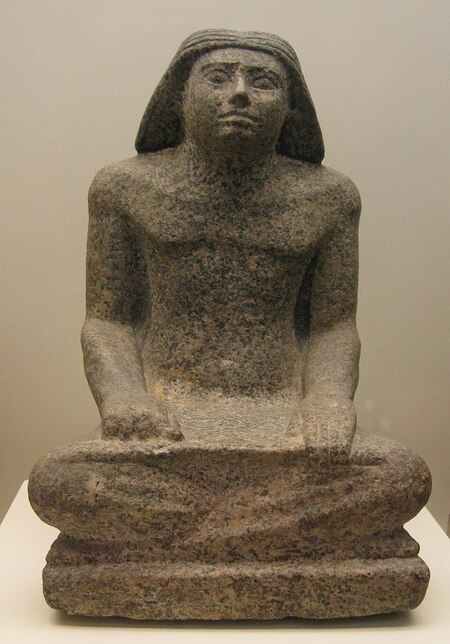
Scribe Statue of Min-nakht / Scribes — Egyptian artifacts
Materials
The majority of resources for creating statues were sourced from the Nile Valley, the Arabian desert mountains, and the Sinai Peninsula. The most common materials for sculptures were wood and stone.
Wooden statues were among the earliest sculptures created in Ancient Egypt. Sculptors often used acacia and sycamore from the available wood types.
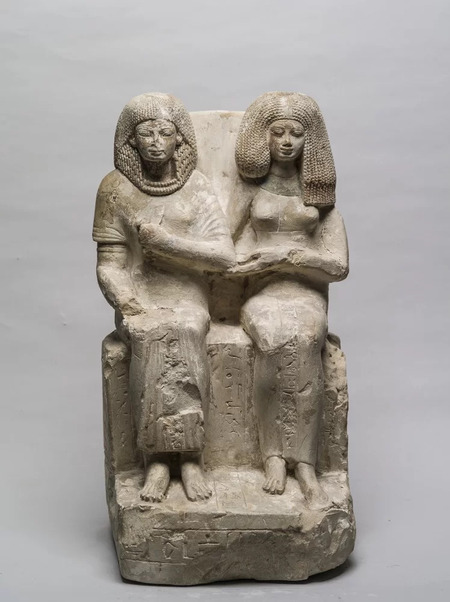
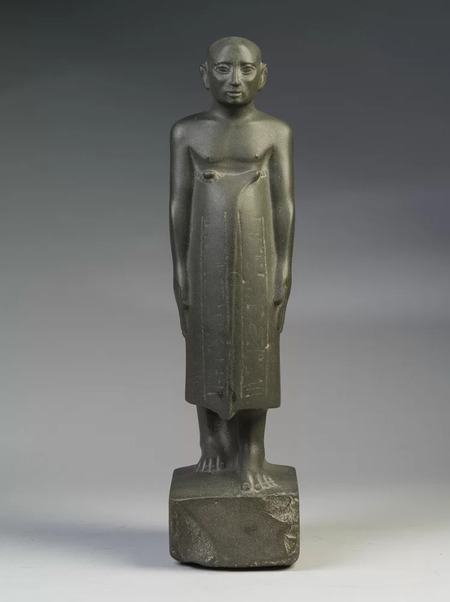
Sculptural Group of the Couple Aa-meru and Mut-ahet / Statue of the Egyptian Seneb-khen-ef
Limestone, sandstone, alabaster, and red granite were the most commonly used stone types. Earlier sculptors used basalt and diorite as materials for fabrication. Thanks to these, sculptors were also able to lend exceptional strength to sarcophagi and statues.
It is interesting to note that in later periods, the eyes of the statues were separately inlaid with other materials to achieve greater expressiveness. Usually, this involved opaque white glass or crystalline limestone.
Seated Scribe
Ushebti
In the history of ancient Egyptian sculpture, ushabti figures were also of great significance. These are small statuettes, ranging from 10 to 50 centimeters in height. They were often depicted holding hoes and other tools of labor, and sometimes excerpts from the Book of the Dead (a collection of funerary spells) were inscribed upon them.
Shabti 04
People placed them in tombs to aid them in the afterlife. But unlike regular statues, which primarily served to preserve the memory of a person and convey information about them into the afterlife, ushabti had a different purpose.