Concept
Brief Biography
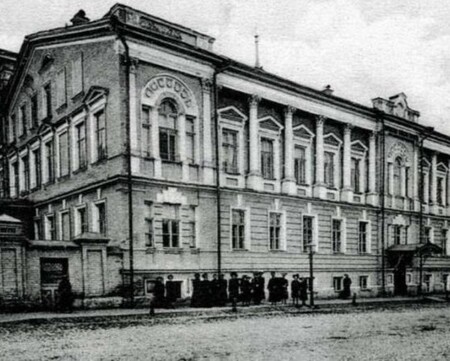
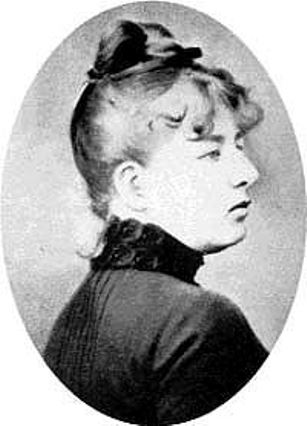
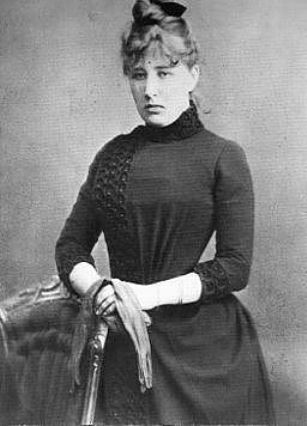
Nadezhda Lamanova was born in 1861 in the village of Shutilovo, Nizhny Novgorod Oblast, into a family of impoverished nobility. Soon after, the family, along with five daughters, moved to Nizhny Novgorod. There, the future fashion designer graduated from the Mariinsky Gymnasium and, at the age of 22, moved to Moscow to attend Olga Alexandrovna Suvorova’s tailoring school. She then secured a position as a model maker in the studio of Tatiana Stepanovna Voitkevich—a renowned seamstress at the time. Even then, her talent was noticed: many of Voitkevich’s clientele came to Lamanova specifically to place orders.
Rapid Ascent
At the age of 24, she opened her workshop on Bolshaya Nikitskaya, later moving to Bolshaya Dmitrovka. In 1898, she became a «Supplier to Her Imperial Majesty» Elizaveta Feodorovna, and six years later, she began dressing Alexandra Feodorovna.
Her home became a veritable salon for the most magnificent women of the era. She created looks for ladies such as Her Highness Grand Duchess Elizaveta Feodorovna and Grand Duchess Maria Pavlovna, Maria Ermolova and Olga Knipper-Chekhov, Vera Kholodnaya and Yevfimiya Nosova—in her evening gowns, embellished with beads and rhinestones, prima ballerinas Tamara Carsavina and Ekaterina Geltser glittered… Many portraits of these women, painted by Valentin Serov, depict them in dresses «by Lamanova.» (1)
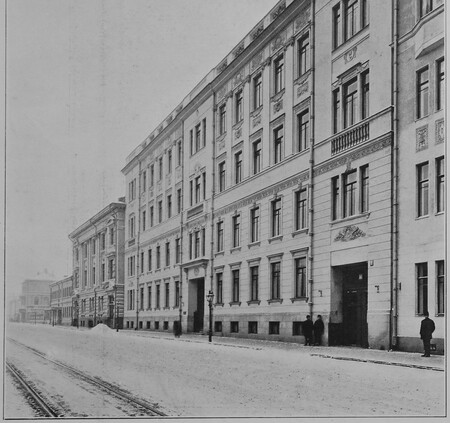
In 1908, Lamanova, along with her husband, built a house at Tvetersky St. 10: a workshop (for 300 people), a studio, rooms for workers, and more, plus a free school for girls.
Lamanova achieved absolute success in Russia: her outfits became a mark of high status and refined taste. Furthermore, she was friends with the renowned couturier Paul Poiret. Starting in 1901, Lamanova’s fashion house began actively collaborating with the Stanislavsky Theater.
Revolution
Revolution: he sells his house, pays off all his debts, and acquires a flat in Yeropkinsky Lane. He joins Rabis, affiliates with all the art unions, invents his own workshops, and will now clothe everyone—not just the wealthy (he announced the production of mass-market clothing, a first in the world). In 1919, he established the «Art Studio for Costume Production» (there was a denunciation: a case against Kayutov and others, but they were released after two months). Immediately afterward, he created the pioneering school uniform.
«The Revolution changed my economic standing, but it did not change my life ideals; rather, it gave me the opportunity to pursue them on an incomparably broader scale.» (2)
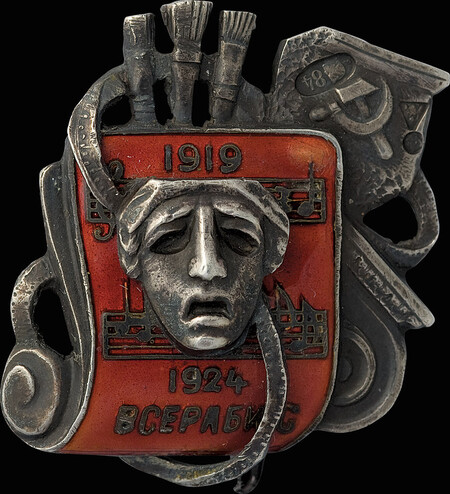
In 1918, Nadezhda Lamanova became a member of the Professional Union of Applied Arts and Artistic Industry Workers, which would later become part of the RABIS union (an abbreviation for RABotniki Iskusstva). This was a mass professional organization in the USSR that voluntarily brought together all workers in the arts. from the website
Activities in Soviet Russia
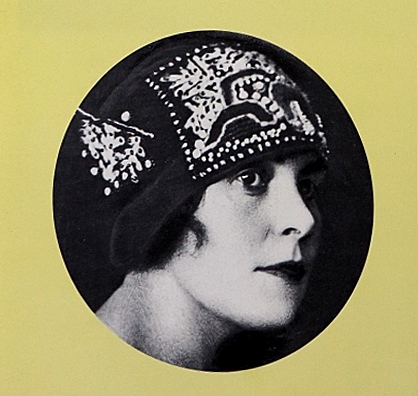
Lamanova, along with her younger sister Maria, constructed the aforementioned fashion headwear, often embellishing them with authentic, antique ornamental inserts. Lily Brik and Nadezhda Makarova wore this kerchief-cap as a complement to their outfits. Curiously, Lamanova’s sister—Maria Petrovna Neppenstrem—ran a millinery workshop on Bolshaya Dmitrovka at the beginning of the century. from the website
Since 1918, Lamanova began collaborating with other Moscow theaters, never deviating from Stanislavsky’s children’s theater—the Moscow Art Theatre—throughout her life, and since 1923, Lamanova began designing costumes for cinema. from the website
«My work involves creating models of contemporary women’s clothing, and I have always striven to incorporate simplicity and logic into my designs, primarily driven by the material…» (3)
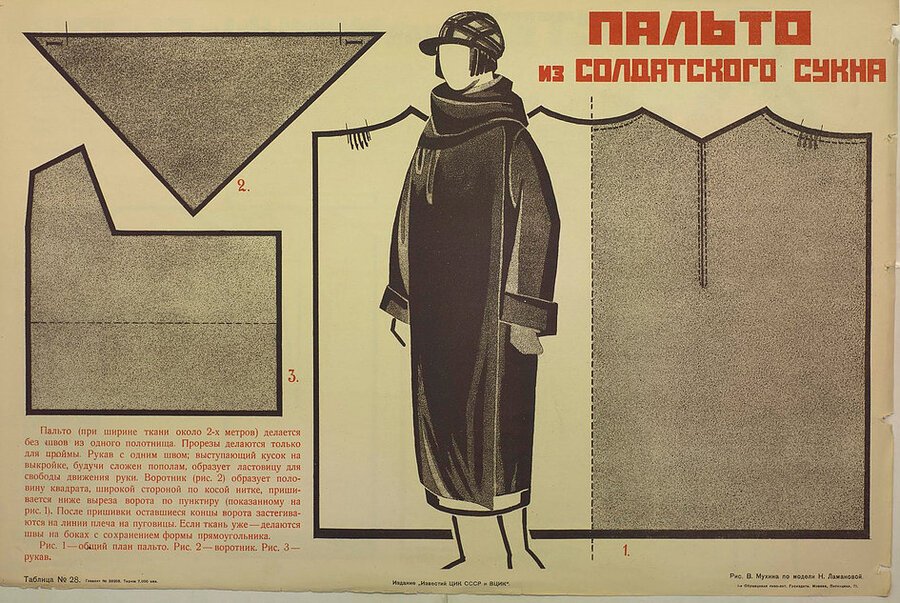
The designers were presented with materials that were structurally unremarkable, limp or overly stiff, poorly dyed, and in dull, grayish tones—like paper maché, military serge, canvas, calico, and rough cloth. Based on the capabilities and properties of these fabrics, Lamanova develops the primary silhouette of the costume—her theory states that «the material dictates the form.» This principle, which now seems elementary, can be called a genuine breakthrough in the field of costume design.
All-Russian Fine and Industrial Exhibition of 1923
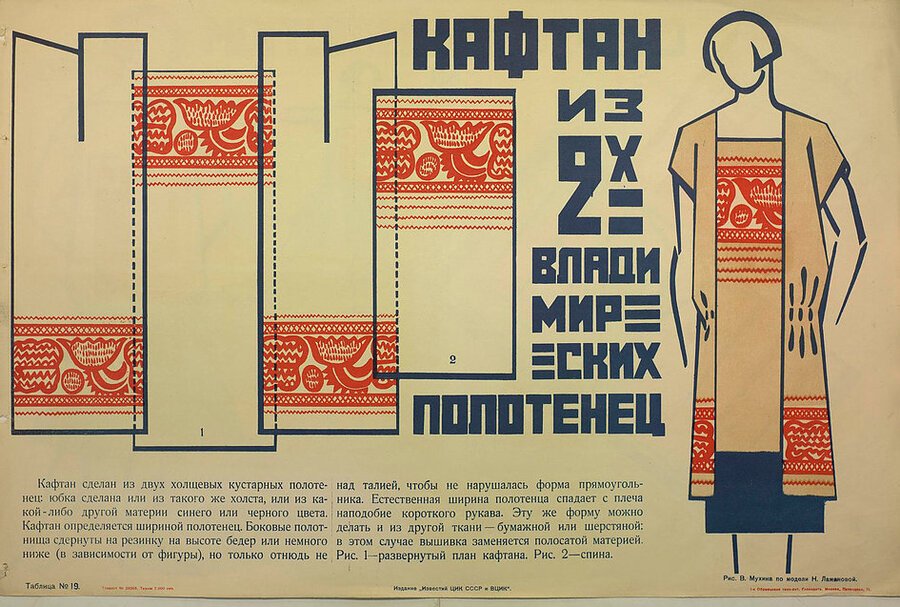
Around 2021, Mukhinaya, Popova, and Ekster met: they collaborated until the end. In 1923, the All-Russian Fine and Industrial Exhibition took place: she presented costumes made from towels from Vladimir; most likely (she received a diploma).
for the Lamanska workshop, which participated in the I All-Russian Fine and Industrial Exhibition, with a diploma for: a) an original creative concept; b) the use of materials that did not indicate high skill; c) for delicate, harmonious color; d) for the logically simplified design of the costume, allowing for mass production; e) for a thorough and precise study of labor distribution leading to reduced working hours for the craftsman.
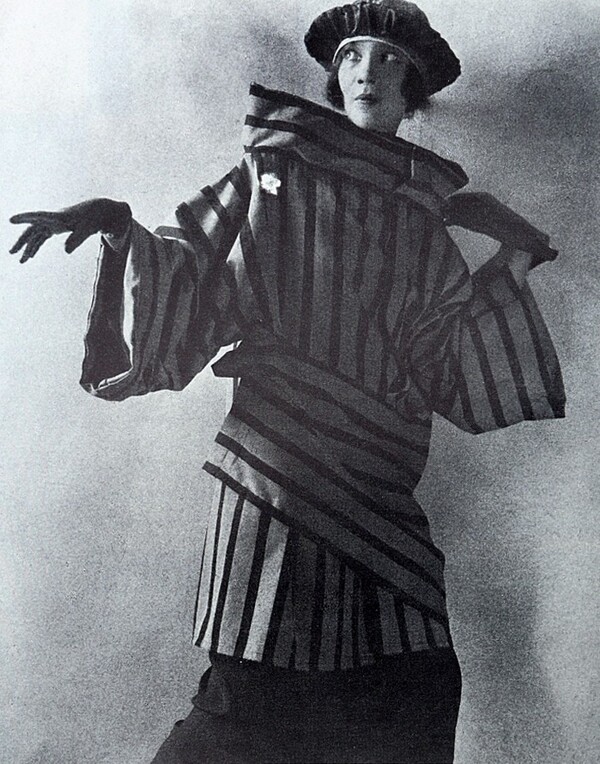
From the surviving photographs of Lamanova’s models, it is easy to notice that the artist often selected the principle of contrasting elements when designing costumes: a loose blouse paired with a narrow skirt, a wide-sleeved or draped garment with a straight dress, sometimes positioned asymmetrically. Lamanova consciously utilized contrast in her costume design to infuse it with dynamism, making it more lively and sharp. She believed that «the absence of contrast—and consequently, of dynamism—makes the figure dry, monotonous, and lifeless in silhouette.»
In 1925, Lamanova’s models in this genre were sent to the International Exhibition of Decorative Arts and Industrial Arts in Paris. These simple yet sensational models achieved tremendous success among the refined Parisian public.
The collection, created under the guidance of Nadezhda Lamanova, was honored with three awards—MosEkust received the Grand Prix, Nadezhda Lamanova herself received an Honorable Diploma, and Natalya Yakovlevna Davydova received a gold medal.
Conclusion