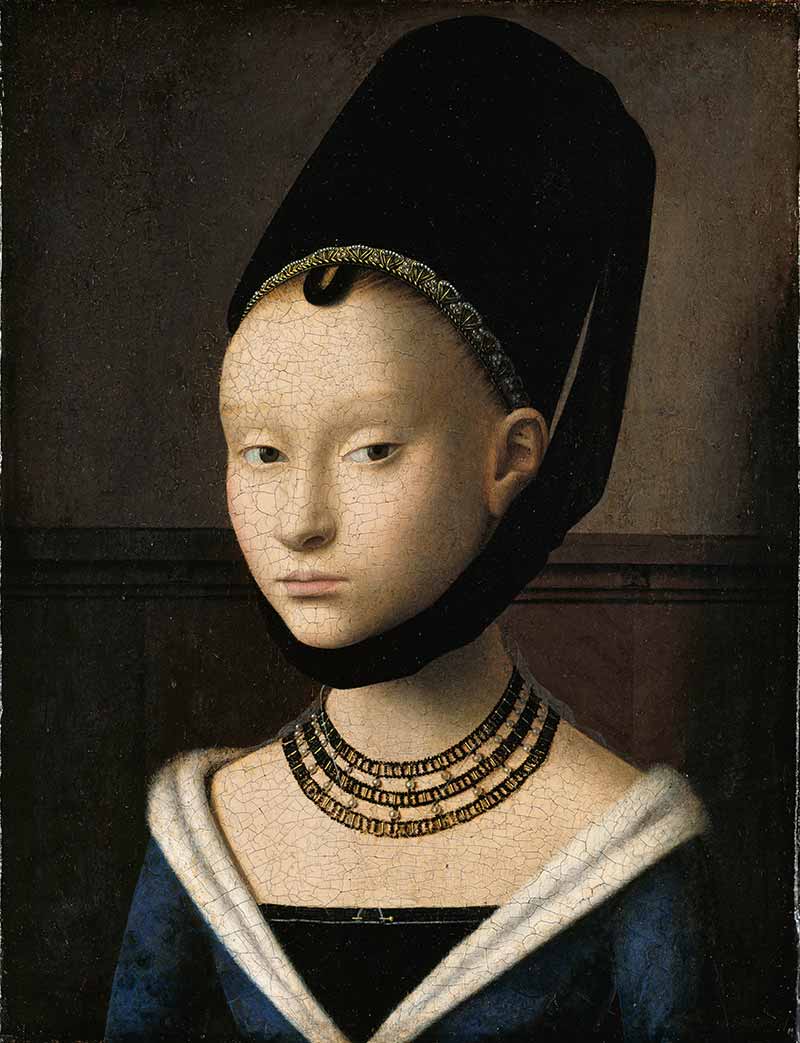
Concept
Headwear often serves multiple functions: protecting the head from adverse weather, demonstrating the wearer’s social status, being used in various rituals, being mandatory in certain professions, and helping to complete an overall look. Along with the evolution of society, headwear has also transformed. I became interested in how headwear looked and what it signified during the Early and High Middle Ages. For this research, I chose women’s headwear from the 5th to the 15th centuries. I plan to find out what functions they performed at the beginning and end of this time frame, which social classes wore them, and what materials the headwear was made from, as well as the significance of its individual elements.
In my work, I intend to explore how the trend of women’s headwear in high society has evolved over the past ten centuries. How it transformed from an object initially serving an exclusively religious purpose into an item that encompasses both fashion trends and the status of its wearer.
For my research, I plan to use text and illustrations from Hilda Amplett’s book, «Hats: A History of Headwear in Fashion,» and R.P. Andreyeva’s «Encyclopedia of Fashion,» as well as artistic works from medieval authors: miniatures, portraits, frescoes, and sculptures.
The study will also utilize the Codex Manesse—a medieval illustrated collection of poetry in German, created for noble collectors of the Manesse lineage around 1300. This manuscript features numerous miniatures that offer insight into how the nobility appeared during that period.
The object of study is the women’s headdress from the 5th to the 15th centuries, as presented in its visual representations.
The subject is the transformation of the headdress’s functions: from religious and normative (covering the hair) to social (demonstrating status).
Objective: To analyze the evolution of headdresses from the 5th to the 15th century.
Tasks: • To study literature describing headdresses across different periods. • To select artworks to illustrate the research. • To trace how the appearance of headdresses changed from the 5th to the 15th century. • To conclude how the function of women’s headwear evolved.
In the 4th century CE, Christianity was established as the official religion, and it became a requirement for women to cover their hair with a veil or head covering to demonstrate modesty and humility. The mosaic in the Basilica of San Vitale in Ravenna illustrates what a typical women’s headwear looked like between the 5th and 10th centuries. It depicts Empress Theodora surrounded by her retinue. A diadem, adorned with precious stones, rests atop her head covering.
Image of Theodora from the portrait mosaic in the Basilica of San Vitale, Ravenna
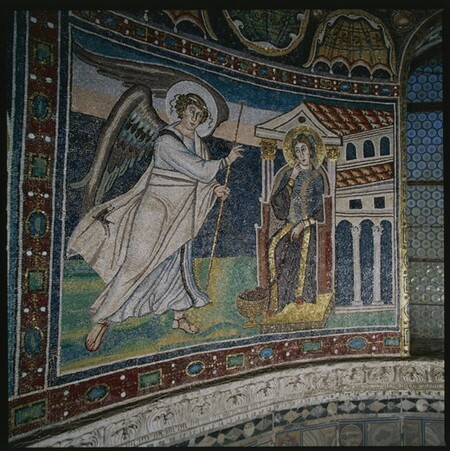
Mary is depicted wearing a similar, yet simpler head covering.
Сцена Благовещения из Евфразиевой базилики в Порече.
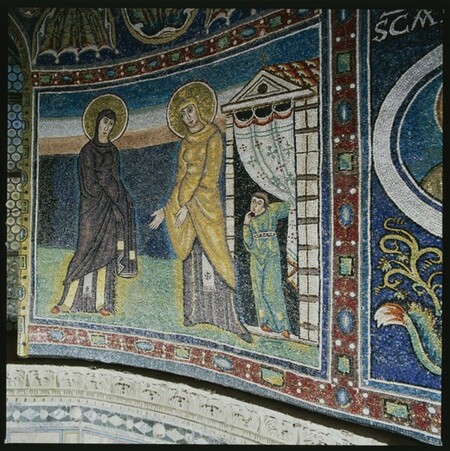
Сцена Встречи Марии и Елизаветы, Евфразиева базилика в Порече.
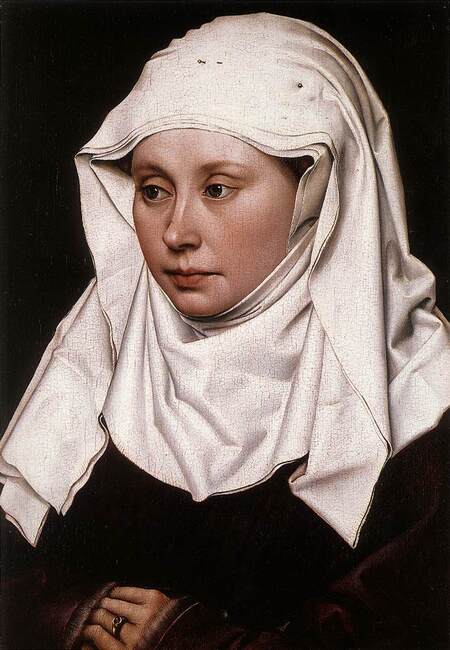
During the Crusades of the 13th–14th centuries, the barbet emerged—a kerchief-like headdress that covered the chin and tied at the head. The barbet was a feminine imitation of the head and neck coverings worn by knights’ armor and gained widespread popularity. Hats or caps (coifs) could be attached to the barbet. Furthermore, the barbet visually narrowed the face—a feature favored by medieval fashionistas—and was often tied extremely tight, which drew mockery from contemporaries.
The barbette resembles a wimple (apron/plate/mantle), which was created in the 11th century to protect the head from the cold. It was not very comfortable, but it was effective and later became widespread among Catholic nuns. They were made of linen or silk.
Женский портрет. Робер Камен, ок.1435 г.
Диерик Баутс, Нидерланды, Mater Dolorosa, 1470–1475 гг.

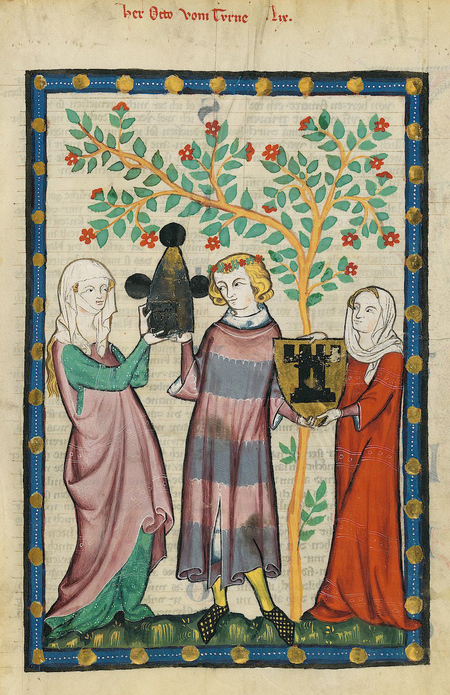
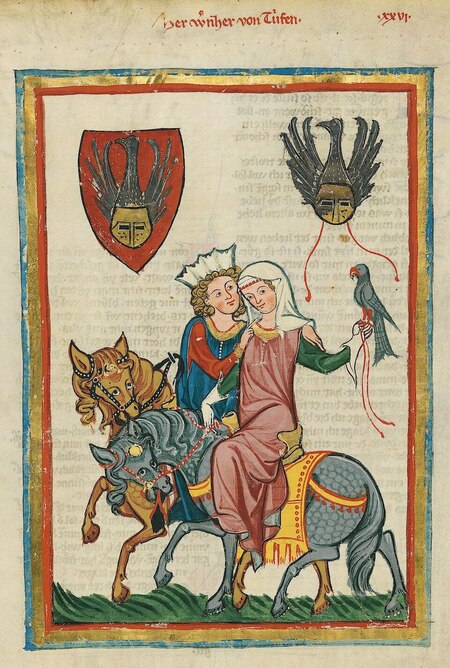
Miniatures from the Manueline Codex, c. 1300
A sculpture by an unknown master depicts the German Queen Otto in a beret and crown.
статуя маркграфини Уты Балленштедтской (ок. 1000–1046), Наумбургский собор
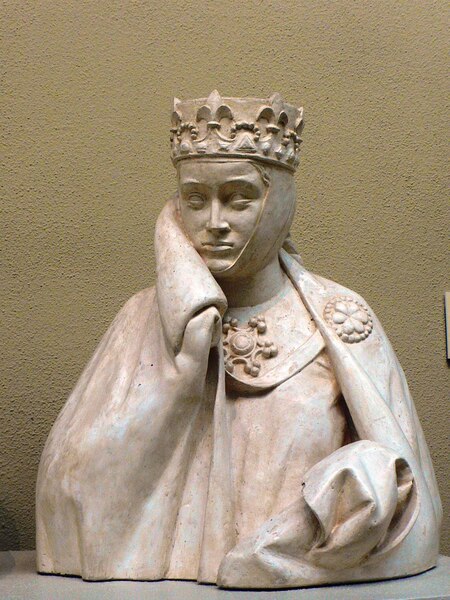
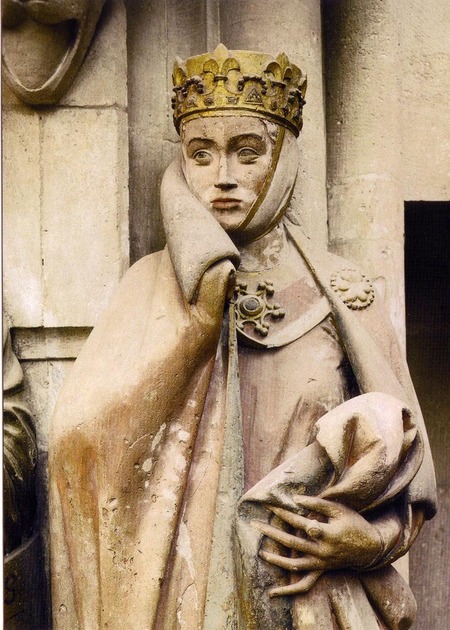
Images of women in turbans can also be found in the Code of Hammurabi.
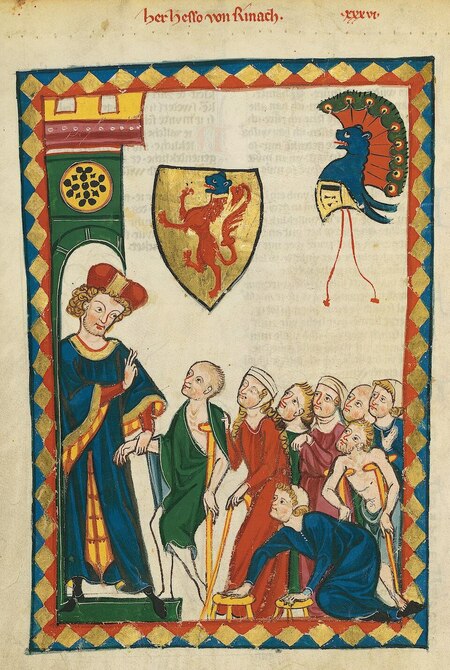
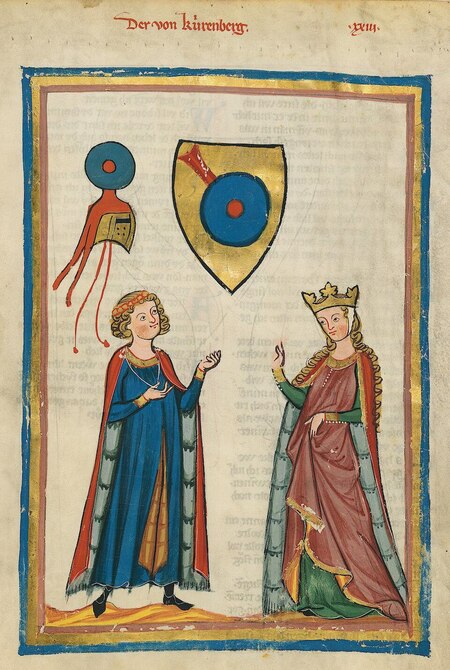
Miniatures from the Manesse Codex, c. 1300
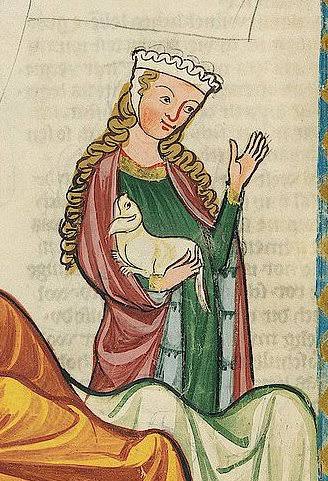
Fillet—a small linen cap worn over a barbette.
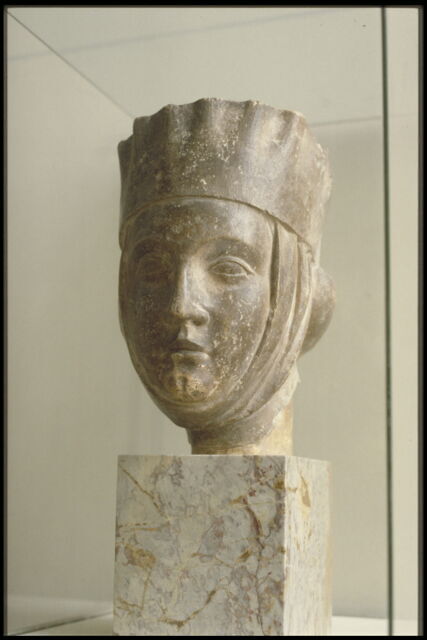
Голова неразумной девы, ок.1220–1230 гг., Лувр
миниатюра из Манесского кодекса, ок.1300 г.
Head of an Unwise Maiden, c. 1220–1230, Louvre
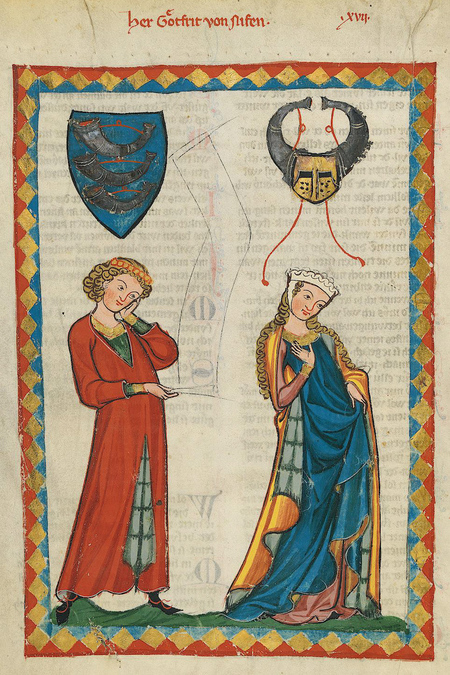
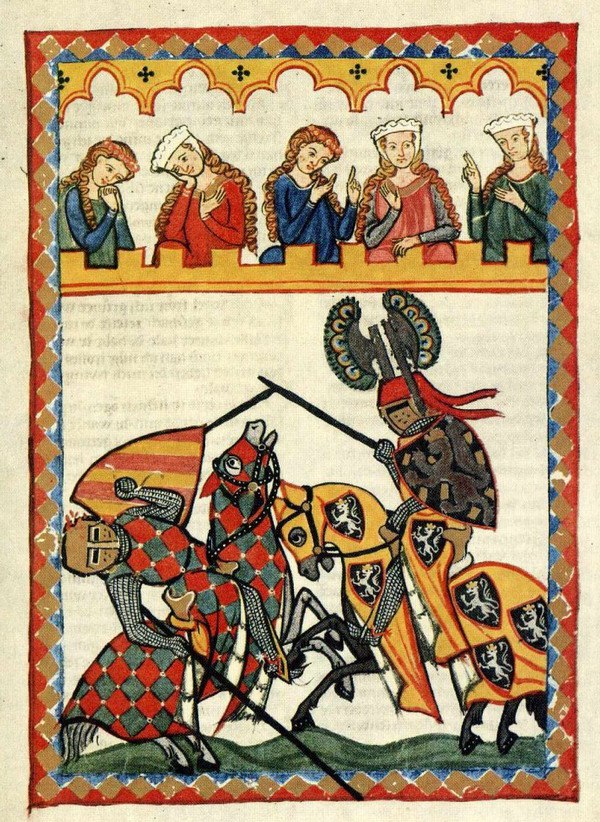
Miniatures from the Manuscript Codex, c. 1300
Crespinetta was a headdress in which hair was arranged in a net of gold or silver threads. This structure was often attached to a fabric band and worn along with a barbette and fillet. Wealthy ladies could embellish the crespinetta with precious stones.
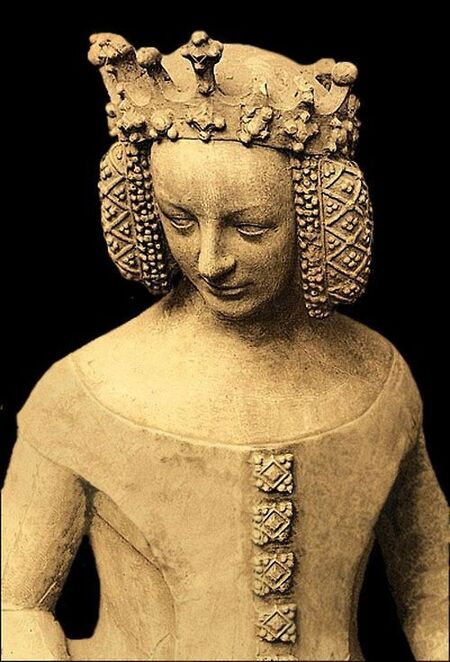
Скульптура королевы Франции Изабеллы Баварской. Жан де Рупи или Ги де Даммартен, ок.1390 г.
миниатюра Робинета Тестарда, ок.1488–1496 гг.
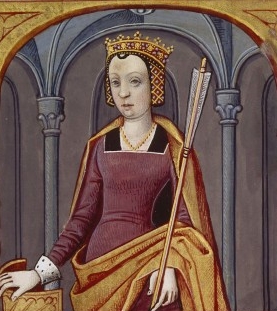
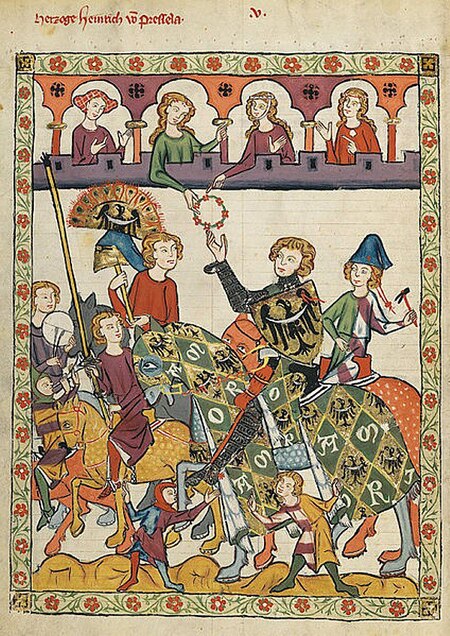
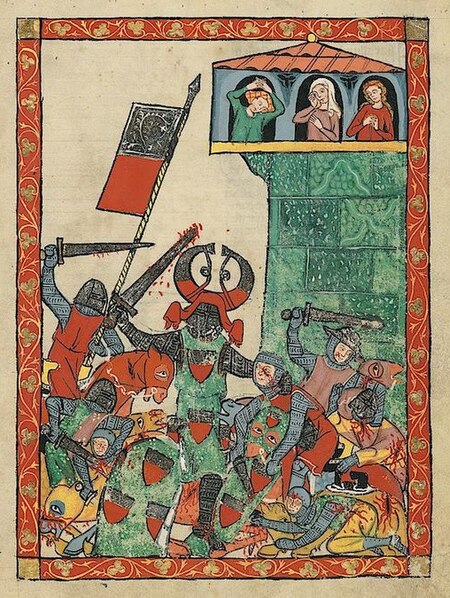
Miniatures from the Manesse Codex, c. 1300
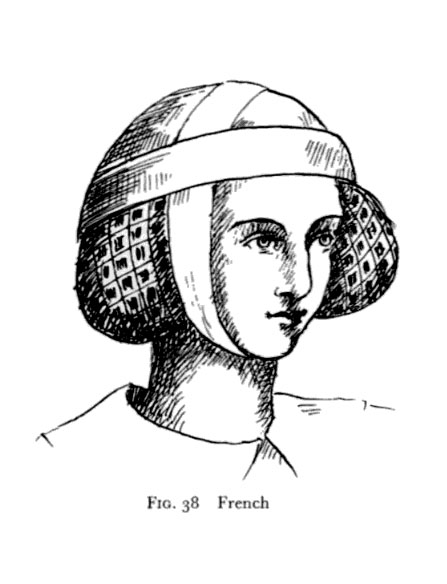
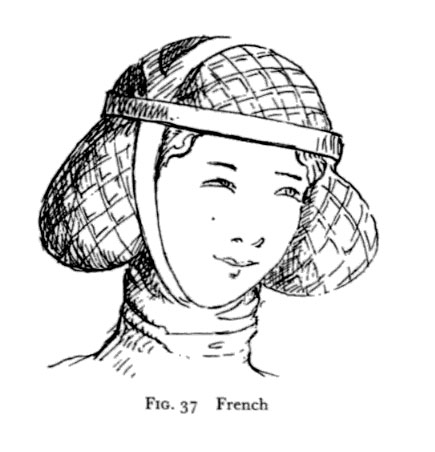
Illustrations from Hilda Amplett’s book, «Hats: The History of Headwear in Fashion»
The bicorn is a hat style fashionable among both women and men in the 1100s. Its brim is conspicuously turned forward and pointed, like a bird’s beak. This headwear was worn during hunts by members of the royal family and representatives of wealthy classes. It was crafted from felted wool or broadcloth and was often decorated with feathers. In mass culture, the bicorn is strongly associated with the image of Robin Hood.
Fragment of a fresco by the Italian artist Annaldo Gaddi from the cycle «The Legend of the Holy Cross, ” c. 1380.
Fragment of the fresco «Effects of Good Governance in the Village» by Ambrogio Lorenzetti, 1338–1339