Navigation
- Research Concept
- Shell and Function: A Kantian Perspective
- Butterfly and Beetle: Why Form Trumps Biology
- Apple and its Faceless Counterpart: Beauty That Promises
- The General and the Specific: How the Shell Suggests the Notion of Purpose
- Conclusion
- Bibliography
- Image Sources
Research Concept
We constantly judge things based on their appearance before we understand what they are for. Two objects can perform the exact same function, but we can like them in completely different ways. It’s not their purpose that influences this, but their exterior. In the «Fundamentals of Aesthetics» course, the question echoes quite directly: why do we like some objects before we understand their mechanics? I want to answer that with specific material—not by scattering examples across dozens of instances, but by focusing on two clear and illustrative cases.The relevance of this topic stems from the constant emergence of this «aesthetic inequality» around us: items that are essentially the same are judged differently because of how they look. In modern literature, this is usually discussed in terms of marketing or consumer psychology, while the aesthetic mechanism itself remains overlooked. I want to understand where the exterior genuinely creates beauty, and where it merely manipulates our perception.
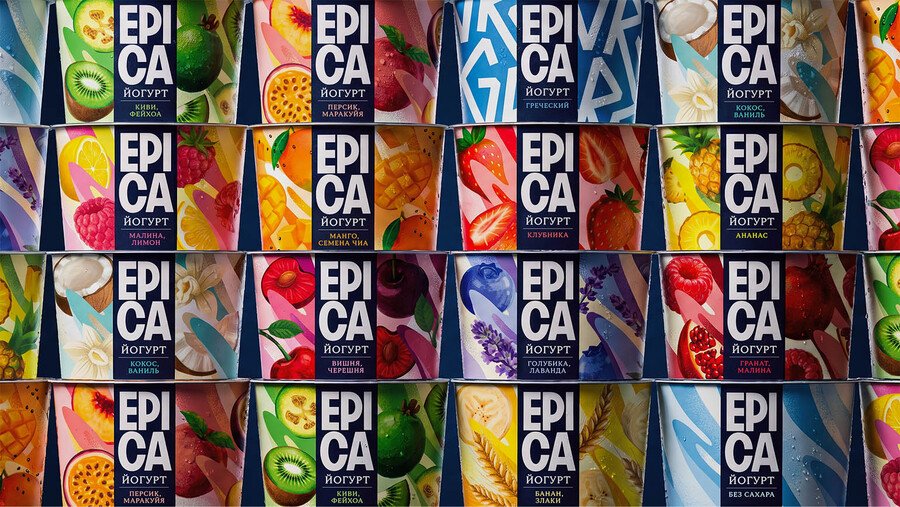
Yogurt packaging redesign as an example of aesthetic consumption. EPICA / brand agency «Shchuka.» 2026
I intentionally limit the visual narrative to two pairs of objects that perform a similar function but are perceived differently. The first pair is from nature: a butterfly and a beetle—both insects. The second is from the world of design: an Apple product and its functional equivalent lacking distinct design. This selection allows me to demonstrate that the same aesthetic mechanism operates in both the wild and in the world of technology. I refrain from adding other examples to maintain the integrity of the work and not to dilute the focus. The material consists of photographs and promotional imagery of the objects.The primary source is Immanuel Kant’s «Critique of Judgment, ” specifically the sections on free and dependent beauty. For the contemporary context, I draw upon Donald Norman’s works on design and industrial design aesthetics, as well as articles on visual appeal. I am not retelling the theories, but testing them against specific cases: I examine each example from the perspective of whether the judgment is free or dependent.
Portrait of Immanuel Kant. Library of Foreign Literature. 2026
The central question of this work is: why do objects with the same function elicit different aesthetic responses based on their envelope, and is this response entirely free, or is it always conditioned by a conception of purpose that the form suggests?
My hypothesis is that the envelope functions as an aesthetic lens. It initiates our judgment before we understand the function, but this judgment is not entirely free. The varied responses to identical objects are explained by the envelope suggesting different conceptions of purpose. The butterfly appears beautiful because its form does not evoke thoughts of harm, whereas the caterpillar is perceived through the concept of a pest. The same applies to Apple: it is appealing even before understanding its functions because its envelope promises «beauty without purpose, ” even though that promise is already loaded with the concept of high-quality design. To prove this, one must analyze both cases and demonstrate that behind the apparent freedom of judgment always lies the hidden work of conception.
Shell and Function: A Kantian Perspective
There are two types of beauty: free beauty and incidental beauty. The first does not presuppose a concept of what the object ought to be; the second does presuppose such a concept and the object’s perfection according to that concept.
To understand why we treat things with the same functions differently, we need to briefly look into the philosophy of Immanuel Kant. His ideas seem complex, but they actually explain our everyday experience perfectly. I will refer to them in a simplified way, avoiding overly complicated terminology. For our research, his two main thoughts are important: what beauty is, and how beauty differs from mere pleasure.
The First Idea: Beauty can be free or dependent.
Kant observed that we call completely different things beautiful, but we do so in different ways. Sometimes we like a form for its own sake, without thinking at all about what the object is for. Kant called this «free beauty.» Imagine frost patterns on a windowpane or a beautiful flower. We don’t think, «What is this created for? What use does it serve?» We simply enjoy looking at it. Here, there is no purpose other than contemplation itself.
Frost pattern on the glass, appearing chaotically. Photographer Zimnee_chudo. 2025
But there is another type—dependent beauty. In this case, we evaluate an object’s form based on a preconceived notion of what it should be. For example, we look at a building and think, «How beautiful!» but our brain already knows it is a house, so it evaluates it according to the laws of architecture. If it were just a plain concrete box without windows, we wouldn’t call it beautiful because it fails to meet our standard of what a beautiful building should look like.
Photo of the «Nautilus» Shopping Center in Moscow, which frequently appears on lists of the capital’s ugliest buildings. Tripadvisor. 2021
Second idea: beautiful and pleasant.
Pleasant is purely a physical, sensual pleasure. For example, when we eat something delicious or drink hot tea on a very cold day. It feels good to us personally, but we don’t expect the whole world to agree with it. We don’t say, «This tea is objectively beautiful for everyone.» It is simply «I enjoy it» at the moment of interaction.
But when we say something is «beautiful» (or «sublime»), we seem to be expecting agreement and recognition from others. When you say a butterfly is beautiful, you imply that any normal person will agree. This is the difference: the beautiful claims universality, whereas the pleasant does not.
Museum visitors view the painting. Thomas Riker. 2009
How does this relate to our topic of the shell?
The exterior casing of an object—its form, color, or material—functions as an immediate cue for our brain. It can signal that particular kind of liberated beauty, where an object appears to exist purely to be beautiful, without declaring its utility. Or it might signal a dependent beauty, where the shell screams, «I am a tool; I serve a purpose.»
This is where the main paradox lies, which we will explore further. We often assume that we evaluate an object with absolute freedom and sincerity. But in reality, the shell has already subtly signaled to us its intended purpose. This is why two objects with identical functions can elicit vastly different feelings from us. Behind the apparent freedom of our taste is always a process of thought that we do not always recognize.
Butterfly and Beetle: Why Form Trumps Biology
Let’s start our analysis with the most apparent example, one familiar to everyone.Look at the butterfly and the beetle. From a biological perspective—they are simply different insects with similar structures, and they both play a role in the ecosystem. But our perception of them differs radically. The butterfly symbolizes lightness, beauty, and flight. The beetle, conversely, is often associated with something heavy, crawling, evoking unpleasant sensations, or even fear.
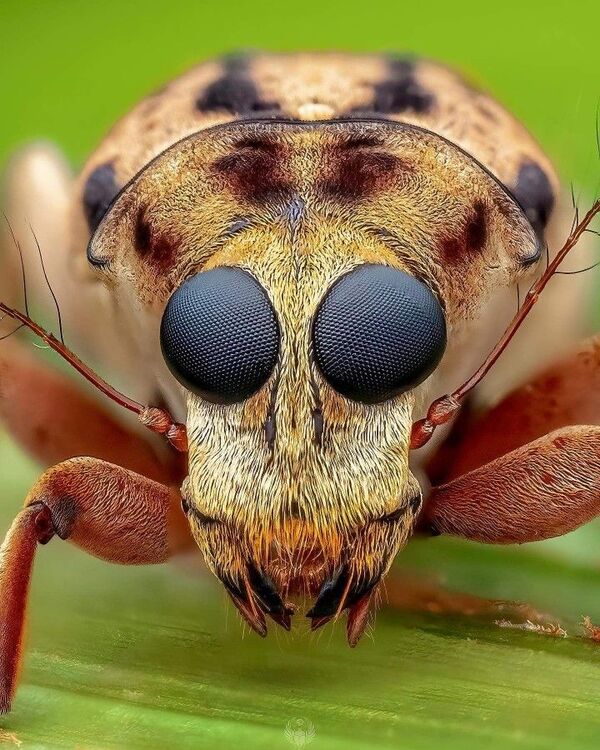
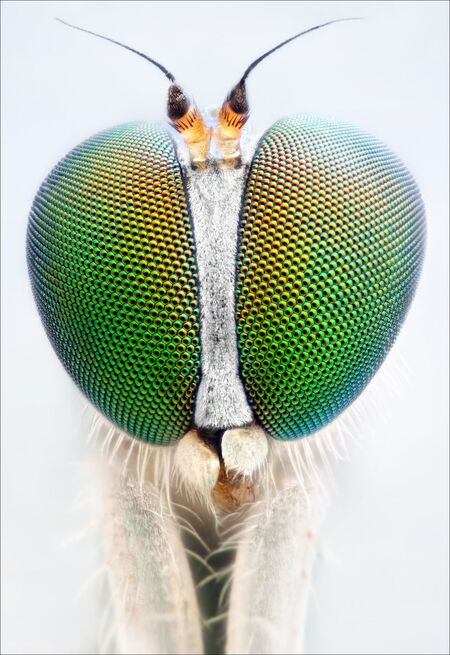
Microscopic image of a beetle’s head (left) and a butterfly (right). Pinterest. 2026
Why do two things from the same «class» elicit such different reactions? The answer lies in what kind of cues their casing provides us.
When we look at a butterfly, the so-called «free beauty» we discussed in the second part comes into play. Its form fits perfectly into our perception of the beautiful. Symmetrical wings, graceful lines, vibrant yet non-aggressive colors. We admire its pattern without thinking at all about its internal structure.
Looking at a butterfly, we do not ask: «Is it useful? Can it bite?» Our brain finds no threat in it. Its casing seems to tell us, «I am here simply to be beautiful.» It does not refer us to any utilitarian concept of purpose. We evaluate its form as a free play of nature. This is why even the most grotesque-looking caterpillars, upon transforming into butterflies, instantly become objects of aesthetic admiration for us.
Morpho Butterfly. Free Cliparts for Teachers, Designers & Students. 2026
With beetles, everything happens in reverse. Even when confronted with a rare species possessing an iridescent, perfectly symmetrical carapace, our initial impulse is not admiration, but apprehension or disgust. Why? Because its shell instantly brings to mind the concept of a threat. A beetle is associated with crawling on the ground, with a chitinous exoskeleton, with a potential pest in the kitchen or garden. We evaluate it through the lens of «dependent beauty»: we look at its form and subconsciously think about its functions. How dangerous is it? How repulsive is it if you touch it? In our perception, the beetle ceases to be merely an aesthetically pleasing object. Its shell so strongly dictates our understanding of its «harmful» or «unclean» essence that we cannot abstract from this to see free beauty in it. We judge it beforehand, even before we learn anything about it.
Photo of a cricket beetle from the Tenebrionidae family. Flickr. 2017
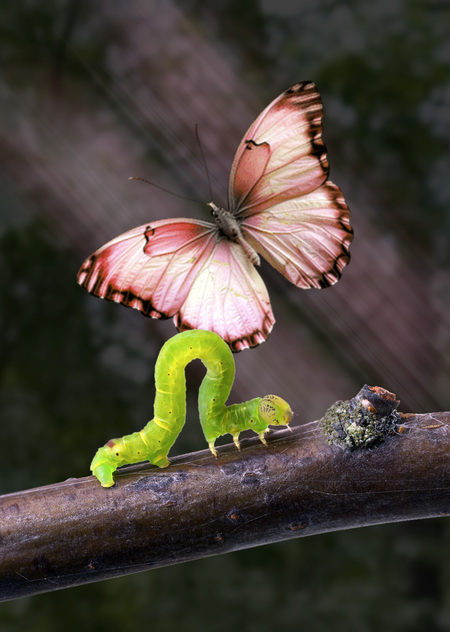
The most striking element in this example is the caterpillar. Biologically, the caterpillar and the butterfly are the exact same organism, just at different developmental stages. But while it looks like a worm, we judge it through dependent beauty—or even consider it ugly. Yet, as soon as its casing changes and transforms into wings, it becomes an object of free beauty.
The Life Cycle and Transformation of the Butterfly. Dominic Monkhaus. 2023
This demonstrates that our aesthetic bias toward insects is not based on their actual utility or biological value, but solely on the form—the shell—we perceive. The butterfly’s form triumphs over its biology, while the beetle’s exterior causes us to see it as a pest. Our perception is governed by form, and this same mechanism operates perfectly well not only in nature but also in the world of human-made objects. We will discuss this further in the next section.
Pest Control — eliminating insects through chemical treatment of the territory (You’re unlucky to be a cockroach). Clean City. 2026
In both cases, our judgment depends on the concept of purpose that the form dictates. With Apple technology, this is a promise of a beautiful life; with its faceless analogue, it is a promise of hard labor. In the next section, we will bring both of our examples together and examine how this underlying mechanism always works, whether we are looking at an insect or technology.
Apple and its faceless analog: beauty that promises