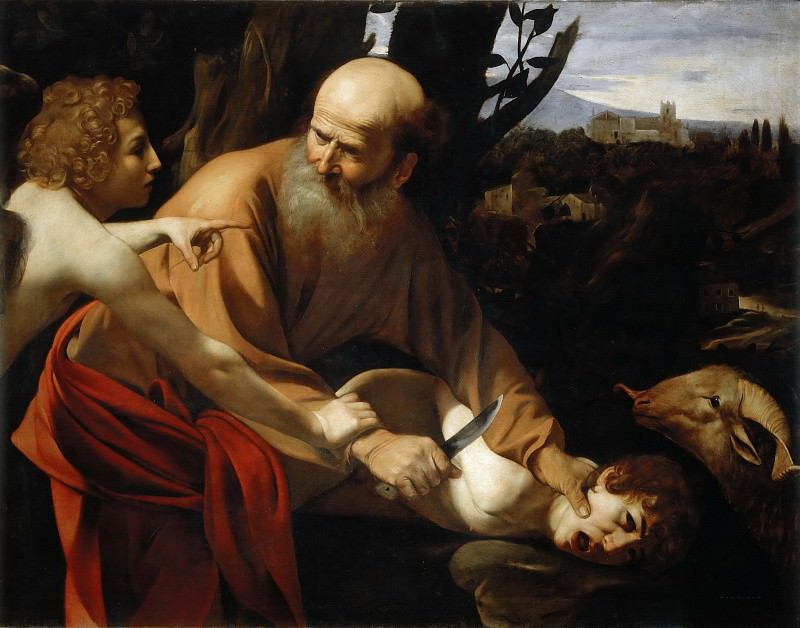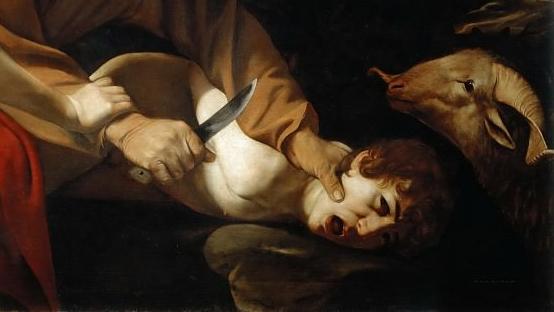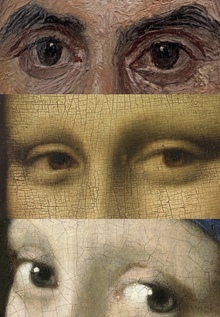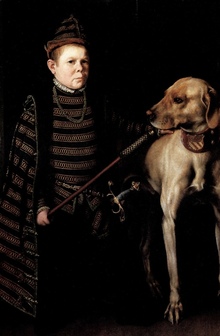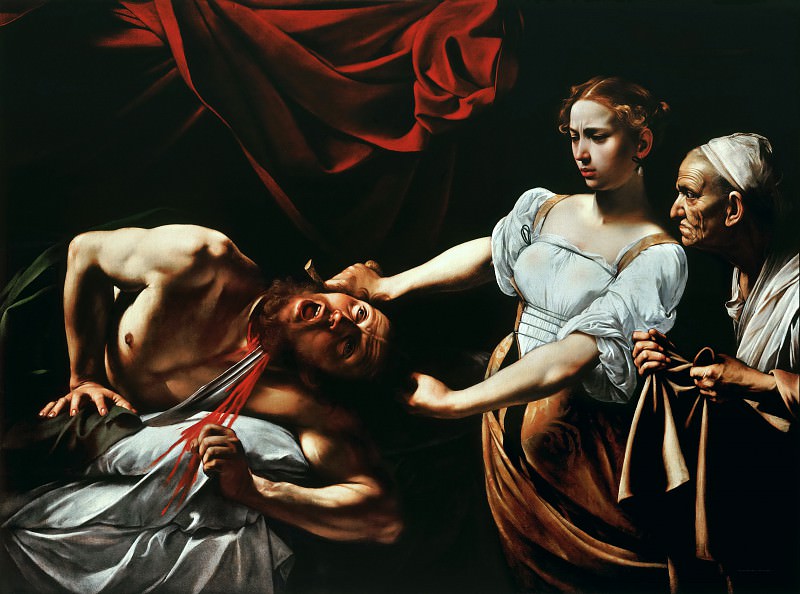
«To write well and to imitate natural things well»
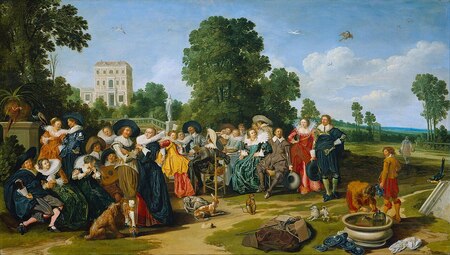
National Museum in Warsaw.
Concept
The distorted human face in the history of art before Caravaggio belonged to the grotesque and comedy. It remained within the confines of religious suffering—that was the maximum expression of emotion considered serious.
Around the turn of the 16th and 17th centuries, a shift in perspective occurred, spearheaded by Michelangelo Merisi da Caravaggio. The vivid, distorted faces ceased being mere symbolic representations of sin or sanctity. They became reflections of the face itself—anatomical distortions, and mimetic expressions. Michelangelo was the catalyst for this transformation.
In my visual research, I examine how Caravaggio captured the intimate moment of human emotion through the «anatomy of the grimace,» and how he deconstructed Renaissance harmony. He imbued his paintings with shocking realism.
This theme interested me the most, because in my view, emotion is what the viewer should experience when looking at a work—they should feel the spectrum of emotions the artist infused into the painting. Chiaroscuro should emphasize the necessary muscles. Caravaggio was someone who could highlight what was needed using his brush. He became a pioneer of grimaces and everyday emotions. When people look at his work, they cannot remain indifferent.
The goal of this work is to trace how in Caravaggio’s paintings, the grimace transforms from a symbol into a human reflex resulting from an action, and to demonstrate that the anatomical precision in his work is not accidental, but a conscious artistic methodology.
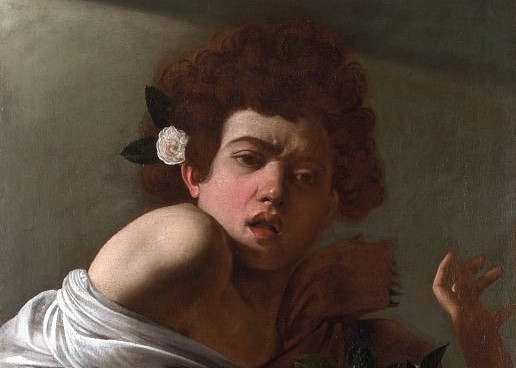
Michelangelo Merisi da Caravaggio — «Youth Bitten by a Lizard,» c. 1596.
Historical Introduction
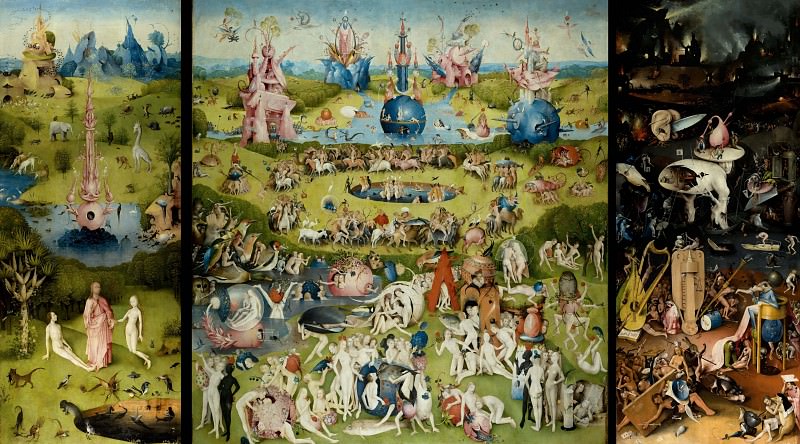
From Michelangelo Merisi da Caravaggio through the Renaissance and Mannerism, the face was often treated as a text—a convention immediately legible to the viewer. Leonardo da Vinci studied facial deformations as a schematic design; his «grotesques» remained an intellectual exercise. In the works of Bosch or Bruegel, the distorted face served as a marker of sin, foolishness, or diabolical nature. The viewer was meant to contemplate these grimaces for a long time to understand them. In this context, anatomy was subjugated to semiotics: the muscles on the face were distorted to signify sin; it was not physiology.
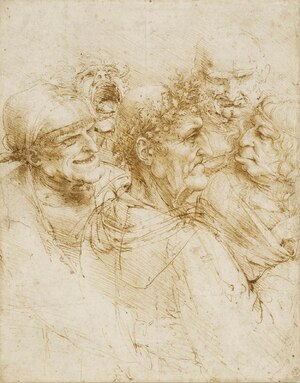
Leonardo da Vinci — «Five Grotesque Heads, ” c. 1494
Hieronymus Bosch — „The Garden of Earthly Delights, ” c. 1490–1510
Gracias to Caravaggio, a shift occurred; he abandoned intellectual distance. He captured the reflexive emotion of a person, not transforming it into symbols. What interested him wasn’t what the distortion of facial features meant, but rather how the muscles function when a person experiences shock, pain, or fear. Michelangelo Merisi da Caravaggio was the first to document the instantaneous, uncontrollable reaction of the body to violence. His chiaroscuro functions like a surgical scalpel, highlighting precisely those areas of the face where muscle spasms occur.