
Categories
-Introduction -Communication Channels -Theoretical Framework -Analysis -Conclusion & Recommendations
Introduction
Yota (OOO Scartel) was founded in 2007 by Denis Sverdlov and Sergey Adonyev. The operator made history as a pioneer of 4G mobile internet in Russia, and since 2013 has operated as a subsidiary of PJSC MegaFon.
Operating model: Operates as a virtual operator (Full MVNO), using the infrastructure and communication towers of PJSC MegaFon, of which it is a subsidiary. Positioning: Yota targets primarily a younger audience, offering a flexible tariff designer where the subscriber chooses the required number of minutes and gigabytes, as well as unlimited options for individual applications. Products: In addition to mobile communications for smartphones, the company offers Internet solutions for modems and routers.
Judging by the brand’s chosen promotional strategies, its services are primarily aimed at solvent young people, aged approximately 18 to 30 years. This conclusion can be drawn from the previously mentioned promotional strategies, as well as design. Minimalism, brightness, and unconventional techniques are primarily appealing to young people.

Yota Office (2014)
Communication Channels
To communicate with its audience, Yota uses a wide variety of formats: advertising on social media, video, television, and physical media, such as billboards.
Among the examples during the research, we encountered both famous examples of Yota advertising, such as a screen with text that appeared in the middle of a television broadcast and thus attracted attention, and less popular ones, such as wall advertising.
Theoretical Framework
In Politeness theory, what sets Yota apart from many other advertisement campaigns is a more direct, «uncontrolling» approach. Their facework is remarkable for the avoidance, a complete lack of face-threatening acts, they rarely even talk about the product itself — their main goal is a relationship between the brand and the potential client, staying recognizable and eliciting trust, thus making the purchase of service something that is the clients initiative, rather than a thought provoked by an advert. This makes the client feel in control, «unpersuaded» as well as critically reduces FTA — most people know the purpose of ads well, and are thus sceptical, dismissive and even sarcastic of them, but such change of the formula isn’t only a good, promoting contrast to other adverts, but is also full concealment of attempted persuasion, at least on the surface.
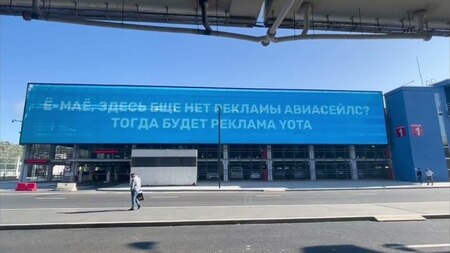
However, other times, Yota seemingly takes an opposite approach — announcing an advertisement with no further message. This actually twists around into going bold on record for most clients, basically announcing «this is an effort to influence you to purchase a good», with no further attempt at recovering face or informing the client about the product. While a bold, risky approach, it once again makes a client feel in control — being this direct breaks the impression of an illusion and the client feels like they «cracked» the persuasion attempt. Although this may still cause some distrust and a negative cognitive response from a client, it does not induce the same sort of wariness or suspicion one may exercise when faced with an obvious advert, that is more obviously persuasive. This will still cause the client a memorable moment, make the brand name «cling», especially when spotted in the weirder places, where advertisements like this were usually located.

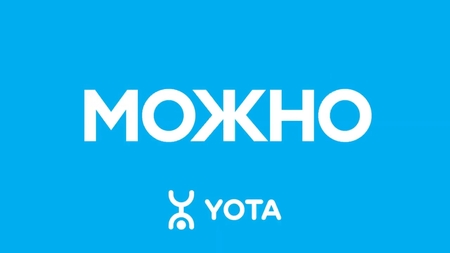
Regardless of facework, most memorable televised Yota adverts, as well as most Yota adverts in general carry a certain simplicity and ease within. They usually consist of a comfortable blue color background and simple, short white text. There are few dynamic elements, and sometimes no audial elements either. Combined with the general «otherness» of Yota advertisements these elements result in simplicity and interest, which contribute to fine conditions for changing attitude via central route, allowing for a stronger and more durable positive attitude change.

Analysis


Many of us remember Yota for its early commercials. For example, one of the most popular was a series of images that literally described the situation in which the advertising banner was present.


This brand wasn’t advertised only online and on television. There were also physical media where this telecom operator’s advertising was placed: billboards, building walls, banners, etc.
Conclusions & Recommendations
Based on the research, it can be concluded that Yota has significantly influenced modern advertising and brand promotion principles. This was primarily due to its unique techniques that attracted attention and generated interest, as well as its well-designed design.
Yota’s core principles are built on minimalism, honesty, and a non-solicitous approach. The advertising company distinguishes itself from its competitors with its unique approach to advertising, interesting yet minimalist design, and overall modernity.