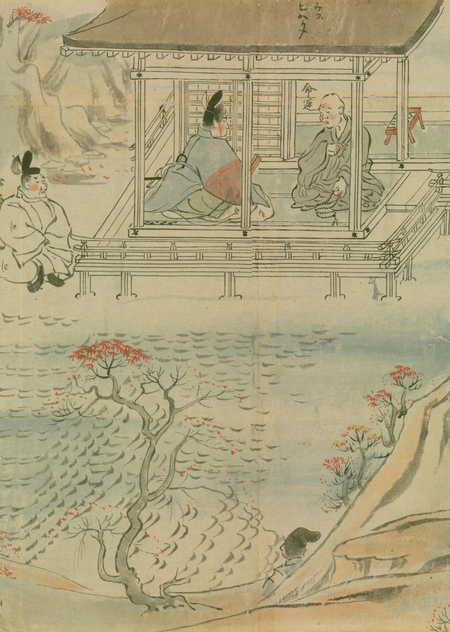
Concept
Chapter 1. Space
How is the world structured inside a scroll? In emakimono, space does not adhere to a single viewpoint nor does it aim to precisely reproduce the real world. Instead, it is shaped by the narrative and the author’s concept.
We will examine the organization of space using the example of the «Legends of Mount Shigi» scrolls, one of the earliest and most outstanding examples of the Emakimono genre from the latter half of the 12th century, the Heian period.
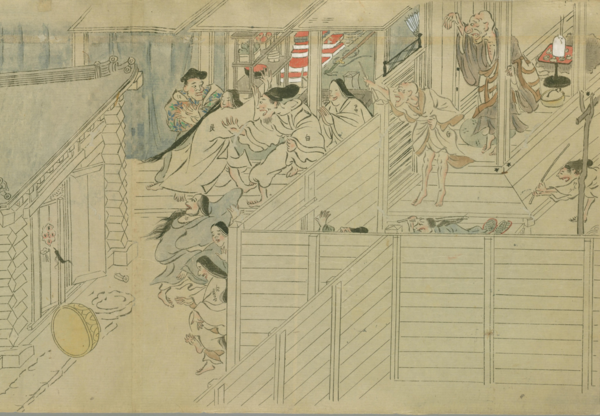
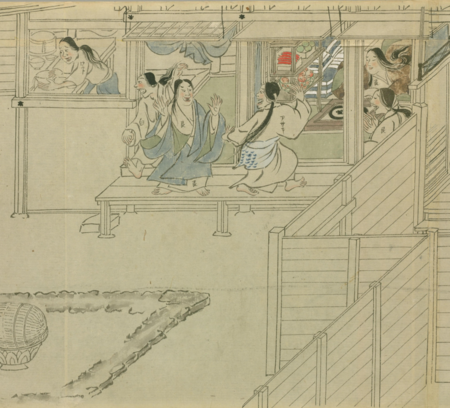
The space in «Legends of Mount Sigi» is not constructed from the perspective of a static observer. The image combines multiple viewpoints, allowing the viewer to perceive different sections of the architectural space simultaneously. The use of a top-down angle allows insight into the interior layout of the rooms and the positioning of the characters while maintaining an overall view of the scene and its compositional centers. [1]
The observer often sees not only the facades of buildings but also their internal structure. Thus, they observe actions both inside and outside simultaneously.
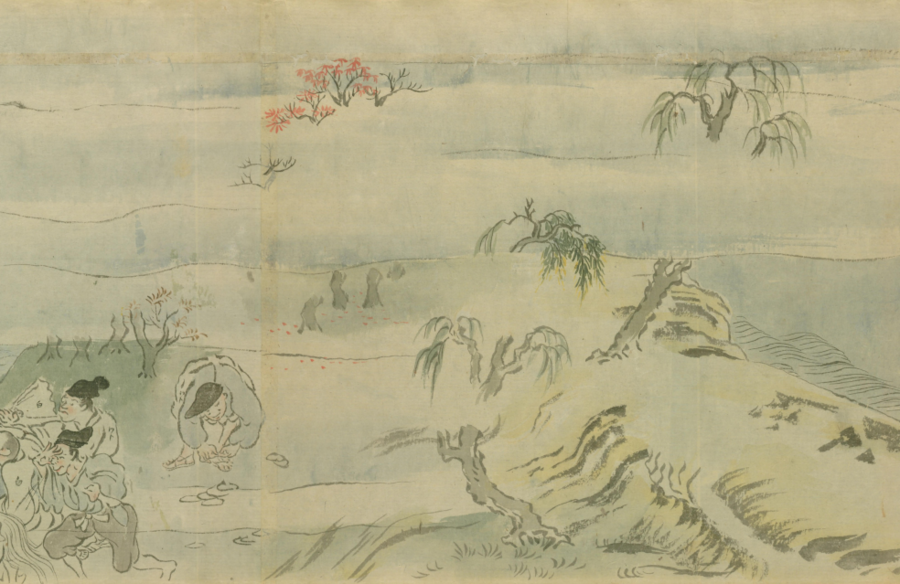
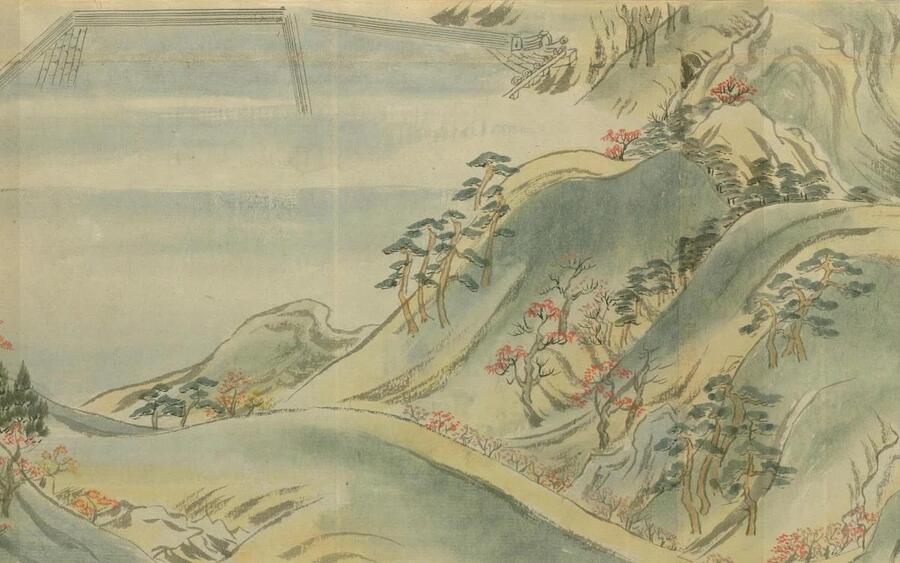
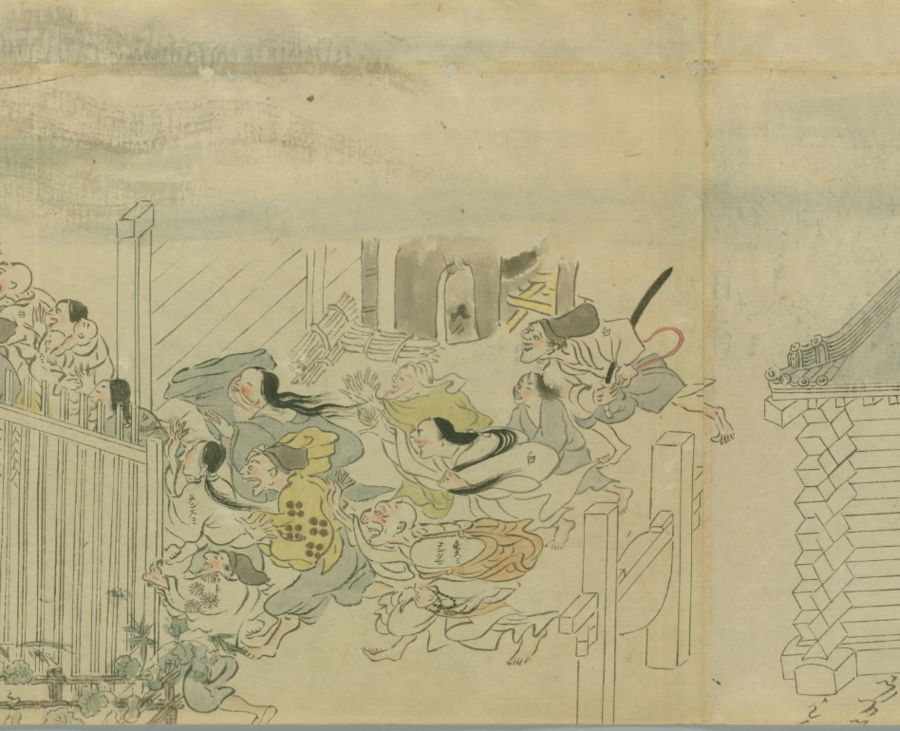
Similar to how the artist reveals hidden space, so too does he conceal elements. Fog, clouds, and overlapping elements limit the visibility of specific areas of the image. This creates a sense of space that extends beyond the scene. This technique also works on the composition of scrolls and fragments.
Note the painterly technique—textured strokes, resembling waves, applied by a brush flying through the air. This creates a sense of dynamism and pictorial flow, allowing the viewer to better understand the scene without labels. The figures positioned at the bottom, reaching their hands upward, unify the visual narrative. The elements are skillfully arranged within the space.
It gives the impression that the author found the only correct way to construct the composition within the scroll fragment.
Diagonal constructions guide the viewer’s gaze across the scroll. The lines of walls, galleries, and railings delineate distinct areas within the composition and lead the viewer toward the characters' actions. Following these lines, the gaze moves along the image and into its depth, revealing the spatial relationships between the figures and their environment. The diagonals connect the horizontal expanse of the scroll with the depth of the scenes.
In the fragment of the third scroll, the mountain range separates two sections of the narrative. Reading from right to left, the gaze moves from the nun standing near the building to her interaction with Meren. The repetition of the heroine’s figure helps connect these images into a sequence, and the landscape positioned between them signifies the transition to the next moment: the artist «delimits it with buildings, an image of hills, or simply a conventional line» [1, p. 111].
The landscape interval also changes the rhythm of viewing. Between images of characters, attention shifts to the contours of slopes, rocks, and trees. The expanse of the mountain range increases the distance the gaze travels from one action to the next. This section can be seen as a pause within a continuous narrative: Kochetova characterizes the landscape insertions as «a rhythmic pause in the overall composition of the scroll» [1, p. 117].
Chapter 2. Time
Chapter 3. Narrative
Bibliography
Image Sources