
Concept
What if we tried?
Unusual leisure often begins with a saved video: a flight in an air tube, the first session at a climbing gym, or venturing onto the water. But between interest and recording remain several questions. Where can I try this? What is included in the price? How long will the session take, and is preparation necessary?
WHAT IF — media about active recreation and new experiences. It helps you choose activities based on your interests, budget, and level of preparation, and then plan your first experience.
The media features mini-guides for beginners, program comparisons, budget breakdowns, and participant stories. The main platform is Telegram. The pilot geographic area is Moscow and the Moscow region.
Data Sources for Media
Where does WHAT IF gather information?
To prepare materials, WHAT IF utilizes three groups of sources: the experience of participants and instructors, public materials from venues and specialized organizations, and feedback from its own audience. These sources help connect newcomers' real questions with verifiable information about the activities.
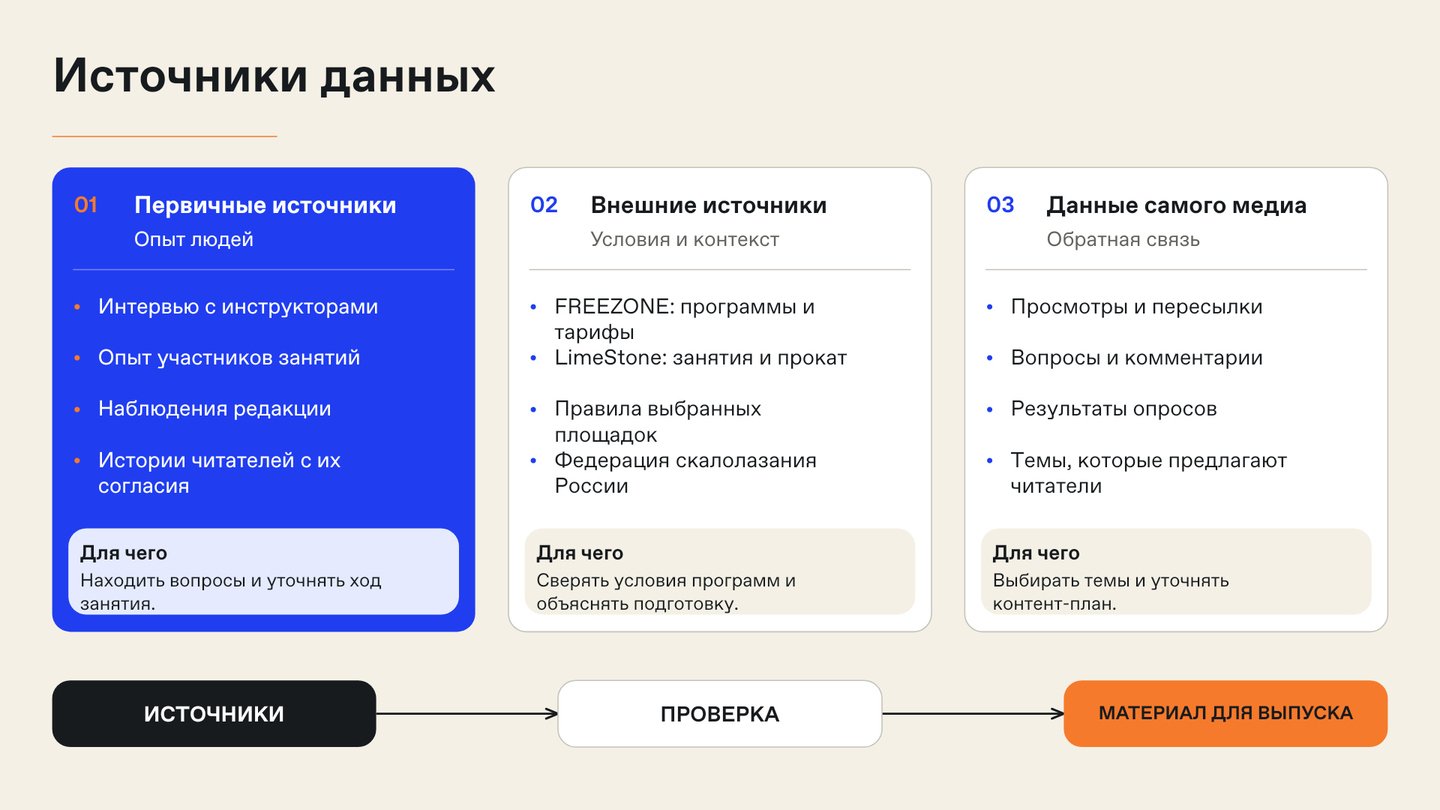
Sources provide the factual basis for the publication. The editorial staff separates the conditions of a specific program from personal impressions and marketing promises. The original source and date of verification are retained for pricing, duration, and restrictions. Before release, the editor reconfirms all changeable information.
Data schema separated for human and machine processing
How does information become a publication?
In the proposed WHAT IF system, automated services help gather and structure information, transcribe interviews, and draft content. The human element selects sources, fact-checks the context, edits the material, and makes the final decision regarding publication.
Machine processing accelerates information preparation. The editor cross-references the class conditions with the original source and clarifies disputed details with the organizer. If an error is found, the card is returned for review. After publication, the editorial team uses reader questions and publication metrics to select future topics.
Guidelines for Automated Services in the Scheme
Automation Usage Guidelines
Automated services assist WHAT IF in processing sources and preparing materials. For each service type, permissible tasks, limitations, and mandatory human review are defined. The system remains a conceptual model—the editorial team verifies specific connections and data retrieval methods before launch.
General Data Usage Guidelines
What does editorial control require?
When working with information, WHAT IF takes into account factual accuracy, participant privacy, and material usage terms. These principles apply at every stage—from collecting the reader’s story to updating a published post.
Core PrinciplesAccuracyEvery fact, number, and quote must have a verifiable source. Pricing refers to a specific package and unit of calculation. If information is incomplete, the service notes the gap, and the editor clarifies the data.PrivacyPrivate correspondence, contacts, and health information are excluded from automatic collection. Before submitting interviews or stories to a third-party service, the editorial team reviews the processing terms and removes extraneous personal details.ConsentStories, quotes, and photographs of participants are published in the agreed-upon scope. The editorial team retains details about the image creator and the usage permission.Editorial OversightThe editor reviews the meaning, tone, program conditions, and final layout. The media relays the organizer’s requirements, citing the source, and does not make decisions regarding an individual reader’s access to the activity.TransparencyThe editorial team retains links, verification dates, and revision history. Conceptual AI illustrations are not presented as photographs of a specific venue. If important conditions change, the editor updates the publication and marks the correction date.