
I am interested in one simple thing: whether a person is smiling in an advertisement and how precisely. In real life, a smile is considered standard courtesy, but in ads for toothpaste or a family car, it is absolutely essential. In clothing and handbag advertising, models have looked at the camera with closed mouths for years. I stopped noticing this myself long ago until I began collecting material.
I took the last decade, 2016–2026. Several significant trends occurred in fashion advertising during this time. In 2019, Gucci released a lipstick campaign featuring models with visible gaps between their teeth; subsequently, brands began featuring shouts, grimaces, and paparazzi-style shots. Then, in 2024, the first advertising videos entirely generated by neural networks were released. I wanted to test whether the model’s expression is changing due to all of this, or if these are simply notable isolated instances.
This interests me as a designer, too. When I select photographs for a layout, the model’s expression speaks volumes about the brand, just as much as the typography or the color. I wanted to understand what rules govern the selection of these expressions and whether those rules correlate with the price of the item.
My material consisted of 509 advertising campaigns from The Impression archive, where fashion brand campaigns are organized by season. I personally reviewed every mouth that resembled a smile and categorized it into one of five states: neutral, soft smile, full toothy smile, scream and laughter, or grimace. I separately noted any defects (gaps or crooked teeth).
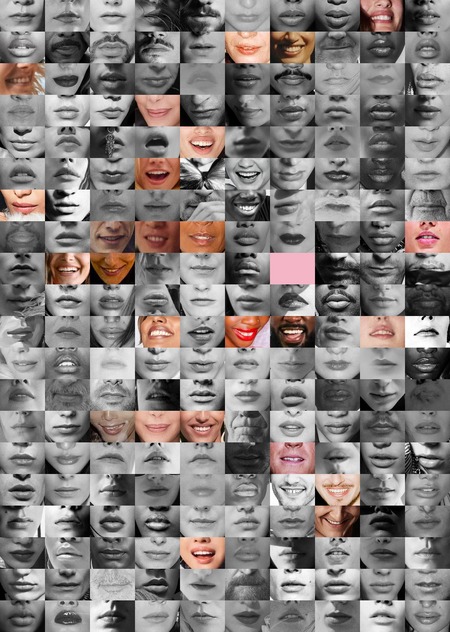
The central technique of my research—a grid of mouths rendered at a unified scale—allows one to immediately see the proportion of smiles when hundreds of mouths are placed side-by-side.

I hypothesize that the smile in fashion advertising is correlated with price point. Mass-market brands promise that living with their products will be easier and more enjoyable, and the smile suits such a promise perfectly. Luxury requires a distance between the object and the consumer, and a smile diminishes that distance. Therefore, in luxury advertising, models should smile infrequently, whereas in mass-market advertising, they smile often. Furthermore, in recent years, luxury has begun to feature an «imperfect» smile—with uneven teeth or a gap, as seen in the Gucci lipstick campaign in 2019. Only those who do not need to convince anyone of their status can afford to display such a mouth in an advertisement.

How I Was Taught to Smile
On 19th-century portraits, almost no one smiles. In the early 20th century, advertising began selling cameras and toothpaste, and with them, smiles appeared in the frame. In a 2005 article, Kristina Kotchemidova traces the habit of smiling into the lens from Kodak advertising.
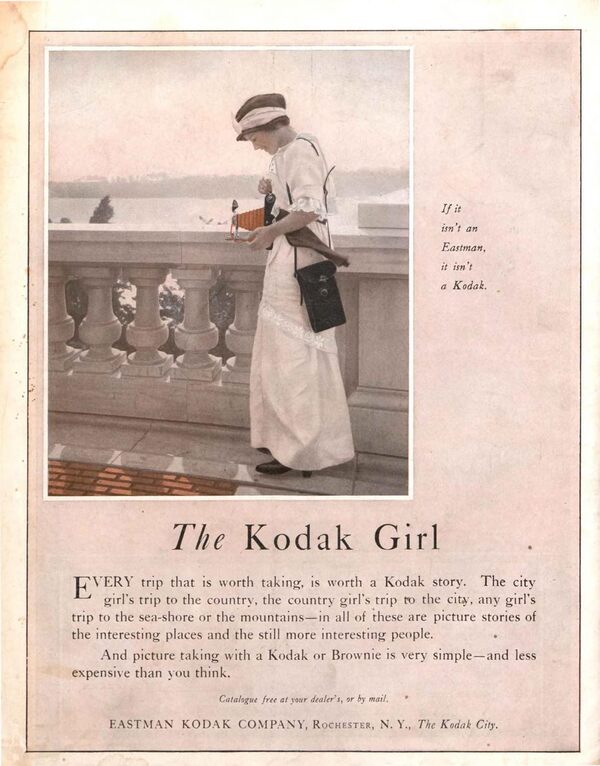
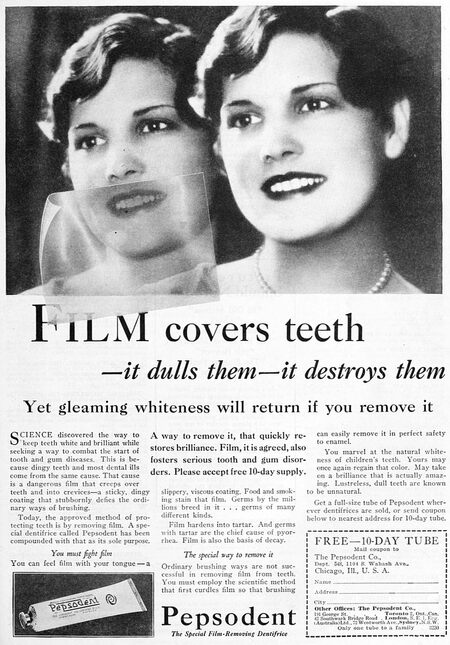
1 — The Kodak Girl, Saturday Evening Post, 1914; 2 — Pepsodent, Photoplay, 1929. «Film covers teeth»
Kolynos, Argentina, 1948
Building and Method
I selected 509 campaigns from The Impression archive, totaling 3,639 frames. The count included faces that were not heavily turned and where the mouth was large enough to be clearly visible.
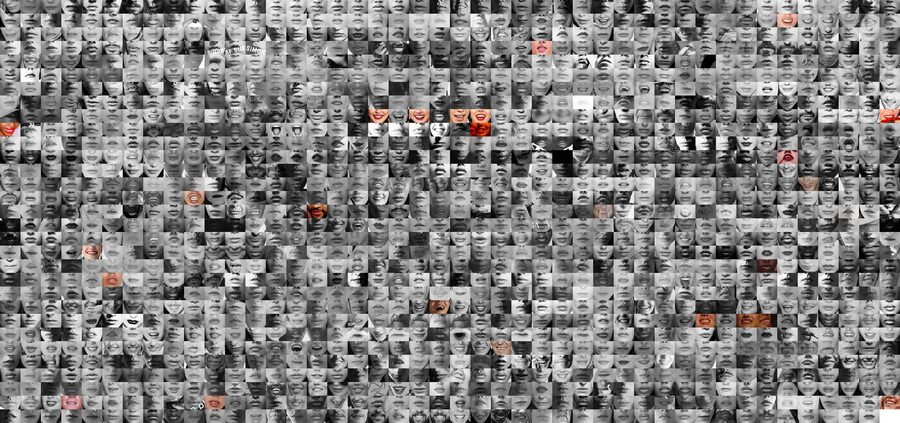
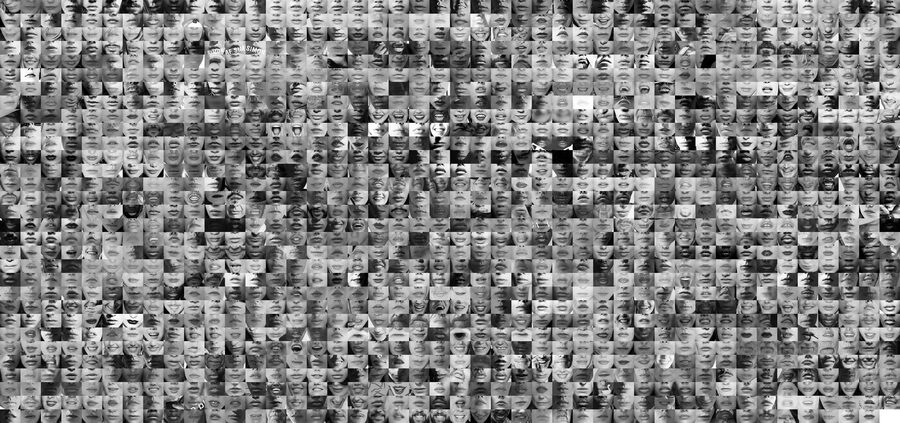
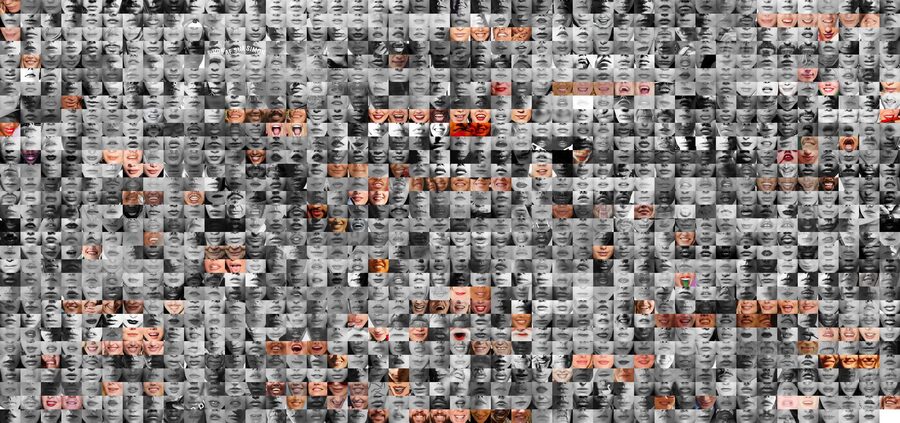
1 — all mouths; 2 — all smiles; 3 — smiles with defects