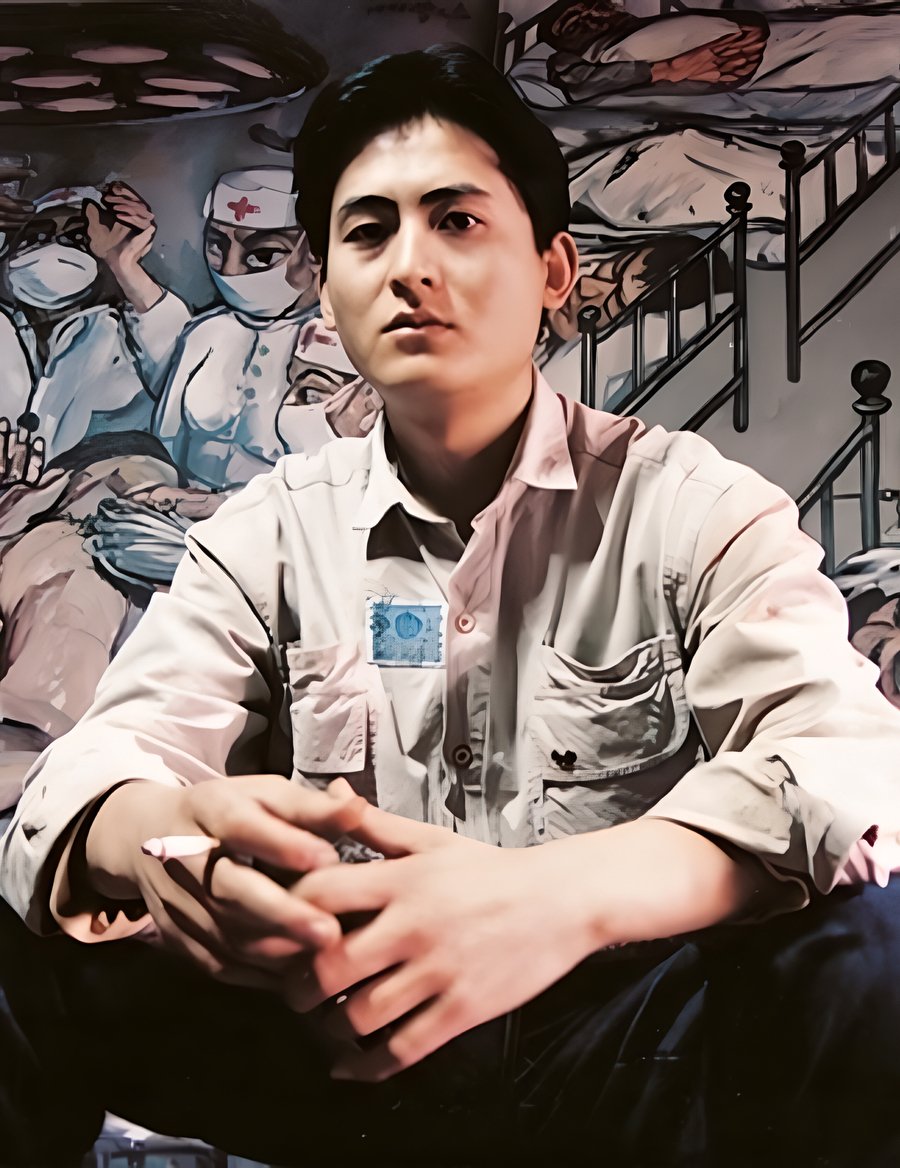
Concept:
The visual study is dedicated to the trends of expressionism in the art of contemporary artist Zhen Fanzhi. This visual research analyzes the path of formation of his individual artistic style, which merges diverse stylistic approaches and techniques. It identifies the core artistic characteristics of the Chinese creator’s works across different periods of his life: from the utilization of Western expressionist methods to the development of his own recognizable manner. The foundations of Zhen Fanzhi’s conceptual art are examined in detail, particularly in the application of symbolic imagery, such as the «mask.» The works of the Chinese artist present examples of abstract painting developed using the «chaotic brush» technique, which is based on expressive linear abstractions. Furthermore, the main artistic features of the conceptual series «Dedication» are identified, in which Zhen Fanzhi engaged with the painting heritage of bygone eras. The phase of experimental painting in the artist’s work after 2018 has been analyzed: «Zhen Fanzhi offers a qualitatively new interpretation of classical Chinese painting by combining the artistic techniques of Paul Cézanne with the concepts of traditional Chinese art, applying the readymade technique.»
The visual research utilized sources such as interviews with Zhen Fanzhi regarding his creative worldview, art, and forms of artistic expression. A comparative analysis of Zhen Fanzhi’s artistic language was conducted, examining the formation of his unique style, as well as the stylistic principles employed by the painter and the relationship between these elements. Furthermore, the specificities of the linear constructions and brushwork techniques in the artist’s paintings were analyzed, which allowed for the identification of characteristic traits inherent to works from various periods. The analysis concluded that Zhen Fanzhi’s artworks serve as clear evidence of the organic synthesis of Western European and Chinese artistic traditions. Every stylistic device Zhen Fanzhi employs demonstrates a profound understanding of painting and the language of form, expressing his creative interpretation of the artistic principles of Western European art—principles shaped by the artist’s personal experience and high level of education, the culmination of years of dedicated effort.
This visual study, using the work of Chen Fanzhi as an example, reveals one of the fundamental characteristics of contemporary Chinese painting—its synthetic or combined nature, which shares similarities with, yet differs from, the traditions of Western art. The main distinction lies not so much in geographical origin—despite the fact that Chen Fanzhi’s art was shaped within the framework of traditional Chinese culture and established aesthetic canons—but in the personal experience and subjective feelings embodied in the painter’s form across the visionary’s canvases. Chinese painting entered the era of the «be-modern,» remaining largely related to, yet simultaneously distinct from, the art of Western modernism and postmodernism.
Bibliography:
1. https://ru.wikipedia.org/wiki/Zen_Fanjin?ysclid=mwea7e11r453608957
2. https://artuzel.com/content/zen-fanjin?ysclid=mwea4mre8r333093088
3. https://lovers-of-art.livejournal.com/1198870.html
4. https://gorbutovich.livejournal.com/53902.html
5. https://vk.ru/@chinaclubhse-hudozhnik-czen-fanchzhi