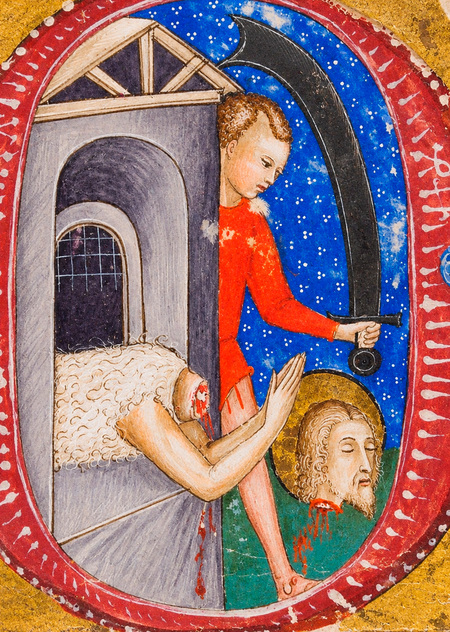
THE IMAGE THAT BECAME SYNONYMOUS WITH DANCE
In medieval art, there are narratives where a specific action becomes the primary means of recognizing a character. Salome is one such figure. Her name is inextricably linked to the dance performed before King Herod, which ultimately led to the beheading of John the Baptist.
From the 12th to the 14th centuries, artists depicted this episode on church portals, capitals, bronze doors, stained glass, frescoes, mosaics, and manuscript pages. However, their interest was not solely in the biblical narrative itself. The dance provided an opportunity to convey the movement of the human body in static media.
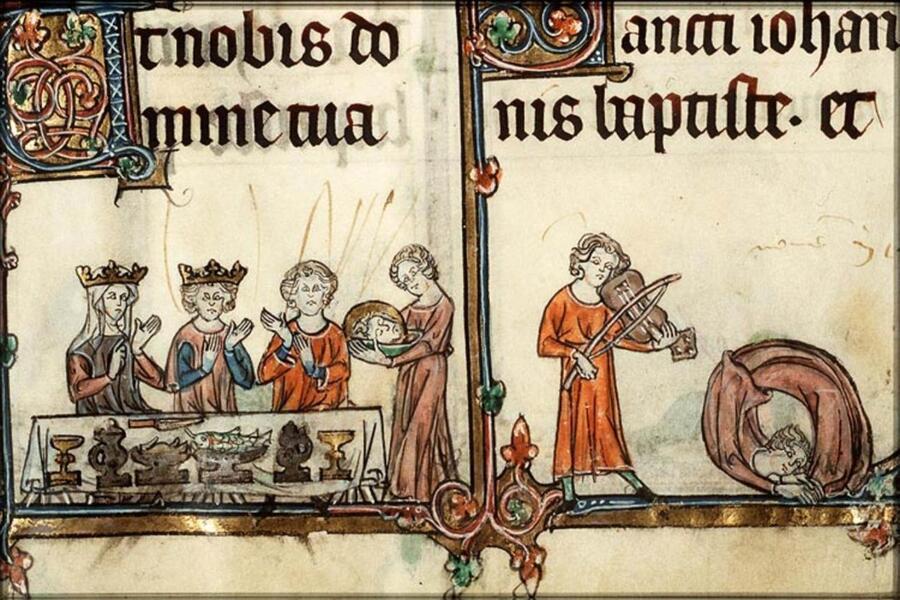
Anonymous English miniature. «The Dance of Salome with Swords, ” mid-12th century.
This was particularly evident in Romanesque sculpture: Salome was depicted with a sharply arched back, head tilted back, and raised legs. In later works, the dance could take on a more restrained character, transform into a courtly spectacle, or become part of a complex narrative about a saint’s martyrdom.
This study investigates how the visual image of Salome changed in European art from the 12th to the 14th centuries and why a single biblical episode received such diverse artistic interpretations.
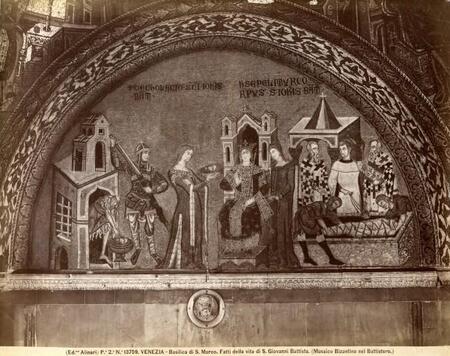
RESEARCH CONCEPTSalome’s story holds a unique place in medieval iconography. Unlike many other biblical figures, her image became closely associated with a specific action—the dance that led to the death of John the Baptist. However, medieval artists were not limited to a literal depiction of the Gospel event. They transformed the dance into an independent artistic motif, using it to convey concepts of corporeality, spectacle, temptation, and moral transgression.During the 12th–14th centuries, Salome appears across various art forms: in stone and bronze sculpture, monumental painting, stained glass, mosaics, and book miniatures. In each medium, movement was rendered differently. In sculpture, it was expressed through the posture and curve of the body; in painting, through gestures and figure placement; in stained glass, through silhouette, color, and the division of the narrative into discrete scenes; and in miniatures, through a sequence of small episodes.