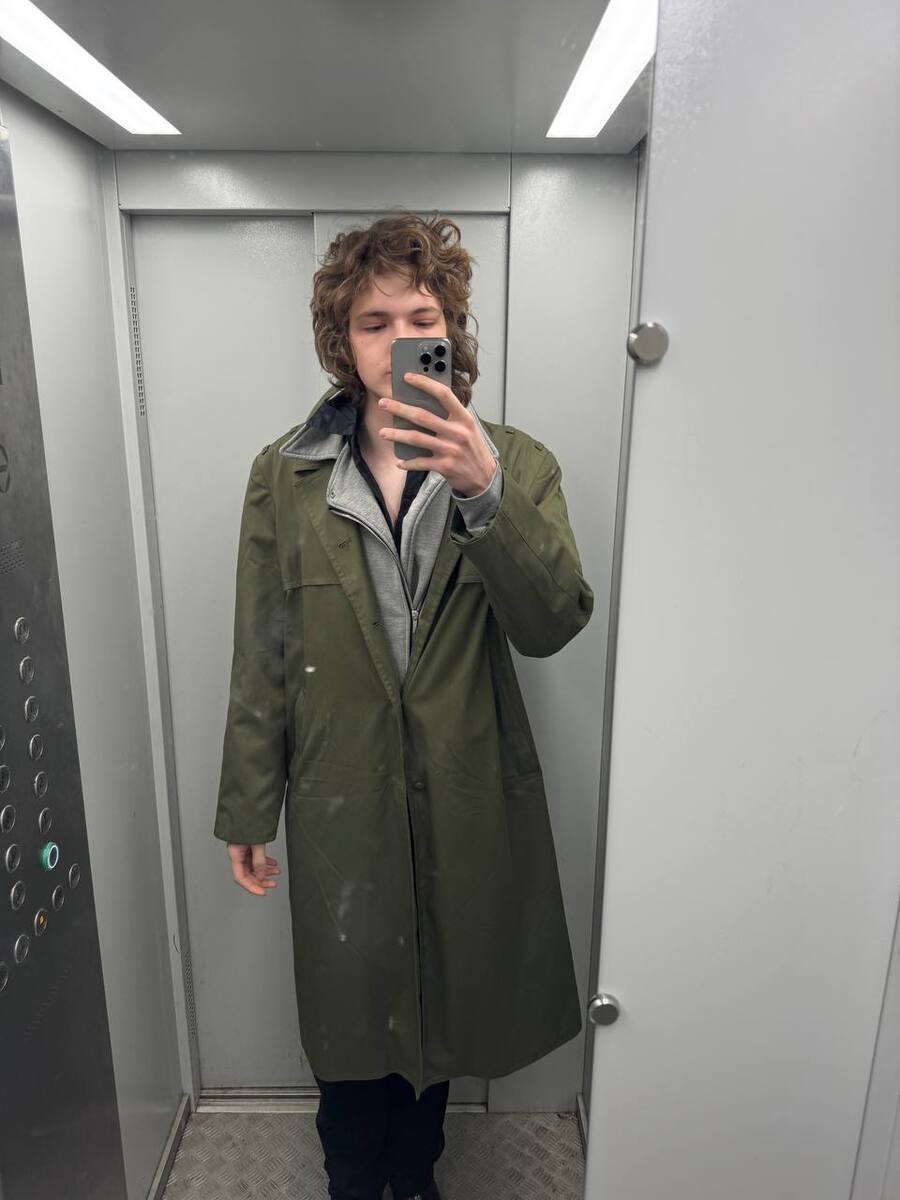
MEDIA CONCEPT
STOLEN CLOTHING
Fashion media exploring the origins of contemporary fashion
«Stolen Clothing» is a fashion media outlet that investigates the journey of clothing from its original social context to modern global fashion.
The journal shows how workwear, military, athletic, streetwear, and subcultural clothing becomes part of designer collections, the luxury market, popular culture, and celebrities’ wardrobes.
The project is rooted in the exploration of cultural transitions. Each item is examined not merely as a piece of clothing, but as an object possessing its own history, original function, and social significance.In the new version of the project, artificial intelligence functions as a research tool, assisting in locating historical sources, analyzing imagery, correlating visual forms, and reconstructing the trajectory of a specific garment.The central question of the project is:«What happens to clothing when it moves from one social environment to another?»
The Core Formula
ORIGIN → FUNCTION → COMMUNITY → SUBCULTURE → FASHION → DESIGNER → LUXURY → CELEBRITY → NOW
The New Role of AI
AI is not used to create fictional fashion narratives; rather, it is used to process large volumes of information, identify correlations, and organize the research process.
It helps to:
- Locate archival images and historical materials.
- Define the visual characteristics of garments.
- Correlate historical and contemporary imagery.
- Search for designer interpretations of specific items.
- Structure information within a unified system.
- Generate preliminary drafts of research materials.
- Form visual timelines and maps of cultural shifts.
The main principle of the project is: AI explores and systematizes; humans interpret and validate.
02. DATA SOURCES FOR THE MEDIA
The project «Stolen Clothes» requires several types of data: historical, visual, design-related, cultural, and contemporary.
Here, it is important to show the instructor that you understand precisely where the AI will be drawing its information from.
Source
What data we receive
What it is used for
V&A Museum
Historical garments, photographs, descriptions
Researching the original purpose of items
The Metropolitan Museum of Art
Garments, dating, materials, origin
Studying the history and construction of clothing
Europeana
Archival photographs, museum objects, historical documents
Searching for visual evidence
Library of Congress
Historical photographs, documents, cultural archives
Investigating social and cultural contexts
Source
Data Received
Usage
Vogue Runway
Designer collections, runway photography
Searching for modern interpretations of fashion
Dazed
Fashion, subcultures, celebrity style
Investigating cultural shifts
Hypebeast
Streetwear, designers, contemporary trends
Studying the shift of apparel from streetwear to luxury
Highsnobiety
Streetwear, luxury, cultural phenomena
Analyzing the contemporary fashion system
2.3. Sources of Subcultures and Communities
Source
What Data We Obtain
Archives of Music Scenes
The History of Clothing in Punk, Hip-Hop, Rave, and Rock
Archival Photographs of Clubs and Concerts
Visual Characteristics of Subcultures
Photographic Archives
Real Images of Members of Specific Communities
Interviews and Documentaries
The Significance of Clothing Within a Specific Culture
Historical Publications
The Context of Visual Code Emergence
2.4. Journal DatabaseA proprietary database is created during the course of the project.It includes:* garment name;
- original function;
- historical period;
- initial social context;
- primary visual characteristics;
- associated subcultures;
- design interpretations;
- contemporary usage examples;
- photographs and sources;
- verified historical facts;
- authorial interpretations.The primary source of the project’s uniqueness is not a single archive, but the synthesis of data from various sources into a unified research system.
03. DATA SCHEMA
Human Processing / Machine Processing
The project incorporates a division between automated information processing and human research work.
AI handles tasks related to processing large volumes of data, recognition, search, and structuring.
Humans are responsible for cultural interpretation, verifying historical facts, and making editorial decisions.
The overall media workflow schema
- DATA COLLECTIONCollecting archival images, historical documents, fashion photography, publications, and materials on subcultures.↓02. DATA PROCESSINGAutomated searching, visual characteristic recognition, classification, and information structuring.↓03. HUMAN RESEARCHEditorial verification of sources, historical interpretation, and defining cultural context.↓04. DATA CONNECTIONUnifying the original purpose of an object, its cultural history, and contemporary design interpretations.↓05. CONTENT PRODUCTIONCreating research materials, visual comparisons, timelines, and publications.↓06. DISTRIBUTIONPublishing materials on Instagram, Telegram, and the magazine’s digital archive.
3.1. MACHINE PROCESSING — Automated Processing
StageAI TaskResultSearchSearching for materials related to a specific garmentCurating potentially relevant sourcesComputer VisionRecognizing visual characteristicsDetermining silhouette, shape, and detailsClassificationClassifying imagesSeparating into workwear, military, sportswear, and other categoriesImage SimilarityMatching visually similar objectsFinding similar items from different erasOCRRecognizing text on archival imagesExtracting signatures, dates, and namesNLPAnalyzing textual sourcesExtracting key facts, names, dates, and termsData StructuringOrganizing informationFilling out object cardsContent AssistancePreparing draftsPreliminary structure of the research material
Example of automated processing
The researcher uploads an image of a leather jacket.
The AI determines:
- category: biker jacket
- material: leather
- key details: asymmetrical closure, metal hardware
- visual silhouette
- potential historical and cultural associations
Next, the system searches for visually similar items within archival images and contemporary collections.
The result is passed to the editor for further investigation.
3.2. HUMAN PROCESSING — Human Processing
StageHuman TaskResultSource VerificationVerifying the reliability of sourcesConfirmed historical factsHistorical ResearchInvestigating the original purpose of the garmentHistorical ContextCultural InterpretationAnalyzing the object’s significance within a communityCultural InterpretationEditorial SelectionSelecting the most significant materialsEditorial ConceptFact CheckingVerifying dates, names, collections, and statementsVerifiable MaterialVisual DirectionSelecting imagery and compositionCohesive visual presentationStorytellingConstructing the narrative of the garmentOriginal Research MaterialFinal ApprovalApproving the finished publicationFinal Content
Why is human interpretation necessary?
AI can detect visual similarity between two items of clothing, but it cannot independently prove that one item genuinely influenced another.
It can propose a hypothesis about a cultural connection, but this must be substantiated by historical sources.
The human determines:
* whether a historical connection truly exists;
* how accurately the cultural context is interpreted;
* if influence from one designer on another can be asserted;
* whether the material distorts the original meaning of the clothing.
AI discovers possible connections. The human transforms them into research.
04. GUIDELINES FOR AUTOMATED SERVICES
AI Guidelines
To operate the «Stolen Clothing» project, it is necessary to develop rules for using automated services.
The main objective is to maintain the historical authenticity and the authorial stance of the project, even when using AI.
4.1. Authenticity Rule
AI must not independently create historical facts.
Any information regarding the clothing’s origin, dating, designers, or cultural transitions must be verified by primary or authoritative secondary sources.
If information cannot be verified, it must be marked as a hypothesis.
4.2. Source Citation Guidelines
For every research material, you must retain:
- source title;
- author or organization;
- publication date;
- link;
- access date;
- the specific fact confirmed by the source.
AI must not use unverified claims from random publications as historical facts.
4.3. Visual Analysis Rule
AI can identify the visual characteristics of clothing, but it must not automatically ascribe a specific origin to an item.
For example, a jacket that looks visually similar does not necessarily mean it is an original military uniform.
The system must distinguish between:
VISUAL SIMILARITY ≠ HISTORICAL PROOF
4.4. Image Usage Guidelines
When working with archival images, you must consider:
* authorship;
* copyright holder;
* usage terms;
* license availability;
* restrictions on commercial use;
* source citation requirements.
AI must not unilaterally remove watermarks or alter archival images to create false historical evidence.
4.5. Generative AI Policy
Generative imagery is permitted only as a supporting tool.
It may be used for:
* visualizing hypotheses;
* creating illustrative materials;
* developing graphic elements;
* experimental fashion visualizations.
Generated images must not be presented as authentic archival photographs.
If a generative image is used in research material, it must be appropriately labeled.
4.6. Editorial Review Policy
Any material created using AI undergoes human editing.
Before publication, you must verify:
- Historical facts
- Sources
- Accuracy of dates
- Designer names
- Visual consistencies
- Cultural interpretations
- Copyrights
The editor always makes the final decision on publication.
—
05. AUTOMATED SERVICES
Service
Project Function
ChatGPT
Research assistant, information structuring, text analysis, draft preparation
Google Lens
Searching for visually similar images and objects
Google Gemini
Image analysis, visual detail recognition, working with textual materials
Perplexity
Information search with sources and preliminary topic research
Google NotebookLM
Working with collected documents, archives, and research materials
Adobe Photoshop
Image processing, preparation of visual comparisons
Adobe Illustrator
Creating graphic schemes, timelines, and visualizations
- SYSTEM WORK EXAMPLECASE STUDY: LEATHER JACKETInput DataSubject of Study: a leather jacket.The editor uploads an archival image of a motorcycle jacket.MACHINE PROCESSINGAI:1. Recognizes the type of clothing.
- Determines visual characteristics.
- Finds similar archival images.
- Suggests potential cultural associations.
- Searches for materials on motorcycle, rock, and punk culture.
- Forms a preliminary research structure.HUMAN PROCESSINGEditor:1. Verifies the jacket’s original purpose.
- Studies its history of use by motorcyclists.
- Investigates its transition into rock and punk culture.
- Checks for the appearance of a similar silhouette in designer collections.
- Selects verified images.
- Develops an original interpretation.OUTPUTThe research material is generated:LEATHER JACKET: FROM MOTORCYCLE TO LUXURYORIGIN → FUNCTION → MOTORCYCLE CULTURE → ROCK → PUNK → DESIGNER → LUXURY → CELEBRITYVisually, the material consists of:* archival photographs;
- historical artifacts;
- photos of subculture representatives;
- designer collections;
- modern celebrity looks;
- a visual timeline.The AI accelerates the search and organization of information, while the human forms the material’s semantic sequence.⸻07. FINAL AI MEDIA MODEL«Stolen Clothes» is a research fashion media utilizing artificial intelligence to analyze visual and historical data.