Concept
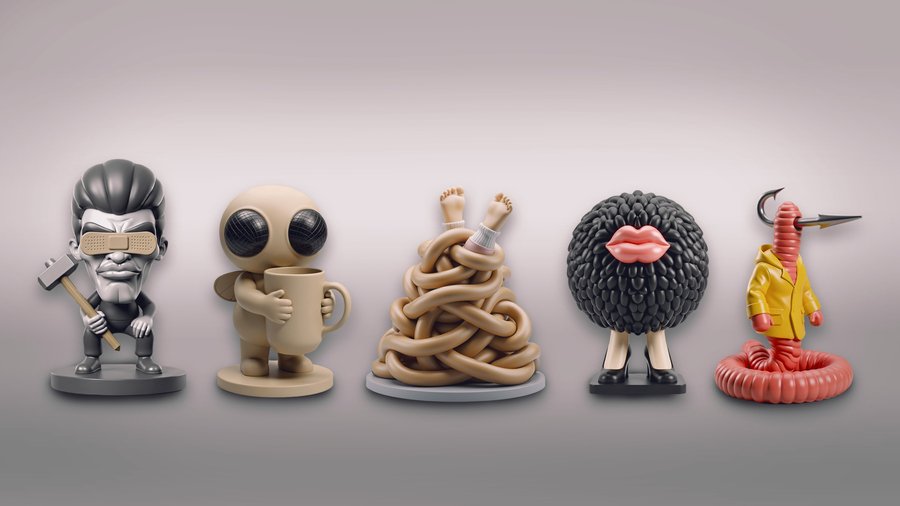
«Slopiki» is an original series of conceptual designer toys (Art Toys) that reinterprets the absurdity and comedy of everyday life through the lens of surreal meme aesthetics. The project is rooted in the idea that every person occasionally feels like a «Slopik”—a being stuck in a ridiculous, strange, or slightly painful situation, yet retaining a stubbornly persistent character. The series is perfectly adapted for the „blind box“ format and targets the geek community, gamers, and collectors of modern hybrid art who appreciate dark humor.
Collectible Figures
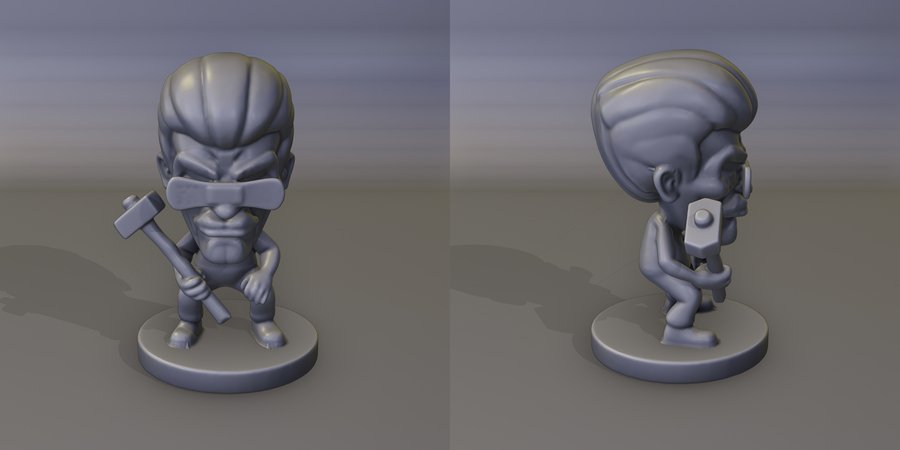
Lux Maxim
Project Specification Description for Production
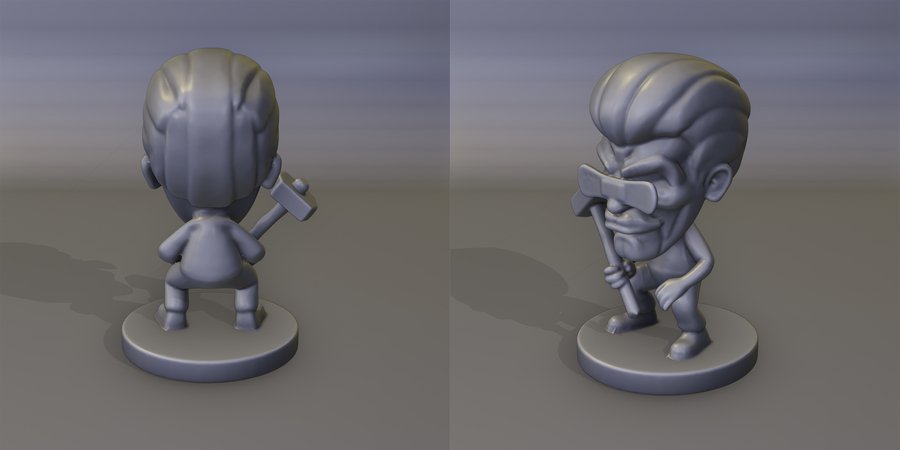
Dimensions and Volume: A series of 5 characters. A small-batch, miniature Art Toy format (70 mm tall, including a 50–60mm diameter base).Printing Technology: Fused deposition modeling (FDM) using an ultra-fine 0.1 mm nozzle to ensure high detail in small elements. Layer height is minimal (0.04–0.06 mm), infill is 25% (hexagon pattern), and wall thickness is a minimum of 3–4 perimeters for structural integrity during sanding.Material: Neutral-colored PETG plastic (gray/beige for priming), selected for its high interlayer strength, durability, and malleability for mechanical finishing.Post-Processing: A complete cycle of manual «finishing,» including careful mechanical removal of supports without compromising geometry, rough cutting of overhangs and seams with files/rasps, and subsequent fine sanding with sandpaper. The final result is a monolithic, smooth matte surface with no visible printed layer texture, completely ready for priming and painting.
Processing Workflow Description
Support Removal: External support structures are carefully cut away using side cutters, fine grooves are cleaned with tweezers, and technological overruns, seam residues, and the base skirt at the podium’s foundation are trimmed using a modeling scalpel.Rough Sanding: Pronounced defects, blemishes, and the vertical layer change seam (Z-seam) are shaved down with files, and hard-to-reach joints are refined with a round tool.Wet Sanding: To prevent plastic melting and slippage from friction, PETG is processed exclusively «wet"—keeping the sandpaper constantly moistened with water. First, the main «stair-step» effect from the 0.1 mm nozzle is smoothed with P240 sandpaper using circular motions, followed by using P400 sandpaper to even out any remaining deep scratches.Putty Application and Final Smoothing: The dried model is inspected for pitting and micropores where supports were removed; these are filled in spots with acrylic putty. In the final stage, excess putty is sanded smooth with wet P600 sandpaper, and the entire surface of the figure is polished with P1000 grit or a sanding sponge until it achieves a perfectly smooth, silky finish. Finally, the figure is washed with soap to degas it.