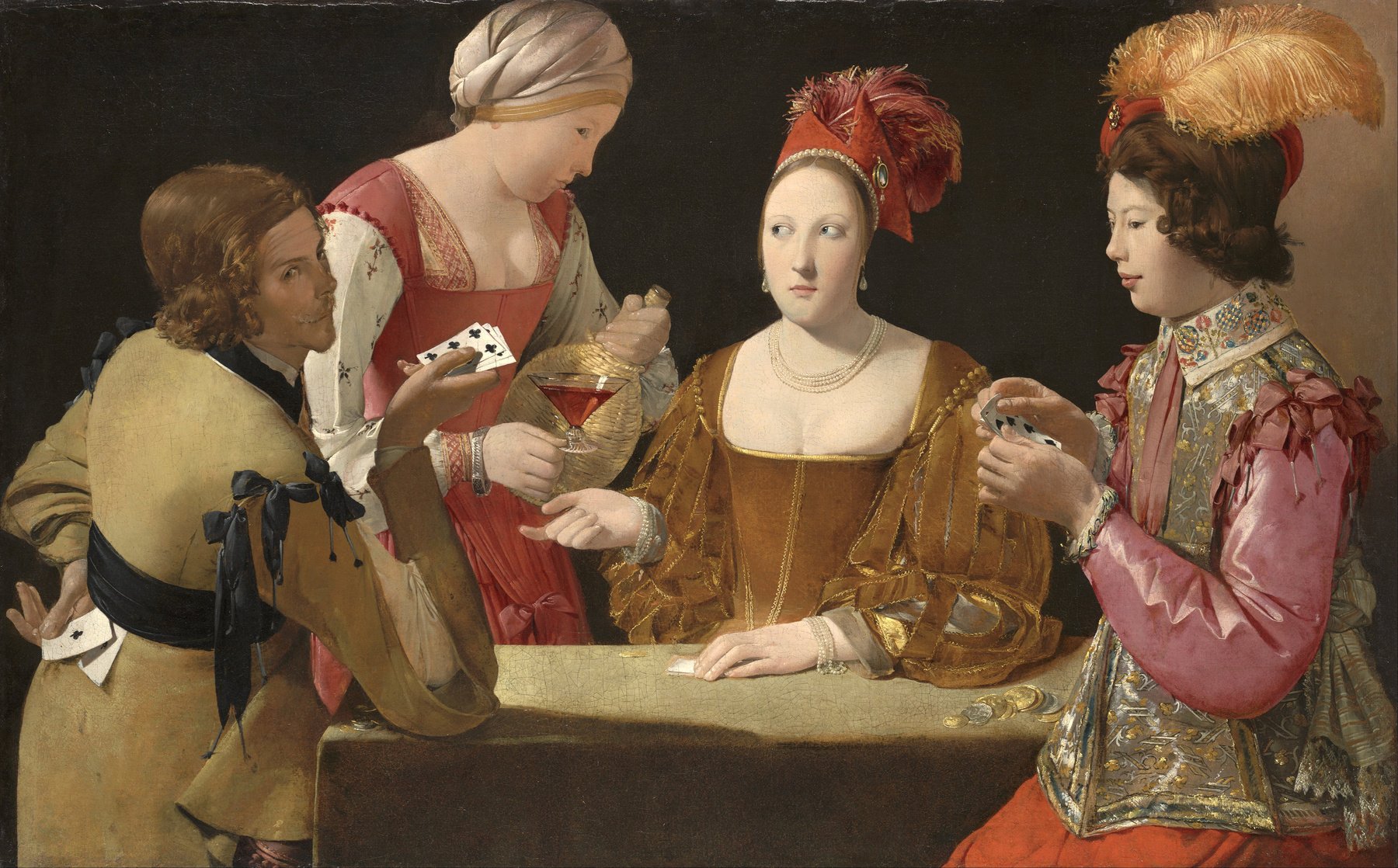
Georges de Latura is a demonstration of the theatred moment of deception, frozen in acute tension. The artist, characteristic of his strict-light style, builds the composition as a fascinating drama, where every gesture, vision, and object is filled with psychological sappence. The painting becomes a reflection on moral principles, trust, naivety, greed — the delicate dimension on which interpersonal relations are built. It’s a scene of gambling, covered under the mask of unforgivableness and hope of ripping off.
Georges Dumenil de Lathur — French provincial painter at the late Renaissance school. Caravagist, an individual style owner, wrote most of the paintings on biblical stories with using a certain color gamma and lighting patterns. However, the painter’s brushes were not they were alien and the light topics where references to the Bible’s narrations were placed. Living most of his life in the Duchess of Lotaringia, far from active artistic life in Paris, the artist’s name after death was forgotten, but restored in XX century. The painting <laqua; Schuler with treff ace» (c. 1636–1638) raises the moral problem: the dangers of addiction to vin, women, and gambling. The artist performs pastish on Caravajo ' laquo; Cardet Schulers» (ok. 1594) and the parable about the blind son, in illustrated by God’s forgiveness for sinners who have fallen down to the lows of life: alcohol, fornication, greed, and t. d.
Georges de Latura exposes the social problems of society of its time from unusual accuracy and contained dramatism, where you need to focus your eyes in order to decipher the hidden motives of each figure. On first look, we have the social scene — four characters for card table. But this seeming simplicity is hidden by a carefully constructed moral allegory. The viewer is involved in the process of conspiracies, tricks and tricks — theatricality of the painting, views, gestures that signal the next actions of stage heroes, form curious conceptual connections, and allow the viewer to untangle the motives inside the painting.
The central figure — the curtisan (identified by ee lifu with deep cut) in the heavy, golden dress — is located in the epicenter of action itself not the viewer sees one of the the gamers tucked the map on the left hand with a syringe, a the servant holding the wine watches the the coming with the the participation, the subsp interest. Every hero tells a certain story through his views and gests. The fraudster exposes his cards to the viewer, who thus becomes an accomplice to the conspiracy. What we know surely — is the fraudster’s willingness to put all his coins hidden behind the elbows hands with three cards in order to rip off the stake in twice as much investment in time. Here the fraudster and attracts an audience in game, and asks permission to make the next move.
Latur uses the light not just as decorative, but as a way to stress psychological tension: faces are almost masked, but them silence speaks more words. The light falls unevenly, focusing on key details — ornaments, maps, gold on staff — all related to temptation. The painting is written with an exclusive clarity, in the spirit of the Caravagist tradition, but c the nature of Latura’s laconicness. The figures are close to the edge of the canvas is as close to the viewer, which makes the scene not simply visible, but incredible. & quo; Schuler with trefe ace» — is a tense, almost frozen moment of moral choice presented through a domestic plot. And in this — the strength of the period, in who lived and worked Georges de Lathur, who increasingly watches not na shape, a a a internal movement of the soul. Text prepared by Michael Arutyunyan