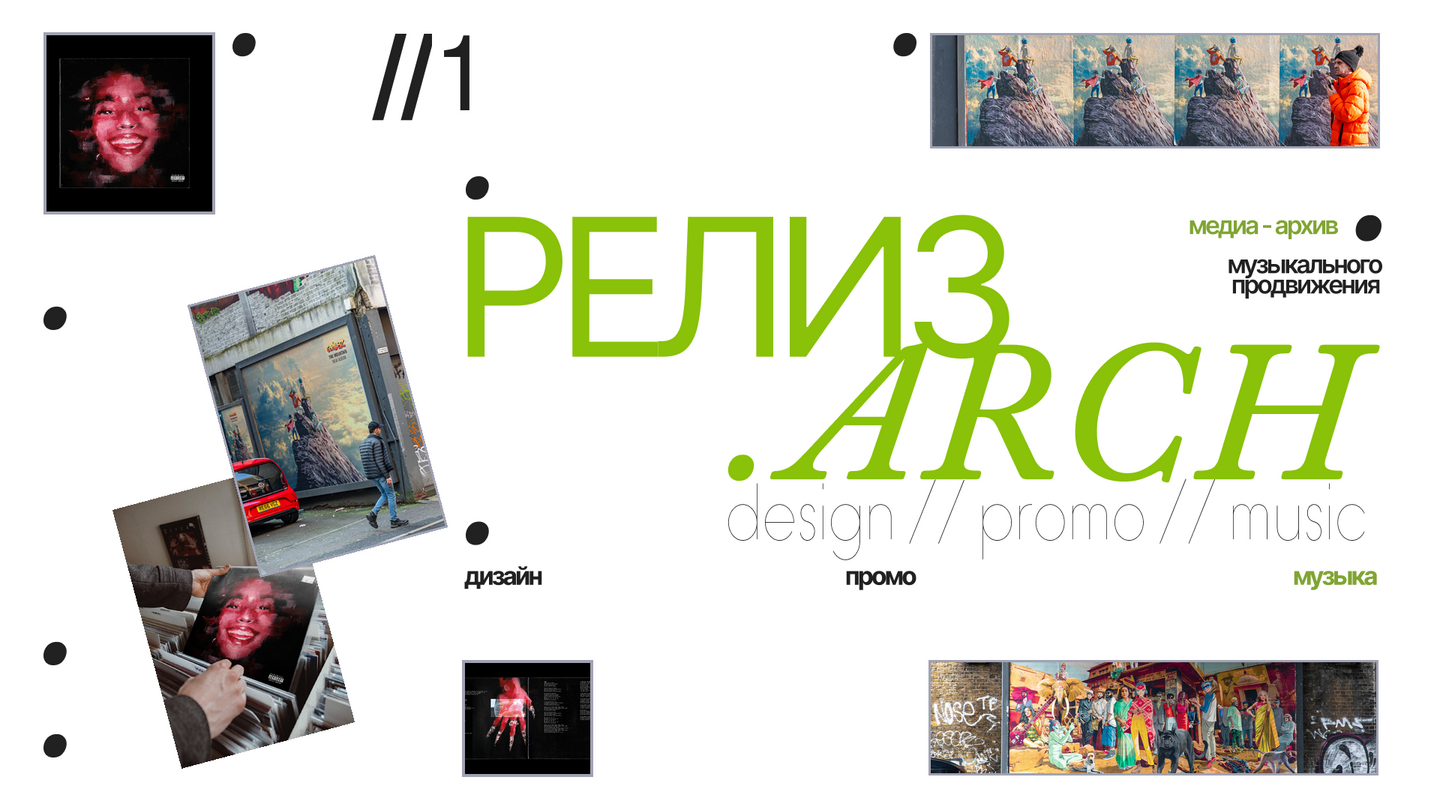
01 // Media Concept
RELEASE.ARCH — a media archive documenting how music releases are transformed into visual campaigns. Each archive entry is a campaign for a single, EP, or album.
We curate it by channel: from the cover and typography to snippets, merchandise, outdoor advertising, and special projects. For each channel, we investigate who created it, where and when it appeared, the role it played in the launch, and how it related to other elements of the campaign.
The main question of every analysis is: how does a visual technique help promote a specific release, and under what conditions can it be applied in another project?
The designer receives an argued reference; the independent artist is a technique that can be adapted to the resources of a small team; the manager is a sequence of actions and a way to assess their results. The listener can trace how a visual image connects with the music.At the start, comprehensive breakdowns are published on Telegram: text, visual cards, a timeline, and links to sources. The internal database immediately stores materials on artists, releases, media, and mechanics. Later, this structure will form the basis for searching the archive website.
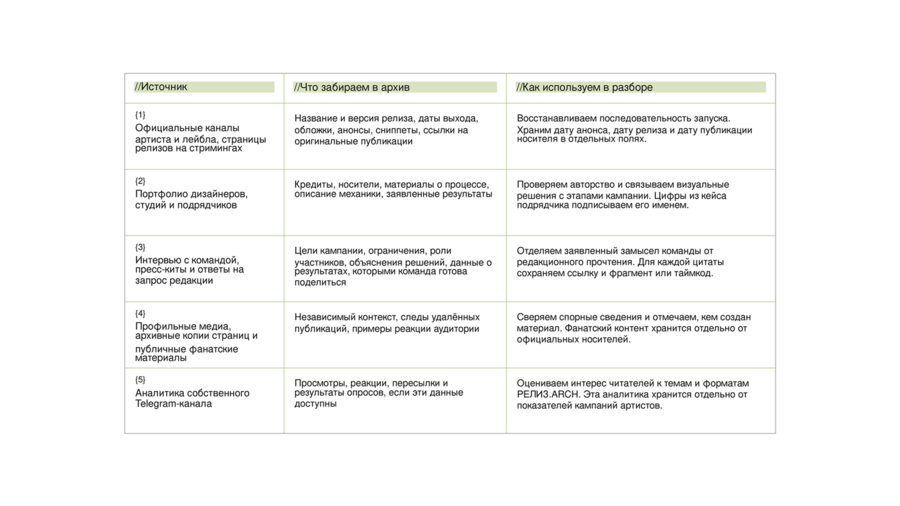
02 // Data Sources for Media
// Selection Criteria
The analysis includes content where the editor can show the connection to the release and indicate the material’s origin for the originator. If the authorship, date, or result remain unknown, this is visible in the card. For a disputed statement, the editor seeks a second confirmation and notes the discrepancy if sources provide different versions.
03 // Data Schema and Processing Segmentation
How the archive is structured
The release integrates artifacts and events. An artifact is an object, such as a mural. An event is an action performed on it, such as changing the text or publishing a video. A single mural can participate in multiple events, each with its own date and source. This way, the campaign logic is preserved in the archive, even if the same visual object is used repeatedly.
// How Data Becomes a Publication
The machine prepares a structured draft. Fact-checking, interpretation, and the final publication decision remain with the editor. In the pilot version, one person may combine the roles of researcher, author, and managing editor.
04 // Guidelines for Automated Services
For a pilot, a Google Sheets base, a collection script in Make, and a language model for field extraction and draft preparation are sufficient. Below are the operating rules for each component of the diagram.
// Schema validation on a real-world case // Charli XCX, BRAT
The Special Offer portfolio showcases textual signage and vinyl graphics. The Colossal Media case documents Brat Wall and its updates. The archive will contain various sources and media related to a single campaign. The repainting of the wall, its broadcasting, and the publication of the recording are separate events.
// What the machine extracts
From the Colossal Media case, she creates a record for the «first TikTok post about Brat Wall» and attaches over 12 million views according to Colossal Media data. The «measurement period» field remains empty because the contractor does not provide it alongside the metric.
// What the editor writes
The wall functioned as a reusable display for announcements: the team would change the signage, broadcast the process, and translate events to social media. This approach, suitable for independent artists, is to choose one recognizable medium and update it across different release stages. This mechanism could be adapted into a series of digital cards or snippets. Post views here indicate the level of attention given to a specific publication. To assess the traffic to the listening platform, separate data would be required.