INDEX |
Concept — Museum Type: an entirely digital environment, digitized real-world museums, Hybrid Format — Output
My interest in working with contemporary museums stems from a personal hobby—attending independent exhibitions—and a desire to structure methods for handling digital information that are relevant to museums aiming to keep pace with the times. It also addresses the high financial barrier to visual research, as visiting and studying real exhibition complexes requires significant investment in tickets and sometimes months of waiting or travel to other countries.
The project is structured in five parts. The first and last sections serve as introductory components, presenting a cohesive concept and conclusion, while the middle three sections explore three types of virtual museums: those with entirely digital environments, those based on scanned real environments, and hybrid formats that merge physical museums with virtual artwork and digital museums with physical exhibitions. Under each heading, the specific characteristics of all museum types are detailed; the names of suitable museums for each type, their descriptions, impressions of the official websites, environment analysis, and an identification of the format’s management features, drawbacks, and strengths are provided separately.
The selected websites are those of contemporary art museums accessible and permissible in the Russian Federation, in addition to meeting criteria for interactivity, audience openness, immersiveness, and structure. As part of the visual research, I captured screenshots from the official websites, turning them into a tool for simultaneous analysis of informational content and UX design. Using handwritten annotations and arrows over these screenshots, I highlighted the content within visual blocks, demonstrating the meaning of the accompanying text.
Textual sources assisted in studying the origins of virtual museums, their domestic and international adaptation during the pandemic, and introduced me to global digital museums.
In this work, I explore the official virtual environments provided by museums as an alternative when it is impossible to attend in-person events during lockdown periods when gallery doors are completely shut.
Unlike traditional exhibitions, which could simply display scans of paintings, modern art museums found themselves in a genuine dilemma: how do you transfer an installation or object, which evokes an unforgettable reaction through live contact, onto a screen? This piece will identify museum categories based on their strategies for handling this situation—ranging from those who viewed remote exhibition as merely a temporary inconvenience and provided digital copies, to those who recognized that online is a new exhibition space with its own visual logic and began designing interactive journeys, impossible in physical walls, where the viewer becomes a co-creator. Further on, there will be a detailed examination of unusual interactive additions on museum websites. For me, both successful experiments and failures are equally important. For example, instances where the 3D model of an installation took minutes to load, provoking simple frustration in the viewer due to a poor interface. I examine all of this through the eyes of a researcher and a user who is confined and desperately misses art, in order to understand which museums succeeded not just in weathering the storm, but in truly reinventing a new format for the diffusion of modern art and digital media.
Museum Type: Fully digital environment
From general characteristics: digital environments have adopted the maximally gamified experience. The familiar museum becomes a liminal space where the viewer-player can explore the world independently, sometimes stumbling upon easter eggs or authorial explanations. Most of the material remains intelligible only to the creator, which is both terrifying and mesmerizing.
Voxel
The Voxel platform allows users to create numerous servers within a single map. The entire environment consists of 3D pixels, which artists, photographers, videographers, and others use to construct virtual buildings. In these spaces, they can display their work, host online conferences, and hold private showings of their creations. Unregistered users cannot see other players, but logging in allows you to observe the movements of other visitors. The site features a dedicated page for buying and selling pixelated 3D interior objects, as well as digital art pieces (which display a «sold» tag after purchase).
NFT artworks—pieces of crypto art where each file comes with a certificate of authenticity—are especially popular with crypto investors. These NFT artworks are sold on platforms like OpenSea for cryptocurrency, and subsequently, the artwork does not become a fungible token.
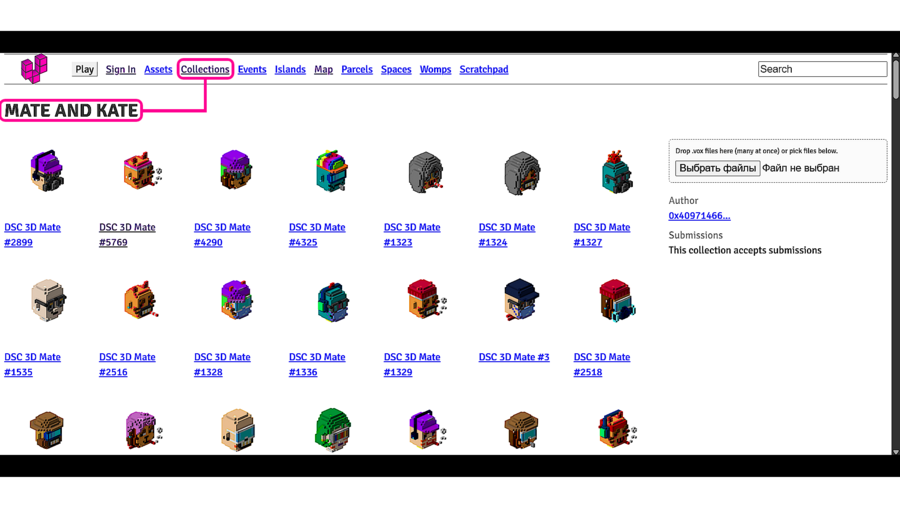
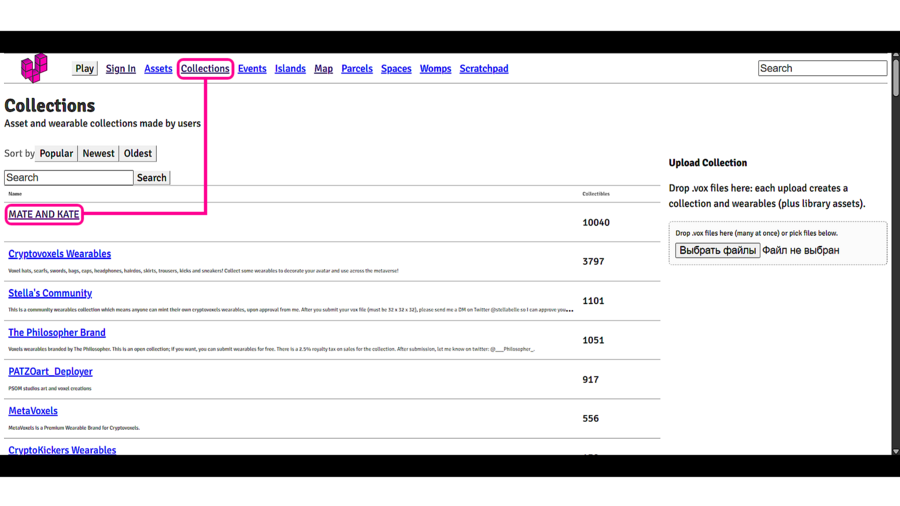
Voxels (formerly Cryptovoxels), navigation page, 2018
I visited the 2footmuseum exhibition, where the artist, Daniela, introduced herself and talked about her love for feminism, her disobedient son, her cat, and beer. Several paintings had sold, and on the ground floor, people could sign up for the next event using a Google invitation.
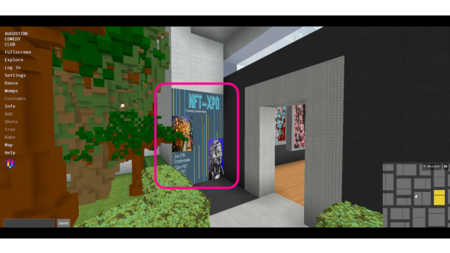
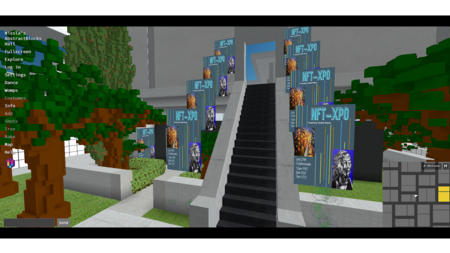
Voxels (formerly Cryptovoxels), 2footmuseum, 2020
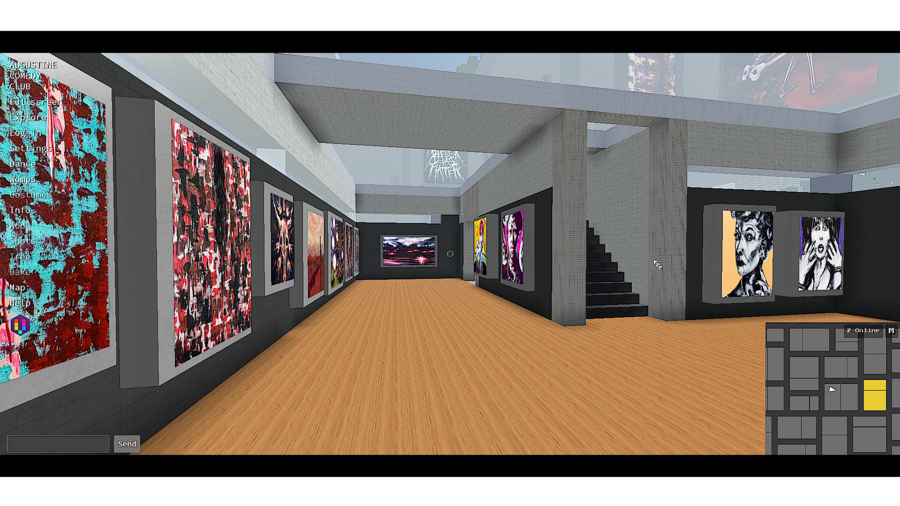
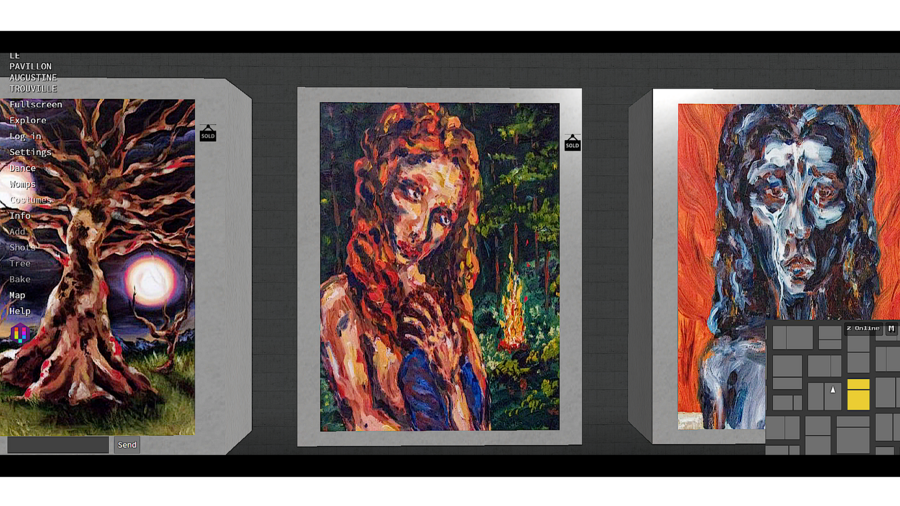
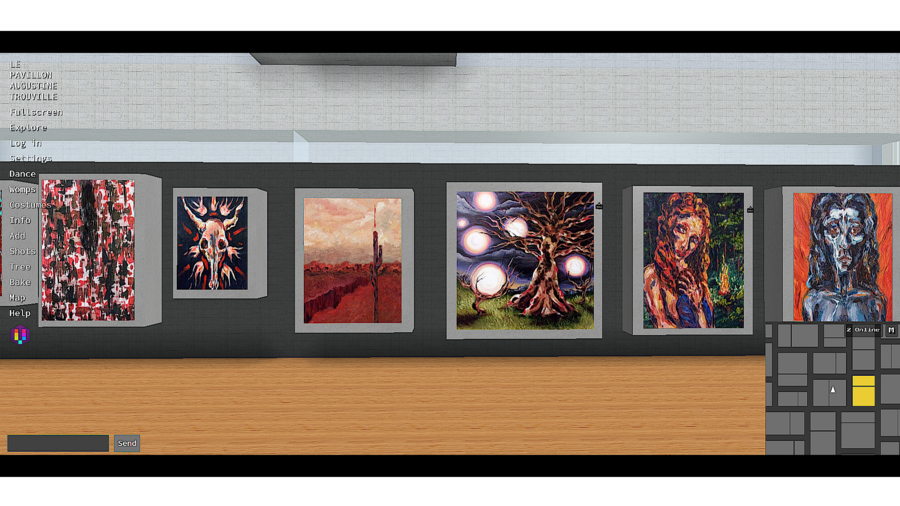
Voxels (formerly Cryptovoxels), 2footmuseum, 2020
Voxels (formerly Cryptovoxels), 2footmuseum guest lecture, 2020
The interface includes a tagged menu organized by subject matter. For example, I am researching «museums.» In the bottom right corner, there is a server map so that the viewer does not get lost. On the left side of the pop-up menu, there is an option to return to the site’s homepage, expand into full-screen mode, or interact with other players in new ways—sending them reactions or combining welcoming poses with the marionette avatar. The hotkey instructions are located there as well.
Implementation errors: the controlled marionette often gets stuck in voxels, requiring the viewer to reload the environment several times. The physics of the objects are unclear—there is emptiness in the air where one can run, and the ship’s deck allows the avatar to fall into the water.
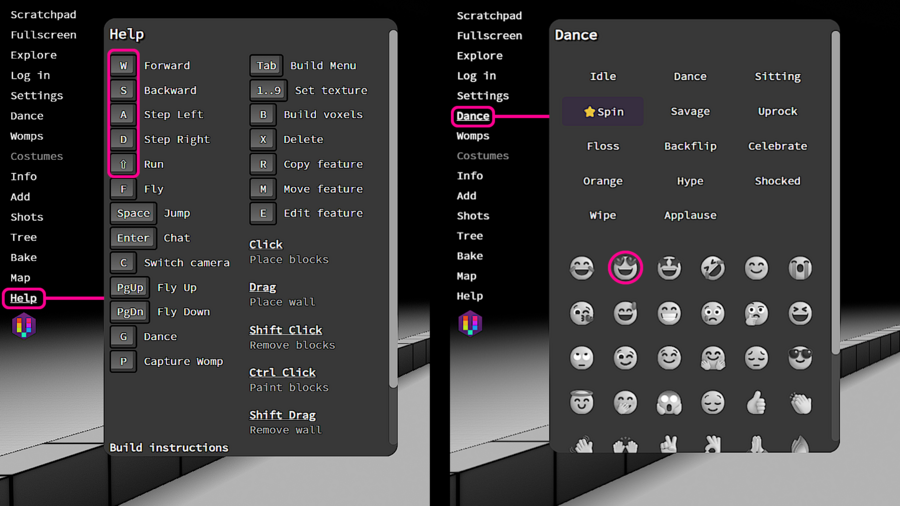
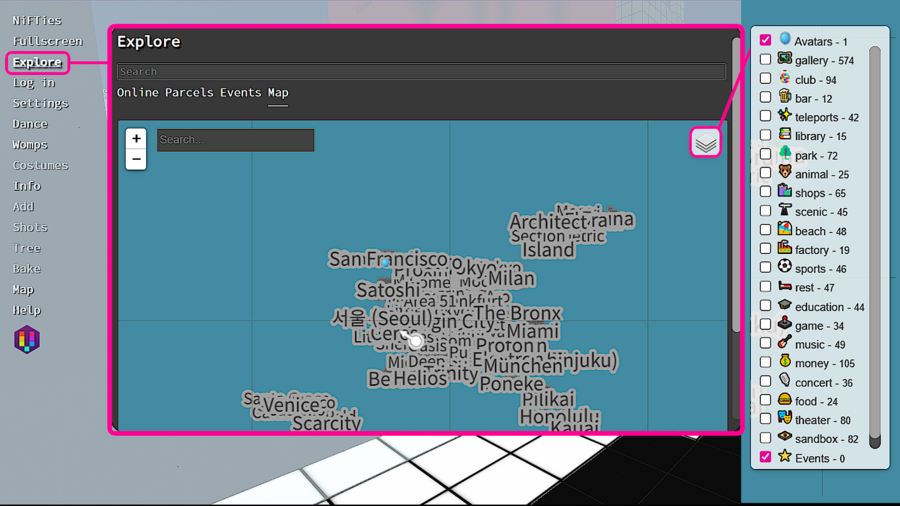
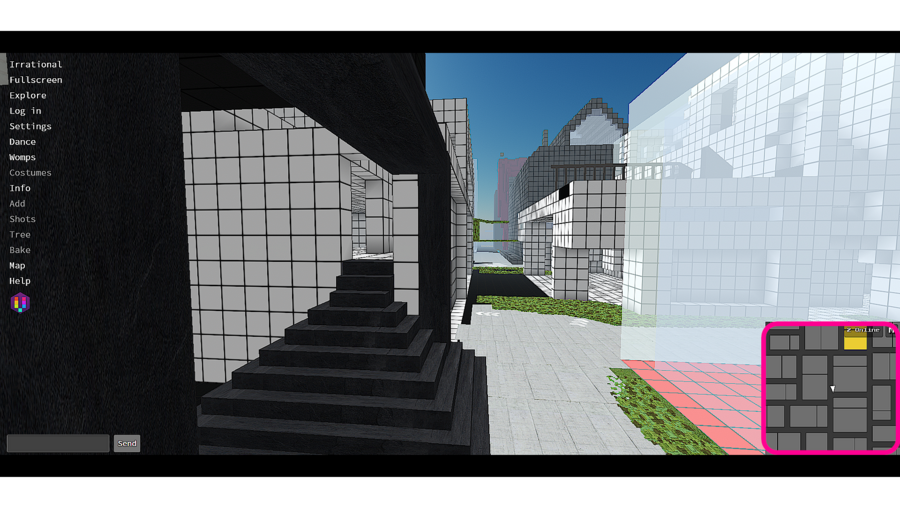
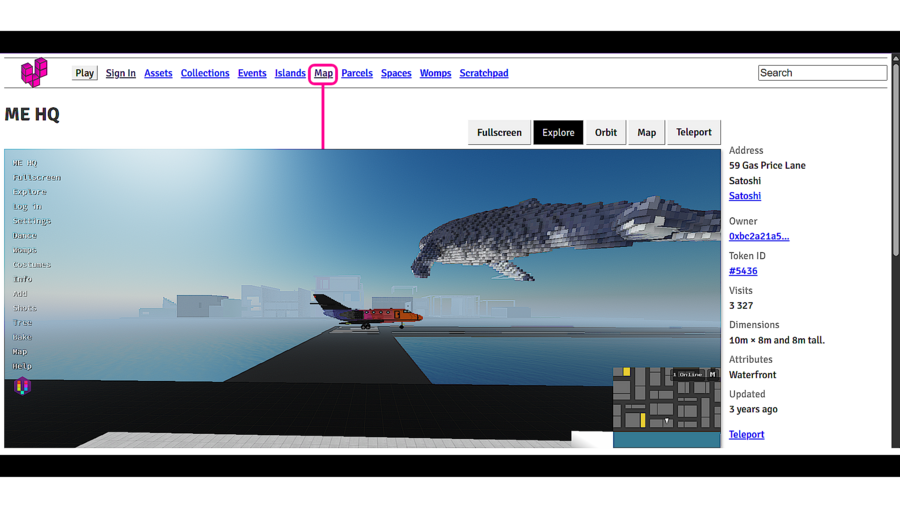
Voxels (formerly Cryptovoxels), navigation controls, 2018
New Art City
A digital museum that allows practicing game designers, artists, programmers, and design students to showcase their virtual works on an engine, which are then featured in a public catalog.
The site navigation is transparent and intuitive: you can find topics of interest using hashtags. The short list on the right always features the top available exhibitions, with all other projects listed below.
Inside the museums, you can move around using WASD, as in standard games, transitioning from exhibit to exhibit, and teleporting to other creators' works using save points. These digital journeys are often accompanied by abstract sounds and melodies. This resource inspired me the most due to its simplicity and complete immersion into the atmosphere.
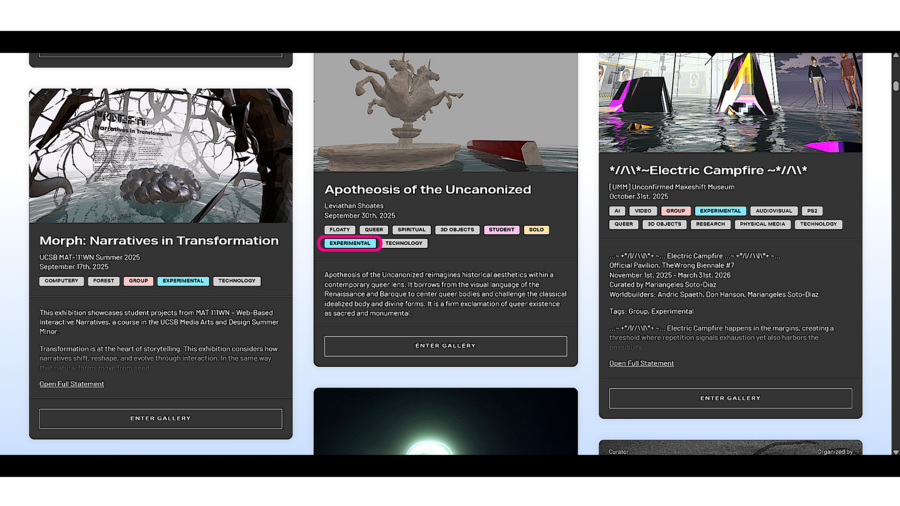
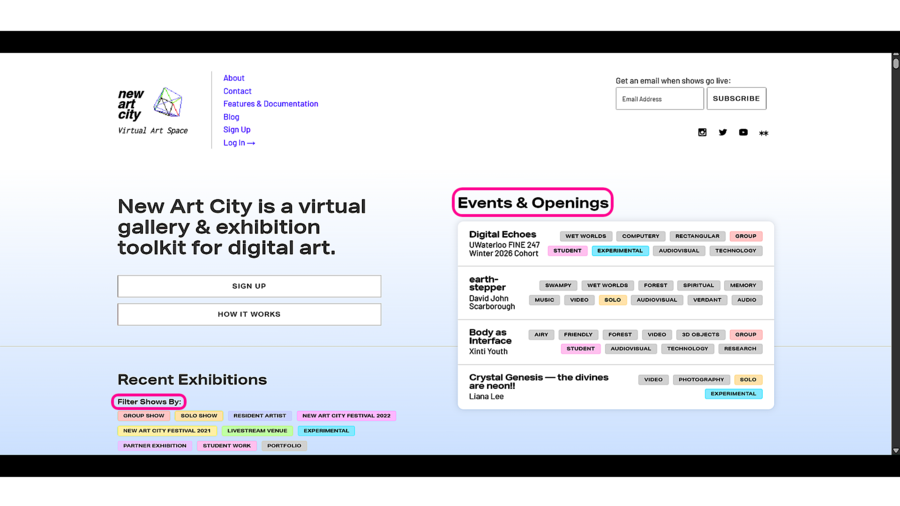
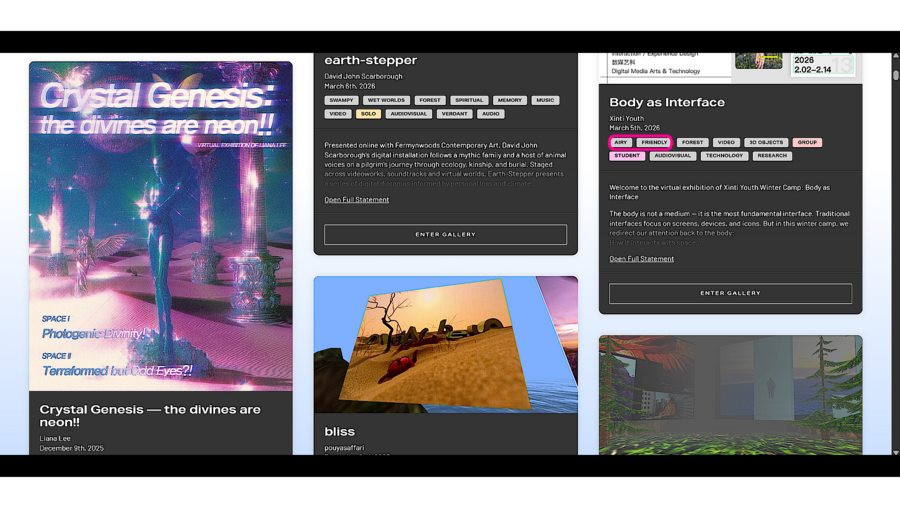
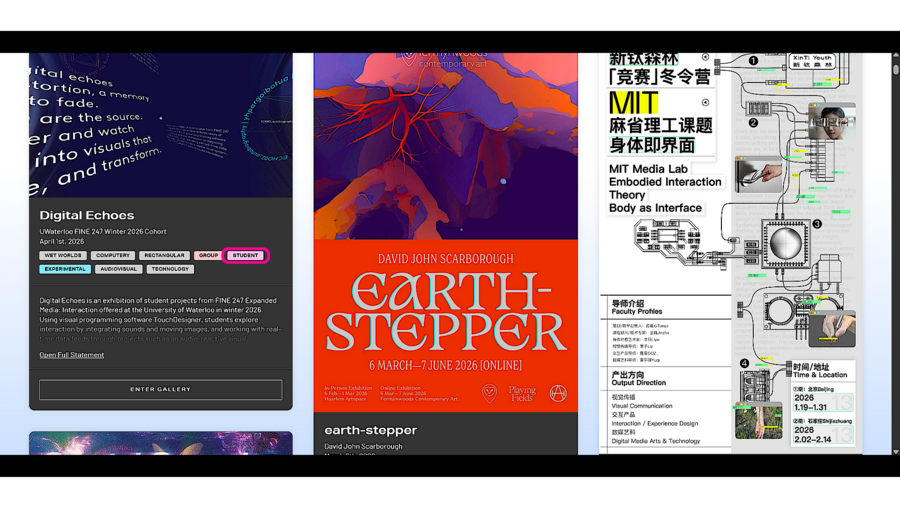
New Art City, navigation interface, 2020
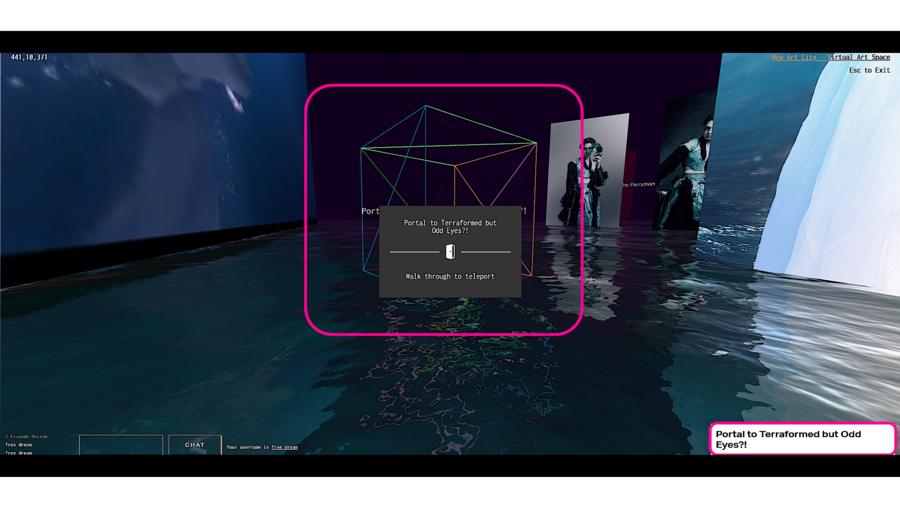
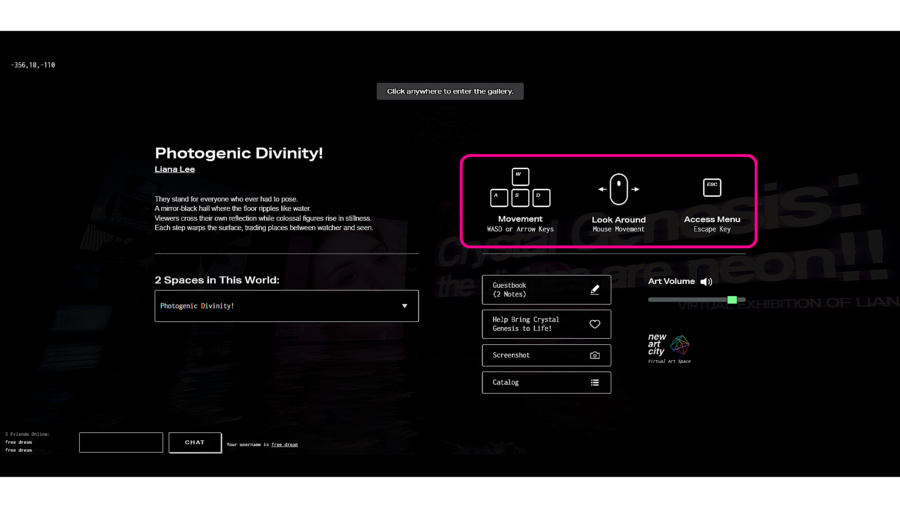
New Art City, navigation controls, 2020
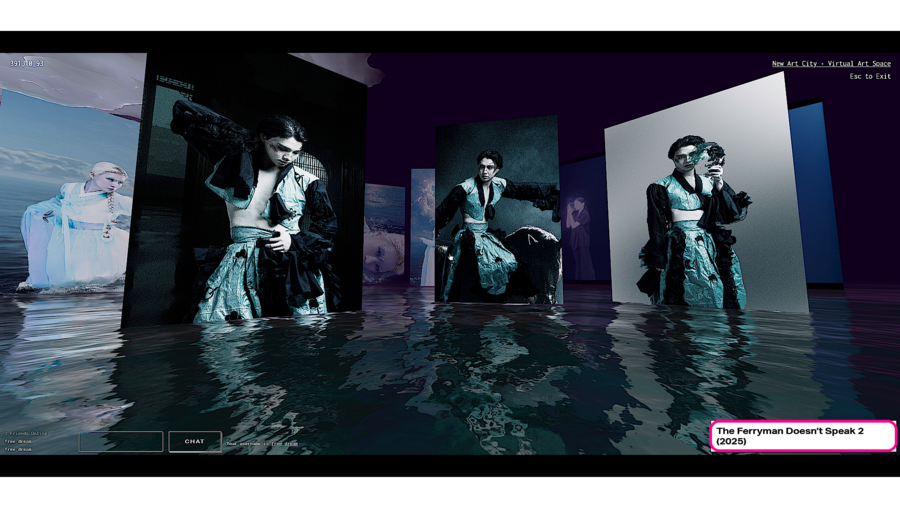
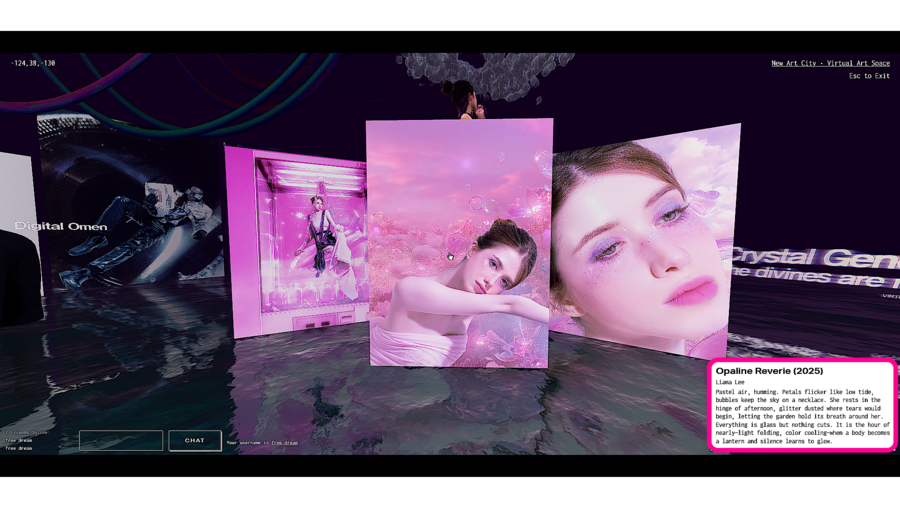
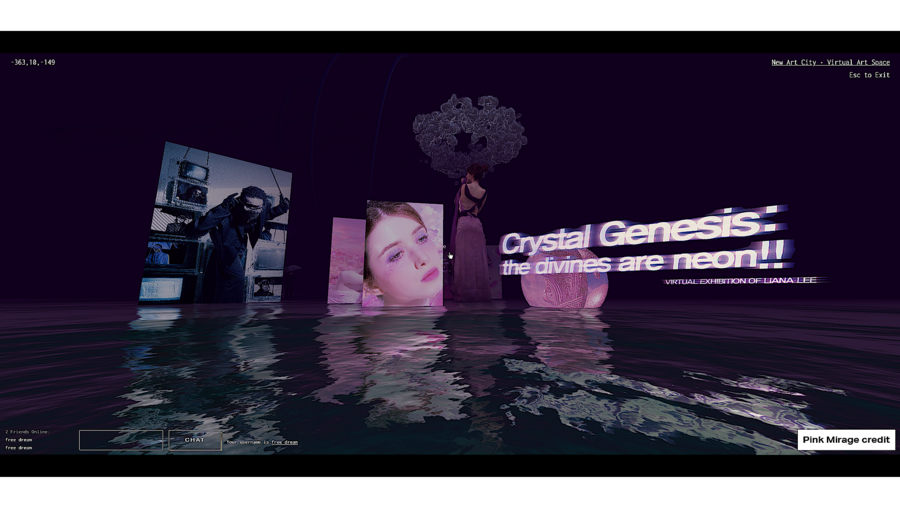
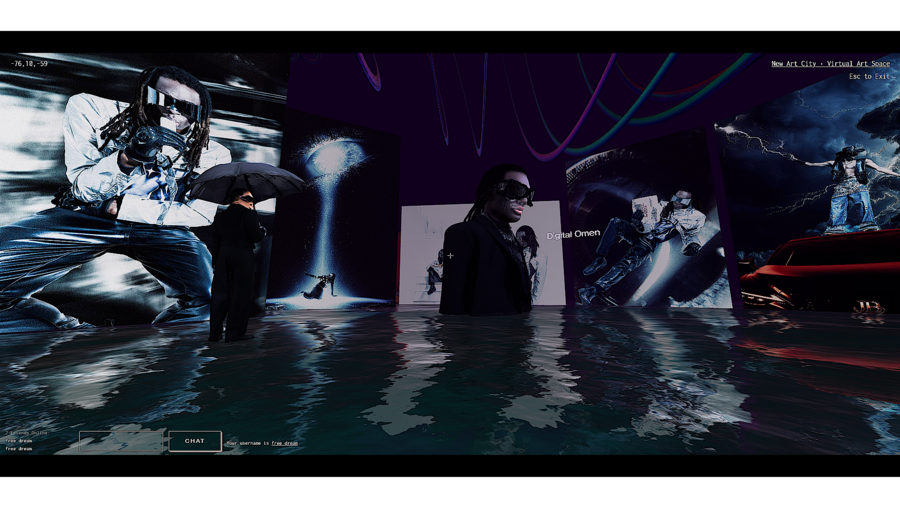
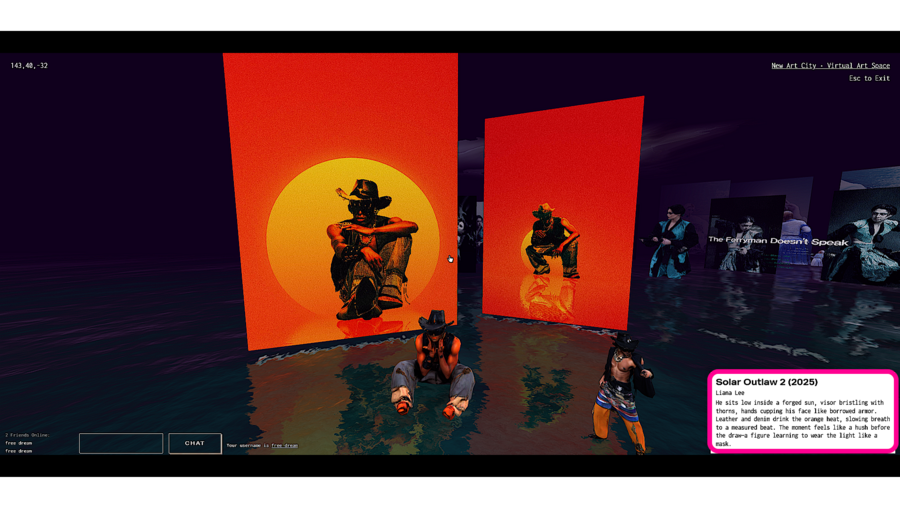
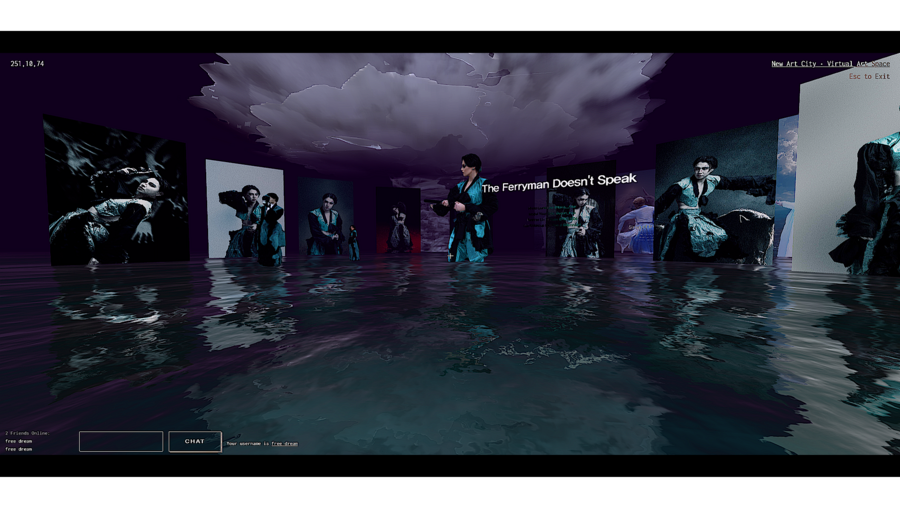
New Art City, Terraformed but Odd Eyes?! virtual gallery, 2020
Implementation errors: incredibly long loading time for all objects, screen «freezing» when zooming in on heavily programmed exhibits.
New Art City, upload dialog, 2020
Vrchat Museum
These are virtual worlds within the VRChat platform, which can be used for gameplay on a PC or VR headset. The developers place exhibition complexes on the virtual museum servers to allow for full immersion when viewing contemporary art galleries. Often, a visual narrative unfolds around one or a series of paintings through surrounding objects, a ‘jump into’ the artwork, and the exploration of the immediate environment within it. This presentation features Claude Monet’s museum.
The museum is controlled on the computer using the classic WASD keys, and interaction with objects is done by clicking the left mouse button or dragging the object.
As an obvious downside, I would point out the paid continuation of the content.
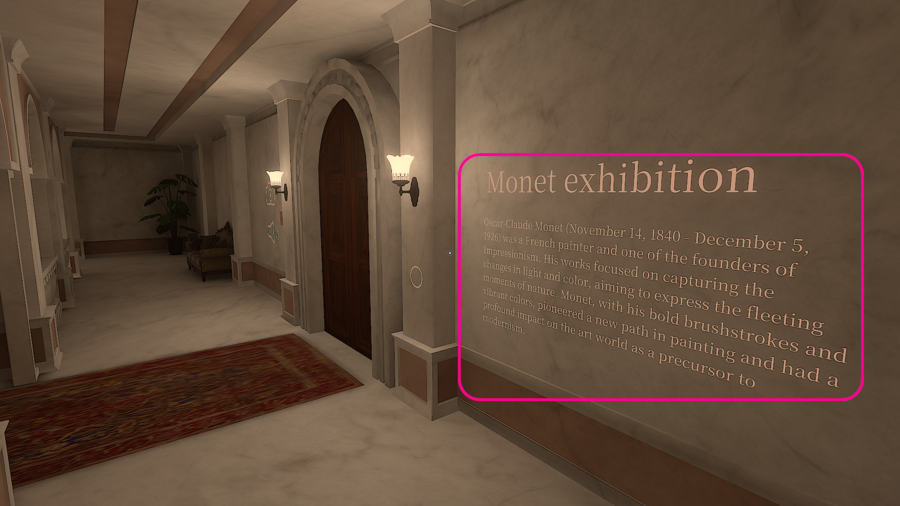
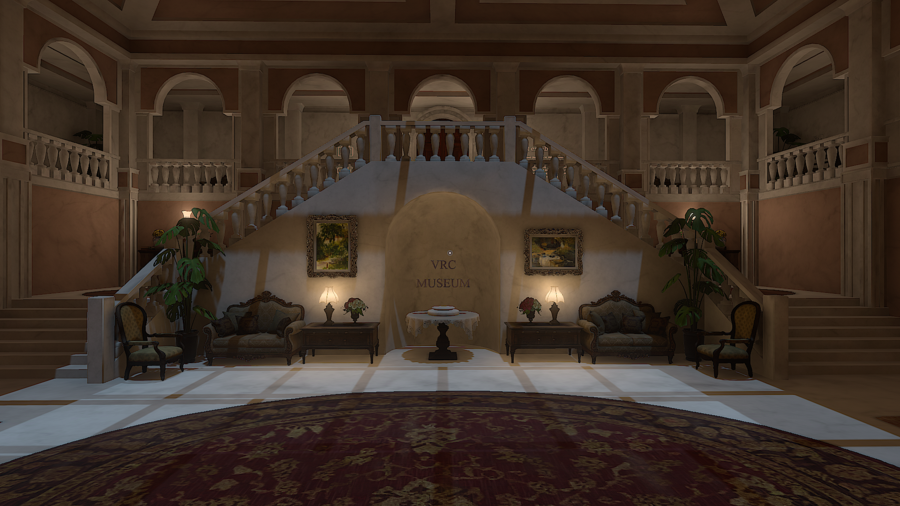
VRChat, entrance to the Claude Monet virtual museum, 2014
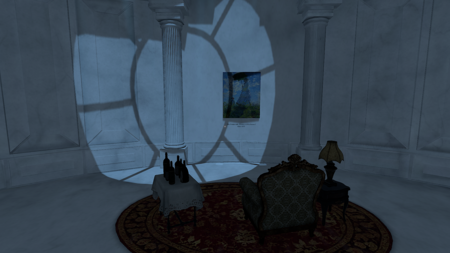
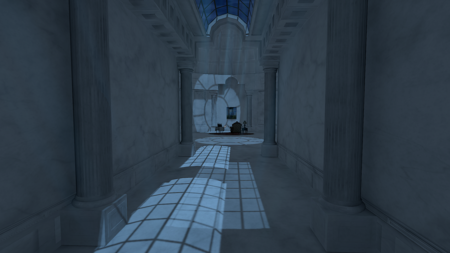
VRChat, Claude Monet Gallery, 2014
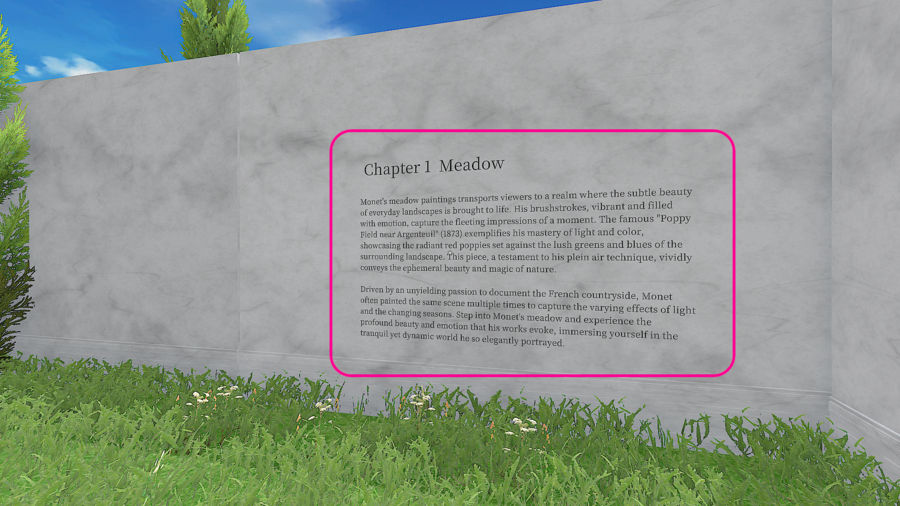
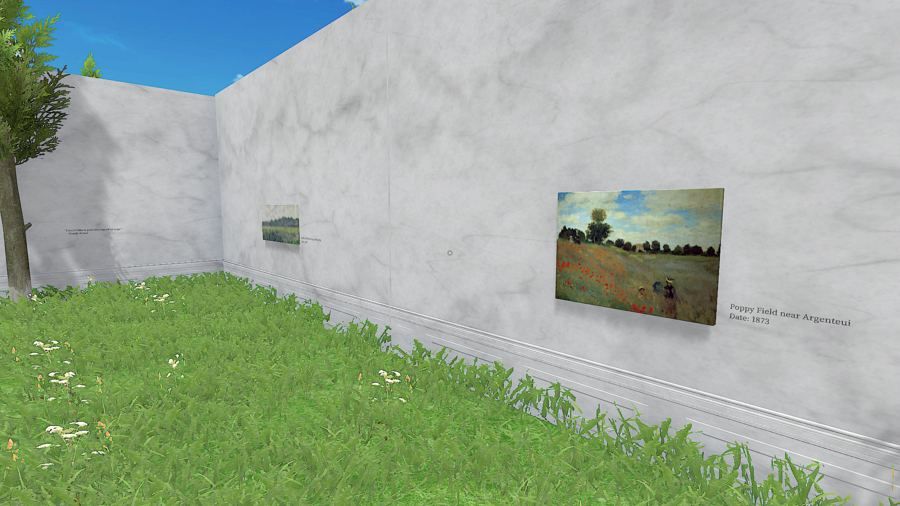
VRChat, Claude Monet, Poppy Field in Argenteuil, 1873. Virtual gallery, 2014.
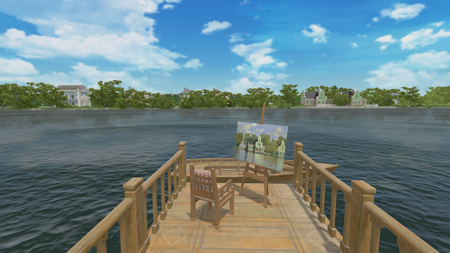
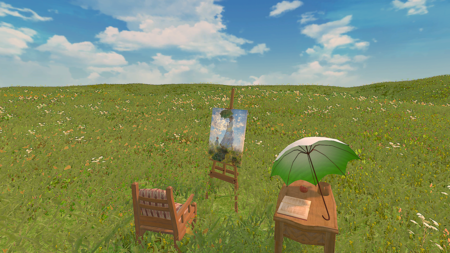
VRChat, Claude Monet, Woman with a Parasol — Madame Monet and Her Son, 1875. Virtual gallery, 2014. VRChat, Claude Monet, Houses on the Zaan River, 1871. Virtual gallery, 2014.
Yandex Museum
Yandex Lab stands out from the general list of digital museums because, not only is the art AI-generated and put up for auction, but it also lacks a virtual gallery displaying the artwork.
Visually, the site looks like this: a four-page layout with uniform design and numbering on the left side. The themes on which the neural networks pondered are presented in the center top of the screen: «city, ” „nature, ” „people, ” and „mood.“