It seemed that digital technologies would forever change the book market: texts could be read on a phone, tablet, or computer, and an electronic library easily fit in a pocket. However, contrary to these predictions, the physical book did not become part of the past. On the contrary, its meaning has evolved.
Once, a book was a means of storing and transmitting information. Today, it is increasingly perceived as a cultural and material object. We choose it not just for the text, but for the reading experience—the possibility of holding the book itself, noticing the details of its design, returning to favorite pages, and gradually building our own rhythm of engagement with the work.
Slow Down
The digital environment has trained us to read quickly. We jump from tab to tab, scroll through endless feeds, and grow accustomed to processing information in small fragments.
The printed book operates by different rules. It doesn’t suggest opening another link, it doesn’t distract with notifications, and it doesn’t conform to recommendation algorithms. To read it, one must pause, concentrate, and give oneself time.
This level of focus doesn’t come automatically. Sometimes, you have to reread paragraphs, go back to what you’ve already read, and re-enter the narrative. But this is precisely the value of print reading: it demands engagement and gradually restores the ability to sustain attention for long periods.
«I need ten minutes to stop scrolling and start reading, ” admits Sofia Rauf, editor-in-chief of WOL magazine.
The Book as an Art Object
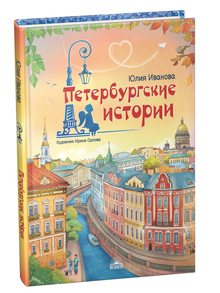
The contemporary book has long transcended its role as merely a carrier of text. Paper, binding, typography, illustrations, and print quality—all these elements become intrinsic parts of the work.
This is especially evident in books about art, photography, and design. Here, the presentation does not merely accompany the content; it extends it. The format, materials, and composition collaborate with the text, transforming the book into an autonomous work of art.
As Ekaterina Panchenko, Content Director for the book service and publishing house «Stroki,» notes, «a person reads an e-book, and then buys the physical copy simply because they want to possess it.»
This is why well-produced books are increasingly becoming part of home libraries—objects of collection and pieces people want to revisit years later.
Navigating the World of Books
Thousands of new publications come out every year. The wider the selection, the more important it becomes not just access to books, but the ability to navigate this diversity.
Digital platforms have paved the way for independent publishers and small projects, but they have simultaneously amplified the influence of algorithms, which increasingly determine what the reader will see.
In this situation, the role of editors, literary critics, curators of book projects, and thematic collections grows in importance. They help discover books that might otherwise be lost in the general information flow.
Still, the final decision rests with the reader. Sometimes, just a few pages are enough to decide whether or not you want to keep a book in your collection.
Book fair as a meeting place
Despite the growth of online bookstores, book fairs have not lost their significance. They are no longer just spaces for commerce, but rather meeting grounds for people united by a love of reading and literature.
Here, readers, publishers, editors, designers, and authors gather. One can not only purchase a book but also speak with those who conceived, designed, and published it.
For publishers, these events offer an opportunity to gauge audience reaction, while for visitors, they provide a chance to discover new names and stumble upon a book that a recommendation system might have overlooked.
This is precisely why book festivals continue to be a vital part of cultural life—they remind us that reading is not merely a solitary experience, but also a form of connection.
The paperbook remains
The evolution of digital technologies has not negated humanity’s need for tangible cultural objects. In fact, the opposite is true: the more information that exists only on screens, the higher the value of physical objects with which one can interact. As Natalia Nartissova, editor-in-chief of Alpina Nonfiction, notes, «our sales show that the youth segment prefers physical books.» Today, a book is no longer the sole way to receive information. Digital formats have largely taken over this function. However, the printed edition has retained something else—the ability to transform reading into an experience worth dedicating time to.
This is why the screen and the book are not competing with each other today. They exist side-by-side, fulfilling different roles. One helps provide quick access to text, while the other creates space for attentive reading, a personal library, and aesthetic experience. While it is important for people not only to learn new things but also to experience the act of reading, the physical book will retain its place in culture.