«By Composition» is a media resource about textiles for small apparel brands: their properties, selection, and behavior in a finished garment.
While a material may look perfect in a photograph, it could end up being too stiff, too thin, or too stretchy in a finished garment. The properties of the fabric determine the fit, comfort, appearance of the piece, and how long it will last.How do you select fabric for a heavy-duty T-shirt or a lightweight shirt? What can you learn from the composition, and what should you check on a sample? Why do similar materials behave differently after washing? And what questions should you ask a supplier before purchasing?A novice brand must search for answers in catalogs, professional blogs, and manufacturer descriptions. There are many terms, but it is not always clear what they mean for a specific item.«Composition» helps connect the material’s properties to the collection’s objectives. We analyze fabrics using examples of finished products, compare swatches, and show you what to check before ordering—so you can choose material intentionally, not just based on a photograph.
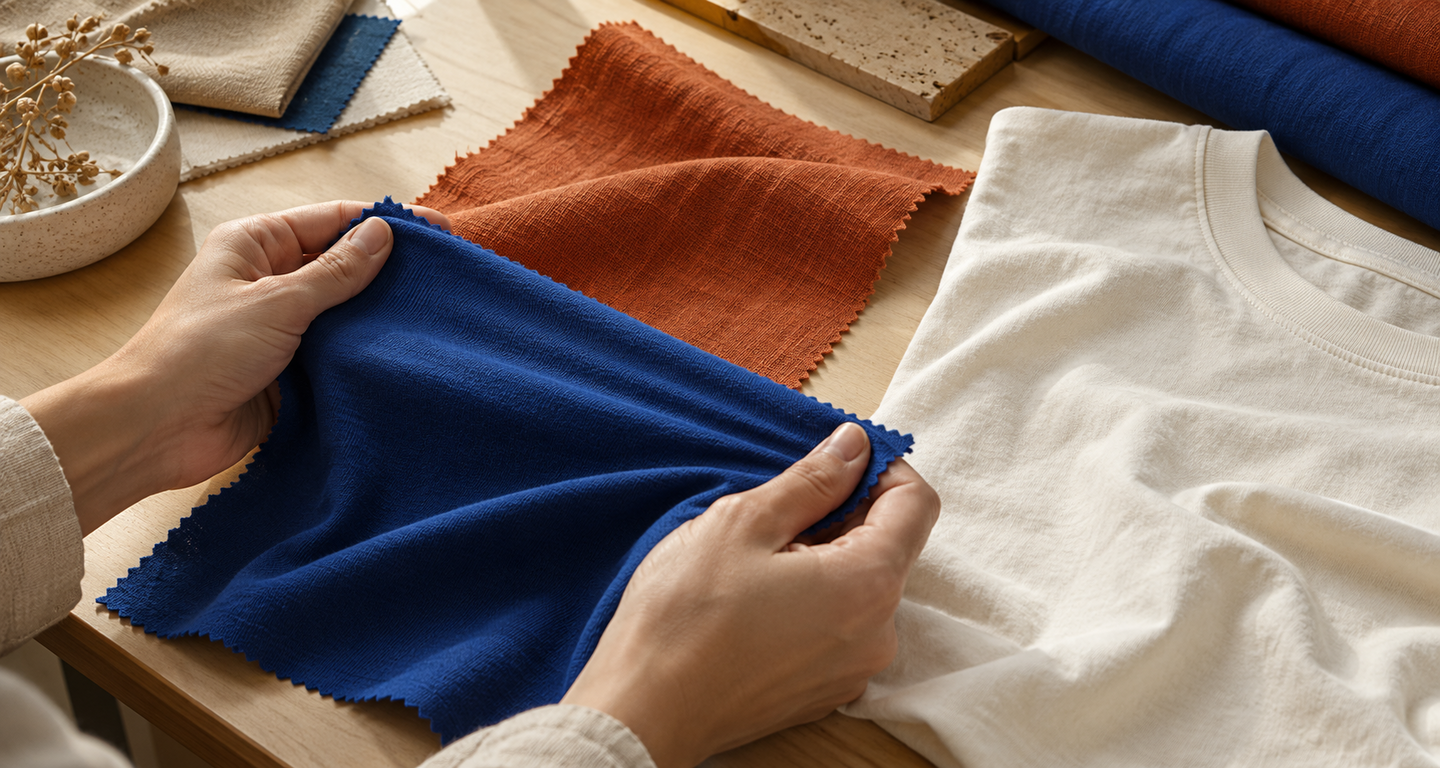
«By Composition» is a resource for small apparel brands looking to understand materials and find the right fabrics for their collections.
This is a practical media resource focused on textile materials for apparel. Every analysis is centered on the fabric—its properties and the functions it serves.
We connect material selection to collection development by explaining: — how to select the right fabric for a pattern and garment purpose; — what composition, density, and weave type practically mean; — how the material affects fit, silhouette, and comfort; — what tests to perform on a sample before placing an order; — what to clarify with the supplier before purchasing; — when an alternative can be chosen versus when a substitution will alter the final outcome.
Our goal is to help brands make informed material decisions and reduce errors between the initial sketch and the finished collection.
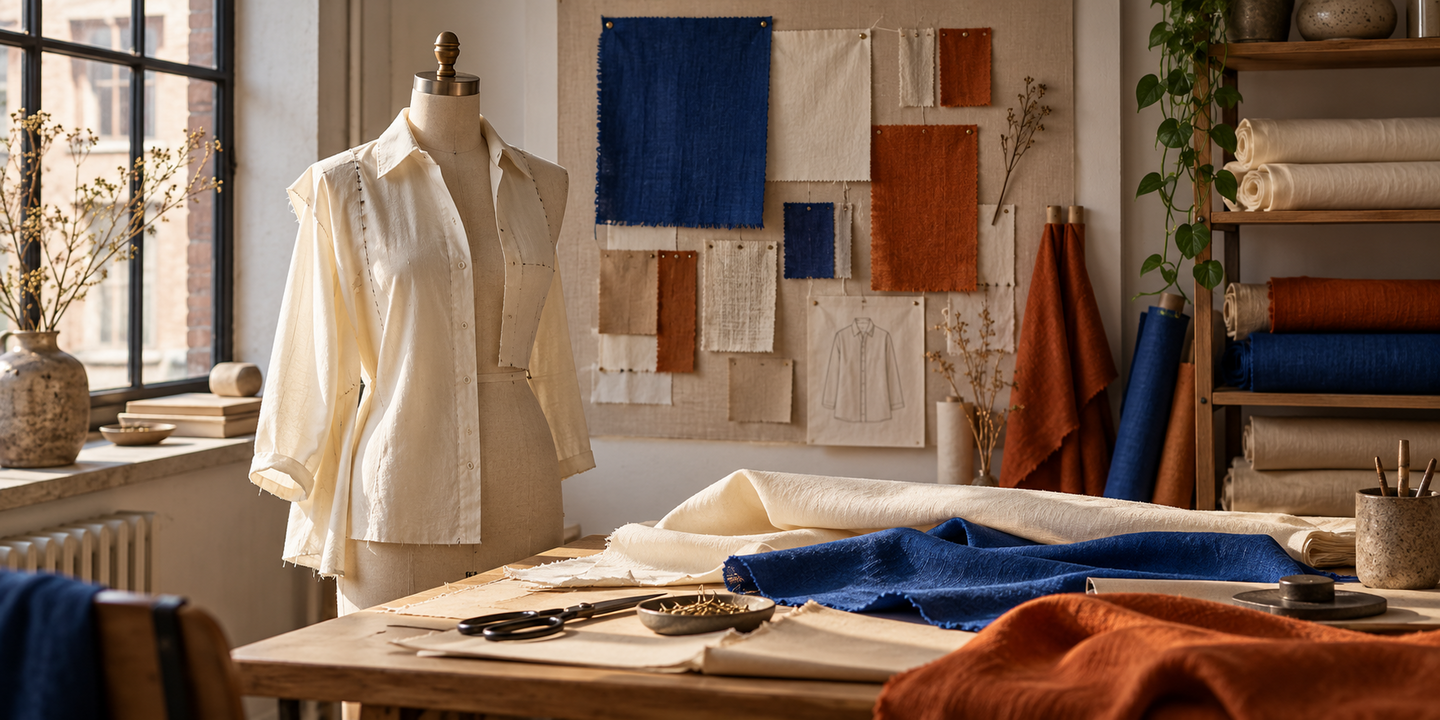
The goal of media.
To help small brands consciously select fabrics for their collections.The goal of «Composition» is to provide emerging designers and brand founders with clear knowledge about the materials they can use when developing clothing—from sourcing initial samples to purchasing and sewing.The media helps the reader to: — select the right fabric for a specific garment and its intended use; — compare materials based on their properties, not just their appearance and cost; — understand how fabric composition and structure affect fit, comfort, and wear; — vet samples before making a purchase; — consider how the material behaves after washing and during wear; — formulate care recommendations for the finished piece.
The value of the project lies in consolidating information that typically needs to be sourced separately from suppliers, technologists, and professional resources. The reader receives a clear analysis: for what the fabric is suitable, what its limitations are, and what to check before launching production.
Segment and Niche Topic
Segment Professional B2B media for novice designers and small apparel brands.Niche Topic Fabric selection and vetting for first collections: composition, density, structure, tactile properties, application, and performance in finished garments. We examine materials through the lens of specific brand challenges: which fabric to choose for a basic t-shirt, what will help a jacket maintain its shape, and how to select material for summer trousers.The media coverage includes: — natural, artificial, and synthetic fibers; — woven textiles and knits; — fabric properties: shrinkage, stretch, wrinkle resistance, and wear resistance; — sample testing and comparison; — working with suppliers and selecting batches; — garment care for various materials.
Editorial System.
Six topics help explore the subject of fabrics through real-world challenges for a small brand. «Fabric in Detail» We examine one material: how it is constructed, what properties it possesses, and what types of garments it is suitable for. Example: French terry for a hoodie—how do the loopback and brushed versions differ? «Composition Breakdown» We analyze fiber combinations and explain how each one affects the finished garment. Example: Cotton blended with elastane—when is stretch necessary, and when does it complicate the design? «Matching the Brief» We compare several fabrics for a specific item, taking into account the cut, season, and intended use. Example: Poplin versus linen—which to choose for a summer shirt? «Sample Inspection» We show how to evaluate a material before purchasing and to notice properties that are not visible in a photograph. Example: Shrinkage test—what to check before sewing the first batch of T-shirts? «Collection Costing» We explain what goes into the material costs and how to compare supplier offers. Example: price per meter versus the cost of fabric for a single item—why are these different calculations? «Post-Construction Care» We analyze how the fabric behaves when worn and the care instructions the brand must consider when releasing the garment. Example: pilling on knitwear—what to check and what recommendations to give the buyer?
For instance, linen can be analyzed as a material for a shirt, compared to cotton, tested for shrinkage, and its consumption calculated. One fabric becomes the basis for several posts, each answering a separate practical question.
Competitive Analysis
The goal of this analysis is to determine where emerging designers and small brands are currently seeking information about fabrics, what answers they find, and what they must figure out on their own. This will help establish the position of the «Composition» section within professional media, blogs, and supplier content.
Analysis CriteriaPositioning and Audience — who the project is for: clothing buyers, designers, technologists, or brand owners.Topic and Depth — what materials are covered and how thoroughly the selection and application of those materials are explained.Platforms and Adaptation — where the content is published and how it is adapted to fit the specific characteristics of each platform.Formats and Tools — whether it uses video, cards, instructions, sample comparisons, or item breakdowns.Visual Style — how effectively the photography and presentation convey the texture and differences between fabrics.Tone of voice — how accessible the language is for a beginner specialist and how clearly terminology is explained. Engagement and Practical Value — which publications prompt questions, discussions, and saves; what the reader can apply, and what techniques are beneficial for our media.
Direct Competitors
GRANOTEX — a fabric journal A supplier’s journal featuring publications for brands, buyers, and technologists. Topics include material density, procurement, and batch management. Source Platform: website, journal section. Formats: practical articles, guides, thematic analyses. Visuals: applied, related to materials and purchasing. Tone of voice: professional, focused on solving work problems. Strength: connecting fabric properties to production and brand costs. Takeaway for us: it’s not enough to explain a material’s properties—we must show how they impact purchasing and the final collection result. For «Composition, ” an independent editorial stance is crucial when comparing offers from different suppliers.Tkanio A reference guide on fabrics and garment care. It explains composition, density, shrinkage, pilling, and how materials behave during washing. The primary context is the homeowner’s practical concerns regarding clothing. Source Platform: website. Formats: reference articles, step-by-step instructions, quick guides. Visuals: functional, prioritizing readability. Tone of voice: simple and direct. Strength: providing quick answers to specific questions without lengthy introductions. Takeaway for us: it is useful to begin a publication with a short answer. „Composition“ shifts the focus to the development phase: how to vet a material before purchasing and how to account for its properties before cutting and sewing.Fabric Guide — sklad-tkani.ru An informational portal on fibers, weaves, fabric properties, and applications. It covers materials for apparel, interior design, and other uses. Source Platform: website. Formats: thematic articles, explanations, recommendations for use and care. Visuals: reference-style, featuring photos of materials and finished goods. Tone of voice: explanatory, occasionally technical. Strength: broad coverage of textile topics. Takeaway for us: the reader needs a bridge from characteristic to action. After explaining density or stretch, we should show what that means for a t-shirt, a shirt, or a pair of pants.
Indirect Competitors
PROfashion Professional media covering the fashion industry: market, production, brands, and textiles. It targets the attention of people who are building businesses in apparel. Source Platforms: website and magazine. Formats: news, analytics, interviews, industry reviews. Visuals: businesslike, featuring collection photography and industry events. Tone of voice: professional, informative. Strength: deep understanding of the fashion business context. Takeaway for us: fabric selection must be tied to real brand constraints—budget, batch size, and deadlines. Our specialization is providing in-depth material breakdowns for emerging teams.Good On You An international project assessing fashion’s impact on people, animals, and the environment. It publishes brand rankings and material guides. Source Platforms: website, mobile app, rating catalog. Formats: guides, rankings, explanatory articles, and collections. Visuals: contemporary, emphasizing apparel and its use. Tone of voice: accessible, focused on ecological and ethical values. Strength: clearly explaining complex sustainability issues. Takeaway for us: ecological characteristics should be explained alongside material limitations. «By composition» treats these factors as part of the fabric selection, alongside fit, durability, and production requirements.RBC Style A lifestyle media outlet that publishes analyses of materials, apparel quality, and care, among other things. For example, it explains the characteristics of cashmere through expert commentary. Source Platforms: website, Telegram. Formats: articles, interviews, recommendations, visual roundups. Visuals: evocative photography, editorial presentation. Tone of voice: expert yet accessible. Strength: combining professional commentary with appealing presentation. Takeaway for us: technical topics can be explored through beautiful details and clear examples. Our context is material selection for garment production, so every analysis must help users make a practical decision.
Potential Competitors
Skillbox Media — «Design» An educational media platform focused on design. It already publishes content about fabric types, their properties, and clothing selection. Source Platform: website, «Design» section. Formats: detailed articles, tables, instructions, illustrations. Visuals: modern, with a clearly structured publication layout. Tone of voice: friendly, educational. Strength: the ability to explain professional topics to novices. Why it is a potential competitor: certain articles overlap with our topic. A regular feature on materials and apparel production could address similar needs. We should adopt their clear sequence of explanations and develop a more specialized focus.MaterialDistrict A professional platform about materials and their application in design. It connects editorial publications with a materials catalog. Source Platforms: website, catalog, professional events. Formats: material cards, news, development reviews. Visuals: large textures, samples, application examples. Tone of voice: professional, technological. Strength: systematization of materials and attention to new solutions. Why it is a potential competitor: expanding its applied textile content could attract fashion designers. The principle of a unified fabric card—composition, properties, intended use, and limitations—is useful for us.Material Source A materials platform for interior designers, architects, and manufacturers. It publishes project stories and introduces the audience to materials through physical sample studios. Source Platforms: website and materials studios. Formats: articles, interviews, project analyses, events, and sample work. Visuals: tactile, with attention to surface and detail. Tone of voice: professional, inspiring. Strength: its ability to present material as an essential part of the design solution. Why it is a potential competitor: currently, the main context is interior and architecture. If it expands toward apparel textiles, the project could intersect with our audience. Its approach to textures, scale, and lighting of samples is valuable to us.
Competitive Analysis — Conclusion
The proposed «Composition» section is built upon three principles.
For Small Brands Content Addresses First Collection Needs: limited budget, small batch production, supplier sourcing, and limited material experience.
From Property to Solution Each breakdown explains how a fabric characteristic impacts a specific garment and what needs to be checked before placing an order.
Clear and Visual Photos of textures, sample comparisons, and brief instructions help users see the differences and apply their knowledge practically.
What We Integrate from Analysis: — from reference guides: intuitive navigation and concise answers upfront; — from professional publications: the link between materials, production, and cost; — from educational media: clear explanations of terminology; — from material platforms: large-scale texture imagery and a unified card design principle; — from lifestyle media: expressive visual presentation.
Key insight: our readers don’t just need to know the fabric’s name; they need to understand whether it suits their intended project, what risks they need to assess, and how to make a purchasing decision.
Distribution Channels
VK — To Understand and Apply The project’s primary platform for regular publications and community interaction with readers. Channel content includes: — fabric and composition analysis; — recommendations for specific garments; — sample comparisons; — instructions for pre-purchase inspection; — supplier Q&A; — subscriber surveys and problem-solving sessions; — categorized navigation. Each post proposes a specific action: checking shrinkage, comparing sample densities, or clarifying specifications with a supplier.YOUTUBE — To See the Properties A platform for engaging with the project through short videos and visual cards. The core principle is: material → testing → result in the final garment. Examples: — how different fabrics drape on the same mannequin; — what happens to a sample after washing; — the difference between two materials of the same composition; — how density affects translucency; — why one knit holds its shape while another stretches. The videos demonstrate properties that are difficult to convey through text alone.Pinterest — Building a Visual Database An archive of textures and fabric application examples for collection development. We plan to publish: — large photographs of materials; — fabric selections matched to specific garments; — comparisons of texture and drape; — cards featuring essential characteristics; — examples of material combinations; — boards organized by clothing categories. Each pin includes a brief explanation and a link to a detailed analysis. The visual collections help formulate an idea, but the final choice requires physical sample testing.The Website — Finding Answers to Specific Needs In the next phase, the site will become the project’s library: featuring full articles, fabric cards, and purchasing guides. Navigation is structured around three questions: What are we making? → What properties are needed? → What must be tested? For example: summer shirt → lightness and breathability → shrinkage, transparency, and wrinkle resistance.